Quick Answer: If you want control over your brand, pricing, and product range, Printify is the better choice.
If you’d rather plug into Amazon’s marketplace and earn passive income with zero customer service, Amazon Merch on Demand might suit you better.
After running print-on-demand (POD) stores for over a decade, I’ve used both of these platforms across multiple niches.
In this guide, I’ll compare them head-to-head based on real-world experience, so you can decide what works best for your ecommerce goals.
Quick Comparison Table: Printify vs Amazon Merch on Demand
| Feature | Printify | Amazon Merch on Demand |
|---|---|---|
| Overall Rating | 4.7 / 5 | 4.2 / 5 |
| Pricing Model | Free to start, pay per order | Free to join, earn royalties |
| Product Variety | 800+ products | Mostly apparel |
| Fulfillment | 90+ print providers globally | Fulfilled by Amazon |
| Marketplace Access | You bring the traffic | Built-in Amazon traffic |
| Brand Control | Full (custom branding, packaging) | None (Amazon branding) |
| Profit Margin Flexibility | Full pricing control | Royalties set by Amazon |
| Ease of Use | Moderate (integrations required) | Simple (upload and go) |
| Best For | Store owners, Etsy sellers | Designers, passive income seekers |
Best for Pricing: Both Are Free, But Profits Work Differently
Both platforms are technically free to join. But how you earn is where the difference lies.
Printify
Printify follows a straightforward pay-as-you-go model. You don’t need to pay anything to set up an account, and you only get charged once a customer places an order.
This makes it ideal for low-risk testing and flexible scaling.
Here’s what you get:
- No subscription required to start
- You only pay when a product is sold
- Offers a Premium plan at $24.99/month with up to 20 percent off per order
- Integrates with Shopify, Etsy, TikTok Shop, and other ecommerce platforms
The Printify Premium plan is useful if you’re getting consistent orders. That extra discount can mean the difference between small profits and healthy margins, especially when you’re scaling through paid traffic or influencer campaigns.
You also choose the print provider for each product. That means you can weigh the base cost against location, turnaround time, and quality. Pricing control is entirely in your hands.
| Plan | Monthly Cost | Discount Benefit | Best For |
|---|---|---|---|
| Free | 0 | None | Beginners, testing new niches |
| Premium | $24.99 | Up to 20% per product | Scaling stores, high-volume POD |
Printify is great for margin control. You pick the product, choose your print provider, set the selling price, and keep the profit. You control how much you make, minus product and shipping costs.
Amazon Merch on Demand
Amazon Merch is completely free to use — no monthly fees, no setup costs, and no upfront investment. However, it’s an invite-only platform, so getting in can take time depending on how competitive the space is.
Key pricing highlights:
- Completely free, but invite-only (application required)
- Amazon handles everything: printing, shipping, customer service, even returns
- You get paid via royalties, which depend on Amazon’s fixed base pricing
Royalties are paid out based on how much higher your sale price is above Amazon’s base price. But you can’t change that base cost. So while it’s low effort, your profit is often capped. A typical t-shirt might only earn you two to five dollars in royalties.
The trade-off is simplicity. You won’t handle any order issues, refunds, or logistics. It’s a good setup for designers who want a passive side hustle, but it’s not built for brand builders.
| Product Type | Base Price (set by Amazon) | List Price (example) | Estimated Royalty |
|---|---|---|---|
| Standard Tee | $13.50 | $19.99 | $3.23 |
| Pullover Hoodie | $25.00 | $39.99 | $6.75 |
| Long Sleeve Tee | $18.00 | $26.99 | $3.75 |
You’re limited to Amazon’s pricing structure. Royalties can be thin — especially on lower-tier shirts — but there’s no out-of-pocket cost, ever.
The Verdict:
Printify gives more control and scalability if you’re building a real ecommerce brand. You set your prices, choose your costs, and determine your profit margins. It’s a system built for growth if you’re willing to manage your storefront and fulfillment workflow.
Amazon Merch wins if you want a truly free, low-risk setup that earns passively. It’s ideal for graphic designers, hobbyists, and side hustlers who prefer not to deal with the business side of ecommerce.
Best for Product Selection: Printify by a Landslide
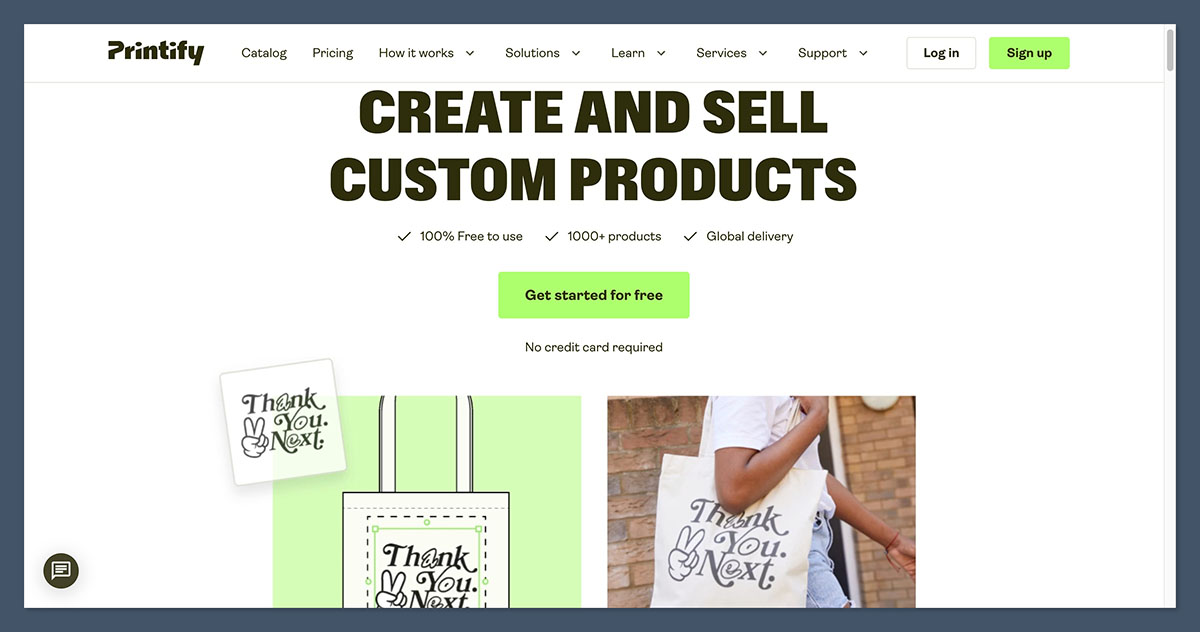
This one’s not even close. If product variety is important to your print-on-demand business, there’s a clear winner.
Printify
Printify offers one of the largest POD catalogs in the market, with over 850 products and counting. The selection goes far beyond standard t-shirts and mugs, giving you full creative freedom to test different niches, cater to various demographics, and build collections that actually stand out.
Here’s what you can sell through Printify:
- Apparel: T-shirts, hoodies, leggings, tank tops, sports bras
- Accessories: Tote bags, phone cases, backpacks, socks
- Home décor: Wall art, pillows, blankets, candles
- Drinkware: Mugs, tumblers, water bottles, shot glasses
- Novelty items: Stickers, clocks, journals, pet gear, jewellery
Each product typically comes with multiple print provider options. You can choose the one that fits your needs best — whether that’s the lowest cost, fastest shipping, or highest print quality.
Printify also gives you flexibility in building full product ecosystems. For example, you could launch a fitness apparel line that includes performance tees, leggings, duffle bags, and shaker bottles — all from one dashboard.
That kind of breadth lets you cater to seasonal campaigns, brand aesthetics, and upsell strategies.
| Product Category | Example Products | Bundling Potential |
|---|---|---|
| Apparel | T-shirts, hoodies, leggings | High |
| Accessories | Tote bags, phone cases, hats | High |
| Home & Lifestyle | Wall art, pillows, candles | Medium |
| Drinkware | Mugs, tumblers, pint glasses | High |
| Pet Products | Pet mats, collars, bandanas | Niche but growing |
Printify allows you to test a huge range of niches. You can build full product collections, experiment with bundles, and serve different customer avatars without switching platforms.
Amazon Merch on Demand
Amazon Merch keeps things extremely lean. It’s focused almost entirely on apparel and a small selection of accessories. While that makes the platform easier to manage, it limits creative potential and growth opportunities.
What Amazon Merch currently offers:
- Apparel: Standard t-shirts, long sleeve tees, sweatshirts, hoodies, tank tops
- Accessories: PopSockets, tote bags, phone cases (limited models)
- No ability to bundle products or cross-sell within listings
- Very little control over brand tags, garment style, or color availability
All products are supplied by Amazon-approved manufacturers. You can’t choose or change the garment style, brand, or supplier. This simplifies fulfillment but leaves very little flexibility if your designs need to live on more premium or specialized products.
For a designer just looking to monetize t-shirt art, it works fine. But if you want to launch a more diverse or themed store — such as eco-lifestyle, pet fashion, or wellness merch — you’ll hit limitations quickly.
| Category | Product Range | Provider Options | Customization |
|---|---|---|---|
| Apparel | Basic only | Amazon only | Very limited |
| Accessories | Few (PopSockets, tote bags) | None | Very limited |
| New Product Releases | Infrequent | Controlled by Amazon | None |
It’s solid for apparel, but you’re stuck within Amazon’s strict catalog. Great if you want simplicity, but not ideal for creative brand expansion.
The Verdict:
If product range matters to your business, Printify wins this category. With hundreds of SKUs and multiple supplier options, it’s designed for experimentation, niche testing, and brand building. You can grow horizontally and vertically without platform switching.
Amazon’s offer is too narrow for serious POD sellers. It works for basic merch, but if you want flexibility or variety, you’ll quickly outgrow it.
Best for Uploading Designs and Managing Products: Depends on Your Needs
Here’s where usability comes into play. I’ve used both platforms extensively, and the workflow feels very different.
Printify
Printify offers a more advanced product management system that gives you flexibility and control, but it comes with a steeper setup and management curve. This platform is geared toward sellers who plan to grow their store across multiple sales channels.
What you get with Printify:
- Upload designs to a built-in mockup generator
- Syncs with Shopify, Etsy, WooCommerce, and other ecommerce platforms
- Can push designs to multiple storefronts at once
- Full control over product titles, descriptions, and image mockups
- Bulk duplication, editing, and cloning features
Once your design is uploaded, you can generate high-quality product previews for each variant and push them to your connected stores. It’s efficient once you’re set up, but requires some attention to detail.
However, Printify does put the operational responsibility in your hands:
- You must monitor integration syncing (especially if you’re using Etsy)
- You handle order issues, delivery delays, and customer complaints
- You’ll need to review settings to ensure SKU alignment across stores
It’s a complete system but takes time to set up properly. You’ll spend more time managing your storefront and integrations, but in return, you control how your brand is presented across platforms.
| Feature | Printify |
|---|---|
| Design Upload | Mockup generator with live preview |
| Store Integrations | Shopify, Etsy, TikTok, WooCommerce |
| Product Publishing | Sync to multiple stores |
| Control over Listings | Titles, descriptions, pricing, images |
| Support Responsibility | You manage customer orders & issues |
Amazon Merch on Demand
Amazon Merch is the easier platform when it comes to uploading and listing. The dashboard is clean and simple. It’s designed for efficiency, which makes it perfect for creators who want to list quickly without dealing with logistics or third-party integrations.
Here’s how it works:
- Upload your design file
- Write a title, add bullet points, and choose product types and colors
- Amazon reviews the listing (usually within 24–48 hours)
- Set your royalty based on Amazon’s fixed pricing, and publish (if approved)
The entire process is centralized and requires minimal manual work beyond the listing form. There are no mockup tools or image previews beyond a simple product outline. Still, it’s streamlined.
That said, this simplicity has its limits:
- Amazon can reject your design for vague reasons
- You don’t control your storefront layout, mockups, or product arrangement
- Edits and updates are subject to Amazon’s review system, which can delay listing improvements
You’re operating in Amazon’s ecosystem. That makes life easier day to day, but harder if you want flexibility.
| Feature | Amazon Merch |
|---|---|
| Design Upload | Manual form with file upload |
| Storefront Integrations | None (hosted on Amazon) |
| Product Publishing | Reviewed by Amazon |
| Control over Listings | Limited to title, bullets, price |
| Support Responsibility | Amazon handles customer orders |
It’s faster and more automated. But the trade-off is control. Amazon can remove your listing for minor violations, and edits can take days.
The Verdict:
Want simplicity? Amazon wins. The process is quicker, cleaner, and perfect if you’re just trying to get designs online without dealing with the logistics.
Want control? Printify takes it. You manage your own store, set up your own listings, and maintain full creative direction. That means more work upfront, but more flexibility long term.
Choose based on your comfort with ecommerce workflows — and how much control you want over how your products appear and perform.
Best for Branding and Store Ownership: Printify All the Way
If you want to build a long-term brand, there’s no comparison. One platform gives you ownership of your business, while the other keeps you in the background.
Printify
Printify is built for sellers who want to run a real business — not just upload designs and hope for sales. When you use Printify with your own store (like Shopify or Etsy), you control the customer journey from start to finish.
Key branding benefits with Printify:
- You own the customer relationship
- Add branding inserts, custom packing slips, and logo placements (depending on provider)
- Collect emails and build a subscriber list
- Run retargeting ads and email campaigns for returning customers
- Customize storefront layout, collections, and content
With most top print providers on Printify, you can request white-label fulfilment, which means no trace of the production company appears in the packaging. This creates a clean, professional experience for your customers.
You’re also in charge of your storefront’s design and user experience. From homepage banners to cart sequences, everything reflects your brand — not the print on demand platform behind it.
| Feature | Printify |
|---|---|
| Branding Inserts | Available with select providers |
| Custom Packaging | Optional with white-label setup |
| Store Ownership | Full (Shopify, Etsy, etc.) |
| Email Marketing & Retargeting | Yes |
| Customer List Access | Yes |
This is perfect for creators, influencers, or ecommerce store owners who want to scale. Your brand is what customers remember — not the POD platform.
Amazon Merch on Demand
Amazon Merch flips this model completely. You’re working inside the Amazon system, and your listing appears as “Sold by Amazon.” This may help build trust with new buyers, but you give up nearly every aspect of brand control.
Here’s what Amazon Merch doesn’t allow:
- No branding control — you can’t add logos, inserts, or custom labels
- No access to customer data — emails, order history, and buyer profiles belong to Amazon
- No ability to retarget or build a following
- All traffic and customer interactions happen within Amazon’s ecosystem
That means even if someone loves your design, there’s no easy way to bring them back to your brand or offer additional products. Amazon handles support, but it also handles the relationship. You’re essentially a contributor to their marketplace.
| Feature | Amazon Merch |
|---|---|
| Branding Inserts | Not available |
| Custom Packaging | Not available |
| Store Ownership | Amazon controlled |
| Email Marketing & Retargeting | Not allowed |
| Customer List Access | Not allowed |
Great for quick cashflow, not for brand loyalty. It’s a transactional setup designed for convenience — not connection.
The Verdict:
Printify is the better platform if you care about building a brand and audience. You’re in charge of how your products look, how your store runs, and how your customers come back.
Amazon is fine if you’re happy being behind the curtain. It’s low-maintenance and scalable for passive income, but if your goal is to grow a loyal following or create a brand experience, you’ll be held back by the limitations.
Best for Profit Margins: Printify Wins on Flexibility
Margins are a big deal in print on demand, and they vary wildly between platforms. If your goal is to build a profitable, scalable ecommerce business, understanding how each platform handles pricing and profit is essential.
Printify
With Printify, you have complete control over your retail pricing. You select the print provider, which means you can balance cost, quality, and shipping time depending on your strategy.
Whether you’re prioritizing higher margins or faster delivery, you can tailor it based on your goals.
Key margin advantages with Printify:
- Set your own retail price
- Choose between different suppliers based on location and cost
- Offer express or economy shipping depending on your audience
- Keep all profits after the base cost and shipping are deducted
Printify gives you flexibility to price products at market rate or charge premium prices depending on your niche. For example, you could sell a hoodie at $65 in a luxury niche or $35 for a mass-market campaign.
Here’s a quick example:
| Product | Base Cost | Selling Price | Profit |
|---|---|---|---|
| Hoodie | $22.00 | $45.00 | $23.00 |
| Mug | $7.00 | $18.00 | $11.00 |
Using Printify Premium, which costs $24.99/month, you can cut the base price by up to 20 percent depending on the provider. This might not sound like much on a single order, but at scale, it adds up fast.
If you’re running Facebook ads or influencer campaigns, higher margins give you more room to test and stay profitable — especially with rising acquisition costs.
Amazon Merch on Demand
Amazon Merch uses a royalty system. You don’t choose the base cost — Amazon sets it. You only decide how much above that baseline you want to price your product. The gap between those numbers is your royalty.
Here’s what that looks like in practice:
- Royalties are fixed by Amazon’s base pricing
- You set your list price above the minimum threshold
- You can’t adjust fulfillment or shipping options to optimize profit
- Most shirts earn between $2–$5 depending on the price point
Example:
| Product | Base Price (Amazon) | List Price | Royalty |
|---|---|---|---|
| Standard Tee | $13.50 | $19.99 | $3.23 |
| Hoodie | $25.00 | $39.99 | $6.75 |
This model is consistent and easy to manage. But the downside is that you’re stuck with low profit potential per sale. If you want to earn more, your only option is to raise the price — which can impact conversion rates on a competitive marketplace like Amazon.
There’s also no ability to upsell or increase customer lifetime value. Every order stands alone. You can’t bundle, cross-sell, or push add-ons.
The Verdict:
Printify offers more margin potential and lets you optimize pricing at every stage — from product choice to shipping strategy. You control your pricing, promotions, and overall profit structure. It’s ideal for sellers who want to build a high-margin, self-managed business.
Amazon is passive, but you’ll make less per sale. It’s predictable and easy to manage, but the ceiling on your earnings is low. It works well for side income or passive listings, but it’s not ideal if you’re trying to build sustainable profits at scale.
Best for Traffic and Sales: Amazon Wins on Reach
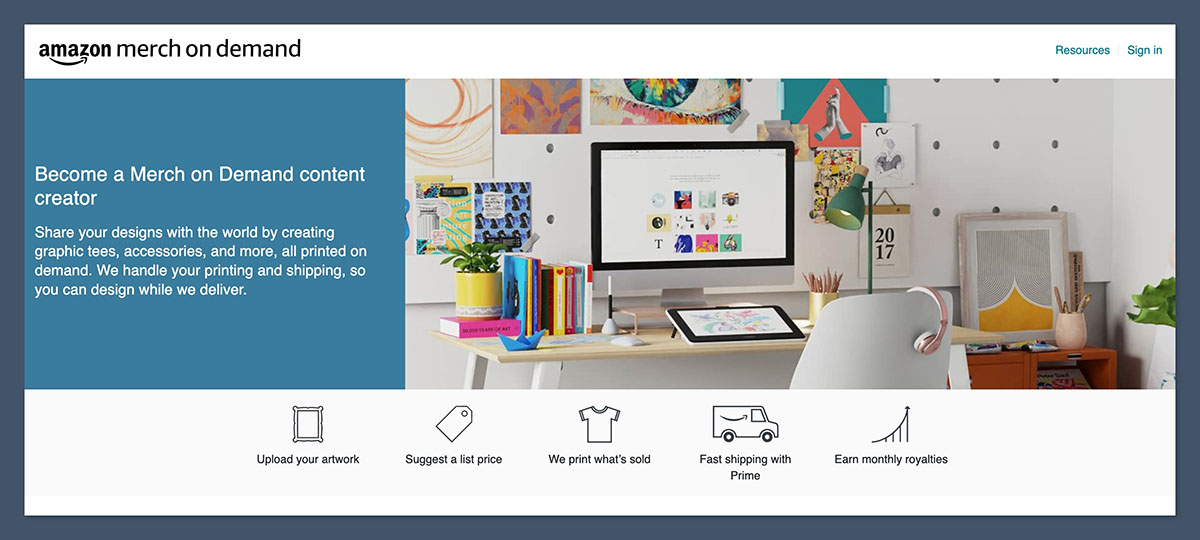
Marketing is a major factor. No matter how good your design is, it won’t sell unless people actually see it. Each platform takes a completely different approach to traffic — and that has a big impact on how you’ll generate sales.
Printify
With Printify, you’re responsible for bringing in every customer. Whether you use a Shopify store, Etsy storefront, or connect with TikTok Shop, the platform itself doesn’t drive any traffic. That means you need to understand digital marketing or be willing to learn.
Traffic sources with Printify include:
- Paid advertising (Meta, Google, TikTok)
- Organic SEO (especially on Shopify or WooCommerce sites)
- Etsy marketplace search traffic (if integrated)
- Influencer marketing and affiliate programs
- Email marketing and retargeting
This setup gives you full ownership of your audience, which is a major advantage over time.
You can build a list, create marketing funnels, and improve customer lifetime value through remarketing campaigns. But you’ll need to invest time and/or budget into making it happen.
Printify works best for sellers who are comfortable running ads, creating content, or hiring help to grow traffic consistently. It’s not plug-and-play — but that also means you’re not sharing your traffic with thousands of other similar listings.
| Printify Traffic Model | Description |
|---|---|
| Self-driven traffic | All marketing is your responsibility |
| Multi-platform integration | Shopify, Etsy, TikTok, Walmart |
| Retargeting & email marketing | Fully allowed and encouraged |
| Traffic ownership | Yes – you control it |
| Discovery without marketing | No – you must actively drive traffic |
It’s an open canvas — but that means you need real marketing strategies.
Amazon Merch on Demand
Amazon Merch is built on one of the biggest traffic engines in the world. Over 300 million active customers visit Amazon each month, and your designs can appear directly in search results for relevant keywords.
Traffic advantages on Amazon:
- Organic discoverability from Amazon search
- Eligibility for Amazon Prime (fast, free shipping)
- Higher trust from customers due to Amazon branding
- Built-in mobile and voice search exposure (Alexa, etc.)
- Seasonal and trend-based spikes without needing marketing
You don’t need to run ads or drive people to a site. If your listing ranks well, it will generate consistent sales. Amazon handles product visibility, promotion on-site, and conversion optimization. But you don’t control who sees your products or how often. Algorithms decide what gets shown.
One limitation: you can’t track or retarget visitors. That means if someone clicks and doesn’t buy, they’re gone. You also can’t collect customer data or follow up later.
| Amazon Merch Traffic Model | Description |
|---|---|
| Built-in traffic | Millions of daily Amazon shoppers |
| Discovery through search | Listings show up in organic results |
| Customer trust | Amazon brand + Prime shipping |
| Retargeting & email marketing | Not possible |
| Traffic ownership | None – Amazon controls everything |
If your design ranks well, you’ll get consistent sales with zero ongoing effort.
The Verdict:
Amazon wins for built-in traffic. You can get sales without doing any external marketing, and the platform handles discovery. It’s perfect if you want low-effort exposure with the potential for steady volume.
Printify gives you more opportunity, but you have to work harder to earn it. It rewards long-term thinking and marketing skills. You own your traffic, and that opens the door for retargeting, email campaigns, and building repeat buyers. It’s a harder start, but potentially more rewarding over time.
Best for Beginners: Amazon Merch for Simplicity
Not everyone wants to manage a full ecommerce store — and if you’re just getting started with print on demand, ease of use matters a lot. Between these two platforms, one is clearly designed with simplicity in mind.
Amazon Merch on Demand
Amazon Merch is the definition of plug-and-play. There’s no storefront to build, no apps to install, and no customer support to manage. Everything — from printing to shipping and returns — is handled directly by Amazon.
Why Amazon is beginner-friendly:
- No storefront setup or domain needed
- No customer service responsibilities
- No integration with third-party tools or payment gateways
- Just upload your artwork, add basic product info, and go live (after approval)
- Minimal technical experience required
This setup is ideal for artists, illustrators, or side hustlers who want to monetize their designs with very little effort. Once your design is approved and listed, sales can happen without ongoing involvement.
You also avoid the usual learning curve that comes with ecommerce platforms. There are no website themes, shipping settings, or payment providers to configure. It’s a true hands-off model.
| Feature | Amazon Merch |
|---|---|
| Storefront setup | None |
| Customer service | Handled by Amazon |
| Fulfillment and returns | Handled by Amazon |
| Learning curve | Very low |
| Ongoing maintenance | Minimal |
If you’re brand new to ecommerce and want to earn a little passive income from your designs, this is your easiest path.
Printify
Printify gives you more freedom, but it also expects more from the seller. You need to connect the platform to an online storefront like Shopify, Etsy, or WooCommerce, and that means some upfront work.
What beginners should expect with Printify:
- Requires choosing and setting up an ecommerce platform
- You’ll need to create product listings and connect payment methods
- Manage customer service (returns, order issues, delivery questions)
- Integrate marketing tools like email or analytics if needed
- Understand fulfillment workflows and syncing with your store
There’s definitely a learning curve, especially if this is your first ecommerce business. But that learning pays off later when you’re able to manage your customer base, optimize your profits, and grow a standalone brand.
The platform gives you freedom to create your own pricing, design flow, marketing setup, and customer journey — but all of that requires hands-on learning.
| Feature | Printify |
|---|---|
| Storefront setup | Required (Shopify, Etsy, etc.) |
| Customer service | Managed by you or your store |
| Fulfillment and returns | Through chosen print providers |
| Learning curve | Moderate to high |
| Ongoing maintenance | Moderate, depending on platform |
The Verdict:
Amazon Merch is the clear winner for beginners who want simplicity, minimal setup, and a passive income stream. It removes most of the operational burden, letting you focus on uploading quality designs.
Printify has a steeper learning curve but gives more long-term potential. Once you get through the initial setup, you gain far more control over your business, branding, and profits. It’s a better choice for sellers willing to invest time in building a real store.
Customer Service and Support: Printify Leads on Responsiveness
Customer support can be critical — especially when something goes wrong with an order, delivery, or print provider. Whether you’re dealing with delays, damaged items, or syncing issues, having access to responsive support can save your reputation and your revenue.
Printify
Printify gives you multiple support channels that are easy to access and generally fast to respond. Whether you’re on the free or premium plan, you can expect consistent service.
Here’s what support looks like with Printify:
- Help Center with step-by-step guides and FAQs
- Email support for general inquiries
- Live chat available during business hours
- Option to contact individual print providers directly if needed
Live chat tends to be the quickest way to get help, especially for time-sensitive issues like fulfillment delays or integration bugs. In my experience, response times are usually within a few hours, even on the free plan. If you’re on Printify Premium, support may be slightly more prioritized.
Another big plus: because you’re managing your own storefront (on Shopify, Etsy, or similar), you need support that can address both tech and order-related questions. Printify’s system does both fairly well.
| Support Feature | Printify |
|---|---|
| Help Center | Yes (searchable knowledge base) |
| Email Support | Yes |
| Live Chat | Yes (business hours) |
| Provider Communication | Yes – direct messaging available |
| Response Speed | Fast (even on free plan) |
You’re still responsible for your end customer, so you’ll need fast help if things go wrong. Printify is built for sellers who want answers quickly to maintain service quality.
Amazon Merch on Demand
Amazon’s support system is much more generic — and that’s a problem when your issue is specific to Merch. Because it’s part of Amazon’s broader seller support infrastructure, getting direct help can be slow, unclear, or frustrating.
Here’s what to expect:
- No live chat specific to Merch on Demand
- No phone support or dedicated seller hotline
- Support tickets are handled through the standard Amazon portal
- Canned responses are common, especially for account or listing issues
- Appeals and escalations often take days or weeks
While Amazon handles customer-facing support (like returns or shipping issues), it offers very little help when you, the seller, run into platform-related problems. Whether your listing is rejected or your royalties seem off, it’s often hard to get a straight answer.
| Support Feature | Amazon Merch |
|---|---|
| Help Center | Yes (generic Amazon support) |
| Email Support | Limited ticketing system |
| Live Chat | No |
| Direct Contact | No direct line for Merch issues |
| Response Speed | Slow, often templated replies |
If you’re running into a technical or account problem, you’re often on your own or stuck waiting for an unclear resolution.
The Verdict:
Printify wins for hands-on support. You get live help, detailed documentation, and the ability to message print providers directly. That makes it easier to solve problems quickly and maintain customer satisfaction.
Amazon Merch’s system is slow and impersonal. It’s designed for scale, not service. If your goal is to feel supported while building your POD business, Printify delivers a much more responsive experience.
Final Verdict: Choose Based on Your Goals
At the end of the day, the right platform depends on what you’re trying to build. Both Printify and Amazon Merch on Demand have clear strengths, but they serve different types of sellers. Your goals will determine which is the better fit.
Choose Printify if you want to build a real business
Printify is built for sellers who want ownership — of the brand, the traffic, the customer list, and the profit margins. It’s the better platform if you’re ready to put in the effort to grow something long-term.
Choose Printify if you want:
- To build a real ecommerce brand that customers remember
- Full control over pricing, product selection, and custom branding
- To sell across multiple platforms like Shopify, Etsy, TikTok Shop, or WooCommerce
- Flexibility in choosing print providers and shipping options
- Long-term scalability and the ability to test and expand into new niches
- The tools and infrastructure to create repeat customers and higher lifetime value
Printify requires more setup and hands-on management, but the trade-off is full control and higher earning potential. You’re not just selling designs — you’re building a brand.
Choose Amazon Merch if you want simplicity and passive income
Amazon Merch is ideal for creators who want a low-maintenance side hustle. It’s streamlined, predictable, and easy to use — especially if you don’t want to deal with running a storefront or handling support.
Choose Amazon Merch if you want:
- A hands-off, passive income channel that doesn’t require storefront setup
- Easy uploads with no technical setup or product management
- Access to Amazon’s massive built-in traffic and Prime shipping
- A simple way to test designs and earn royalties without upfront investment
- To avoid handling customer support, logistics, or fulfilment
You won’t get branding, customer data, or advanced control — but you also won’t need to worry about shipping labels, order status updates, or answering buyer messages.
Platform Summary Comparison
| Feature | Printify | Amazon Merch on Demand |
|---|---|---|
| Brand Ownership | Full | None |
| Storefront Required | Yes (Shopify, Etsy, etc.) | No |
| Customer Relationship | Direct | Owned by Amazon |
| Fulfillment Responsibility | Via print providers | Handled by Amazon |
| Profit Potential | High (custom pricing) | Moderate (fixed royalties) |
| Setup & Management | Higher involvement | Minimal effort |
| Marketing Required | Yes | No (organic traffic available) |
| Best For | Brand builders, ecommerce pros | Designers, side hustlers |
If you’re aiming to grow a long-term business with flexibility and higher profits, Printify is the right tool.
If you’re looking for a low-effort, entry-level income stream without needing to learn ecommerce systems, Amazon Merch is the simpler place to start.
Both platforms work — it just depends what kind of business you want to build.