HubSpot is the best choice for ecommerce businesses in 2026, it syncs natively with Shopify and WooCommerce, unifies your customer data, and automates marketing, sales, and support in one platform.
When you’re running an ecommerce business, even one based on a simple model (hello dropshipping, and print on demand vendors), managing customers is always a serious challenge. You need to earn their loyalty if you’re going to keep them choosing you over the millions of other companies out there. That means offering great service, personalized deals, and value competitors can’t match.
A good CRM (customer relationship management) platform can help you do all that, but only if you choose one that actually works with your business, rather than just giving you more work.
As someone who’s constantly on the hunt for the tools that really help ecommerce leaders thrive, I’ve tested my fair share of platforms that claim to be the best CRM for ecommerce. You’ve probably seen me talk about a lot of them before.
Overall, I still think HubSpot CRM deserves the top spot, no matter what kind of ecommerce brand you’re building. But if you’re wondering why that is, this list will give you a closer look at all of the leading CRM systems I’ve tested, and what makes them recommendation worthy.
The Best Ecommerce CRM: Your Options Side by Side
| CRM Tool | Best For / Ideal User | Standout Features | Starter Pricing |
|---|---|---|---|
| HubSpot | Ecommerce brands of all sizes — from new dropshippers to scaling stores | Native integrations with Shopify, WooCommerce, etc.; unified contact/order/cart history; powerful marketing automation & AI-powered segmentation; built-in sales + support tools | Free forever plan |
| Pipedrive | Small online businesses or boutiques focused heavily on sales | Clean, drag-and-drop sales pipelines; easy lead/deal tracking; simple UI; good for small sales teams | From $14 per month |
| Zoho CRM | Businesses that like deep customization and owning the full workflow | Flexible modules, automation, multichannel communications (email, chat, social), inventory/order tracking, strong custom-fields and analytics, AI-powered assistants | From $14 per month |
| Freshworks (Freshsales / CRM Suite) | Small-to-medium ecommerce brands wanting an affordable “all-in-one” package | Shared inbox, email marketing, chat/ticket support, basic marketing & sales workflows, easier onboarding for small teams | Free plan available for small teams; paid plans start at $9 per month |
| Monday.com CRM | Visual, collaboration-heavy teams | Highly visual boards, flexible customisation, new AI summary tools, built-in quoting | Starts around $10–12/user/month |
| Zendesk Sell | Support-driven ecommerce stores that already use Zendesk | Seamless connection to Zendesk Support, clean interface, strong customer visibility, good for service-heavy operations | Starts around $19/user/month |
| Less Annoying CRM | Solopreneurs or micro-stores wanting simplicity & minimal learning curve | Core contact management, lead tracking, task scheduling, custom fields, straightforward UX, less clutter, minimal setup | Basic plans around $15/user/month |
The Best Ecommerce CRMs (and How I Picked Them)
You’ll notice I’ve kept this list of “top picks” deliberately small; a little smaller than most of the other articles out there comparing CRM tools. Honestly, that’s just because I know most ecommerce companies don’t have time to be hit with choice paralysis when they’re buying new tech.
Still, there were real reasons behind my choices. When I was reviewing these tools, I was mostly looking at:
- How fast I can get set up: If a CRM needs endless tutorials, your team won’t have the time or the patience to use it.
- Whether the integrations actually sync properly: Shopify → CRM → email → support → back again. You need that to work.
- How good the automation is: Because ecommerce is 50% repetitive tasks, and you need to streamline at least some of them.
- If the data tells me something useful: Not just “look, contacts!” but “here’s what your customers are actually doing.”
- Price creep: Some CRMs lure you in with £10/month, then suddenly you’re paying the price of a used car.
- Whether it feels like a tool I’d want to open every day: This one’s underrated. Some CRMs just feel clunky.
So, with that explainer out of the way, let’s get into the meat of this comparison.
1. HubSpot: The Best Ecommerce CRM
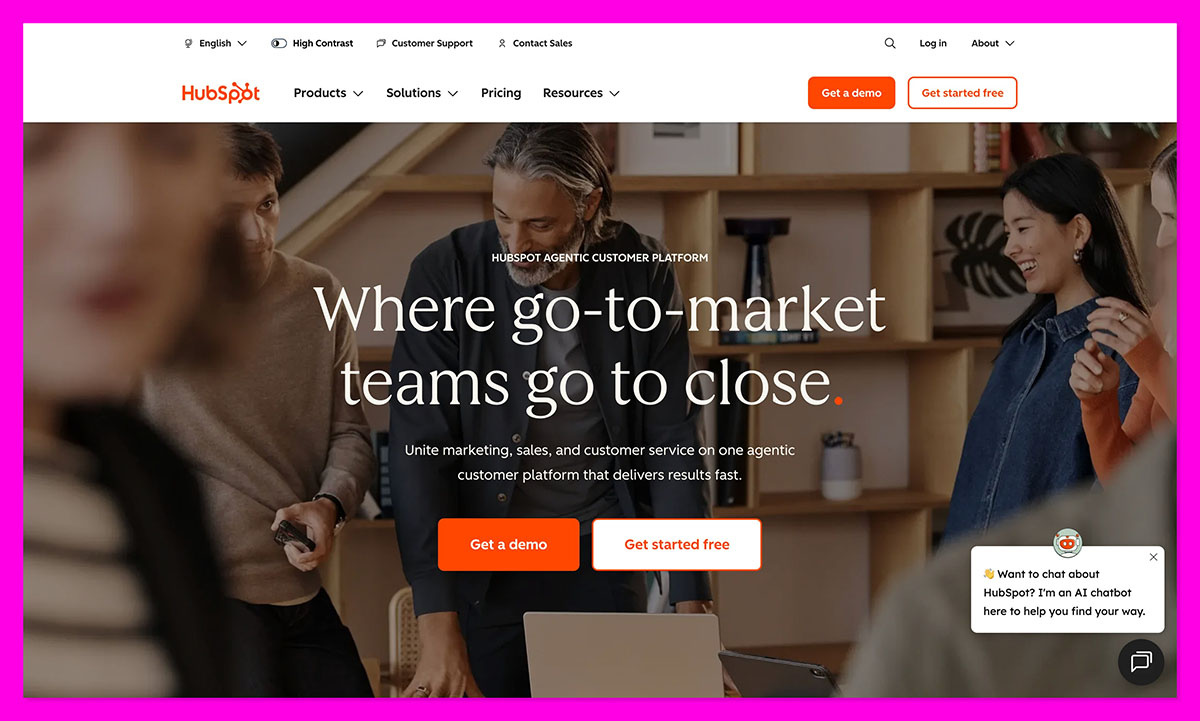
Every time a new company asks me to recommend a CRM, HubSpot is the first one to jump to mind. It’s the only platform I’ve used where things just fall into place. Connect it to Shopify or WooCommerce, and suddenly your entire customer story appears in one clean timeline.
You’ll see who browsed, who bailed, who bought, which emails they opened, which cart they abandoned, and more, all in one spot. It kind of makes relationship marketing feel fun.
Plus, the AI and automation features from HubSpot are genuinely incredible. It’s not just abandoned cart flows. You can create entire agents that handle customer support, send out marketing messages, rewrite your campaigns, and update your data.
Pricing: Free for beginners, with entry-level tiers starting at $20 per month per seat for the annual plan. Once you grow, it does start to feel a bit more expensive, but you’ll still spend less than you would if you were cobbling together sales, marketing, and service tools.
Pros
- Everything you need lives in one place
- Ecommerce data syncs properly (rare)
- Automation feels effortless
- AI tools that are actually useful
- Free plan is genuinely good
Cons
- Price jumps at the higher tiers
- Might feel like overkill for very tiny stores
2. Pipedrive: Best for Small Online Businesses
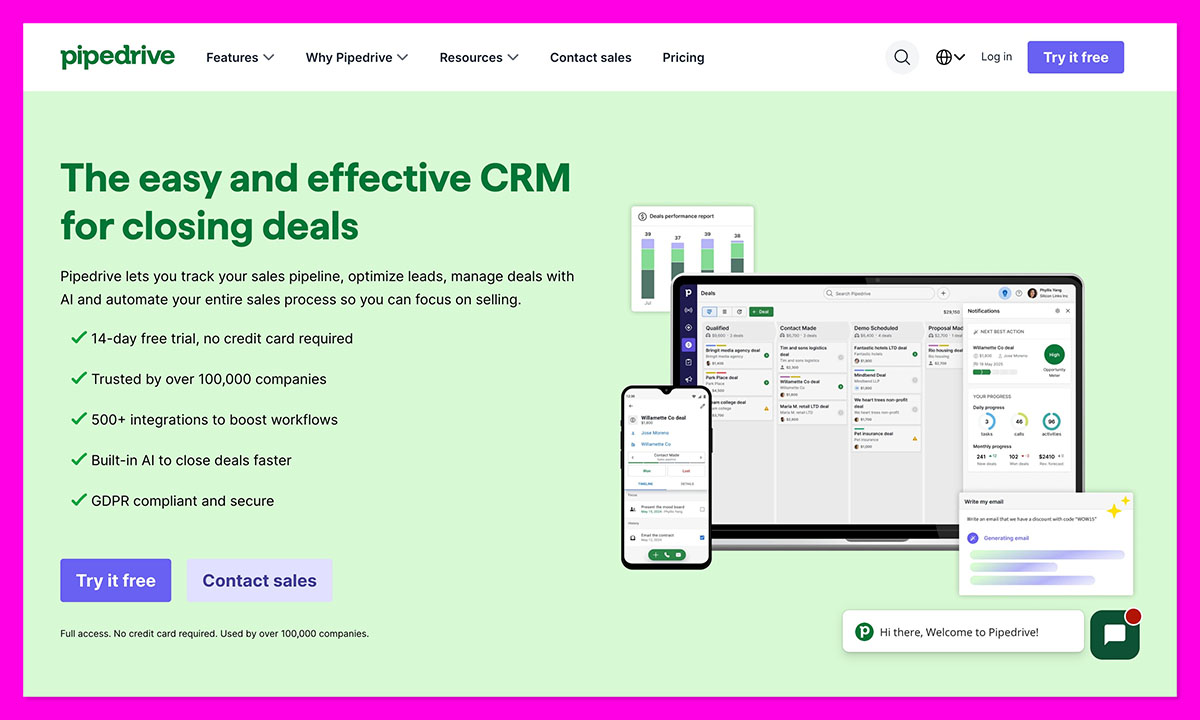
Now, I might be HubSpot’s biggest fan, but I still like Pipedrive for a lot of reasons – the main one is that it feels so easy to use. You don’t have to worry about hours of setup and training here. You connect an ecommerce store, and start building pipelines in minutes.
Drag a deal forward, drop it where it belongs, and instantly see what’s stuck, what’s hot, and what you’ve ignored for way too long. Notably, it is built mainly for sales teams, rather than ecommerce companies that want to automate ecommerce journeys end-to-end.
Still, for smaller shops or service-heavy ecommerce sellers, this is the CRM that keeps you organized without eating your schedule. It’s simple, lightweight, and affordable.
Pricing: Plans start at around $14/user/month for the basic tier, and climb as you add more automation and insights.
Pros
- Very clean, visual sales pipeline
- Great reminders and follow-ups
- Nice mobile app
- Easy onboarding for small teams
Cons
- Limited marketing and support features
- Not ideal if you want heavy automation
- Usually needs extra tools to round it out
3. Zoho CRM: Best for Sellers Who Love Customizing Everything
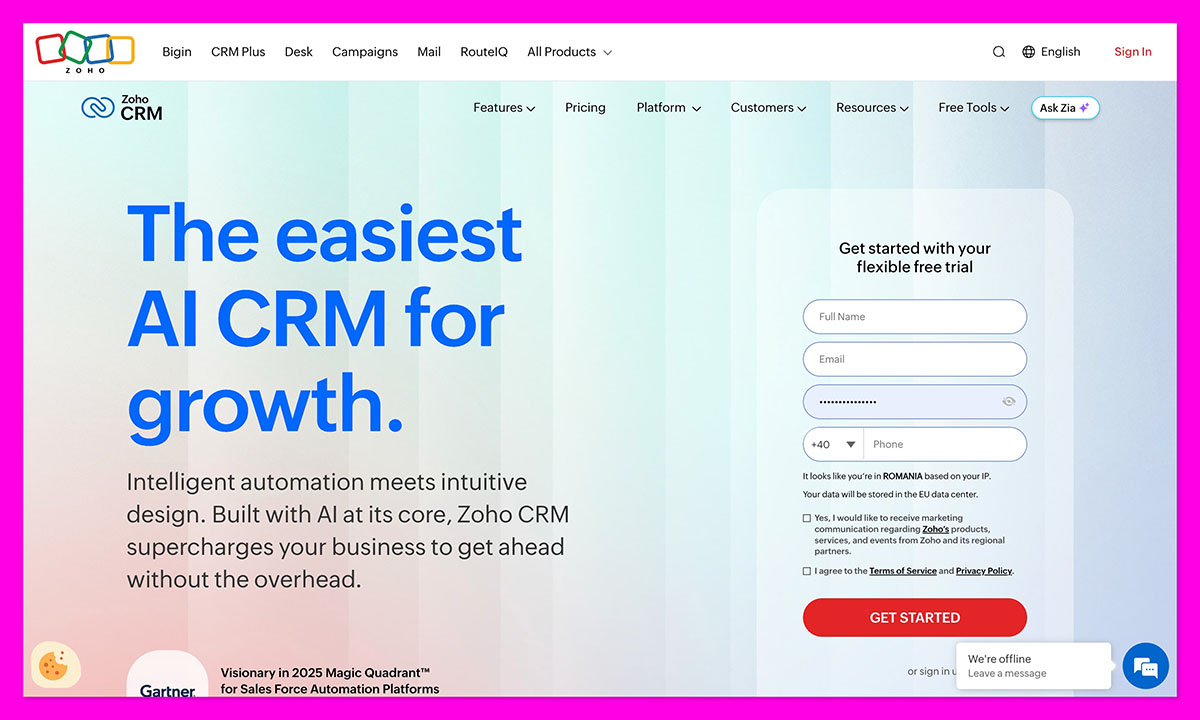
Compared to most ecommerce CRMs, Zoho feels a lot like it was made for “creative” people who like designing things that fit their terms. It’s deceptively simple at first glance, but give it an hour and you’ll find yourself knee-deep in custom dashboards, automation rules, inventory options, and more settings than you’ll ever admit to using.
For ecommerce, Zoho easily connects sales, inventory tracking, multi-channel support, and even marketing. It’s not as slick as HubSpot, and you do need a bit of patience to set it up properly, but once everything’s configured, Zoho can run some seriously advanced workflows.
I find it especially useful for ecommerce stores with unusual processes (print on demand businesses are a good example), multi-product pipelines, or brands that want total control over data structure.
Pricing: Starts at about $14/user/month, with higher tiers still staying reasonably priced even as you scale.
Pros
- Extremely customisable
- Strong multi-channel communication
- Built-in inventory/order tools
- Great feature-to-price ratio
Cons
- Setup can be time-consuming
- Interface feels outdated in places
- Needs tinkering to get the most out of it
4. Freshworks: Best Beginner All-in-One CRM
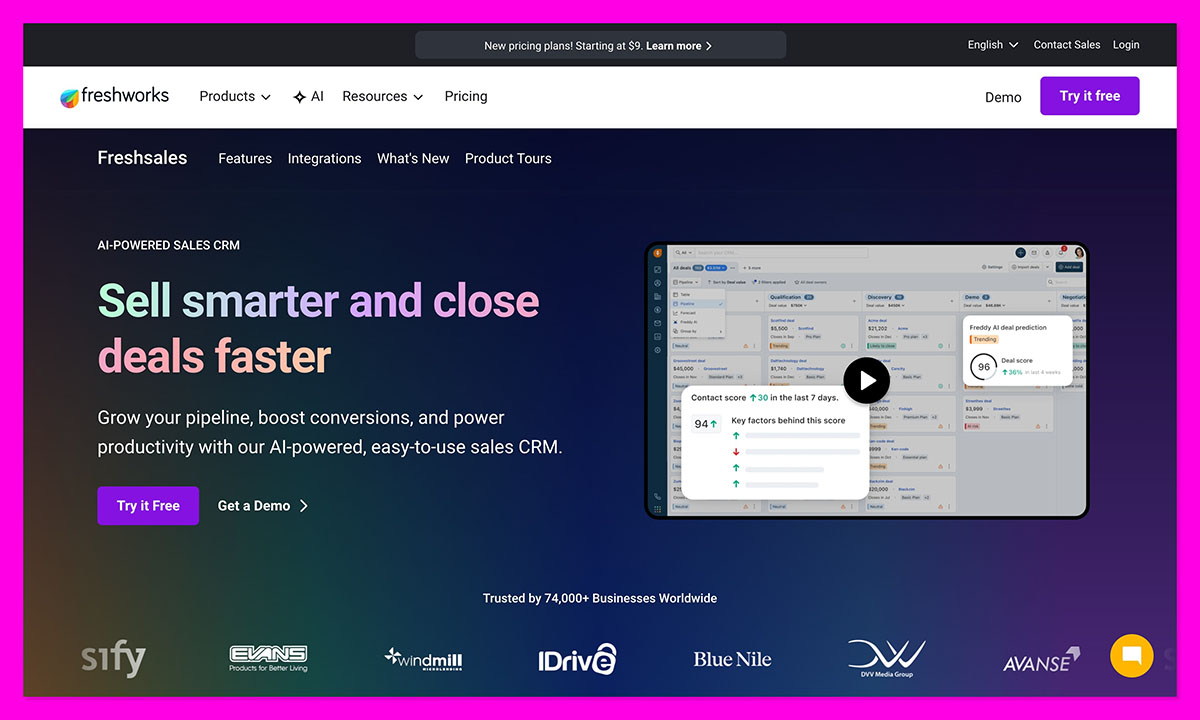
Freshworks is like the taster version of HubSpot in some ways. Just like HubSpot, it really does do a great job of tying everything together. You get email marketing, a shared inbox, chat, ticketing, sales pipelines, and even some AI tools, all without needing a week to learn the system.
The support features are the strongest part. If your store gets a steady stream of customer questions (returns, sizing, “where’s my order?”), Freshworks keeps conversations from slipping through the cracks. Tickets route cleanly, replies stay organized, and your team doesn’t need to jump between five apps just to solve a simple issue.
Where it falls short is automation depth. It’s good for basic workflows, but if you want complex ecommerce journeys, HubSpot leaves it in the dust.
Pricing: Free plan available; paid plans start at around $9/user/month.
Pros
- Very beginner-friendly
- Solid support & ticketing tools
- Simple email marketing + segmentation
- Clean, intuitive interface
Cons
- Limited automation compared to bigger CRMs
- Ecommerce integrations aren’t very deep
- May feel restrictive as you scale
5. Monday.com CRM: Best for Visual, Collaborative Teams
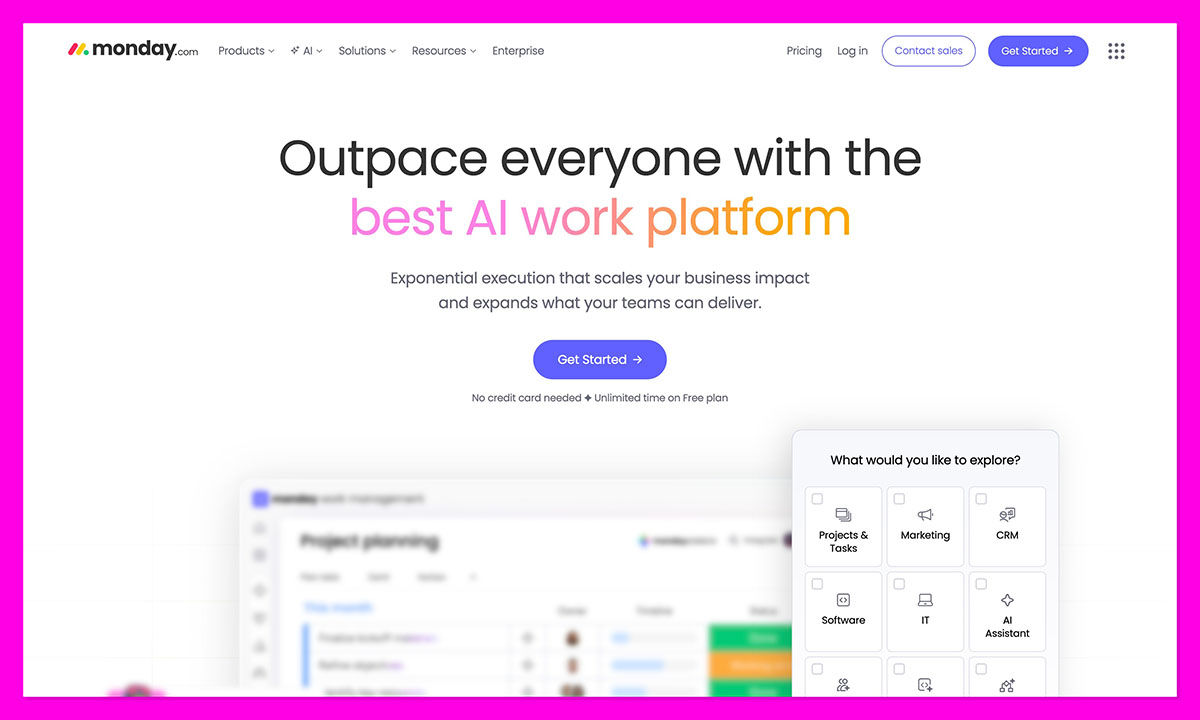
I use Monday.com for project management on a daily basis, so I can see how easily businesses would probably adapt to using it for customer relationships too. The CRM is wonderfully visual, with boards, colored tags, groups, and timelines. If your team works best when they have everything laid out in front of them, Monday.com is great.
Connected to your Shopify store, it gives you a dashboard for most of the business at once. You can see sales stages, fulfilment progress, support issues, and supplier timelines. You can customize boards endlessly too, which is either amazing or dangerous depending on how much your team likes to tweak things.
The recent updates (especially the AI summaries and built-in quoting tools) make it feel much more like a real CRM rather than “project management pretending.” But ecommerce integrations still aren’t as deep or as polished as they are from HubSpot or Zoho.
Pricing: Plans start around $10–12/user/month, depending on the tier.
Pros
- Incredibly visual and easy to customise
- Great for teams working collaboratively
- Frequent updates and improvements
- Works well as a central dashboard
Cons
- Limited ecommerce-specific automation
- Some integrations need manual setup
- Can be too flexible (teams over-build boards)
6. Zendesk Sell: Best If Support Drives Your Sales
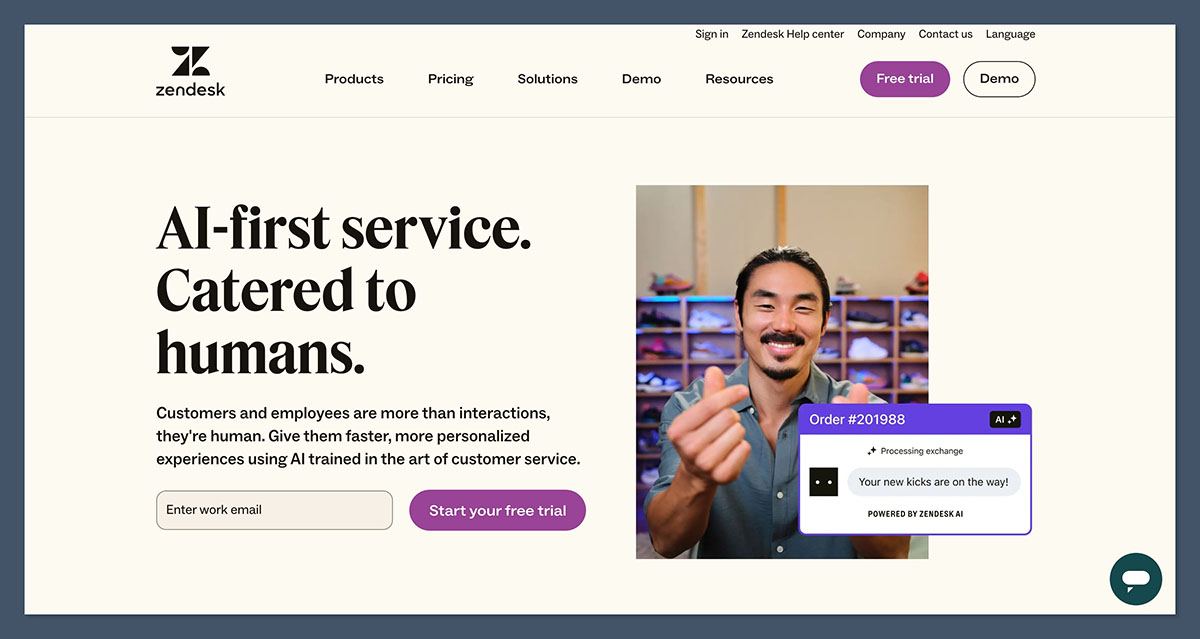
Zendesk Sell is a funny one. On its own, it’s a perfectly decent sales CRM with a clean interface, simple pipelines, and easy to track leads. Honestly, though, I think it really only makes the most sense if you also use Zendesk for support.
When you combine the two, you get something closer to what you’d expect from HubSpot, with a full customer history in one place. That’s great if you’re a company dealing with a bunch of post-purchase issues, like warranty claims, returns, or sizing questions.
Where it struggles is ecommerce automation and marketing. This isn’t the tool you pick for abandoned cart flows or sophisticated segmentation.
Pricing: Plans start at around $19/user/month, with higher tiers adding more automation and analytics.
Pros
- Amazing if you already use Zendesk Support
- Clean, lightweight CRM
- Full visibility into each customer’s story
- Great for service-heavy ecommerce brands
Cons
- Weak ecommerce integrations
- Limited marketing automation
- Pricey for smaller stores without a support-heavy model
7. Less Annoying CRM: Best for Simplicity and Affordability
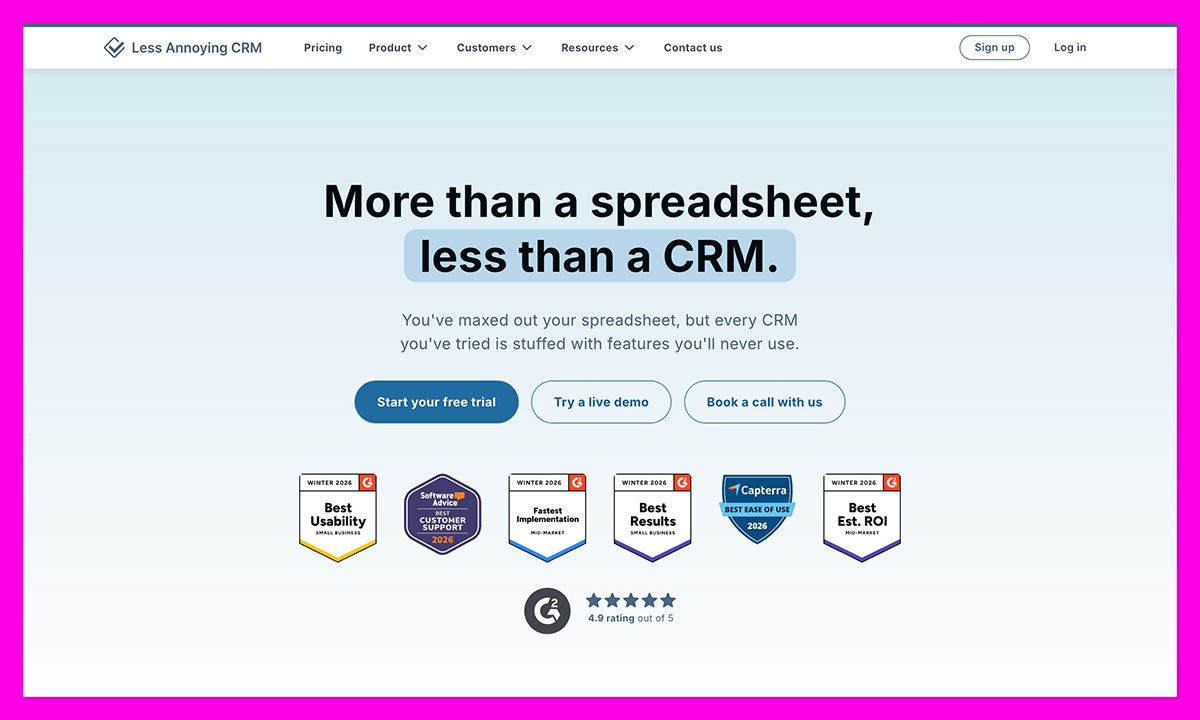
I’ll be honest, the reason I ended up testing “Less Annoying CRM” in the first place was mostly that I loved the branding. CRMs can be annoying, and it’s nice to see a company claiming to strip away all of the tricky parts. I really do love this platform, particularly for tiny teams or solo sellers.
Setting up a sales pipeline takes minutes. Custom fields are easy to add. And if you just want a place where your team can see who talked to who (and about what), this tool nails it. It’s also one of the most affordable CRMs that doesn’t feel cheap.
The downside is that it’s VERY basic. There’s no built-in email marketing, no deep ecommerce integration, no automation engine that’s going to save your abandoned carts. If you need those things, you’ll be bolting on extra tools.
Pricing: A flat $15/user/month, no tiers, no nonsense.
Pros
- Extremely simple and lightweight
- Ideal for small teams
- Clean interface
- Very affordable
Cons
- No built-in email marketing
- Limited automation
- Basic integrations compared to bigger platforms
Why HubSpot Is Still the Best Ecommerce CRM
You’ve probably noticed that I’ve said great things about all of the CRMs on this list, and that’s because they’re all excellent in their own way. Pipedrive is great for keeping sales teams organized, Freshworks and Monday.com are super user-friendly.
Zendesk Sell is brilliant for support-heavy teams, and Zoho gives you tinkering capacity. Even Less Annoying CRM stands out if you’re just looking for something simple above all else.
HubSpot, though, still takes the crown. It’s the only platform that brings everything together in a way that makes sense for ecommerce companies today. It’s also the only one that scales seamlessly with you as you grow, giving you more freedom to experiment when you want it most.
Most CRMs eventually make you feel like you’ve outgrown them. HubSpot does the opposite, it grows with you. You can start with the free CRM from HubSpot, connect your store, and explore its automation and AI tools before deciding if it’s the right fit for your business.
FAQs
What exactly is an ecommerce CRM?
An ecommerce CRM is a system that tracks customer interactions, purchase behavior, and engagement data to help businesses improve retention and sales.’
Do I really need a CRM if I already use Shopify or WooCommerce?
If all you want is order history, you’re fine. But if you want segmentation, automation, customer timelines, follow-up workflows, or actual insights, your ecommerce platform won’t get you there on its own.
Is HubSpot really worth the price for ecommerce stores?
For growing brands, absolutely. The automations alone usually pay for the subscription. Smaller stores can start on the free plan and upgrade later if needed.
What features does HubSpot offer for online stores?
HubSpot covers pretty much every customer-facing function an online store needs in one place. On the marketing side, you get email automation, abandoned cart workflows, segmentation, landing pages, SEO tools, and AI content generation through Breeze AI. On the sales side, there’s predictive lead scoring, buyer intent signals, deal pipelines, and the Prospecting Agent.
How much does HubSpot cost for ecommerce businesses?
HubSpot’s pricing scales with your store. The free CRM plan covers contact management, basic email marketing, forms, live chat, and Shopify or WooCommerce sync, which is enough for many smaller stores to get real value without paying anything. The Starter Customer Platform starts at $15 per seat per month (annual) or $20 per seat per month (monthly) and unlocks removed HubSpot branding, deeper automation, and more contact capacity.