Most students dump the career-fair haul in the nearest bin before they reach the parking lot. Yet a single branded hoodie racks up 7,856 brand impressions across its life, the highest of any promotional product category (ASI). That gap is the whole game, and picking the right company swag ideas for college students is what closes it.
The stakes cut both ways. 72% of people say a brand’s reputation is reflected in the quality of the promo items they receive, and 82% develop a more positive impression after receiving a promotional item. Cheap swag does not just get tossed. It actively damages your employer brand.
Here is the part recruiters miss. Gen Z has retail-quality expectations, and 46% call this stuff “merch,” not “promo.” A flimsy pen tells them your budget for people is flimsy too.
This list ranks 15 swag ideas by real impact: lifetime impressions, repeat use, and genuine Gen Z appeal. Each pick includes a current price range and the best use case, whether you are staffing a campus recruiting table or building an intern welcome kit. The hoodie is number one because nothing else combines daily wear, emotional pull, and category-leading impressions.
1. Hoodie: The Ultimate College Swag Crowd-Pleaser
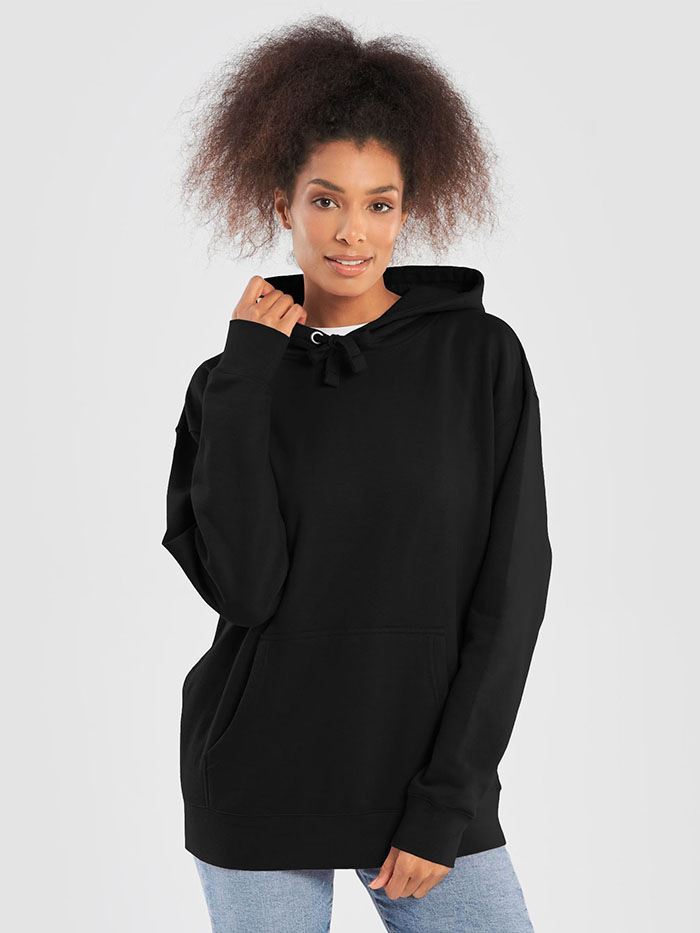
Custom hoodie from Fourthwall
If you buy one premium swag item this year, make it a hoodie. Nothing else on this list gets worn daily, for years, across every campus setting.
Price: $30-$65/unit finished (quality blank plus print or embroidery, 100 units).Best for: finalist gifts, intern kits, and your highest-engagement career-fair candidates.Impressions: outerwear leads all promotional products at 7,856 lifetime impressions (ASI).
Why it works:
- Students pull it on for dorms, libraries, gyms, and weekend trips over multiple years, so exposure compounds.
- Gen Z ranks apparel their number-one promo category at 63% (PPAI).
- Quality blanks (Comfort Colors, Bella+Canvas, Next Level heavyweight) feel retail, not corporate.
- A tonal or chest-left embroidered logo reads as fashion, which is exactly what gets it worn in public.
One honest warning: a cheap 5.3oz hoodie with a giant front logo gets demoted to a sleep shirt and earns zero public impressions. My direct recommendation is to order accurate size ratios (campus skews M and L) and pick a trending color like dusty sage, terracotta, or bone over bright primaries.
2. Insulated Tumbler or Water Bottle (Owala-Style)
Students already pay $30 to $50 for these at retail, so your logo on one feels like a gift rather than a giveaway. That perceived value is hard to buy anywhere else on this list.
Price: $8 to $15 for mid-tier vacuum-insulated units at 50 plus; $25 to $50 for a branded Owala or Hydro Flask equivalent. OnFourthwall, a 20oz double-walled stainless tumbler is $20.95 and a CamelBak Thrive Flip Straw bottle is $23.45, both with no minimum.
Best for: intern welcome kits, info sessions, and higher-engagement candidates.
Impressions: 3,162 for drinkware (ASI), and 63% of recipients keep promotional items over a year.
Why it works:
- Daily use for morning coffee, the gym, and study sessions creates constant touchpoints.
- It carries a real sustainability signal by replacing single-use cups.
- Owala ranked among the top Gen Z brands in Q1 2026 (Ad Age), so the branded version carries aspirational weight.
- Students photograph and post their bottles, which extends reach for free.
- A recognised brand name is what buys the social post, so spend the extra few dollars when the recipient matters.
The market is saturated and vacuum insulation is non-negotiable. Best for kits and finalists. Skip flimsy single-wall bottles, which disappoint the moment a student picks one up.
3. Quarter-Zip or Fleece: The Fast-Rising Premium Pick
Quarter-zip demand jumped 31% in late 2025, making it the apparel item students actually want right now (Custom Ink). It has quietly displaced the basic pullover as the premium campus piece.
Price: $45 to $85 per unit finished at 50 to 100 units. If a full zip works for your audience, the Independent Trading Co. Fleece Zip Up Hoodie is $35.90 with no minimum.
Best for: finalist gifts and intern-kit hero items, especially STEM and business recruiting.
Impressions: the outerwear category leads at 7,856 (ASI).
Why it works:
- It bridges classroom, gym, and interview contexts in a way a hoodie sometimes cannot.
- Its premium feel signals genuine employer investment at the offer-acceptance moment.
- Sherpa and quarter-zip silhouettes read as retail fashion, not corporate uniform.
- Retro and Y2K-inspired designs are driving campus apparel demand, and the quarter-zip sits right in that trend.
This one is too expensive for a high-volume career-fair table, so reserve it for finalists and interns, and budget 30 plus days for custom embroidery. The verdict: this is your premium apparel upgrade for moments when a hoodie feels a touch too casual.
4. Crewneck Sweatshirt: The Hoodie Alternative That Photographs Better
The crewneck does everything a hoodie does, minus the hood, and it reads cleaner in photos and on camera. For anyone building employer brand content, that matters more than it sounds.
Price: $23.73 base cost for the Cotton Heritage Premium Sweatshirt on Fourthwall, rising to $35.23 for a faded relaxed crew and $40.02 for an organic oversized version.
Best for: intern kits, offer gifts, and any team you plan to photograph.
Impressions: outerwear tier at 7,856 (ASI).
Why it works:
- It sits in the same outerwear tier as the hoodie for lifetime impressions but costs less at most weights.
- Faded and pigment-dyed finishes match the vintage look driving campus apparel right now.
- Organic cotton options give you a credible sustainability claim rather than a vague eco label.
- No hood means no bunched fabric hiding a back print, so the design stays visible.
The trade off is warmth. A crewneck loses to a hoodie on a February walk across campus, so northern schools should still lead with the hood. Quick comparison: the crewneck is the better content piece, the hoodie is the better winter piece.
5. Custom Tote Bag: The Cost-Per-Impression Champion
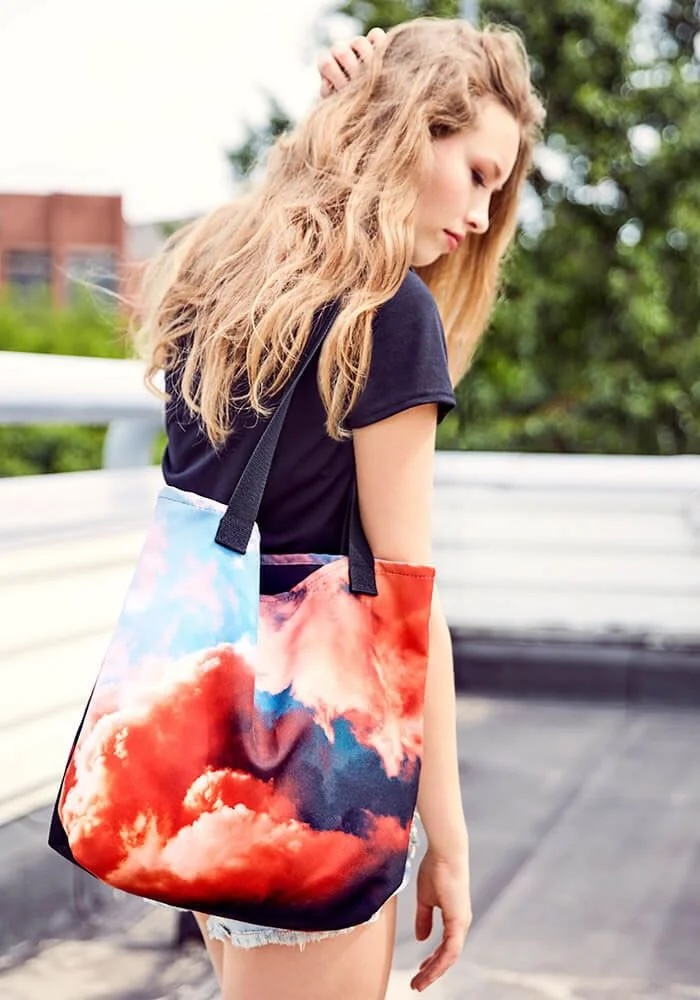
Custom Tote Bag from Printful
A $6 tote earns roughly 5,000 impressions, a cost-per-impression of one-tenth of a cent, the best of any hard good (ASI). No other item stretches a marketing dollar this far.
Price: $1.50-$4.32 standard canvas (100 units); $3.61-$11.60 heavyweight or premium two-tone; organic cotton or rPET adds 20% to 40%.Best for: high-volume career-fair distribution and campus marketing.
Why it works:
- Hand it out at the booth entrance and your logo leads as students carry every competitor’s swag through the hall.
- Gen Z uses canvas totes for textbooks, groceries, and the gym, so it stays in rotation.
- Authentic eco credentials (organic cotton, rPET) match Gen Z values when you can prove them.
- Low cost means every visitor can get one without denting the budget.
Students already own five totes, so the design has to earn its display slot, and cheap non-woven polypropylene contradicts any sustainability message. My direct recommendation is to make it your career-fair greeting item and invest in the graphic, not just a slapped-on logo.
6. Wireless Earbuds: The High-Value Tech Draw
Nothing makes an intern-kit unboxing go viral faster than earbuds. They carry the highest perceived value of any wearable tech giveaway.
Price: $9.95 to $25 for budget branded pairs at 100 units; $30 to $80 for premium or name-brand options.
Best for: finalist gifts, intern kits, and controlled career-fair draws rather than mass giveaway.
Why it works:
- Gen Z lives in earbuds through lectures, podcasts, the gym, and the commute, creating constant brand touchpoints.
- They hold the highest perceived value of any wearable tech item.
- A branded charging case adds a second surface for your logo.
- Salesforce’s Beats-in-kit approach generated millions of TikTok views as organic employer-brand content.
Quality varies enormously by price tier, and budget brands feel inferior next to a student’s AirPods. Best for premium finalist and intern moments. Skip them as a tight-budget career-fair table item, where controlled distribution beats a free-for-all.
7. Beanie, Bucket Hat, or Cap: The Most Underrated Item Here
Headwear racks up 3,380 lifetime impressions and, unlike a tee, one size mostly fits all (ASI). That combination of published reach and near-zero sizing hassle is why it outranks most of the tech further down this list.
Price: $6 to $18 per unit at 100 units depending on style and decoration. On Fourthwall, a cuffed beanie is $13.79, a classic dad hat $15.65, and a structured trucker $18.89, all with no minimum.
Best for: career-fair mid-tier, intern kits, and campus marketing.
Impressions: 3,380 (ASI).
Why it works:
- It is one of the few items here with a published impressions figure and no sizing spreadsheet attached.
- Beanies and bucket hats carry strong Gen Z fashion credibility and gender-neutral appeal.
- Embroidered caps feel premium and hold up over years of wear.
- Headwear gets worn across seasons, so exposure does not stop in April.
Headwear is style-driven, so a dated trucker cap misses and you want current silhouettes like a structured five-panel, a ribbed beanie, or a bucket hat. My direct recommendation is to choose a genuinely current style with tonal embroidery over a loud front logo.
8. Power Bank: The Career-Fair Rescue
A dead phone is the number-one anxiety at a day-long career fair, and your logo can be the fix. That rescue moment ties your brand to relief in a way few items can.
Price: $4.73 to $8.87 for 1,200 to 5,000 mAh units at 25 to 50; $11 to $17 for wireless or fast-charge premium models.
Best for: career fairs, info sessions, and tech-forward audiences.
Why it works:
- It solves an immediate on-site problem for networking and note-taking.
- Perceived value runs high relative to the actual cost.
- Every recharge after the event is another brand impression.
- MagSafe and wireless versions are the premium tier students notice.
Skip token 1,200 mAh units, which signal low investment, and remember that battery items face airline-shipping limits for national programs. Quick comparison: higher perceived value than a tote, but fewer public impressions since it lives inside a bag.
9. Custom Stickers: Near-Zero Cost, Real Reach
The cheapest item on this list can also be the most shared. When a student chooses to display your sticker, that is a genuine brand endorsement.
Price: $0.14 to $0.51 per unit at 100 units covering die-cut, holographic, and pin buttons. On Fourthwall, kiss-cut vinyl decals start at $1.21 and holographic sheets at $4.00 with no minimum.
Best for: high-volume career fairs, campus marketing, and pairing with premium items.
Why it works:
- Gen Z curates laptop and bottle stickers as identity, so making the cut is a form of endorsement.
- Die-cut shapes and holographic finishes drive real excitement at the table.
- Cost-per-impression is near zero on high-visibility surfaces like laptop lids.
- There is no sizing or shipping complexity to manage.
A boring logo-dump sticker gets ignored, so the design has to be genuinely good, and stickers work as a pairing or filler rather than a standalone gift. My direct recommendation is to invest in a designer, not just your logo, and offer two or three designs so students want the set.
10. Premium Heavyweight T-Shirt (Skip the Cheap Ones)
The T-shirt is both the most powerful volume apparel item and the most overdone promotional product, and the entire difference is the blank. Get that right and you have a walking ad; get it wrong and you have landfill.
Price: $5 to $12 per unit at 100 plus for a premium blank with a one-colour print. On Fourthwall, Bella+Canvas 3001 is $11.75, Comfort Colors 1717 is $15.45, and Next Level 3600 is $16.83 with no minimum.
Best for: mid-engagement career-fair candidates, campus marketing, and intern-kit add-ons.
Impressions: 5,053 (ASI), second only to outerwear, and the number-one preferred promo among 18 to 24s.
Why it works:
- Peer-to-peer visibility turns students into brand ambassadors across campus.
- Heavyweight blanks feel retail-grade in a way budget cotton never does.
- 62% of corporate buyers now prioritise heavyweight fabric as the top apparel trend.
Here is the catch: 24.6% of buyers call the standard cotton tee the most overdone item, and cheap Gildan 5000s with big logos become sleep shirts. Best for a heavyweight blank with a chest-left logo. Skip lightweight tees in loud colours entirely, because those never leave the dorm.
11. PopSocket or MagSafe Phone Grip
College students touch their phones 7 plus hours a day, and a grip puts your logo in the middle of every scroll. Few items match that daily touch frequency.
Price: $4.40 to $8 per unit for authentic PopSockets at 100 plus; a plant-based eco version adds about $1.
Best for: high-volume career fairs and campus marketing.
Why it works:
- Extremely high daily touch frequency keeps your logo in constant view.
- It is compact and easy to hand out in real volume.
- MagSafe PopGrip versions fit the current iPhone base cleanly.
- The authentic PopSocket brand adds legitimacy that a generic grip lacks.
- A plant-based eco version costs about a dollar more and aligns with Gen Z sustainability priorities.
Some students already run a MagSafe wallet, and the logo surface is small, so design tight and keep it simple. Quick comparison: a grip is less impressive than earbuds, but it delivers far more daily impressions per dollar.
12. Branded Socks: The No-Sizing-Headache Winner
All the wearability of apparel, none of the sizing spreadsheet. Socks sidestep the biggest operational pain in campus swag.
Price: $5.27 to $12 per pair for custom knit-in designs at 100 pairs. Premium sustainable crew socks are $9.95 with no minimum.
Best for: career-fair mid-tier, intern-kit add-ons, and creative mailers.
Why it works:
- One-size-fits-most sizing removes most of the complexity of full apparel.
- Gen Z treats bold socks as a fashion statement, so they get chosen rather than tossed.
- They are genuinely kept and worn, unlike pens that vanish by the exit.
- Knit-in logos look premium next to cheap printed alternatives.
- Gen Z shows the lowest interest of any generation in office-supply swag, so a wearable pair beats another pen.
You still need an S/M and L/XL split, and thin budget socks feel cheap, so invest in mid-calf knit quality. My direct recommendation is to treat socks as your smart apparel alternative whenever managing full size ranges is not realistic.
13. Laptop Sleeve: Protecting the One Thing Every Student Carries
Students carry a laptop to every class for four years and most carry it loose in a backpack. A sleeve solves a real problem, and your logo travels with the most valuable object they own.
Price: $21.16 base cost for an all-over-print laptop sleeve on Fourthwall, print on demand with no minimum.
Best for: intern kits, engaged interview candidates, and CS, engineering, and design audiences.
Why it works:
- It gets pulled out and set on the table in every lecture, library session, and group project.
- An all-over-print surface gives you real design space instead of a logo patch.
- Tech-focused students read it as a functional upgrade, not a giveaway.
- There is no sizing spreadsheet, only a laptop size choice.
You do need to know whether your recipient runs a 13, 14, or 16 inch machine, and a student with a hard shell case already fitted will set it aside. My direct recommendation is to collect laptop size alongside shirt size on your intern intake form.
14. Fleece Joggers: The Dorm-to-Class Staple Nobody Orders
Every recruiter orders hoodies. Almost nobody orders the bottom half, which is why branded joggers are the rarest thing in a student’s swag drawer and get worn just as often.
Price: $23.75 base cost for Lane Seven fleece joggers on Fourthwall, rising to $32.75 for a midweight fleece pair, both with no minimum.
Best for: intern welcome kits, finalist gifts, and student ambassador programs.
Why it works:
- Joggers live in the same daily rotation as the hoodie, so you double apparel exposure without doubling item count.
- Gen Z ranks apparel its number-one promo category, and bottoms are the least saturated corner of it.
- Sizing runs simpler than a fitted garment thanks to drawstrings and a relaxed cut.
- A small tonal logo on the thigh or hip reads as streetwear rather than uniform.
The honest caveat: joggers are a dorm and gym item more than a public one, so impressions skew toward roommates and the campus gym instead of the quad. My direct recommendation is to pair joggers with a matching crewneck as a two-piece intern kit, which is where they earn their cost.
15. Notebook or Journal: The Everyday Study Staple
A spiral notebook screams low effort, but a good A5 hardcover earns a whole semester of desk time. Execution is everything here.
Price: $4.13 for an A6 pocket journal; $4.80 to $5.23 for an A5 vegan-leather hardcover at 100 units.
Best for: engaged career-fair candidates, info sessions, and intern kits.
Why it works:
- It gets used in every class and every exam, so utility is universal.
- Eco options such as recycled paper and wheat-straw covers align with Gen Z values.
- A premium cover creates lasting desk presence and visibility.
- It pairs naturally with a pen or stylus for a packaged, considered feel.
The wow factor runs lower than tech, and CS and engineering students trend digital-first, so pick an A5 hardcover with an elastic closure rather than a generic spiral. Best for note-takers and info sessions. Skip cheap spirals that feel like supply-closet leftovers.
16. Dorm Poster or Wall Art: The Cheapest Item That Stays Up All Year
Wall space in a dorm is contested and personal, so a poster that gets hung is the strongest endorsement on this entire list. It is also one of the cheapest items you can print.
Price: $5.50 base cost for an enhanced matte paper poster on Fourthwall, or $20.35 framed, both with no minimum.
Best for: campus marketing, welcome week, student org sponsorships, and kit filler with real design value.
Why it works:
- Cost per unit sits near the sticker tier while the display surface is many times larger.
- It stays visible to roommates and visitors for an entire academic year.
- It ships flat and light, so mailing costs stay reasonable for remote programs.
- Poster art gives your design team room to make something students actually want on a wall.
The catch is brutal and simple: a poster with a logo on it goes straight in the recycling. This item lives or dies on the artwork. Commission a real illustration or typographic piece and keep your branding to a small mark in the corner.
17. Backpack or Drawstring Bag: The Four-Year Billboard
A backpack goes to every class, coffee shop, and weekend trip for four years. That is more sustained visibility than almost any item here.
Price: $2 to $8 for a drawstring bag at 100 units; $20 to $75 for a structured backpack by brand and quality. An all-over-print drawstring bag is $15.25 with no minimum.
Best for: drawstring as a high-volume career-fair item; a premium backpack as an intern-kit centrepiece or finalist gift.
Why it works:
- Constant campus-wide visibility turns the carrier into a moving ad.
- 91% of buyers say recognised retail brands make recipients feel more valued.
- A drawstring version covers high-volume needs at a genuinely low price.
The quality gap is very visible here, since cheap zippers and thin fabric get noticed immediately, and drawstrings read casual or athletic. Quick comparison: use a premium pack as a hero gift and a drawstring for the table, never the reverse.
18. Blue-Light Glasses and Sunglasses
The swag item that doubles as screen-fatigue relief for a generation glued to laptops. That practical angle sets it apart from novelty giveaways.
Price: $0.70 to $2 for budget sunglasses; $5 to $18.35 for quality frames with blue-light blocking.
Best for: outdoor career-fair days, welcome weeks, and kit add-ons; blue-light glasses for STEM and screen-heavy audiences.
Why it works:
- Blue-light glasses are a trending Gen Z wellness item and cheap to produce.
- Sunglasses are fun and shareable, and they show up in event photos.
- Both perform well at outdoor spring and summer events.
These are highly seasonal, and budget frames look cheap, so treat them as a secondary item. Best for an outdoor-event add-on. Skip them as your only career-fair item, since they sit in a drawer most of the year.
19. Desk Mat: The Study Session Billboard
This is the mouse pad grown up. A full-width desk mat covers the working surface a student stares at for hours a day, and it earns more screen time than any wearable on this list.
Price: $13.00 base cost for a 15.5 by 31.5 inch desk mat on Fourthwall, no minimum.
Best for: intern kits, gaming and esports sponsorships, and STEM recruiting.
Why it works:
- It is a fixture in the exact spot where a student writes code, edits, and studies.
- Gaming and PC setup culture makes the desk mat a status item rather than office swag.
- The large print area supports actual design work, not just a logo drop.
- It sits in frame during video calls and setup photos students post themselves.
Be clear-eyed about the difference between this and a token mouse pad, which sits on the skip list for good reason. A small round pad reads as supply-closet leftovers. A full-size mat only works if the artwork is genuinely good, so treat it as a design project rather than a logo placement.
20. Sherpa Throw Blanket: The Dorm Item Roommates See Every Day
A blanket never leaves the room, which sounds like a weakness until you remember that the dorm room is where students study, hang out, and take video calls. It is a stationary billboard in a space your candidate lives in.
Price: $24.14 base cost for an all-over-print throw blanket on Fourthwall, or $46.50 for an embroidered premium sherpa version.
Best for: intern welcome kits, offer acceptance gifts, and remote intern mailers.
Why it works:
- Blankets are almost never given as company swag, so the item itself feels like a real gift.
- It is the best unboxing item on this list because of the size and softness reveal.
- It carries an emotional signal, comfort and care, that a tote or pen cannot.
- Sherpa and all-over-print versions both photograph well for social posts.
Public impressions are close to zero, and shipping cost runs high because of the bulk. Best as a finalist or intern hero item. Skip it entirely for a career-fair table, where the weight alone makes it impractical.
21. Lanyards and Pens: The Honest Budget Fillers
Students collect 15 pens per fair and toss most before they leave the building. These land last for a reason, but they still have a narrow job to do.
Price: pens $0.19 to $0.40 budget or $1 to $3 for metal and stylus versions; lanyards $0.75 to $1.50 standard or $2 to $4.51 full-colour, at 100 units.
Best for: volume fillers paired with a better item, never the main giveaway.
Why they work, honestly:
- A $1 metal pen or full-colour lanyard beats the cheapest versions on perceived value.
- Lanyards give all-day badge visibility at the event itself.
- Pens see functional daily use in classes, labs, and exams.
These are the most-discarded career-fair items, and they hurt your brand as a solo offering. My direct recommendation: use them to round out a tiered table, then let a hoodie, tumbler, or tote carry the impression load.
College Swag Compared: Cost, Impressions, and Best Use
The fastest way to choose is to weigh cost, impressions, and use case on one screen. Here is the ranked field at a glance.
| Item | Approx price (per unit) | Lifetime impressions / CPI | Best use case | Gen Z appeal |
| Hoodie | $27 to $65 | 7,856 (outerwear) | Finalist / intern kit | Very high |
| Tumbler or bottle | $8 to $50 | 3,162 | Intern kit / info session | Very high |
| Quarter-zip / fleece | $36 to $85 | 7,856 (outerwear) | Finalist / intern hero | High |
| Crewneck sweatshirt | $24 to $40 | 7,856 (outerwear) | Intern kit / content shoots | High |
| Tote bag | $1.50 to $18.31 | ~5,000 / $0.001 CPI | Career-fair volume | High |
| Wireless earbuds | $10 to $80 | High perceived value | Finalist / intern kit | Very high |
| Beanie, bucket hat, cap | $6 to $20 | 3,380 | Mid-tier / kit / marketing | High |
| Power bank | $4.73 to $17 | Tech, daily reuse | Career fair / info session | High |
| Stickers | $0.14 to $4 | Near-zero CPI | Volume / marketing | Very high |
| Premium tee | $5 to $17 | 5,053 | Volume / marketing | Medium-high |
| Phone grip | $4.40 to $8 | High daily touch | Volume / marketing | High |
| Socks | $5.27 to $12 | Wearable, kept | Kit add-on / mid-tier | High |
| Laptop sleeve | $21.16 | Daily classroom visibility | Intern kit / tech audiences | High |
| Fleece joggers | $23.75 to $32.75 | Daily wear, private | Intern kit / ambassadors | High |
| Notebook | $4.13 to $5.23 | Utility, semester-long | Info session / kit | Medium |
| Poster / wall art | $5.50 to $20.35 | Year-long dorm display | Marketing / welcome week | Medium-high |
| Backpack / drawstring | $2 to $75 | Four-year visibility | Kit hero / volume | Medium-high |
| Blue-light glasses | $0.70 to $18.35 | Seasonal | Outdoor events / add-on | Medium |
| Desk mat | $13.00 | High dwell time, private | Intern kit / STEM, gaming | High |
| Sherpa blanket | $24.14 to $46.50 | Private, high gift value | Finalist / remote mailer | Medium-high |
| Lanyards and pens | $0.19 to $4.51 | Low retention | Filler tier only | Low |
Price is only half the story. Impressions and repeat use turn a giveaway into a marketing channel, so a $6 tote out-earns a $17 gadget over its life.
How to Match Swag to Your Budget and Event
The right item depends on the moment and the spend. A simple four-tier framework plus event-by-event matching turns this ranked list into an actual plan.
Budget tiers at a glance:
| Tier | Price per item | Example items | When to give |
| Tier 1: Volume | $0.10 to $1.50 | Stickers, pens, lanyards | Every booth visitor |
| Tier 2: Standard | $1.50 to $8 | Totes, notebooks, phone grips, power banks, posters | Engaged conversations |
| Tier 3: Premium | $8 to $25 | Quality tumblers, entry earbuds, socks, hats, desk mats | Interviews and info sessions |
| Tier 4: Finalist / intern | $25 to $150 plus | Hoodies, quarter-zips, crewnecks, joggers, blankets, premium earbuds, full kits | Offers and day-one kits |
Now match the tier to the moment:
- Career-fair table: run high volume at low cost. Hand the tote out first so it carries everything else, keep stickers and pens on the table, and hold premium items behind it for candidates who stop to talk.
- Intern welcome kit ($70 to $150): follow the logic that three premium items beat six cheap ones. One hero item, two or three utility items, and a personal note from the hiring manager.
- Finalist or offer gift ($50 to $150): aim for a shareable unboxing moment. A crewneck, premium tumbler, sherpa blanket, or branded earbuds creates emotional commitment before the start date.
- Marketing and brand awareness: lean on totes, tees, stickers, and posters, and invest in design and story over raw quantity. A beautiful $5 tote gets displayed; a generic $3 one gets used once.
- Per-person spend rule of thumb: $1 to $5 for mass distribution, $5 to $15 for engaged conversations, $15 to $30 for on-the-spot interviews, and $70 to $150 for interns and finalists.
The part that quietly sinks good programs is operations:
- Order for roughly 25% of expected attendance, not 100%. A 10,000-visitor fair needs about 2,500 units.
- Collect apparel sizes before you order intern kits. A wrong-size hoodie on day one reads as disorganisation.
- Plan for a campus size skew toward M and L, roughly 5% XS, 20% S, 30% M, 25% L, 15% XL, 5% XXL, and include true women’s cuts rather than unisex only.
- Start six weeks out. Custom items need 30 full days, standard catalogue items about four weeks, and production alone runs 15 to 21 business days.
The item matters less than matching it to the moment and getting the logistics right. A perfect hoodie in the wrong size, or arriving a day late, still fails.
Print on Demand Versus Bulk: A Note on These Prices
Some prices above reflect bulk promotional pricing at 50 to 100 units or more. Others are quoted at print-on-demand base cost, which is per-unit pricing with no minimum order. That trade off matters when you are planning.
| Approach | Best when | Trade off |
| Bulk promotional order | Career fairs, high-volume distribution, 100 plus units | Lowest unit cost, but you carry inventory, guess sizes, and order six weeks out |
| Print on demand | Intern kits, finalist gifts, remote mailers, small cohorts | Higher unit cost, but zero inventory, no minimums, and per-person size selection |
For a class of twelve interns spread across four cities, print on demand usually wins outright. Platforms like Fourthwall also act as merchant of record, handling sales tax registration, collection, and remittance, with no required monthly fee. For a 2,500-unit career-fair run, bulk still wins on cost. Most recruiting teams end up using both.
Swag to Skip and How to Make Yours Actually Get Worn
47.6% of corporate buyers upgraded their swag after watching students dump the cheap stuff in real time (Custom Ink). Half of a strong strategy is simply refusing to order the items Gen Z has already learned to reject.
Swag to skip:
- Cheap plastic pens and stress balls, the most-discarded career-fair items year after year.
- USB flash drives, obsolete now that most laptops lack a USB-A port and cloud storage rules.
- Sticky notes, small mouse pads, and wristbands, widely seen as dead weight with zero recall.
- Lightweight tees in loud colours with oversized front logos, which never leave the dorm.
- Anything a student cannot use within 24 hours or fit into a pocket or bag.
Design so it actually gets worn:
- Use heavyweight blanks like Comfort Colors, Bella+Canvas, or Next Level, never a budget blank for anything you want worn in public.
- Place the logo chest-left or go tonal, and drop the giant front print that reads as old corporate.
- Choose trending colours such as dusty sage, terracotta, bone, and washed black over bright primaries.
- Order a slightly oversized, relaxed fit, which is where Gen Z style sits right now.
- Think “merch,” not “promo,” since 46% of Gen Z prefer that framing and the quality bar that comes with it.
Sustainability that is real, not greenwashed:
- 89% of Gen Z value sustainability and 84% of buyers prioritise socially responsible items, but they research the claims.
- Use credible materials like GOTS-certified organic cotton, rPET with a disclosed recycled percentage, FSC-certified paper, and bamboo.
- Keep certifications ready to discuss at the booth, because a specific claim builds trust.
- Avoid vague “eco” labels slapped on plastic items, which backfire the moment someone asks a question.
A smaller set of well-made, well-designed items beats a mountain of forgettable swag every time. In my view, that single shift does more for your employer brand than doubling the order quantity ever could.
College Swag FAQ
What is the single best swag item for a limited career-fair budget?
The tote bag. It delivers the best cost-per-impression of any hard good, roughly 5,000 impressions for a $6 bag at a CPI of one-tenth of a cent (ASI). Hand it out first so your logo leads as students carry every other booth’s swag through the fair. Pair it with a sticker sheet for a complete $2 to $5 kit.
How much should we spend per student on career-fair swag?
Tier it by engagement. Budget $1 to $5 for mass distribution to every booth visitor, $5 to $15 for engaged five-minute conversations, and $15 to $30 for candidates who schedule an interview on the spot. Reserve $70 to $150 for intern and finalist kits. Spending under $3 on a single cheap item can net-negative your brand.
Do college students actually wear free branded hoodies?
Yes, when the quality is there. A premium blank with a subtle chest-left logo gets pulled on regularly because it feels retail. A cheap 5.3oz hoodie with a giant front logo becomes sleepwear and earns zero public impressions. The 7,856-impression figure only holds if the item is genuinely worn.
Are Gen Z students different from millennials in what swag they want?
Significantly. Gen Z prefers apparel, 73% versus 62% for millennials, and shows far lower interest in office supplies like pens and mouse pads, 27% versus 41%. They weight sustainability and personalisation more heavily, and 85% expect items chosen for them. They also identify as “merch” consumers who expect retail quality, not corporate handouts.
Should we order name-brand swag or quality generic?
Order name-brand for intern kits and finalist gifts, where a recognised backpack or premium earbuds drive social sharing and 91% of buyers say recognised brands make recipients feel more valued. For high-volume career-fair distribution, quality generic products from a reliable vendor make more sense, because the volume economics do not support premium retail brands at 500 units.
Can we order small quantities for a handful of interns?
Yes, and print on demand is usually the better route for cohorts under about 25 people. Base costs run higher per unit, but you carry no inventory, order exact sizes per person, and ship directly to remote interns. For anything above a few hundred units, bulk promotional ordering wins on cost.
How far in advance do we need to order?
Six weeks for custom products and four weeks for standard catalogue items with imprinting. Production alone runs 15 to 21 business days, and full custom work like embroidery can need 30 days. Add a week of buffer for shipping and a quality check, plus another week if you are mailing intern kits before a start date.
What swag should we absolutely avoid?
Cheap plastic pens, stress balls, USB flash drives, sticky notes, small mouse pads, wristbands, and flimsy lightweight tees in loud colours with oversized logos. Anything a student cannot use within 24 hours, or cannot fit into a pocket or bag, gets left on the table. These items waste budget and, per the 72% reputation figure, actively damage how candidates see you.