


After testing dozens of platforms, I can confidently say Payhip is the best alternative to Gumroad for anyone selling digital products online.
But if you’re tired of Gumroad’s limited features, high fees, and lack of store control, you’re probably searching for something better. And fast.
Whether you sell digital downloads, merch, or memberships, I’ve tested the top platforms that give you more freedom, better features, and full control over your business.
Best Alternatives to Gumroad
Payhip – For selling digital downloads, courses, and memberships
Shopify – For building scalable ecommerce and print-on-demand stores
Sellfy – For creators offering both digital products and physical merch
Podia – For creators running courses, communities, and coaching under one roof
Lemon Squeezy – For SaaS, software, and subscription billing
Key Takeaways
- Payhip is the best Gumroad alternative for selling all types of digital products, with a built-in marketplace, no monthly fees, and lower fees per sale.
- Shopify offers the most control and scalability, but takes more time to set up
- Sellfy lets you sell merch and downloads from the same dashboard
- Podia combines courses, memberships, community, email, and a full website into one creator-first dashboard
- Lemon Squeezy is ideal for developers or creators selling tools and software licenses
Recent Updates:
- Payhip now offers integrations with 10+ payment gateways, so you can offer hundreds of local payment methods to customers
- Sellfy expanded its built-in print-on-demand catalogue
- Lemon Squeezy added customer-facing license management tools
- We added Podia to this guide as a top pick for course creators, community builders, and coaches
Comparing Gumroad Alternatives
| Platform | Overall Rating | Starting Price | Better Than Gumroad For |
|---|---|---|---|
| Payhip | ⭐️⭐️⭐️⭐️⭐️ (4.9) | $0/month | Selling all types of digital products online marketplace, automatic taxt handling |
| Shopify | ⭐️⭐️⭐️⭐️⭐️ (4.8) | $29/month | Branding, POD, advanced ecommerce tools |
| Sellfy | ⭐️⭐️⭐️⭐️⭐️ (4.9) | $29/month | Selling digital + physical products in one storefront |
| Podia | ⭐️⭐️⭐️⭐️☆ (4.5) | $0/month | Courses, memberships, communities, and all-in-one creator sites |
| Lemon Squeezy | ⭐️⭐️⭐️⭐️☆ (4.4) | $0/month | License keys, SaaS features, and global tax support |
Feature-by-Feature Comparison
| Feature | Payhip | Shopify | Sellfy | Lemon Squeezy | Podia |
|---|---|---|---|---|---|
| Sell digital products | ✅ | ✅ | ✅ | ✅ | ✅ |
| Sell physical products | ✅ | ✅ | ✅ | ❌ | ⚠️ |
| Print-on-demand integrations | ✅ | ❌ | ✅ | ❌ | ❌ |
| Courses and cohorts | ✅ | ❌ | ❌ | ❌ | ✅ |
| Memberships/communities | ✅ | ❌ | ❌ | ❌ | ✅ |
| Subscriptions/memberships | ✅ | ✅ | ✅ | ✅ | ✅ |
| Software licensing tools | ✅ | ❌ | ❌ | ✅ | ❌ |
| Custom domain support | ✅ | ✅ | ✅ | ✅ | ✅ |
| Free plan available | ✅ | ❌ | ❌ | ✅ | ✅ |
Who Is Each Tool Suitable For?
Payhip is ideal for digital product creators, authors, artists, or coaches who want a powerful, free solution to start selling digital downloads, files, courses, and memberships with global tax handling.
Shopify is best for creators ready to launch a branded, scalable ecommerce store. With full control, print-on-demand apps, and deep integrations, it’s built for real businesses.
Sellfy is great for influencers, designers, and multi-product sellers who want to offer digital downloads, subscriptions, and merch all in one place, without plugins.
Lemon Squeezy is built for SaaS founders, coders, and developers selling software, plugins, or licenses. It includes tax tools, license key management, and recurring billing.
1. Payhip – Best for Selling Digital Products and Subscriptions
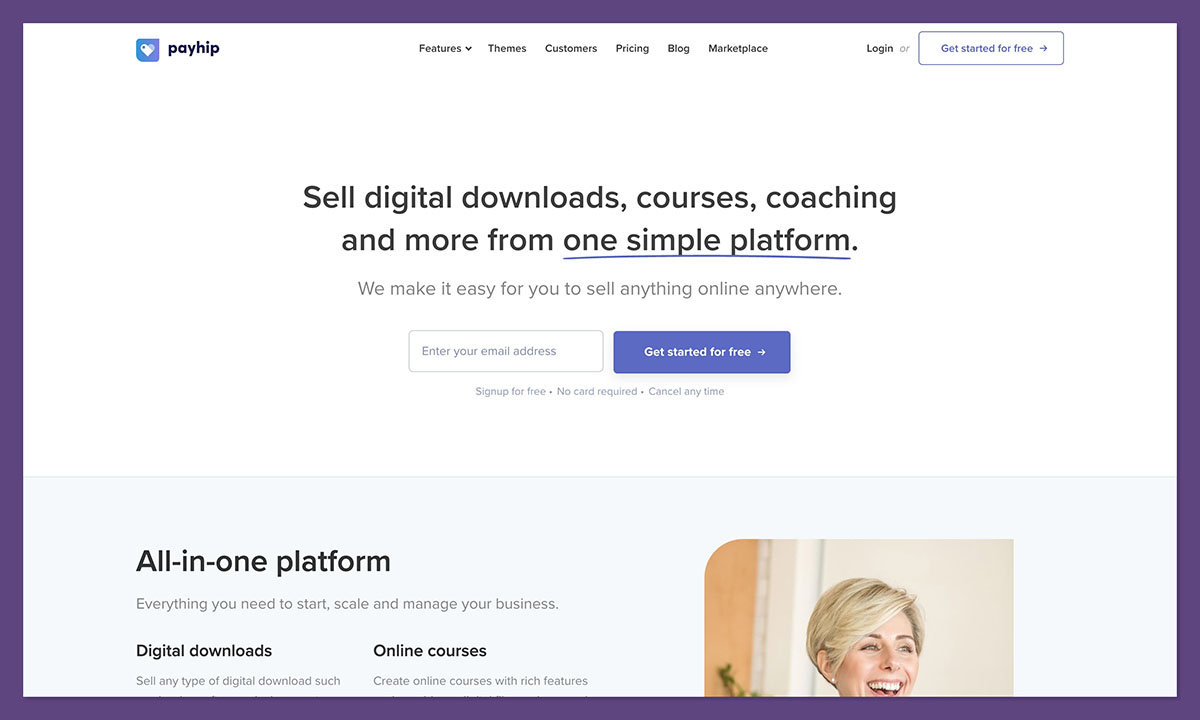
If you’re looking for a simple, low-commitment way to sell digital products, Payhip is the easiest entry point. It’s especially strong for selling ebooks, templates, courses, and memberships—all without upfront fees.
What Makes Payhip a Good Alternative
Payhip is built with simplicity and accessibility in mind. Anybody anywhere can launch a store in less than an hour without worrying about tech headaches. Whether you’re selling PDFs or pre-recorded videos, the setup is clean and fast.
Among all the platforms listed, Payhip comes closest to matching Gumroad’s features while offering more affordable pricing. It also includes niche tools for digital sellers, like built-in security features such as PDF stamping and download limits, collaborations with automatic revenue splitting, a customizable content editor for your download pages, and license key delivery for software or code-based products.
Payhip also launched its own marketplace in 2024 to rival Gumroad’s Discover. The key difference is pricing. Gumroad takes a 30% cut on marketplace sales, while Payhip doesn’t charge anything extra to list or sell, which gives you added visibility at no extra cost
Unlike Gumroad, Payhip lets you create fully customizable storefronts that look like professional websites using its drag-and-drop builder. You can also use direct checkout links to sell digital products from any existing website, no matter which platform you’re using.
Payhip also handles EU VAT for you, which is a huge win if you’re selling to international audiences. It also supports subscription billing and memberships without needing any plugins or external apps.
As a bonus, Payhip’s customer support is consistently praised by users, especially compared to Gumroad, where support quality is often a common concern.
Key Features
- Generous forever-free plan with no monthly fees
- Supports digital products, courses, coaching, and memberships
- Fully customizable storefront with Payhip’s drag and drop store builder
- Customizable checkout page
- Built-in marketing tools: Run affiliates, coupons, cross-sells, and more
- Built-in VAT and tax compliance
- Instant payouts via PayPal,Stripe, Square, Mollie, Mercado Pago, Paystack, PayU, Razorpay, Iyzico, PayTabs, Flutterwave, Xendit, Midtrans
- Marketplace exposure: List products on Payhip’s marketplace for free extra visibility
- Embeddable checkout on your own site or blog
Payhip Pricing (USD)
| Plan | Monthly Cost | Transaction Fee | Ideal For |
|---|---|---|---|
| Free Plan | $0 | 5% per sale | Testing new products or small shops |
| Plus Plan | $29 | 2% per sale | Creators scaling digital sales |
| Pro Plan | $99 | 0% per sale | High-volume digital businesses |
Best Suited For:
- Any digital product sellers
- Course creators, authors, musicians, artists
- Creators testing product ideas
- Freelancers selling templates or guides
- Sellers who prefer real human customer support over AI
Limitations
- Limited support for physical or POD products
- No app marketplace. Features are built-in
2. Shopify – Best Overall Alternative for Ecommerce and POD

Shopify is the best Gumroad alternative for anyone selling physical products, print-on-demand items, or scaling their digital brand. It offers complete control over your store, a massive app ecosystem, and powerful marketing tools built to grow with you.
Why Shopify Beats Gumroad
With Shopify, you’re building a fully-owned storefront. That means no platform branding, no limitations on design, and a checkout process that belongs entirely to you.
Print-on-demand integrations with platforms like Printful, Printify, and Gelato allow you to launch and automate product fulfillment in minutes. No manual shipping, no inventory. This is something Gumroad doesn’t even attempt to support.
Plus, Shopify’s analytics, discount engine, and customizable product pages give you deeper insights and more ways to optimize your sales funnel.
Key Benefits
- Own your domain and customer experience
- Sell digital, physical, subscription, and POD products
- Use thousands of marketing and logistics apps
- Automate fulfillment with POD platforms
- Accept global payments through Stripe, PayPal, and more
Shopify Pricing (USD)
| Plan | Price per Month | Highlights |
|---|---|---|
| Basic | $29 | 2 staff accounts, basic reports |
| Grow | $79 | Better shipping rates, analytics |
| Advanced | $299 | Custom reports, 15 staff accounts |
Great For:
- Sellers launching a brand
- POD ecommerce businesses
- Digital sellers scaling into merch
- Content creators monetizing their audience
Potential Drawbacks
- Steeper learning curve than Gumroad
- Apps and plugins can raise monthly costs
- Setup requires more time and testing
3. Sellfy – Best for Mixed Digital, Physical, and Subscription Sales
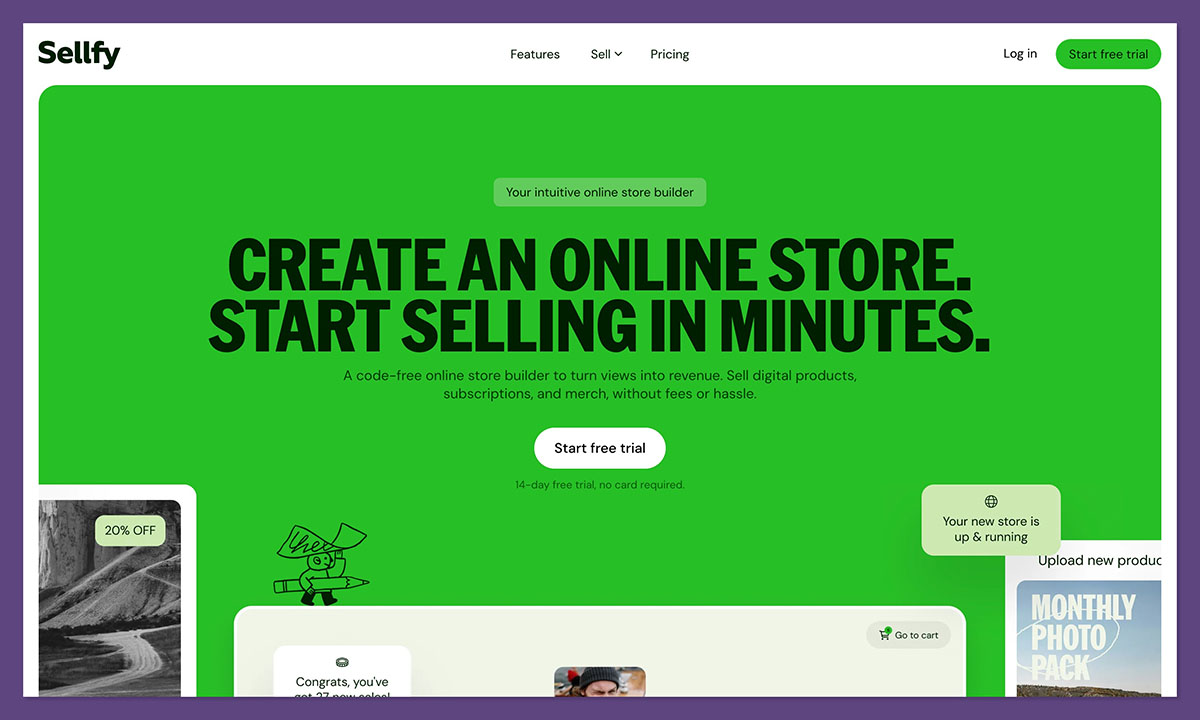
Sellfy is a flexible all-in-one ecommerce platform that’s perfect if you want a simple online store builder that handles digital downloads, physical products, subscriptions, and print-on-demand merch without stitching together a bunch of apps.
Key Features
- Easy, no-code store setup, go from zero to live in minutes
- Sell digital files, physical products, merch, and subscriptions from the same dashboard
- Built-in print-on-demand with automatic fulfillment
- Simple storefront customization and custom domain support
- Email marketing tools and basic analytics included
- Upsells, discount codes, and abandoned cart features on higher plans
- No platform transaction fees, you’ll only pay Stripe/PayPal processing fees
- 14-day free trial to test the platform before subscribing
Sellfy Pricing (USD)
Sellfy uses subscription pricing based on your revenue tier, with three core plans:
- Starter – ~$22/mo: Sell unlimited products (digital, physical, POD), basic marketing tools
- Business – ~$59/mo: Add upsells, cart recovery, better email credits
- Premium – ~$119/mo: Advanced marketing tools, priority support, and more scalability
There’s no free plan after the trial, but no transaction fees means more margin on each sale, just normal Stripe/PayPal charges.
Where Sellfy Shines
Sellfy sits squarely between super-simple download platforms and complex ecommerce systems. It’s particularly great for influencers, designers, and creators who want to sell digital assets, merch, and subscriptions together, without technical setup or plugins.
Potential Drawbacks
- No free plan
- Fewer third-party app integrations
- Limited store theme selection
4. Podia – Best for Courses, Communities, and All-in-One Creator Sites
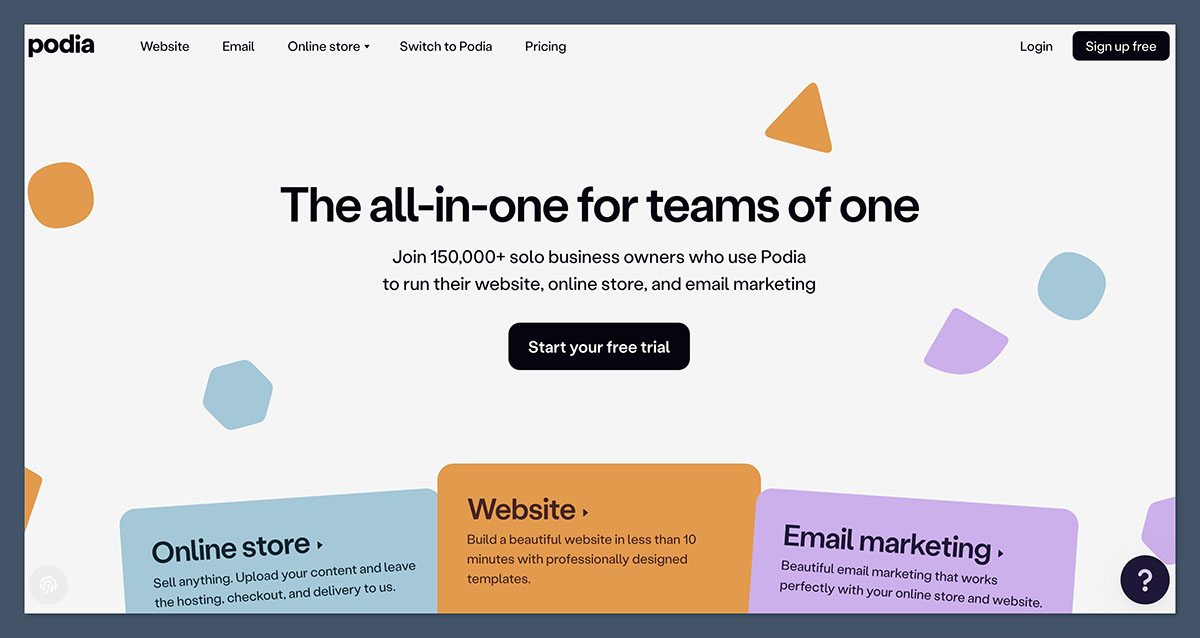
If your business revolves around teaching, community, or content-driven memberships, Podia is one of the strongest Gumroad alternatives out there. Instead of bolting a course platform, email tool, and website onto a basic checkout page, Podia rolls everything into one creator-first dashboard.
You can sell courses, digital downloads, memberships, coaching sessions, and webinars from a single storefront, with built-in email marketing, product bundles, and simple upsells baked in.
Why Podia Beats Gumroad
Where Gumroad treats courses like glorified file downloads, Podia includes a proper course builder with drip content, quizzes, completion tracking, and a clean learning experience for your students.
You also get a full website and blog builder on your own custom domain, so Podia can replace both your course host and your basic website. That’s a level of integration Gumroad simply doesn’t offer.
The built-in community feature is another big differentiator. You can create gated discussion spaces, run paid communities, and keep your audience engaged between launches, all without adding third-party tools.
Key Features
- Sell courses, downloads, memberships, coaching, and webinars from one dashboard
- Full website and blog builder with custom domain support
- Course platform with drip content, quizzes, and student progress tracking
- Built-in community spaces for memberships and paid groups
- Email marketing with broadcasts, sequences, and basic automation
- Live and recorded webinars via Zoom or YouTube Live
- One-time payments, subscriptions, and payment plans across all product types
- Supports Stripe, PayPal, Apple Pay, and Google Pay
Podia Pricing (USD)
| Plan | Monthly Cost | Transaction Fee | Ideal For |
|---|---|---|---|
| Free Plan | $0 | Higher platform fee per sale | Testing offers or validating ideas |
| Mover | $39 | Reduced platform fee | Full course and membership feature access |
| Shaker | $89 | 0% Podia fee | Established creators scaling revenue |
On the free and lower-tier plans, Podia takes a percentage of each sale on top of Stripe/PayPal processing fees. Moving to the Shaker plan removes Podia’s cut entirely, which makes more sense once your revenue is consistent.
Best Suited For:
- Course creators and cohort-based educators
- Membership-site and community owners
- Coaches and consultants selling digital access
- Creators who want one platform for site, email, courses, and community
Limitations
- Not built for complex ecommerce, large product catalogs, or print-on-demand
- Transaction fees on lower plans can eat into margins quickly
- Email marketing tools are basic compared to dedicated platforms like ConvertKit or Mailchimp
5. Lemon Squeezy – Best for Developers, SaaS, and Software Creators
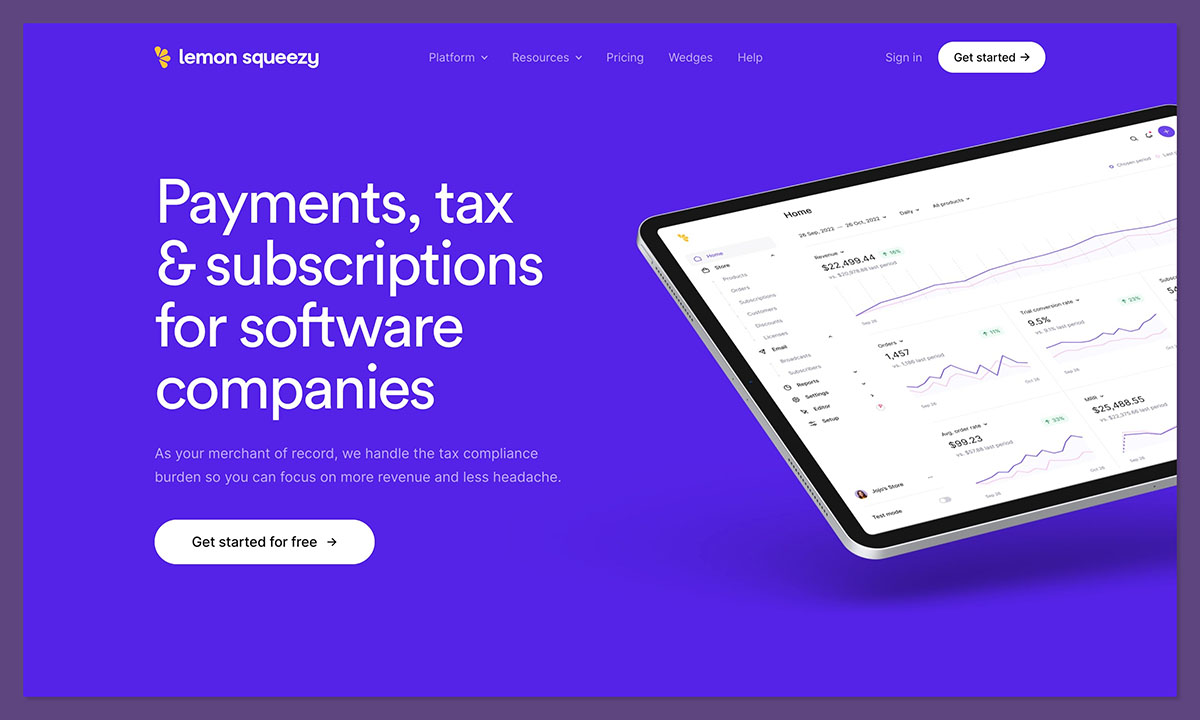
If you’re building software, selling digital tools, or offering subscription-based access, Lemon Squeezy is a smart pick.
It’s specifically built for indie developers, SaaS startups, and code creators, a segment that Gumroad doesn’t serve well.
What Makes Lemon Squeezy Developer-Friendly
Selling software isn’t just about taking payments. You need license keys, subscription management, and compliance with global tax laws. Lemon Squeezy handles all of this out of the box, no need for multiple third-party tools.
With Lemon Squeezy, you can sell one-time licenses or set up recurring billing with advanced customer controls. The platform also handles EU VAT, U.S. sales tax, and worldwide compliance automatically,making it ideal for international SaaS or plugin businesses.
Standout Features
- Secure software license key generation
- Recurring billing and customer portals
- Built-in email marketing
- Global tax compliance (EU VAT, US sales tax)
- Lightweight, fast-checkout pages
Lemon Squeezy Pricing (USD)
| Plan | Monthly Fee | Transaction Fee | Best For |
|---|---|---|---|
| Free | $0 | 5% per sale | New devs testing tools or small SaaS |
| Creator | $29 | 3% per sale | Active software sellers |
| Enterprise | Custom | Custom | High-volume SaaS with advanced needs |
Ideal For:
- Plugin and theme creators
- SaaS founders needing license keys
- Digital product sellers targeting developers
- Coders offering downloads or gated tools
Considerations
- Not suited for physical or POD products
- Customization is more limited than ecommerce platforms
- Not built for visual branding or product design
You might be fine with Gumroad in the beginning, but here’s when it makes sense to switch:
- Your monthly revenue is consistently above $500 and Gumroad’s 10% cut is costing you more than a flat SaaS subscription would
- You’re driving your own traffic but still paying marketplace-level fees for it
- You’re selling print-on-demand or physical products
- You want a custom domain and full brand control
- You need better support for subscriptions, licenses, or course/community tools
- You want direct control over taxes and payouts instead of depending on Gumroad’s Merchant of Record setup
- You’re scaling and need analytics, advanced email, or CRM integrations
If you’re still validating your first product or earning under $150/month, Gumroad is fine. But once you’re consistently above $1,000/month, run the math. In most cases, Stripe fees plus a flat monthly platform cost will leave you with significantly more margin than Gumroad’s percentage-based model.
Gumroad was made for simplicity, not for growth. And they’ve shown they’ll change the pricing model when it suits them, moving from tiered pricing to a flat 10% to a full Merchant of Record structure. That kind of platform risk is worth factoring into your decision.
How to Choose the Right Gumroad Alternative
Choosing the best Gumroad alternative depends on what you’re selling, and what’s frustrating you most about Gumroad right now.
Are you scaling a print-on-demand brand? Selling high-ticket digital products? Launching a membership? Each platform on this list solves a different problem.
Here’s how to narrow it down:
If You’re Focused on Branding and Store Ownership
Use Shopify. You get your own domain, full design control, and a powerful ecommerce backend.
Gumroad limits your ability to control the buyer experience, Shopify hands it all over to you.
If You Want to Keep Things Simple and Free
Choose Payhip. It’s perfect for ebooks, PDFs, guides, and entry-level subscriptions.
You won’t pay a monthly fee unless you upgrade, and the dashboard is built for creators, not tech pros.
If You Sell Digital + Physical Products
Go with Sellfy. You can sell everything from music files to t-shirts from one dashboard.
It’s a strong middle ground between Gumroad’s simplicity and Shopify’s scalability.
If You’re Selling Software or Tools
Use Lemon Squeezy. It handles license keys, recurring billing, and global tax compliance.
Gumroad doesn’t support any of this, and if you sell software, it’s a must-have.
Key Questions to Ask Before Choosing:
- Do I sell digital-only, or do I need support for physical/POD products?
- Am I just starting, or am I scaling a growing business?
- Do I need subscriptions, licenses, or recurring billing?
- How important is custom branding and full store ownership?
The clearer you are about what you need next, the easier it is to choose the right platform to grow with.
How We Tested These Platforms
To find the best Gumroad alternatives, we tested each platform from the perspective of a real seller. Our process focused on the key areas that matter most to ecommerce and creator businesses.
We signed up, set up stores, listed products, ran test checkouts, and compared each tool side-by-side using the same set of criteria.
Our Testing Categories
| Area | Weight | Why It Matters |
|---|---|---|
| Sales Features | 30% | Can you sell all product types? Subscriptions? POD? |
| Ease of Use | 20% | How fast can a new user get set up and make a sale? |
| Design + Branding | 15% | Can you make your store feel like your own brand? |
| Payment + Tax Setup | 10% | Is it easy to get paid, globally and legally? |
| Scalability | 10% | Can the platform grow with your business? |
| Support + Documentation | 10% | Are there tutorials, live support, or community help? |
| Cost and Value | 5% | Are the plans affordable and worth the features? |
Our Testing Process
- Created a real storefront on each platform
- Set up physical, digital, subscription, and POD test products
- Walked through the full checkout and customer experience
- Tested customer portals, refund systems, and analytics tools
- Contacted support to evaluate response time and accuracy
- Compared real-world setup time, app availability, and limitations
Real-World Scenarios We Tested
- Selling a print-on-demand hoodie (Shopify, Sellfy)
- Listing a recurring PDF newsletter membership (Payhip)
- Selling a licensed Notion template or script (Lemon Squeezy)
- Building a landing page with custom checkout (all platforms)
We didn’t just read feature pages, we put each tool through its paces to see how it holds up in real-world ecommerce workflows.
Final Thoughts
There’s no one-size-fits-all solution. The right Gumroad alternative depends on what you’re selling and how far you want to take your brand.
Here’s a quick recap:
- Choose Shopify if you’re launching or scaling a real ecommerce or POD store
- Choose Payhip if you’re just starting with digital products or courses
- Choose Sellfy if you want to sell a mix of merch, digital, and subscriptions
- Choose Lemon Squeezy if you’re a dev or SaaS founder selling digital tools
All four platforms offer free trials or free plans, so you can test each one before fully committing.