The creator economy moves quickly. A few years back, calling yourself an ‘influencer’ was a joke. Now, millions are trying to make a living from content, but only a handful actually do it full-time.
AI gets blamed a lot when creators struggle to earn, but in my experience working with other people in this community, the real issue starts before the bots. Most people start out with too narrow a view of what tools and systems they actually need.
Building a creator business happens in layers, just like anything else. Social platforms help you reach people, but they also decide what happens next. If you want to grow, you need more ways to earn, build your brand, and actually own your audience.
TLDR
Most creators don’t fail because of AI — they fail because they rely too much on social platforms and never build a real system.
Discovery platforms help you get seen, but they don’t help you own your audience. If you want to grow full-time, you need tools for reach, monetization, and retention — all working together.
Here’s the no-fluff breakdown:
Reach & Discovery:
- YouTube – Long-term search + evergreen video
- TikTok – Viral reach with fast feedback
- Instagram – Relationships through Reels + Stories
Sell Digital Products & Merch:
- Fourthwall – All-in-one shop for creators
- Shopify – Full ecommerce control + growth
Recurring Income:
- Patreon – Simple monthly subscriptions
- Substack – Paid email newsletters
- Ko-fi – Tips, sales, and low-pressure support
Courses & Communities:
- Teachable – Structured lessons + course delivery
- Kajabi – All-in-one for serious digital products
- Circle – Paid community and group interaction
Use social for attention. Use owned platforms for income.
The Best Platforms for Content Creators (By Goal)
Every time someone asks me, “What’s the best platform for creators?” I know there’s about a 90% chance they’re about to pick the wrong one. The question itself is off.
There’s no single “creator platform”, because different tools are meant for different things. Some exist to put your work in front of as many people as possible quickly. Others don’t care how anyone finds you. They assume you have attention already, and you just want to turn that attention into cash.
Then there’s a smaller group of platforms that try to slow the whole thing down. They give you a place to host content, sell things, talk to your audience, and keep the relationship in one spot.
So, let’s break this down.
Best Creator Platforms for Reach + Long-Term Discoverability
These are the platforms people in the creator economy usually start with, when they’re trying to “grow an audience.”
These platforms are easy to start on, but the competition is brutal. They keep you chasing the hope that your next post will finally break through. That’s not a bad thing, but it’s risky if you confuse reach with real progress.
Reach platforms are great for getting your work in front of people, but they don’t care what happens after that. Use them to attract people, not as your home base.
YouTube (Long-Form + Shorts)
YouTube is one of the most competitive platforms, and the second most popular search space in the world, after Google. Still, it can be generous, if you know how to use it.
YouTube rewards clarity and consistency. A good video that sticks around can keep pulling views for years, which already puts YouTube in a different class than most social platforms.
Monetization here is pretty clear-cut too. You need 1,000 subscribers and either 4,000 watch hours in 12 months or 10 million Shorts views in 90 days. Hit that, and ad options turn on. From there, you can still branch out with sponsorships, affiliate marketing, and merch sales, if you like.
The good thing about YouTube is that what works best is usually simple: narrow topics, useful titles, and content that answers questions people already type into Google and ChatGPT. Tutorials and explainers age especially well.
The downside is patience. Growth can feel slow at first, competition is intense, and YouTube still controls distribution. That’s why a lot of creators use it as a discovery space, then move their most engaged viewers elsewhere.
TikTok
TikTok is pure reach. Unmatched, chaotic, occasionally ridiculous reach.
You don’t need followers. You don’t need a back catalogue. You just need a hook that works right now. When it clicks, your content can land in front of millions of people almost overnight. In fact, there are about 1.59 billion ad-reachable users here, and engagement levels hover around 4.86% (that number is higher than it might seem).
The Creator Rewards Program sets a clearer bar than it used to: 10,000 followers, 100,000 views in the last 30 days, and videos that run at least a minute, but payouts still swing wildly. One month looks great. The next doesn’t.
That unpredictability is the hard part. Trends move fast, formats get old, and your reach can vanish overnight. TikTok is great for testing ideas and bringing people into your world, but it’s a terrible place to rely on for all your income.
Instagram sits somewhere between TikTok’s “explosive” personality, and YouTube’s evergreen consistency.
Instagram is great for building real connections. Stories, DMs, comments, and Broadcast Channels help creators get familiar with their audience. Lifestyle, personal brands, and visual niches do well here because people come back for you, not just your posts.
Growth usually comes from Reels. Retention comes from Stories. Monetization is thinner. Subscriptions require a professional account, around 10,000 followers, and you still don’t get much flexibility.
Instagram works best for staying visible and building relationships. It keeps you in people’s minds, but you don’t get much control when it comes to making money.
Best for Selling Digital Products & Merch
Once you have people’s attention, the next step is getting them to pay you. That usually starts with simple things like branded hoodies, exclusive content, or memberships. What you don’t want is a mess of platforms that makes you juggle every monetization method on your own.
That’s why I generally recommend one of two platforms:
Fourthwall
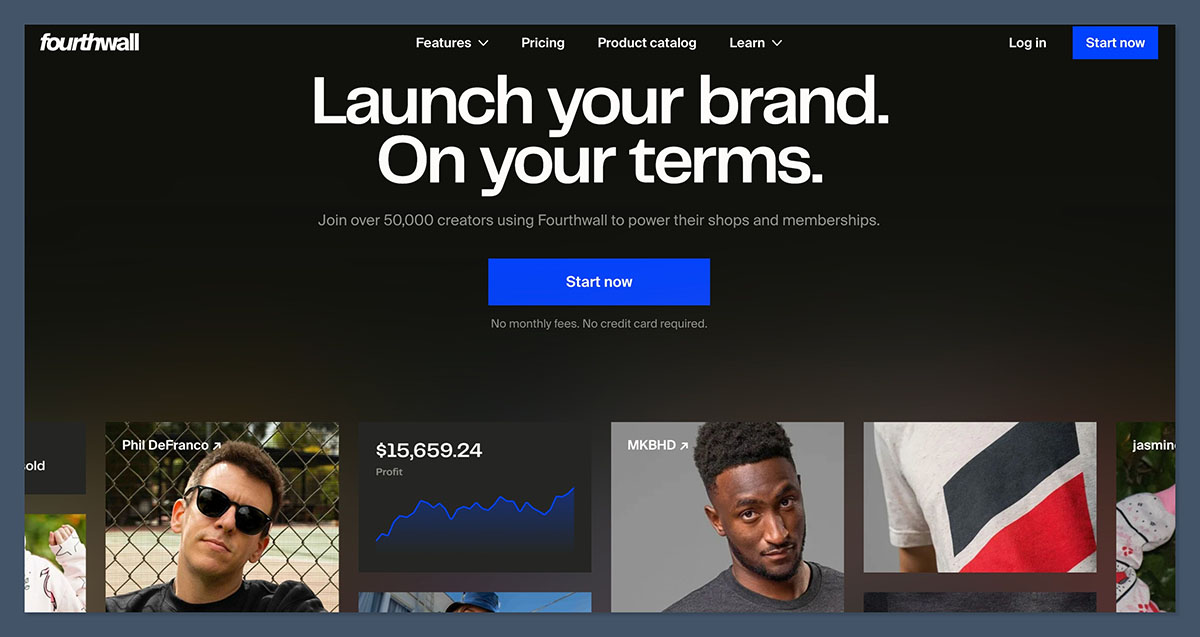
Fourthwall exists because too many creators got tired of running five tools just to sell high-quality products that their customers actually want.
It’s built for people who already have an audience and don’t want to become ecommerce operators by accident. Merch, digital products, memberships, and donations all live in the same place.
Fourthwall also acts as the merchant of record and handles fulfillment and customer support for products in its catalog, which quietly removes a lot of the work people underestimate at the start.
The print-on-demand side is quality-first. Not bargain-basement pricing, but better blanks, better prints, and fewer headaches. It also plugs directly into places creators already sell from: YouTube Product Shelf, Instagram Shopping, TikTok Shop, so merch doesn’t feel like a separate project. There are even integrations for other platforms like Kit, Beacons, and LinkTree.
You won’t find as many integrations here as you would with Shopify, but if you want to run your creator business without hiring extra help, Fourthwall does the job. It’s also 100% free, which is not something you can expect from most alternative platforms.
Shopify (Starter & Core Plans)
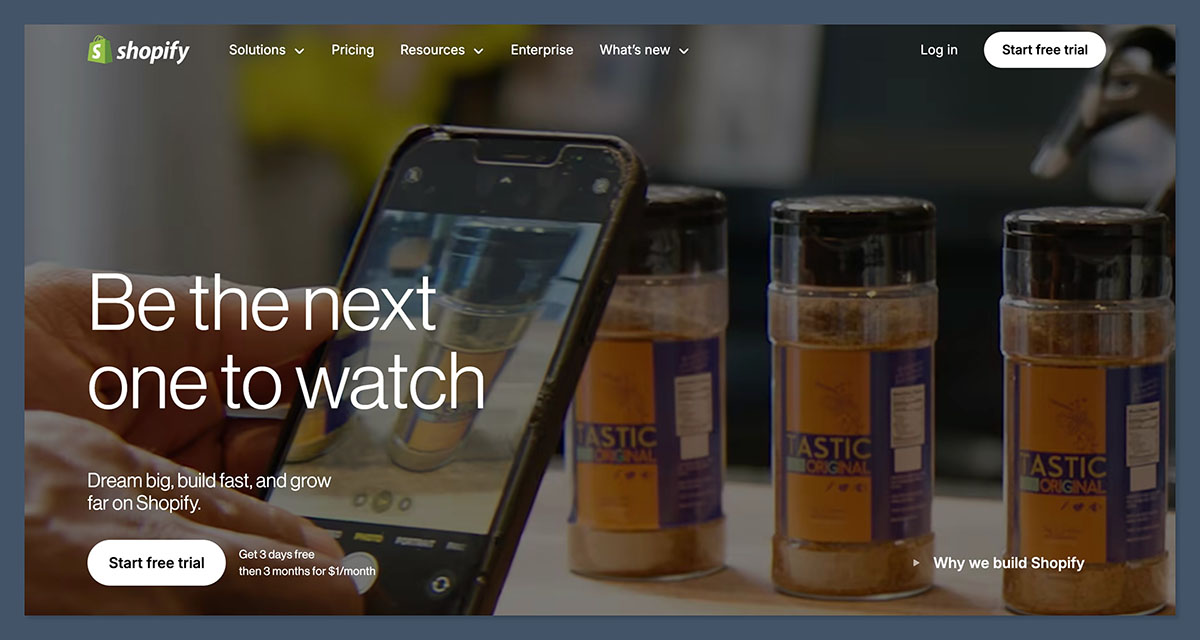
Shopify is still the strongest ecommerce infrastructure out there. Trusted checkout. Multi-channel selling. An app store with 8,000+ integrations. If there’s a feature you want, someone’s built it.
The Starter plan (around $5/month) works if you’re selling through social platforms. Core Shopify plans start around $29/month, plus payment processing. From there, costs stack as you add apps for print-on-demand, memberships, and subscriptions. That’s the upside and the downside. Shopify gives you control and room to grow, but you have to put the whole system together yourself, unlike Fourthwall.
If you want to treat merch like a real business, Shopify is often worth it. If you just want to sell a few things without worrying about the backend, it can feel overwhelming.
Best for Recurring Income (Memberships & Subscriptions)
Recurring income is where creator businesses really level up, if you have the right approach. The problem is, expectations can get out of hand. Subscriptions and memberships don’t fix weak audience relationships—they just make strong ones stronger. If people don’t care, no pricing tier will help.
Platforms in this group aren’t about discovery. They assume you already have attention and focus on turning that into steady income.
Patreon
Patreon is familiar for a reason. It works.
The model hasn’t changed much over the years: monthly tiers, gated content, a feed for members, and a payment system people already trust. That familiarity translates to simplicity, especially for podcasts, video creators, and artists with loyal audiences.
It’s not free though. New creators publishing after August 2025 pay a standard 10% platform fee, plus payment processing. That’s meaningful once subscriptions stack up.
Customization is limited too, and your audience still lives on Patreon’s platform. Posting cadence matters as well. Skip too many updates and you’ll see churn.
Patreon is great if you want something proven and simple. It’s less useful if you’re trying to build a whole brand ecosystem instead of just a membership feed.
Substack
Substack is usually the platform people choose when writing is the product.
Everything revolves around the inbox. Posts land directly where people already pay attention, and that alone changes the tone of the relationship. Readers feel closer. Responses feel more thoughtful. Retention is strong if the work resonates.
The platform takes around 10% of subscription revenue, plus Stripe fees. That’s the deal. In return, you get hosting, payments, and a recommendation network that helps with slow, compounding growth.
Substack isn’t quick. Growth comes from showing up, having a clear voice, and sharing ideas that make people want to stay. The good part is trust. The tradeoff is flexibility. Besides writing, audio, and a few basic community features, you don’t get much room to experiment.
Ko-fi
Ko-Fi is the lightweight, low-pressure option.
You can take one-off tips, run memberships, sell digital products, and even accept commissions. On the free plan, the platform takes around 5%. Upgrade to Gold (about $12/month) and platform fees drop to zero, but processing fees still apply.
Revenue here is unpredictable on purpose. People give when they want to. That makes Ko-fi a great add-on, but not the best foundation.
It works best for early-stage creators, artists, and anyone who wants a low-friction way to accept support without committing to a full subscription model.
Best for Courses + Community (Higher-Ticket Offers)
This is the creator platform category that divides a lot of people.
Courses and communities look great on paper. Higher prices, fewer customers, more depth. But in reality, they take real work: planning, structure, support, and updates. These platforms don’t reward half-hearted effort. The upside is leverage. When it works, it works over and over.
Teachable
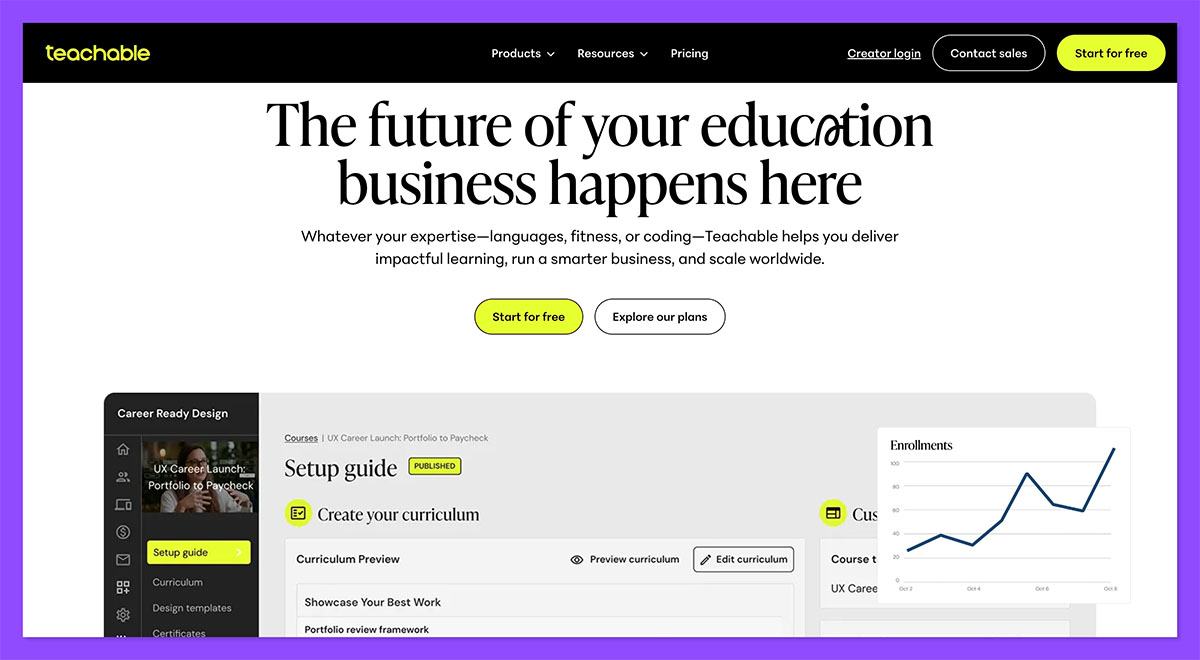
Teachable is for people who want structure.
You’re not just tossing posts into a feed. You’re building lessons, modules, and progress paths. That makes Teachable a good fit for educators, coaches, and anyone selling real transformation instead of just access.
Pricing can sting. The Starter plan takes a 7.5% cut from every sale. If you move up a tier, that fee goes away, but you still pay for payment processing. The idea is simple: start cheap, pay more as you grow.
Teachable handles delivery well. Video hosting, lesson drip, completion tracking. Community features exist, but they’re basic. Most creators pair Teachable with something else if conversation matters.
Kajabi
Kajabi feels expensive until you map out what it replaces.
Courses, email marketing, funnels, memberships, websites, automations; it’s all included. Pricing runs from about $89 to $249 per month on annual plans, and there are no transaction fees if you use Kajabi Payments.
This is where serious creators end up when they’re tired of juggling a bunch of tools. Automations are strong, funnels are flexible, and analytics go deeper than most other platforms.
The catch is commitment. You can’t just dabble with Kajabi. It’s a lot if you’re just starting out, and it’s overkill if you only want to sell one thing.
Circle
Circle is about conversation and community.
It’s designed to keep people talking, showing up, and sticking around. Discussions, groups, events, and livestreams make it a place that’s all about experience. Pricing starts at about $89 per month, so it’s not for casual use. That’s on purpose. Circle is for people who want to sell community as the main product.ell.
It’s not commerce-first. You’ll usually pair it with something else for courses or payments. What you get in return is engagement that feels human rather than transactional.
Build Where You Can Own the Outcome
Social platforms aren’t the enemy for creators. They’re essential for discovery, distribution, and momentum. The problem is, they’re just not enough by themselves.
The creators who stick around use social platforms as just one piece of the puzzle. They pull people in, then give them a reason to stay somewhere they control: email lists, communities, stores, memberships. Places where a rule change can’t erase a year of work.
There’s no single best platform. There never has been. There’s only the one that fits how you work, how you think, and how much uncertainty you’re okay with.
Pick the wrong platforms and you might still grow, just in the wrong direction. Pick the right ones and your effort adds up to results that actually matter.