
You just can’t argue with the facts these days. Selling online is easier than ever, particularly if you’re a member of the growing creator economy, and you already have an audience. Anyone can set up a store, connect a print-on-demand supplier and start taking orders. I’ve done it myself.
What isn’t simple is the stuff that happens later. Creators do more than just sell merch now. They offer downloads, run memberships, launch limited drops, take donations, and try to keep their community active without drowning in emails. That’s when your choice of tools really matters.
It’s also where the differences between platforms like Fourthwall and Printify really add up. Both are tied to selling merch, but they support you in very different ways.
Printify gives you a strong print network but leaves the rest to you. Fourthwall bundles storefront, fulfillment, support, and monetization so you have less to manage. It’s basically the “build the business without hiring a new team” approach.
That doesn’t necessarily mean there’s a one-size-fits-all winner in the Fourthwall vs Printify debate, but it does mean how you make your choice changes.
Quick Verdict: Who Each Platform Is Actually For
Getting straight to the point:
Fourthwall is for people that want to build a brand, prioritizing quality over everything else..
Printify is for people that want to run a side hustle, prioritizing the lowest costs.
Fourthwall vs Printify: The Side by Side Comparison
I’ve tried to explain these platforms to a lot of different people over the years, so here’s a quick angle that makes sense for most. Printify and Fourthwall are both valuable creator platforms, but their philosophy is different.
Printify is built for people who want to assemble their own setup. It gives you a very good print network (probably the best I’ve seen), great design tools, and hands the rest over to you. You pick the providers, choose shipping options, and decide where the store lives. Shopify, WooCommerce, Etsy, even on a social media-style Pop-up Store.
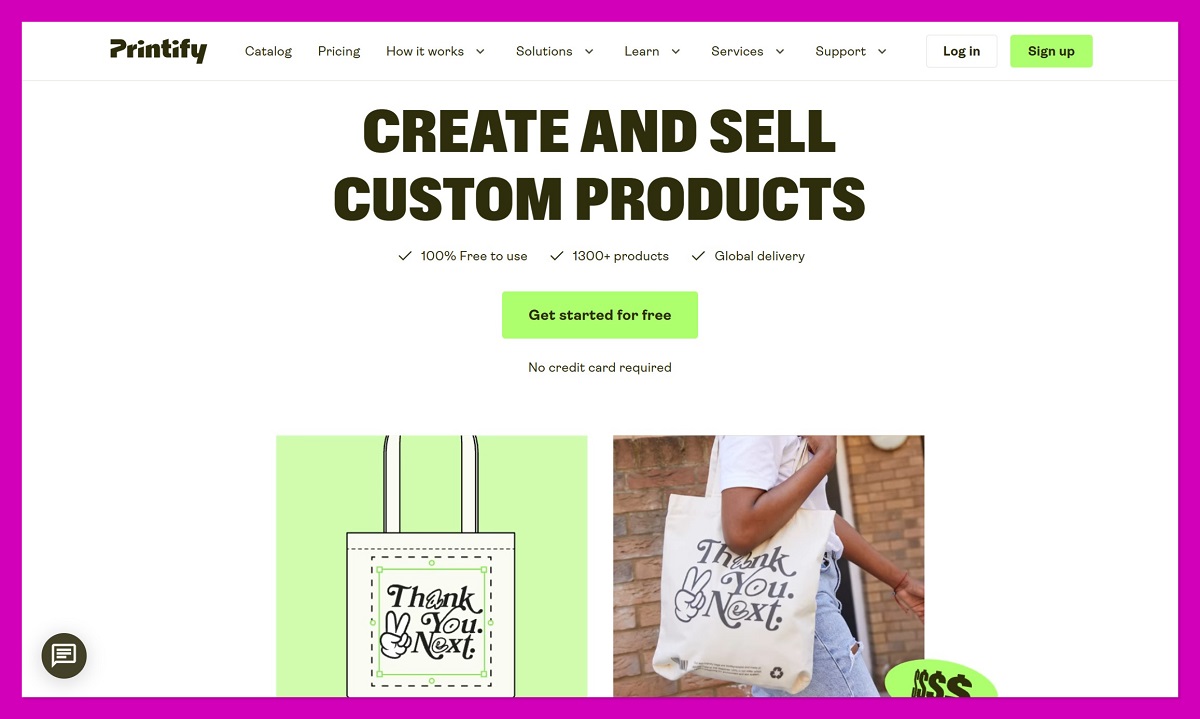
That’s all great if you like control, and freedom to experiment. It’s less ideal if you want to launch fast, grow quickly, and sell great products without headaches.
Fourthwall assumes most creators don’t want to build and manage a tech stack (they’ve got better things to do). The storefront, checkout, fulfillment, customer support, and monetization tools all live in the same system. You don’t choose vendors or wire up tax rules. You publish, list products, and sell. Printify assumes you enjoy managing systems. Fourthwall assumes you’d rather not.

Brand Building & Storefront Tools
This is honestly one of the best places to start with a Fourthwall vs Printify comparison. Fourthwall gives you an actual website builder with themes, layout controls, and branding, because it assumes your store is going to be your home base.
Fourthwall includes all of this at no monthly cost. You get a fully customizable storefront without needing a paid subscription, which makes it accessible whether you’re just starting out or scaling up.
What I like is it’s not trapped in “product grid forever” mode. You can create proper pages (About, FAQs, whatever you need) straight from the dashboard. The help docs literally walk you through everything. You’ve even got a more grown-up option: headless commerce.
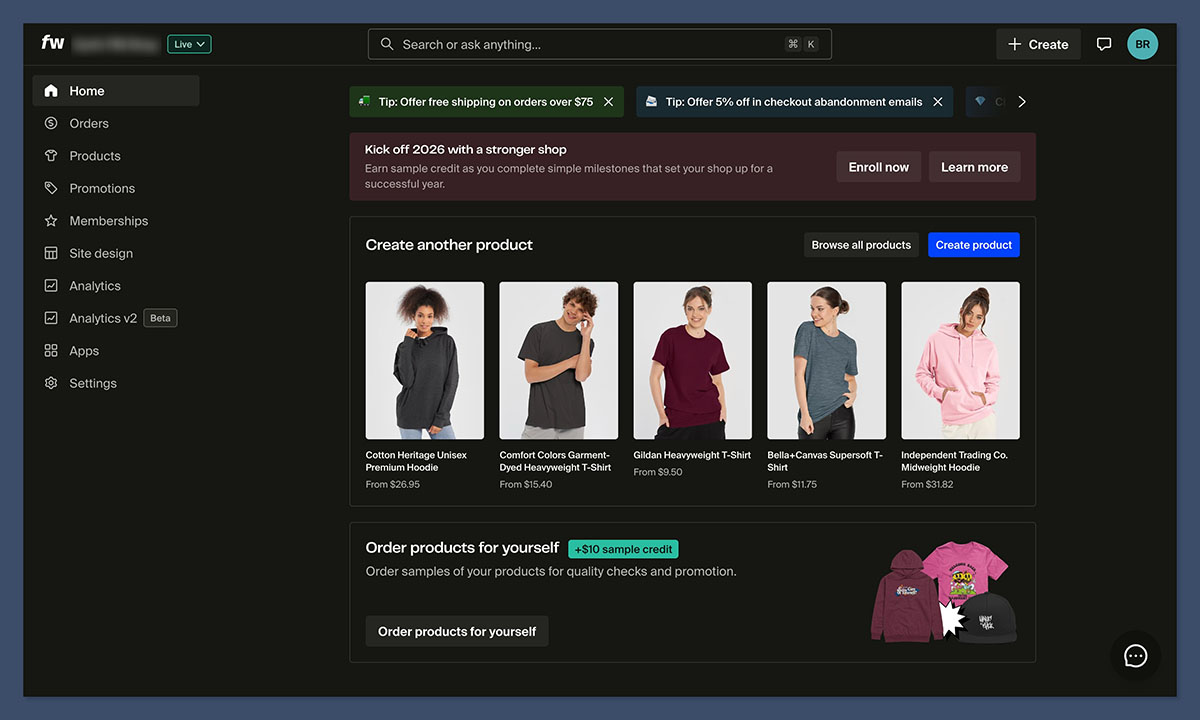
Absolutely none of that is available from Printify. If you want a storefront with Printify, you’ve got two options. First, you can use a free, hosted “pop-up store” storefront. It’s pretty basic, more like a “link-in-bio shop” than a real website, but it works for beginners.
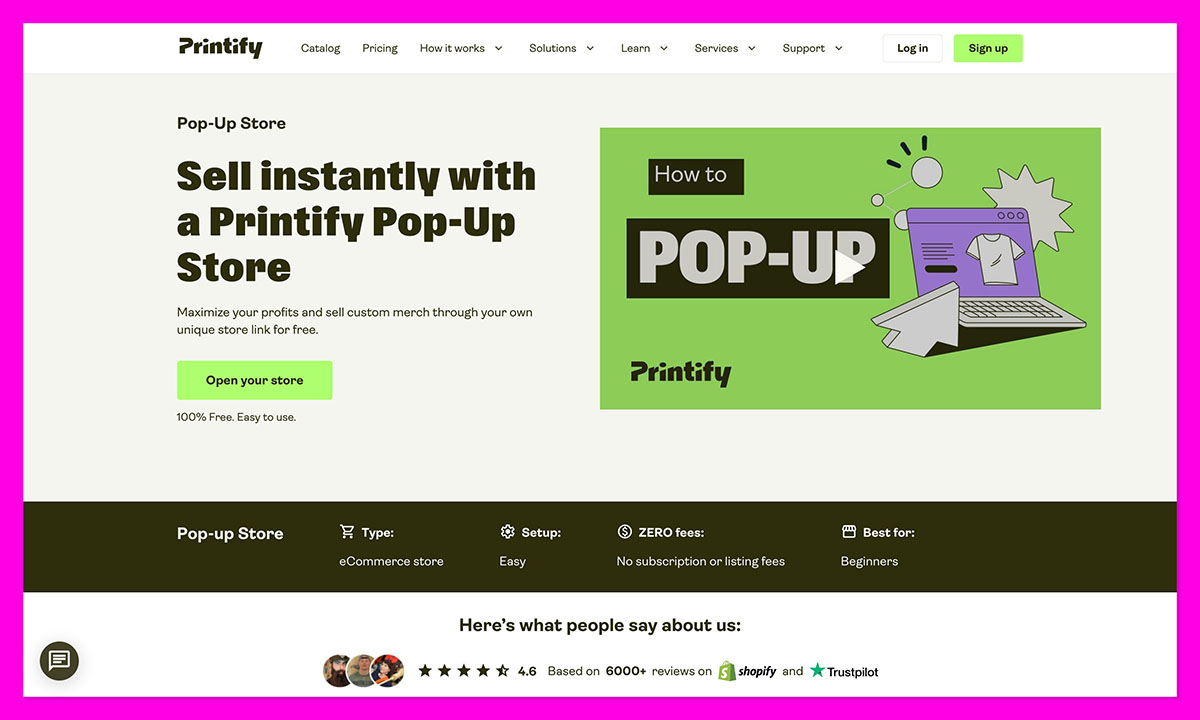
The second option is integration. Printify integrates with all the major sales channels: Shopify, Etsy, WooCommerce, Wix, BigCommerce, eBay, PrestaShop, and that’s where you get serious control. The catch is, once you go that route, you’re back with more moving parts to maintain.
Fourthwall doesn’t integrate with ecommerce platforms (though you can link directly to social sales channels like YouTube Merch Shelf). But honestly, you don’t need those integrations. You already have analytics, inventory management, marketing tools, and other tech in one place.
What You Can Sell with Printify and Fourthwall
People comparing “POD platforms” make assumptions way too quickly here if you ask me. First up, Printify has a huge product catalog, there’s no arguing with that.
There are more than 1,300 products here, compared to nearly 400 products from Fourthwall.
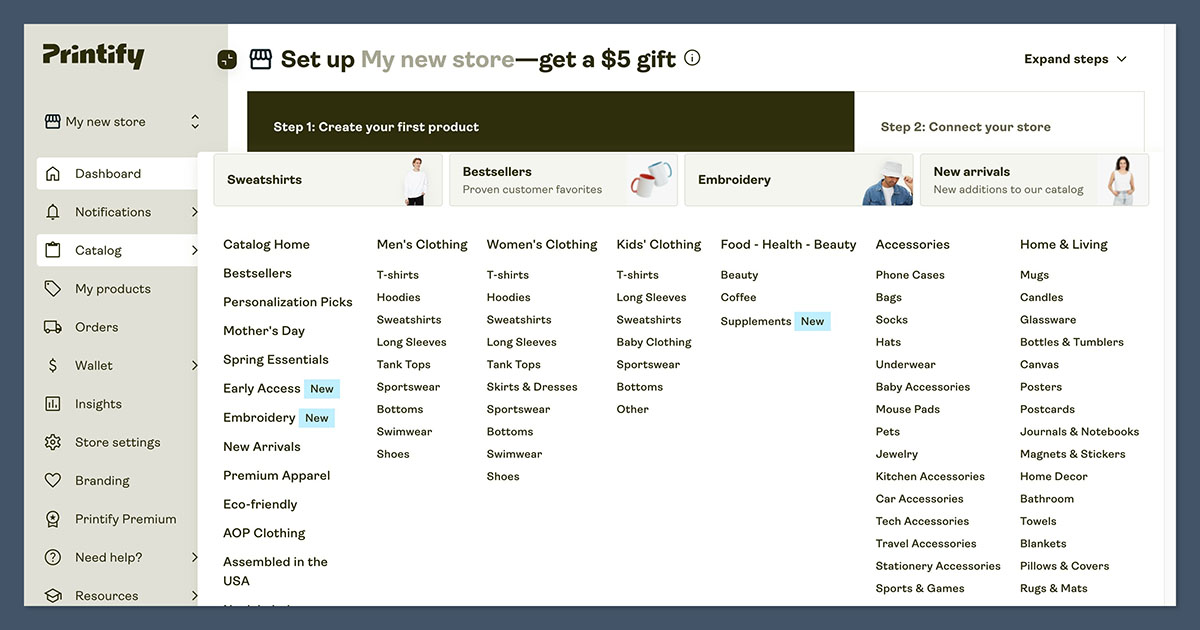
Designing your own collection is easy. Pick a product, add a design (or get AI to help you in the mockup generator), choose a print provider, and add the item to your store.

That’s the value. You want mugs, tees, hoodies, posters, stickers, socks, homeware, variations across multiple suppliers, Printify gives you plenty of runway. You also get only one revenue stream.
Fourthwall’s whole identity is “sell what creators sell.” Yes, you get print-on-demand built-in, and honestly, the quality is fantastic. Fourthwall actually works with suppliers, pushing them to turn up the “max print settings” on their tech for better quality print results, so premium becomes a standard.
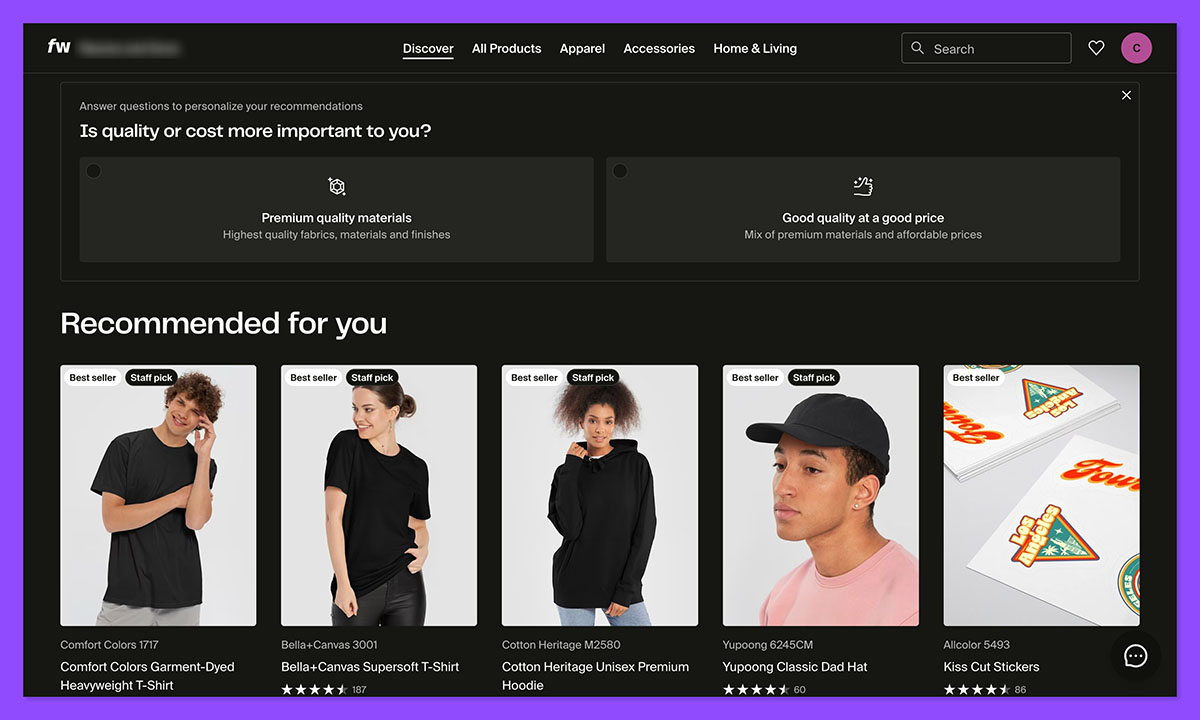
But there’s more to it than that. With Fourthwall, you can also sell:
- Digital products are a first-class product type, with the help docs walking through setting them up like any other listing.
- Memberships for recurring revenue and community growth
- Custom products through Fourthwall’s bespoke side, which helps you track down unique items like plushies and custom keycaps.
Donations are included too, which is something I haven’t seen any other “POD-focused” brand paying attention to. Printify helps you build a merch business. Fourthwall helps you run a creator business that includes merch. That’s the difference.
Product Quality and Profit Margins
This is the section where people want a clean winner and I’m going to annoy them: both platforms can produce great stuff. The difference is who has to do the work to get there, and how many chances you get to mess it up.
Printify is a network. You’re basically shopping a menu of print providers, prices, locations, production times, and (sometimes) slightly different versions of “the same” product. That’s why it can feel like you’ve got endless options, and why quality is unpredictable.
Printify knows this, which is why they push sample ordering as a normal part of the workflow: samples exist so you can check print and product quality before you sell. If you’re the kind of seller who actually does that (please do), Printify becomes a lot safer. It also has “Printify Choice” to help you filter through top-rated providers.
The margin lever is straightforward: Printify Premium gives you up to 20% discount on products, and you maintain full control over your pricing.
Fourthwall’s whole pitch is “premium products” made easier to sell. They negotiate with other print providers to ensure better quality consistently. They also take extra steps to make sure quality assurance isn’t something you have to worry about yourself.
Plus, as I said before, the profits you can earn with Fourthwall are generally bigger for one obvious reason: you can sell more types of products. Not just more variations of print-on-demand items, but POD products stacked with memberships, digital downloads, and custom-sourced goods.
Shipping, Fulfillment, and Customer Support
Printify’s job is to get products made and shipped. It does that through a network of print providers, and you’re the one choosing who prints what, where it ships from, and how you handle the customer experience around it.
When something goes wrong (late delivery, wrong item, damaged print), Printify has policies and support workflows. You can file issues, and they’ll often offer replacements/refunds if you report within their window
They’ve also built Printify Connect, which is basically a “problem reporting” page your customer can use to submit an issue directly, with photos and order details. That’s included with Premium plans.
Still, in most Printify setups (especially when you’re selling through Shopify/Etsy/etc.), you’re the merchant. You own the brand, so customers come to you first. Connect helps, but you’re still managing the relationship and the fallout.
Fourthwall is different. You don’t need to set up a separate customer support system because Fourthwall creates a support email and handles a chunk of the inquiries for you.
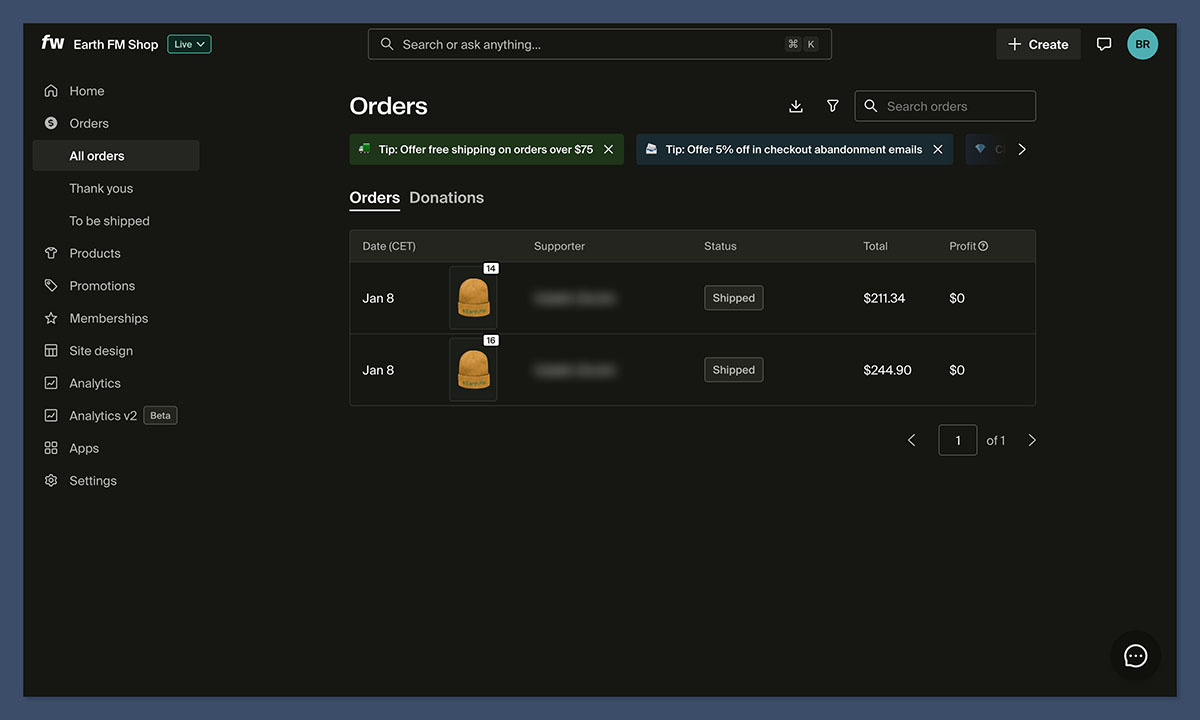
Also, for products from their catalog, Fourthwall hands customer support themselves (usually responding to issues with 12 hours or less). They even handle other parts of the “admin work” of running a store, working as a merchant of record, and dealing with the tricky stuff like logistics, taxes, and making sure everything runs smoothly.
That’s the whole point. Printify is one part of toolkit. Fourthwall is the thing you turn to when you want fewer tools, and fewer people that have to run them all.
Pricing Comparison: What You Pay for Each
Now for the really important part: price. Both platforms have free options. That’s the first bit of good news. With Fourthwall, you can set up a store and start selling with no monthly fees, upfront costs, or contracts. You just pay for things like processing fees and base product costs.
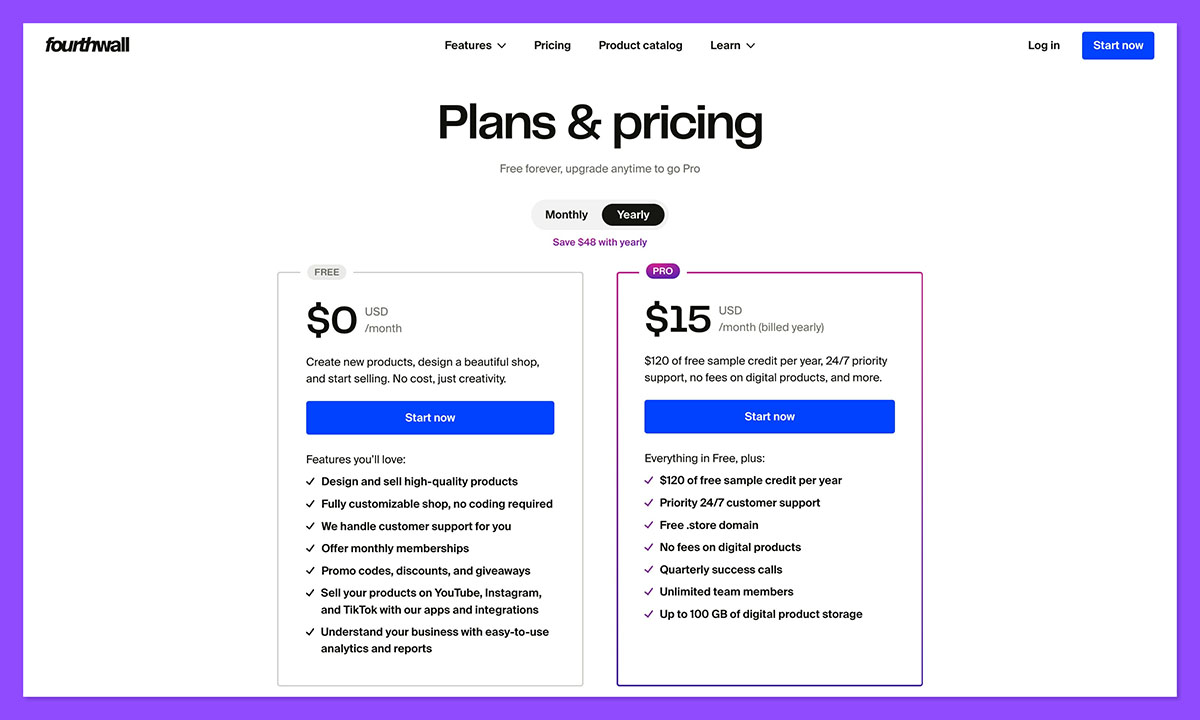
The premium plan, which costs about $15 per month if paid annually, removes digital product selling fees, gives you $10 in monthly free sample credit (or $120 annually), increases storage for digital products, and upgrades your support. You also get unlimited team member accounts, and success calls from an account manager (quarterly).
Printify’s free plan is generous too, letting you set up 5 stores per account, use all the basic product creation tools, and store unlimited designs. The Premium plan, for $29 per month adds order management support with Printify Connect, gives you up to 10 stores per account and an up to 20% discount on all products.
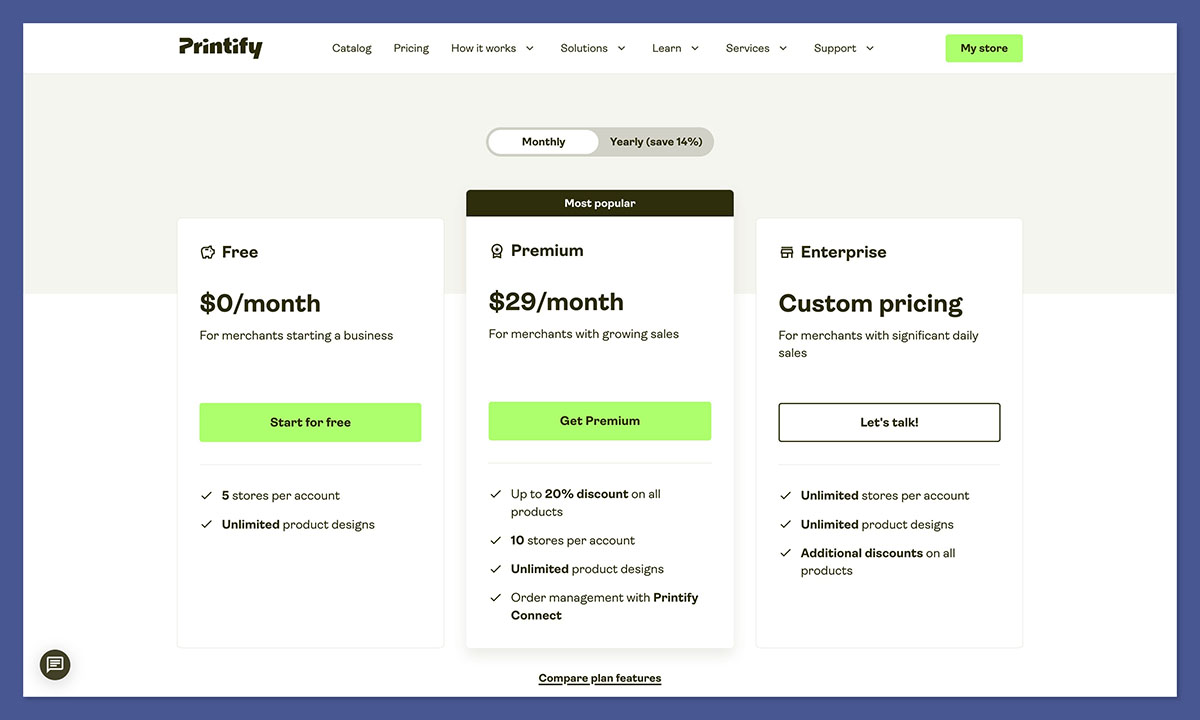
If you look past the product discounts for a second, Printify quickly ends up being a lot more expensive than Fourthwall for a lot of reasons. You’re not just paying for Premium here, you’re buying extra tools (ecommerce, marketing, and other platforms), to grow. Fourthwall gives you the scale faster, for a lower price.
Fourthwall vs Printify: Which is Best?
I want to clear things up fast here.
Pick Fourthwall when you want a high-quality store without the admin work, the tech stack confusion, and a massive team of employees.
You get a full storefront where you can sell anything from POD products, to memberships in the same place, a company that handles taxes, logistics, and customer support for you, and pricing that makes sense when you don’t want a complicated stack.
Printify is what you pick when you want more “mix-and-match” choice. It’s a POD platform with a big catalog and a lot of flexibility. It gives you the freedom to adjust, scale, and experiment however you choose. All you need to do is be willing to put in the extra effort.
The Real Choice: Control vs Convenience
If you ask me, Fourthwall and Printify aren’t really competitors. They just get compared because merch sits at the overlap, and merch is the most visible part of creator commerce. Everything underneath that layer points in opposite directions.
Printify is really for side-hustle operators who want to own the whole stack end-to-end, suppliers, margins, workflows, the lot. Fourthwall is for creators building a brand, where the priority is consistency and quality, even if that means less flexibility.
Fourthwall is built for people who don’t want to become accidental store managers. It wraps storefront, fulfillment, support, and monetization into one system and removes the work that usually forces creators to hire help earlier than they want to.
If your business grows through systems, dashboards, and constant tuning, Printify fits.
If it grows through attention, community, and output, and you want selling to stay in the background, Fourthwall is easier to live with.