There was a time, a few years ago, when I essentially wrote Payhip off as just another simple solution for selling digital products. Not a bad solution, by any means, just a pretty niche one.
However, although Payhip is still a “digital products first” platform, it’s also a lot more than that. The company’s made a lot of changes over the last few years, adding new marketing tools, a marketplace to help you find your audience, options for selling physical products, new checkout customization options; you name it.
It may not have all the meat of something like Shopify, but it’s definitely becoming a compelling option for any new seller who wants to launch a business fast, keep costs low, and leave the opportunity open for scale.
Key Takeaways
- The free plan is genuinely usable. Every feature is included on every plan, and the only cost is a 5% transaction fee.
- It’s no longer digital-only. You can sell downloads, courses, coaching, memberships, and physical products from one dashboard.
- Tax handling is the standout feature. Payhip calculates, collects, and remits sales tax internationally, including the US, Canada, the UK, and the EU.
- Design and SEO are the trade-offs. Customization is limited compared to Shopify or a full site builder.
- Paid plans buy lower fees, not more features. Plus at $29 per month drops the fee to 2%, and Pro at $99 per month removes it entirely.
Payhip Review: My Quick Thoughts
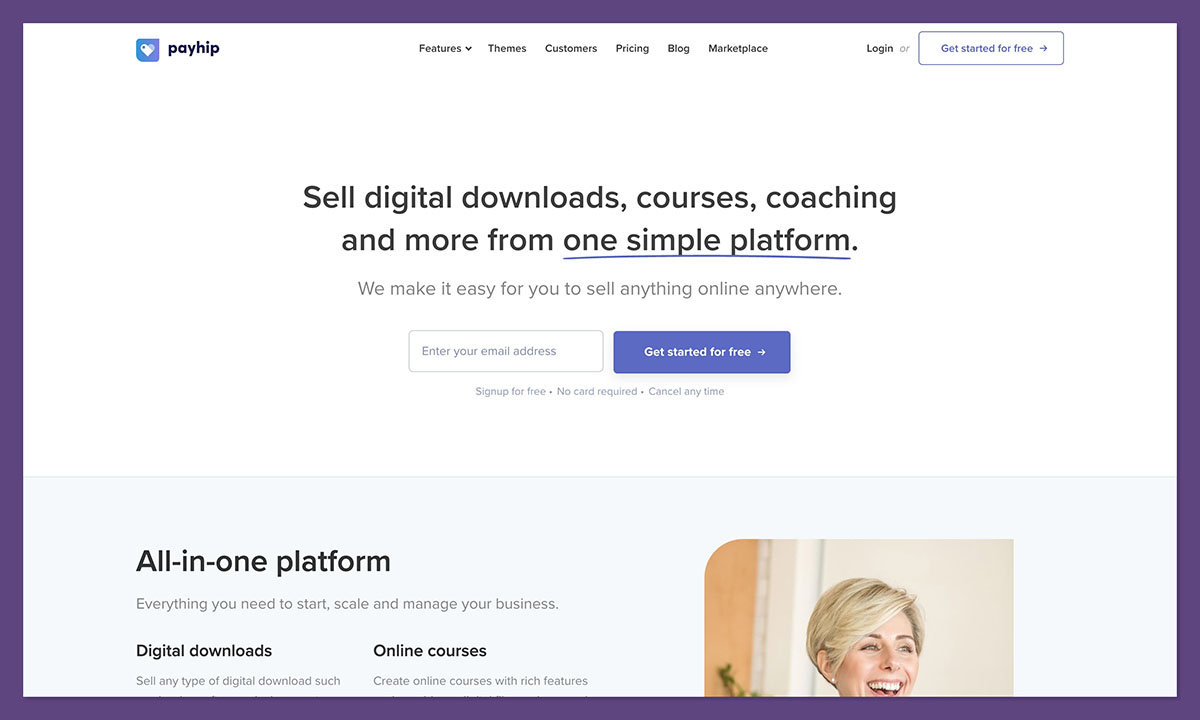
Payhip is one of the platforms that I always recommend for selling digital products, online courses, memberships, and even a few physical products. It’s free to get started and includes almost everything you need to launch your business, from automatic tax handling and multiple checkout options to cross-selling, custom checkout questions, and round the clock email support.
That said, no platform is perfect for every business. If you’re running a large enterprise store or need highly advanced SEO tools or extensive customization, you may find some of Payhip’s limitations sooner than others. For most creators and small businesses, though, it strikes an excellent balance between simplicity and powerful features.
Pros
- Generous free plan, and affordable premium options
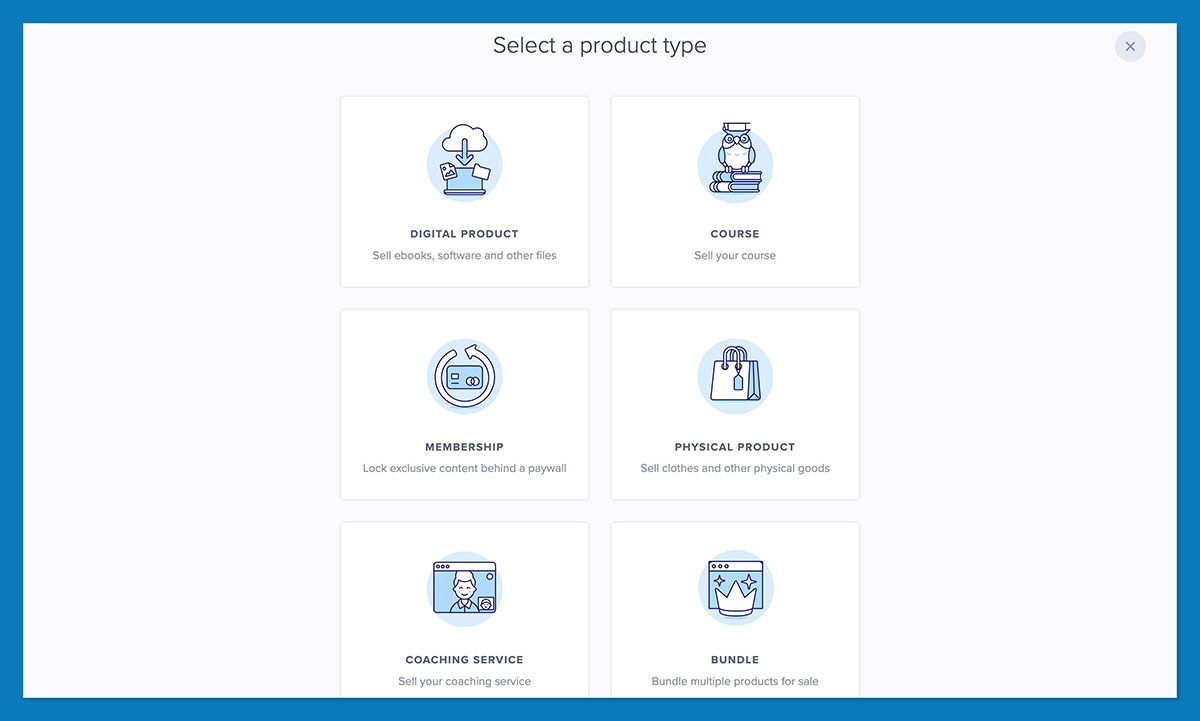
- Unlimited options for all kinds of products
- Built-in automatic tax handling internationally (US, CA, UK, EU, and more)
- Excellent checkout with branding controls
- Marketplace for higher discoverability
- Responsive, human-only customer support
Cons
- Limited customization for site design
- Not the most advanced SEO tools
- Less depth than some enterprise-level platforms
What Is Payhip?
Payhip used to be a tool for selling digital downloads. Now it’s a comprehensive ecommerce platform, focusing on helping creators sell products without the extra setup effort. You get hosted product pages, a customizable checkout, payment processing, digital delivery, store-building tools, marketing features, and analytics in one plan.
Over the last few years, Payhip has kept adding and improving features. It’s added countdown timers, wish lists, bulk editing, customer and country blocking, and the option to embed a live chat widget on your storefront. It also added collaboration features for automatic revenue splitting, content editors for post-purchase pages, variant options, and custom license keys.
The list goes on. In 2026, Payhip is expanding its payment options for customers, adding review responses, and launching their most highly anticipated feature: automated tax handling internationally, which includes the US, Canada, the UK, the EU, and more.
What I like most is that even though the feature set is bigger now, Payhip still feels accessible. You don’t need to exert the same effort you would with something like Shopify to get something launched.
The company says it’s run by two cofounders committed to keeping ecommerce tooling affordable, and that new feature launches are rolled out to existing users without price increases. If that holds, it’s a reasonable basis for building a long term business on the platform.
What Can You Sell on Payhip?
As of 2026, Payhip gives sellers plenty of ways to make money. It’s still pretty “digital-first”, so you get all the basics in that arena that you might expect, such as:
- Downloads: ebooks, PDFs, templates, Canva packs, Notion dashboards, stock files, music, videos, presets, workbooks, ZIP bundles, printables, and paid guides.
- Software and access-code products: license keys, uploaded pre-generated keys, serial numbers, and event-ticket-style codes.
- Courses: video lessons, text lessons, quizzes, downloads, surveys, assignments, embeds, drip content, and student progress tracking.
- Coaching: paid sessions, consultations, workshops, and coaching offers sold alongside downloads or course materials.
- Memberships: recurring access to gated files, paid resources, private content, or a simple resource library.
All of these products come with a custom page, where you can add things like “pay what you want” offers and download limits.
Plus, you can also sell physical products now, too, like calendars, books, planners and merch, so you don’t have to jump between Payhip and Shopify to expand.
The Store Builder, Product Pages, Checkout and Branding
One of the things I’ve always loved about Payhip is its commitment to being beginner-friendly. You don’t need any advanced skills here. You just sign up for a free account and start building.
There’s less freedom to customize in Payhip’s store builder, but you can still add a custom domain, play around with pre-built themes, and adjust sections with the drag-and-drop editor. There are custom pages, options for colors, fonts, and logo uploads.
The product pages give you plenty of options too. Sellers can add cover images, descriptions, previews, audio or video, variants, and sales limits. I particularly like the variants feature, because you can sell one product with different file formats, tiers, or licence types. For instance, you might sell an eBook as a PDF, MOBI, and EPUB download.
I also like the content editor added in 2025, which means you can give customers a really professional post-purchase page, complete with text, images, links, embeds, and videos, even instructions for the digital product they’ve just bought.
Checkout and payment options have seriously improved on Payhip lately too. You can customize your checkout with a logo, brand colors, and banner image (or custom CSS if you like). There’s also Apple Pay, Google Pay, and 100+ extra payment methods sellers can offer, now.
Sales and Marketing Features
The sales and marketing features on Payhip have definitely come a long way. One of my favorite additions has to be the integrated marketplace (launched in 2024). It gives you an easy way to list products and reach people who are already browsing.
Coupons got a proper upgrade in 2025, too, with the option to bulk-build up to 50 unique coupon codes at once. You can also limit redemptions, and set a minimum order spend.
Plus, there are a bunch of little extras that can help ramp up your conversion rates, like:
- Limited time sales with countdown timers
- Wishlists for buyers still getting ready to buy
- Seller responses for reviews
- Emails and an embeddable storefront chat widget for relationship building
There’s also Payhip’s new collaboration features. They let you set up co-marketing strategies with other sellers and creators, with automatic revenue splitting.
You don’t get a comprehensive marketing automation platform, obviously. You might still need to add your own tools (like Klaviyo) later on. Still, you’ll have more than enough to run a launch, push a bundle, reward affiliates and start monetizing your audience.
Taxes, Delivery, and Product Protection
I know, to some would-be sellers, this is likely to seem like the most boring section, but honestly, it’s one of my favorites. Selling digital products sounds easy until you remember all the tax rules, file delivery issues, refunds, licence keys, and so on you have to deal with.
Payhip takes care of much of that work for you. It automatically calculates, collects, and remits sales taxes for eligible sales internationally, including the US, Canada, the UK, and the EU. Instead of worrying about changing tax regulations or registering and filing taxes in multiple jurisdictions, you can leave the heavy lifting of tax compliance to Payhip.
The delivery process is much simpler with Payhip too. The platform ensures that buyers get access to the digital products you sell straight after purchase. Plus, basic protections are built in. For instance, downloads are limited to three attempts by file. The PDF stamping adds the purchase details for the buyer to every page, too.
Payhip also handles software licence generation, issuing, and storage. There’s a whole licence key system, which lets Payhip either generate keys automatically, or enables sellers to upload their own. You can also verify keys, enable or disable them, and check API call usage rates.
Another thing, Payhip added customer and country blocking, alongside custom digital orders in 2024. Those things let you avoid regions you don’t want to sell into, keep problematic buyers away, and create one-off orders without messing up your entire site.
Payhip Pricing: How Much Does It Really Cost?
Payhip’s pricing structure is probably the first thing that attracts a lot of new sellers to the platform in the first place. The free forever plan is genuinely great. It doesn’t stop you from accessing features like other free plans that feel more like a watered down demo.
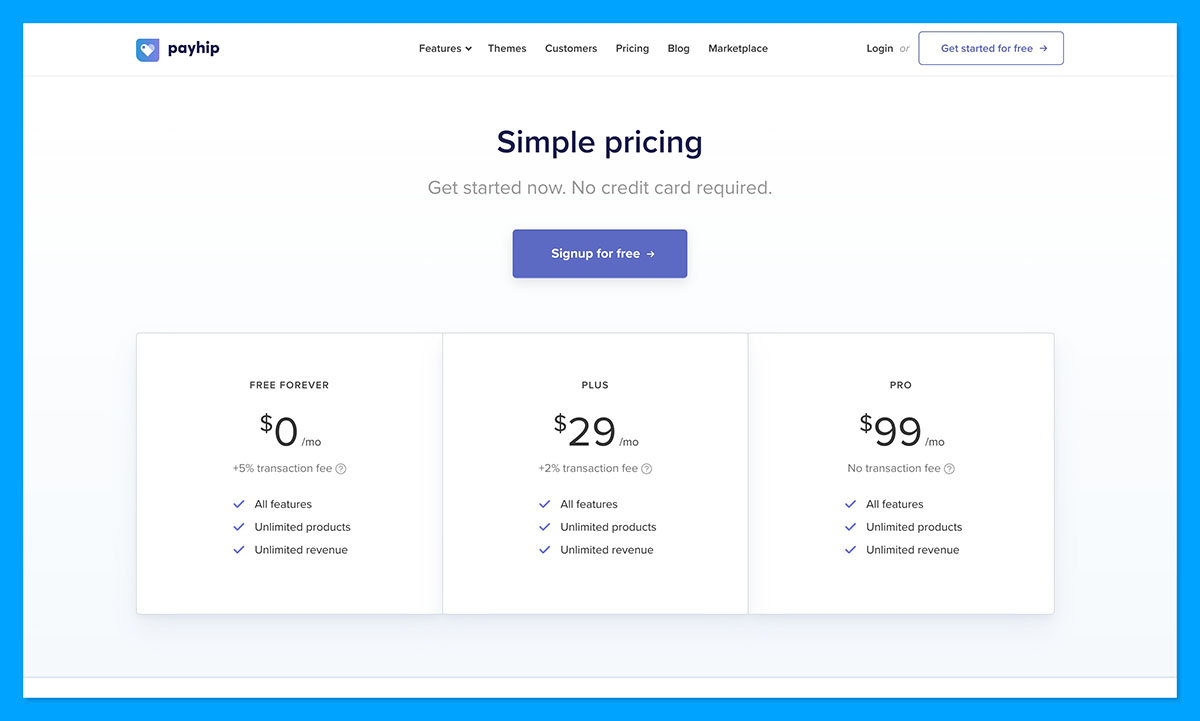
The only thing it does is add a 5% transaction fee to purchases. That seems like a lot, but it can still make Payhip cheaper than something like Etsy, Shopify, or Gumroad for beginners.
| Plan | Monthly cost | Payhip transaction fee | Features included |
|---|---|---|---|
| Free Forever | $0 | 5% | All features, unlimited products, unlimited revenue |
| Plus | $29 | 2% | All features, unlimited products, unlimited revenue |
| Pro | $99 | 0% | All features, unlimited products, unlimited revenue |
Once you start scaling you can upgrade to a paid plan, which cuts the transaction rate down. The Plus plan for $29 per month takes it to 2%. The Pro plan, for $99 per month, cuts the transaction rate to zero. That pricing model is genuinely great for creators.
You can test a bunch of different products without paying rent on software before your first customer arrives. Once you know you’re selling, you simply upgrade, and remove some of the transaction fees.
Who Should Use Payhip, and Who Shouldn’t?
Again, I’ve never reviewed a platform that I can honestly describe as perfect for every kind of seller. Payhip is fantastic if you’re a creator that wants to sell digital downloads (maybe with a couple of physical products from time to time), without taking on a huge tech stack.
It’s easy to use, flexible, and affordable, particularly when you’re just getting started.
I’d recommend Payhip to anyone who:
- Wants to sell digital products without paying monthly fees first
- Needs access to a marketplace to expand their audience
- Would prefer to leave the tax admin burden completely to the platform
- Doesn’t need extensive customization options
- Appreciates an excellent high converting checkout setup
I’d skip Payhip if you:
- Run a store focused exclusively on physical products
- Need a lot of in-depth SEO and analytics tools
- Want high levels of customization for every part of your site
- Need a proper LMS system for courses
Final Verdict: Is Payhip Worth It?
The Bottom Line
For the right seller, Payhip is absolutely worth it. It’s one of the strongest all-in-one platforms available for creators, educators, coaches, and digital entrepreneurs who want a straightforward way to sell without stitching together a dozen tools.
It does have its limitations. While you can sell physical products, Payhip isn’t trying to compete with platforms like Shopify for large ecommerce stores with complex inventory, shipping, and fulfillment requirements. It also doesn’t offer the same level of store customization as some enterprise ecommerce platforms.
But that’s also the point.
Instead of trying to be everything to everyone, Payhip focuses on helping creators build and grow a digital product business with as little friction as possible. It combines everything you need into one platform, including a storefront, secure digital delivery, automatic tax handling, payments, marketing tools, affiliate management, memberships, online courses, and customer management. You don’t have to spend days stitching together multiple apps or paying for a long list of third-party tools just to get your business off the ground.
The fact that every feature is available on every plan, including the free plan, also makes it one of the most accessible platforms for new creators. As your business grows, you can simply upgrade to reduce transaction fees instead of paying extra to unlock essential functionality.
If you’re a creator, educator, coach, or digital entrepreneur who wants a straightforward way to sell digital products, courses, memberships, coaching, or even a few physical products, Payhip delivers an excellent balance of simplicity, powerful built-in features, and value for money, making it an easy platform to recommend for most digital-first businesses.