
Teespring (now known as Spring) and Printify are two of the most popular print-on-demand (POD) platforms on the market, but which one comes out on top?
I’ve spent hours testing, comparing, and analyzing their features, pricing, and performance to help you make the right choice for your ecommerce store.
As a result of my research, Printify takes the crown for flexibility, margins, and product variety, but Teespring still has strong advantages for creators looking for a simple, all-in-one selling solution.
Quick Verdict: Teespring vs Printify
- Printify – Best overall for flexibility, higher margins, and larger product catalog
- Teespring – Best for creators and beginners who want an all-in-one platform
In this review, I’ll break down exactly why Printify edges ahead, comparing the two platforms on pricing, product range, quality control, shipping, marketing tools, and ease of use.
Quick Comparison: Teespring vs Printify
| Feature | Teespring | Printify |
|---|---|---|
| Best For | Beginners and content creators | Experienced sellers wanting control |
| Pricing | No monthly fee | Free plan + Premium at $29/month |
| Product Range | Limited selection | 800+ products |
| Supplier Choice | No | Yes |
| Quality Control | Consistent but fixed | Variable but flexible |
| Marketing Tools | Built-in audience & integrations | External marketing needed |
| Shipping Speed | Slower | Potentially faster with local suppliers |
Best for Pricing: Printify
When it comes to pricing, both platforms approach it differently, and that can have a big impact on your margins.
Teespring’s pricing
Teespring keeps things simple: no subscription fees, ever. Every product has a fixed base cost that already includes Teespring’s platform and production costs, and your profit is simply the difference between that and your retail price. The model is clean, but the trade-off is that the base cost is non-negotiable, you can’t switch suppliers or shop around for a cheaper blank.
Typical base costs for common products:
- T-shirt: ~$10–13, sold at $24.99 = ~$10–12 profit
- Hoodie: ~$21–38, sold at $44.99–$50 = ~$12–13 profit
- Mug: ~$7–10, sold at $18–$19.99 = ~$8–12 profit
Teespring does offer volume-based discounts, hit certain monthly sales thresholds and your base prices drop the following month. That said, sellers have reported base price increases over the years that quietly compress margins if you don’t adjust your retail pricing accordingly.
Printify’s pricing
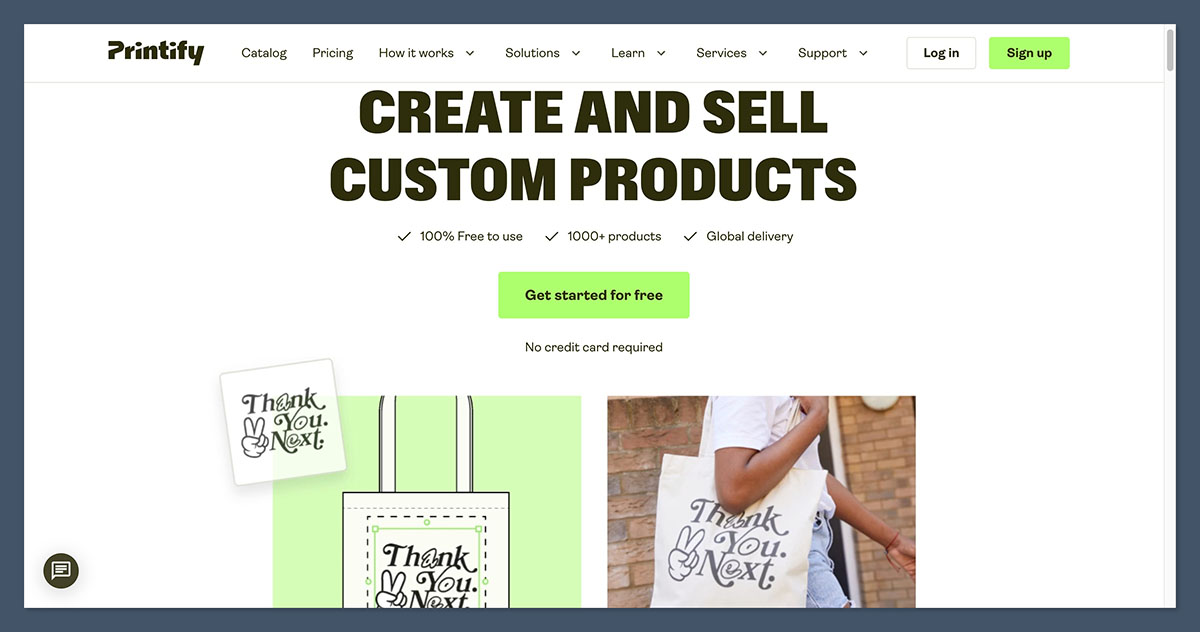
Printify runs a freemium model. The free plan covers unlimited product designs across up to 5 stores with no per-order platform fee. The Premium plan (currently $39/month, or ~$24.99/month billed annually) discounts base product costs by up to 20–33% depending on the product, and because you’re choosing from multiple print providers, you can also optimize base costs independently of the subscription.
Typical margin examples on the free plan:
- T-shirt: ~$9 base + $4 shipping, sold at $24 = ~$11 profit
- Hoodie: ~$20 base + $5 shipping, sold at $45 = ~$20 profit
- Mug: ~$6.50 base + $4 shipping, sold at $19 = ~$8.50 profit
With Premium discounts, a Gildan 64000 tee base cost can drop to roughly $7.25, pushing profit on a $21.99 retail price to around $14.70, higher than most comparable Teespring scenarios.
When does Printify Premium pay for itself?
At an average base cost of around $12 and a 20% discount, the Premium subscription breaks even at roughly 17–20 orders per month at the current $39/month price. Beyond that threshold, every additional order widens the margin gap over Teespring, especially on higher-ticket products like hoodies and all-over prints.
When Teespring is actually cheaper
For low-volume sellers, Teespring’s zero fixed-cost model can win on total spend. If you’re selling a handful of items per month and don’t already have a Shopify or Etsy store, Teespring avoids both the Printify Premium fee and any ecommerce platform subscription. Its built-in storefront also means no hosting, theme, or app costs.
For a creator monetizing a modest YouTube or TikTok audience with unpredictable or seasonal volume, those savings can outweigh the per-unit margin benefits Printify offers at scale.
Pricing comparison table
| Teespring | Printify Free | Printify Premium | |
|---|---|---|---|
| Monthly fee | $0 | $0 | $39/mo (or ~$24.99/mo annual) |
| T-shirt base cost | ~$10–13 | ~$9 | ~$7.25 |
| Supplier choice | No | Yes | Yes |
| Volume discounts | Threshold-based | No | Up to 20–33% off base costs |
| Best for | Creators, low volume | Testing, early-stage sellers | Scaling ecommerce stores |
The Winner
Printify wins for pricing flexibility and long-term profitability. Teespring is a reasonable starting point if you’re low-volume or want to avoid fixed costs entirely, but once you’re moving more than 20 orders a month, Printify’s supplier network and Premium discounts pull ahead on margins.
Best for Product Range: Printify
If variety matters, Printify is the clear winner.
Teespring’s range is focused on core POD items:
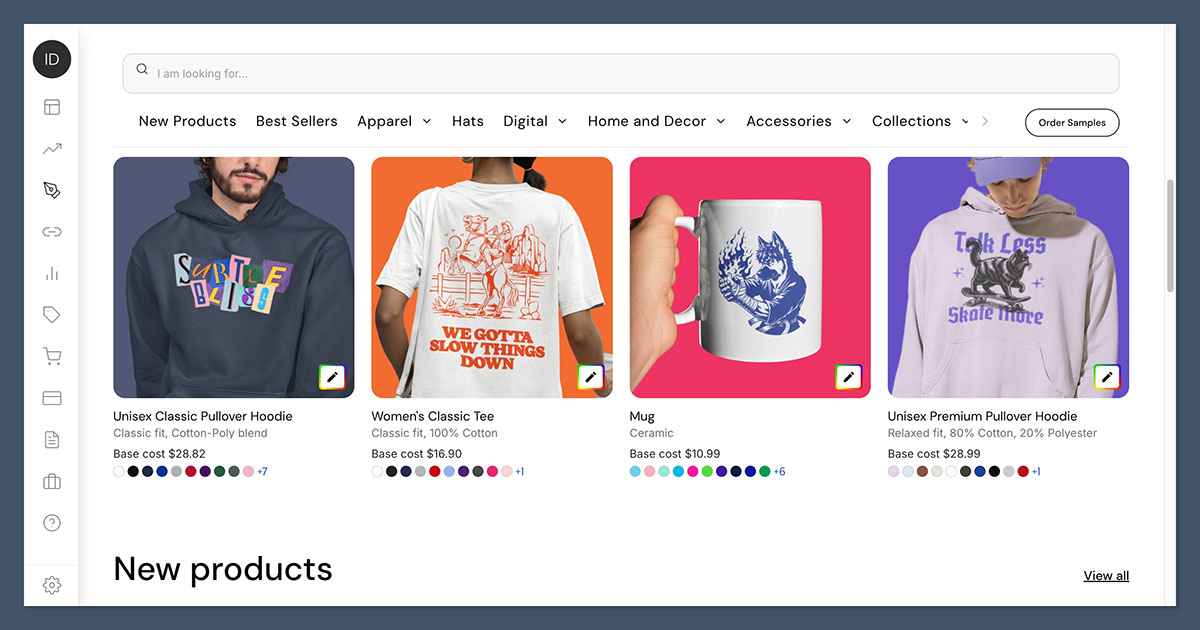
- T-shirts and hoodies
- Mugs and drinkware
- Tote bags
- Posters and wall art
- Phone cases
- Stickers and socks
Printify’s range is far larger, with over 800+ products, including:
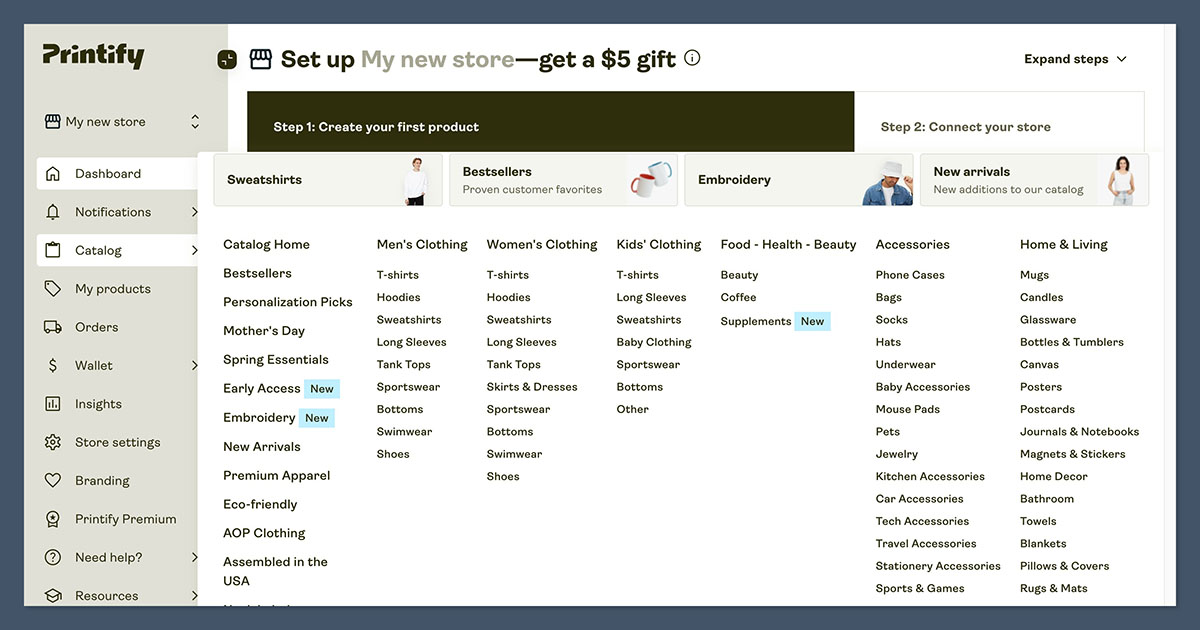
- All standard apparel and mugs
- Sneakers, flip-flops, boots
- Pet products like dog beds and bowls
- Blankets, pillows, beanbags
- Jewelry, watches, accessories
This range advantage means Printify sellers can easily test niche products, adapt to trends, and offer unique catalog options that competitors might not have.
For example, if a seasonal item like personalized Christmas stockings becomes popular, you can add it instantly without waiting for the platform to expand its offering.
The Winner
Printify takes this one easily, it offers far more variety, making it a better choice if you want to test niche products or expand your catalog beyond apparel.
Best for Quality Control: Teespring
In POD, quality consistency matters. Poor print quality or sizing issues mean refunds and bad reviews.
Teespring
- Production is handled in-house or with fixed partners
- Consistency is generally high across orders
- Less control over suppliers, but fewer surprises
Printify
- Quality depends on the supplier you choose
- Some suppliers are excellent, others less so
- You can switch suppliers if issues arise, but it requires testing
The difference in control means that Teespring is a safer bet for those who value uniform results over customization.
With Printify, you have the opportunity to find a supplier that exceeds Teespring’s quality, but you also carry the risk of inconsistent output if you don’t research and test suppliers thoroughly.
The Winner
Teespring edges ahead for quality control, you lose flexibility, but you gain predictability.
Best for Shipping: Printify
Shipping speed can be a deal-breaker for online shoppers.
Teespring shipping
- US delivery: 5–12 business days
- International: 10–16 business days
- Rates vary by product but are flat-rate within categories
Printify shipping
- US delivery: 2–5 business days with local suppliers
- International: 7–20 business days
- Costs vary by supplier and destination
- You can choose suppliers closer to your customers for faster delivery
Having supplier choice also means you can strategically select fulfillment partners in different regions, reducing not only delivery time but also shipping costs for certain countries.
This flexibility is especially important for sellers targeting multiple markets, where delays can impact customer satisfaction and repeat purchase rates.
The Winner
Printify wins here, being able to choose local suppliers means potentially faster and cheaper delivery for key markets.
Best for Marketing Tools: Teespring
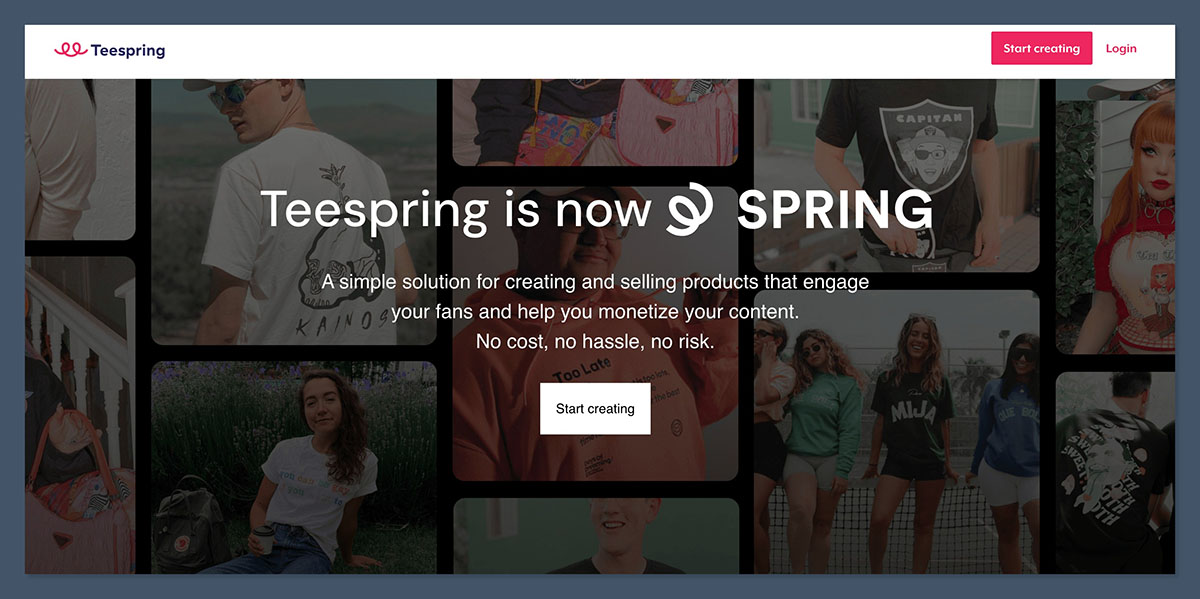
This is where Teespring shines.
Teespring marketing
- Built-in marketplace traffic
- Integrated with YouTube Merch Shelf, Twitch, Instagram Shopping
- Perfect for influencers and creators who already have an audience
Printify marketing
- No marketplace, all traffic must come from your own store or ads
- Works best with Shopify, Etsy, WooCommerce stores that have existing marketing channels
The ability to tap into Teespring’s integrations without extra software or advertising spend can dramatically shorten the time it takes to make your first sale.
Creators who already have a loyal audience can connect their storefront in minutes, start promoting, and begin generating orders without having to build an entire marketing strategy from scratch.
The Winner
Teespring takes this one, its built-in marketing integrations make it ideal for creators who want to focus on content, not ad campaigns.
Best for Ease of Use: Teespring
When it comes to setup, Teespring is much more beginner-friendly.
Teespring setup
- No need for your own website
- Upload your design, set a price, and start selling
- Handles production, payments, shipping, and customer service
Printify setup
- Requires integration with an ecommerce platform like Shopify or Etsy
- More steps to launch and more responsibility for customer service
For sellers who value speed to market, Teespring’s process can be completed in under an hour, from sign-up to having a live product.
Printify, on the other hand, is better suited for those willing to invest more time in setup to gain additional control over their store’s operations and product sourcing.
The Winner
Teespring wins here, it’s simply faster to get started.
Teespring vs Printify: Final Verdict
Both platforms have their place in the POD industry, but they cater to different seller types.
- Choose Teespring if you’re a beginner, content creator, or want a completely hands-off selling process with built-in audience tools.
- Choose Printify if you want full control over pricing, product range, and fulfillment, and you’re ready to handle your own marketing.
This comes down to your priorities: if you want ease and built-in exposure, Teespring makes sense.
If you’re focused on building a scalable ecommerce business with higher margins and diverse products, Printify is the better investment.
| Category | Winner |
|---|---|
| Pricing | Printify |
| Product Range | Printify |
| Quality Control | Teespring |
| Shipping | Printify |
| Marketing Tools | Teespring |
| Ease of Use | Teespring |
Overall Winner: Printify, its flexibility, margins, and massive product selection make it the better long-term choice for scaling an ecommerce POD business.