
After poring over 12 top platforms and spending upwards of 200 hours testing their performance, integrations, flexibility, and pricing – here are my top 5 picks for composable commerce platforms this year.
Whether you’re just starting your print on demand business or scaling way past the limits of Shopify – these platforms give you way more control, speed and power to connect your favorite tools, shop front and suppliers.
Quick Comparison Table
| Platform | Rating | Starting Price | POD Integration | Best For |
| Medusa | 4.7 | Free (Self-hosted) | Yes (Printful, custom APIs) | Best for developers |
| Swell | 4.5 | $99/month | Yes | Best all-in-one backend |
| Commerce Layer | 4.4 | Custom pricing | Yes | Best for global scaling |
| Crystallize | 4.3 | $49/month | Yes | Best for speed |
| Saleor | 4.2 | Free (Open source) | Yes | Best for GraphQL fans |
1. Medusa: Top Pick for Developers
Rating: 4.7/5
Starting Price: Free (self-hosted)
POD Integration: Yes (via plugin or API)
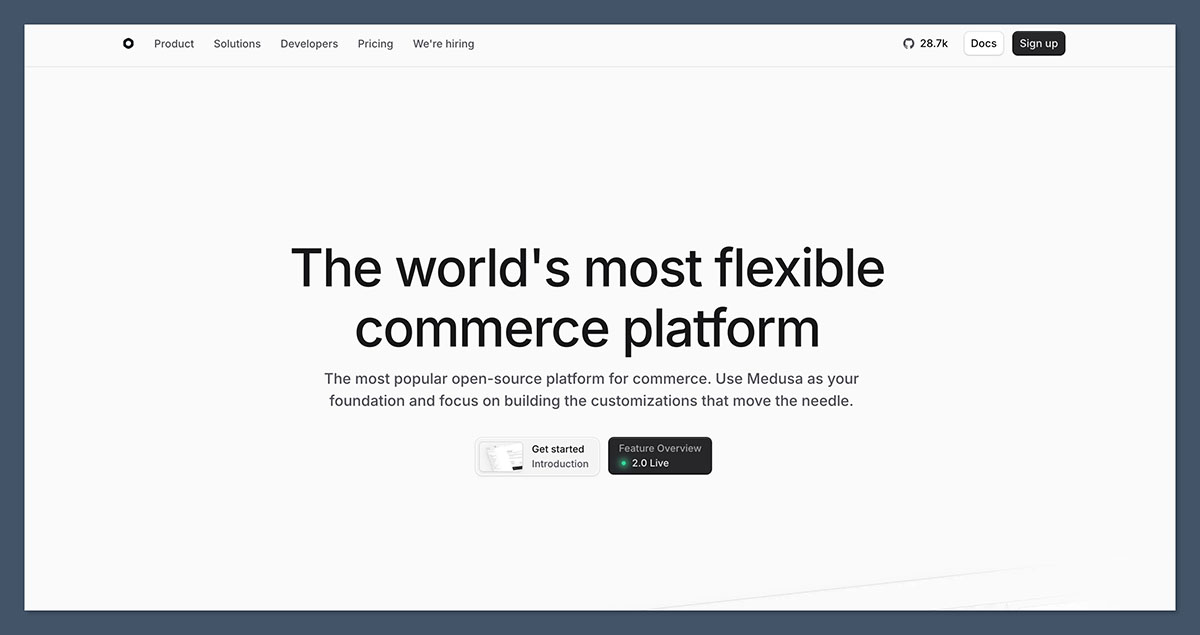
Medusa is the most developer-friendly composable commerce platform Ive used. Its built with a modular architecture using Node.js, and everything is fully API-driven.
You can self-host it for free, but you can also use their cloud option if you dont want to deal with infrastructure hassle.
Pros
- Fully customizable backend
- Built-in admin panel is pretty cool
- They have a plugin system for payments, shipping & Printful
- Great documentation – they really go the extra mile
Cons
- You do need to know what youre doing
- No native front-end builder – youll need to bring your own
Why It’s a Great Choice for Print-on-Demand
Medusa makes it super easy to customize order flows.
For example, if I want to auto-route orders from US customers to Printify and EU orders to Gelato, I can build that logic right into the workflow. No need for expensive apps.
You also get total control over product variants, dynamic pricing, and checkout UX.
| Feature | Available in Medusa? |
| Headless architecture | Yes |
| Built-in admin dashboard | Yes |
| Multi-supplier support | Yes |
| Hosting included | No |
| Printful API integration | Yes |
Medusa is a top pick if you want full control and aren’t afraid to get your hands dirty.
It’s flexible, scalable, and built to grow with your print-on-demand business – especially if youre ready to move beyond the limits of traditional ecommerce platforms.
2. Swell: Top Choice for All-in-One Composable Backend
Rating: 4.5/5
Starting Price: $99/month
POD Integration: Yes
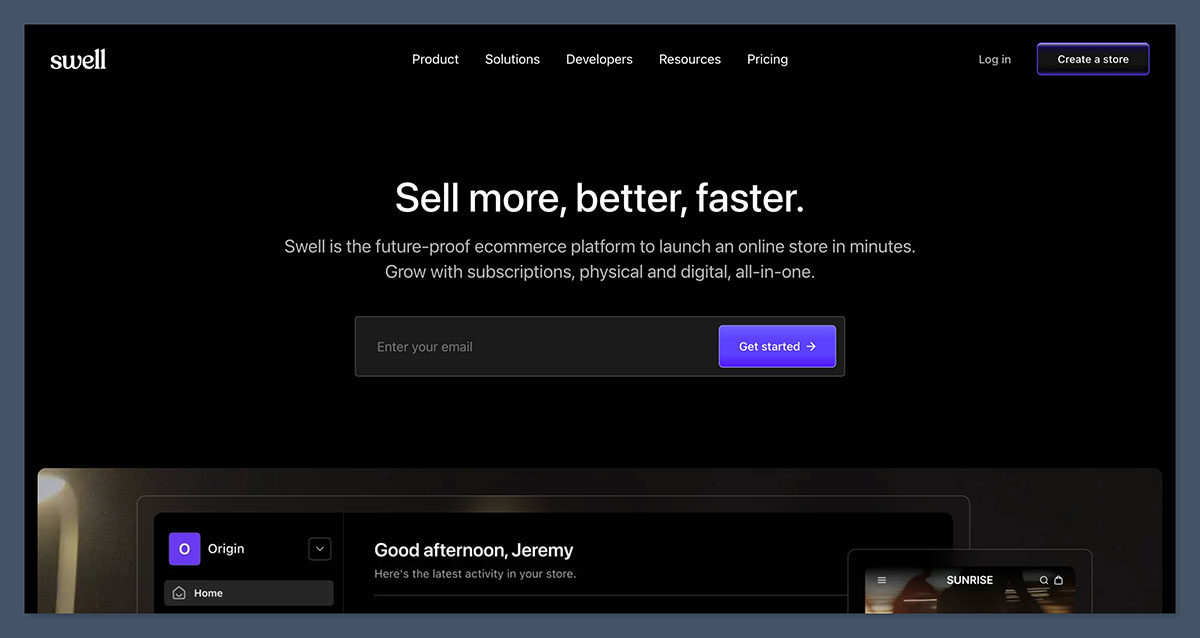
Swell is ideal for teams that want flexibility without having to build everything from scratch themselves.
It gives you an API-first backend with a built-in CMS, product catalog, cart system, and customer profiles.
It’s a lot faster to launch than Medusa and you don’t need to bring in a team of developers to get it going.
Pros
- API-first but still pretty user-friendly
- CMS & storefront included
- Multi-tenant setup for running multiple stores
- Supports digital, physical & subscription products
Cons
- The price jumps after the $99/month mark
- Youll have limited design control if you dont build a custom front-end
Why It’s a Great Choice for Print-on-Demand
You can build product configurators, launch multi-product bundles, and create custom checkout flows – without needing 10 third-party apps.
If you’re selling through multiple brands or micro-niches, Swell supports multi-storefronts under one backend.
| Feature | Available in Swell? |
| Built-in CMS | Yes |
| Headless compatible | Yes |
| Custom product options | Yes |
| Storefront included | Yes (basic) |
| Multi-store management | Yes |
Swell is a strong choice if you want the benefits of composable commerce without having to build everything from scratch.
It strikes a great balance between flexibility and ease of use, making it ideal for POD sellers who need room to grow but still want a manageable backend.
3. Commerce Layer: Top Pick for Global POD Sellers
Rating: 4.4/5
Starting Price: Custom pricing
POD Integration: Yes (via API)
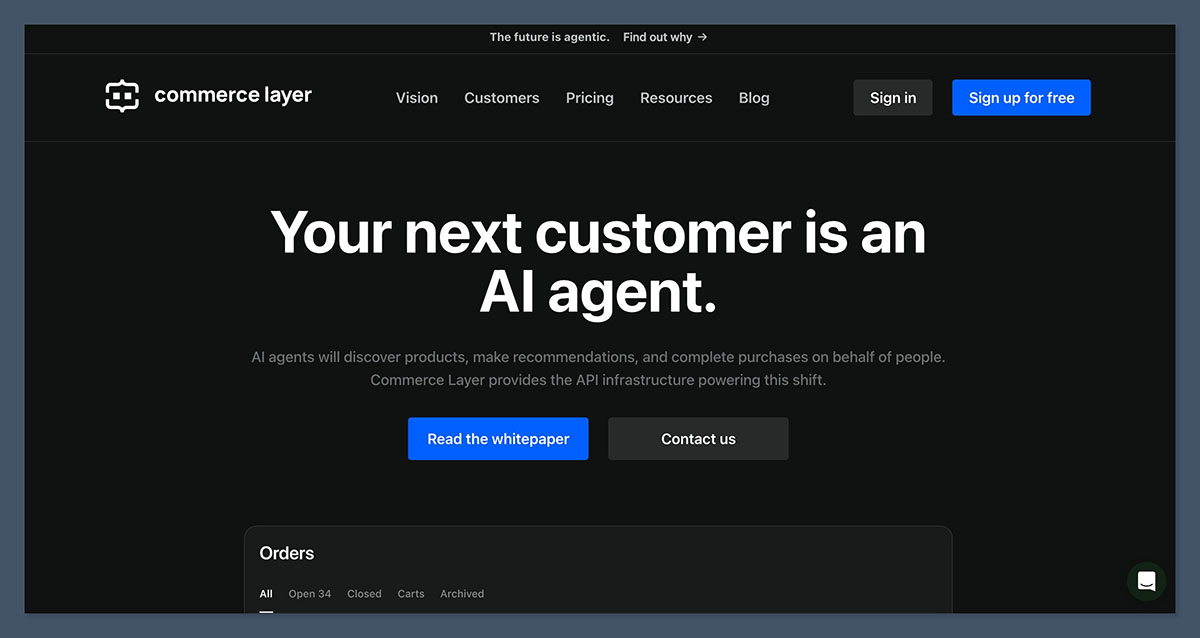
Commerce Layer is built for international ecommerce. If you’re running multiple currencies, languages, or warehouses – this is where Commerce Layer comes out on top.
It’s a pure headless API solution and while its more enterprise-focused, it has clear advantages for scaling POD brands globally.
Pros
- Multi-currency, multi-country support
- Built-in promotions engine
- Connects to any frontend
- Great for international shipping logic
Cons
- Not beginner-friendly at all
- Their custom pricing model may be out of reach for smaller stores
Why It’s a Great Choice for Print-on-Demand
I really like Commerce Layer because it makes handling complex catalogs in multiple regions a breeze.
You can create price books for each market, route orders to different suppliers, and tailor the shopping experience to the customer’s location.
| Feature | Available in Commerce Layer? |
| Multi-currency support | Yes |
| Localization for pricing | Yes |
| Inventory by region | Yes |
| Visual frontend editor | No |
| Open-source or cloud only | Cloud only |
Commerce Layer is built for brands that sell across borders, with some seriously powerful tools for handling currencies, localised pricing and managing inventory by region.
It’s a strong fit for established print-on-demand businesses that are looking to scale internationally without losing any control.
4. Crystallize: Best for Speed & Performance
Rating: 4.3/5
Starting Price: $49/month
Print-on-Demand Integration: Yes
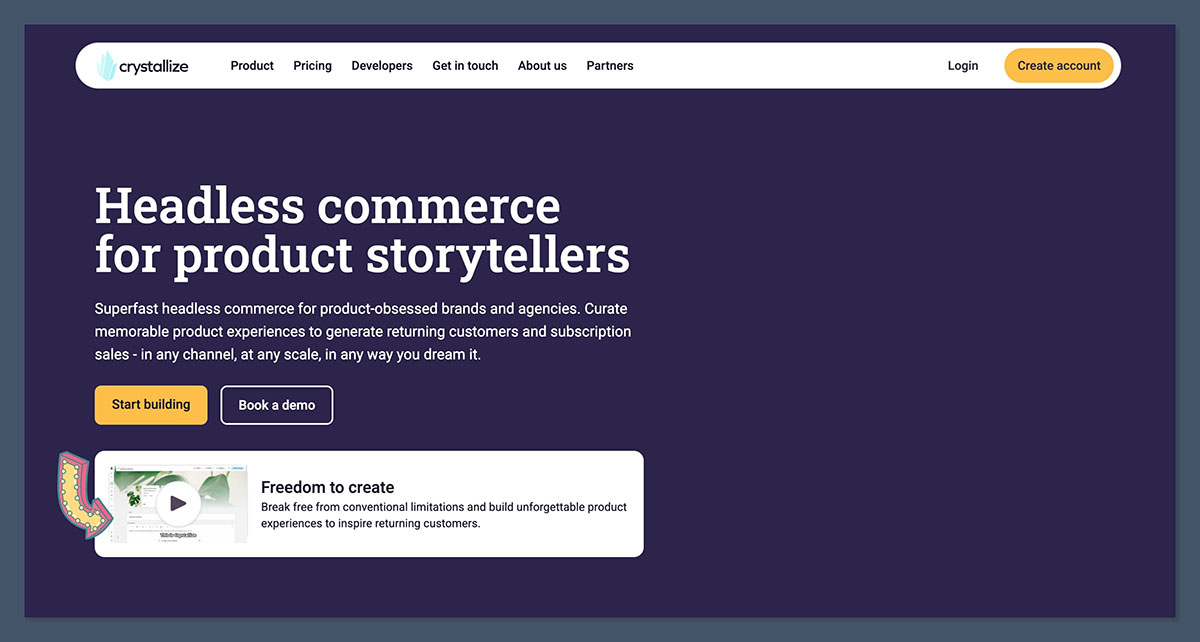
Crystallize is one of the fastest API-first platforms out there. Its GraphQL-powered engine really delivers when it comes to performance and ecommerce.
With a built-in product information manager (PIM), subscription engine and custom checkout options, this platform has got a lot going for it.
Pros
- Lightning-quick GraphQL APIs
- Rich content and ecommerce in one place
- Great documentation and SDKs to help you get started
- Subscriptions and bundles supported right out of the box
Cons
- Not as widely used as some of the other options
- You may need to get some dev support to get the most out of its advanced features
Why Crystallize works so well for print-on-demand
When site speed really matters (e.g. you’ve got mobile users and international traffic to consider), Crystallize really stands out from the pack.
It supports dynamic content blocks which are a great way to showcase different categories of print-on-demand products, or even customise your landing pages for seasonal products.
| Feature | Available in Crystallize? |
| Built-in PIM | Yes |
| Rich content modeling | Yes |
| Subscription engine | Yes |
| Real-time pricing updates | Yes |
| Frontend templates included | Starter kits only |
Crystallize is ideal for print-on-demand sellers who care about speed and flexibility. Its built-in tools and fast APIs make it a great choice for brands selling personalised or subscription-based products.
5. Saleor: Best for GraphQL and Frontend Control
Rating: 4.2/5
Starting Price: Free (Open source)
Print-on-Demand Integration: Yes
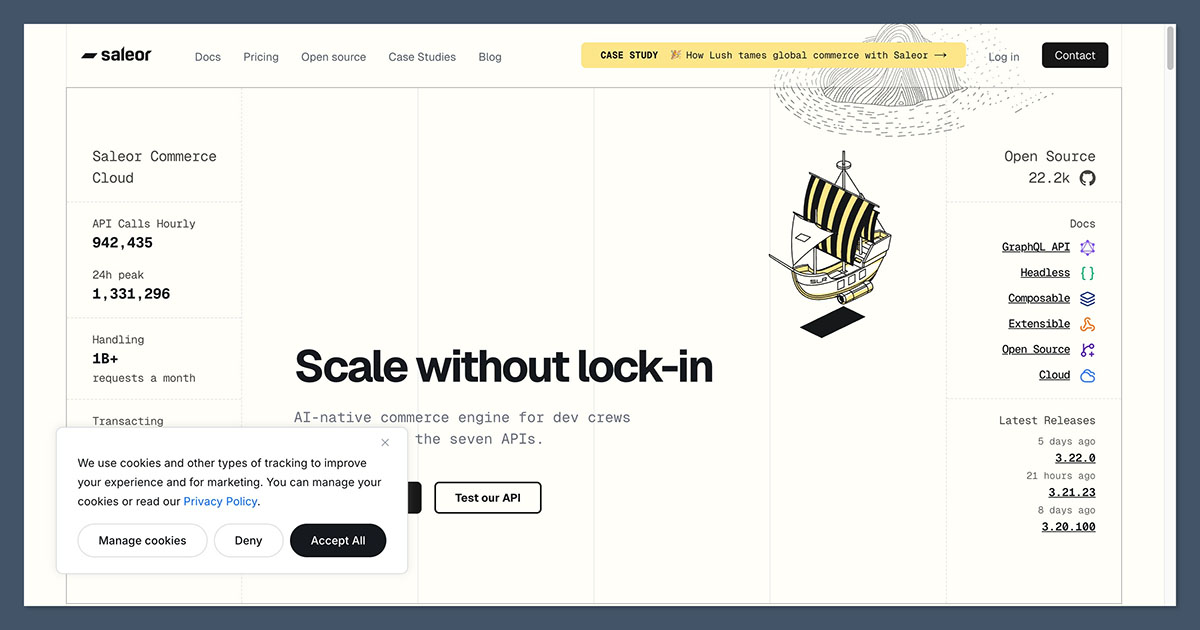
Saleor is a developer-first ecommerce platform that’s built around GraphQL.
It’s got a very clean architecture, and if you’re already working with a React-based stack (like Next.js), Saleor will fit right in. Plus there’s also a hosted version, or you can run it yourself to save some cash.
Pros
- Full GraphQL API
- Clean, modern codebase
- You can use a React storefront
- Great community to help you get started
Cons
- Needs a dev team to get set up
- Admin interface can be a bit of a steep learning curve
Why Saleor works so well for print-on-demand
Saleor is great when you want a fast and scalable backend and you want to handle everything else yourself – product builder logic, third-party apps, and the front-end.
It’s built with modern tools and supports a full range of ecommerce features including discounts, taxes, shipping zones and product variants.
| Feature | Available in Saleor? |
| GraphQL support | Yes |
| Self-hosted option | Yes |
| Custom storefront templates | Available (React) |
| Multi-channel sales | Yes |
| Admin UI out of the box | Yes |
Saleor is a great option if you’re building with modern tools like React and want full GraphQL support.
Its developer-focused, scalable and works well for print-on-demand sellers who need to manage multiple sales channels under one system.
Key Takeaways
- Best for developers: Medusa
- Best all-in-one backend: Swell
- Best for global ecommerce: Commerce Layer
- Best performance: Crystallize
- Best open-source GraphQL: Saleor
All five platforms support composable architecture and are well-suited for print-on-demand sellers. The best choice will depend on how much control, how much speed or how much support you need.
How to Choose the Right Composable Commerce Platform
Here’s a quick checklist that helped me narrow down my options:
| Criteria | Why It Matters |
| API-First Architecture | Ensures flexibility with suppliers and tools |
| Checkout Customization | Helps boost conversions |
| Product Variant Management | Crucial for custom POD options |
| Supplier Integration | Allows direct routing via Printful, Gooten |
| Speed and Performance | Reduces bounce rate and improves UX |
| Developer Ecosystem | Easier scaling and community plugins |
| Cost Structure | Lower long-term costs with open source |
Bottom Line: Which One Should You Choose?
If you’re a developer or you work with one, Medusa is your best bet – it’s free, powerful and flexible enough to build whatever workflow you want.
If you want a plug-and-play option that’s a bit easier on the dev time, Swell or Crystallize offer ready-made components, strong APIs and great support.
For teams spread across multiple regions or that need to get their heads round international pricing – Commerce Layer is a tough one to top.
And if you’re after a state of the art headless setup that’s all sleek and modern, with full support for GraphQL, then Saleor is going to slot right in with a Jamstack or React setup.