
People act like starting a business is so easy these days, and to a point, they’re right. That’s why the creator economy has really taken off.
Anyone can build a site, partner with a dropshipping or print on demand company, and start selling. But there are still decisions to make, like which platform you’re going to launch with.
For people who want to sell customized products (without making them in-house), Printful is usually the obvious choice. You get hundreds of high-quality products, excellent design tools, and global fulfillment, built-in.
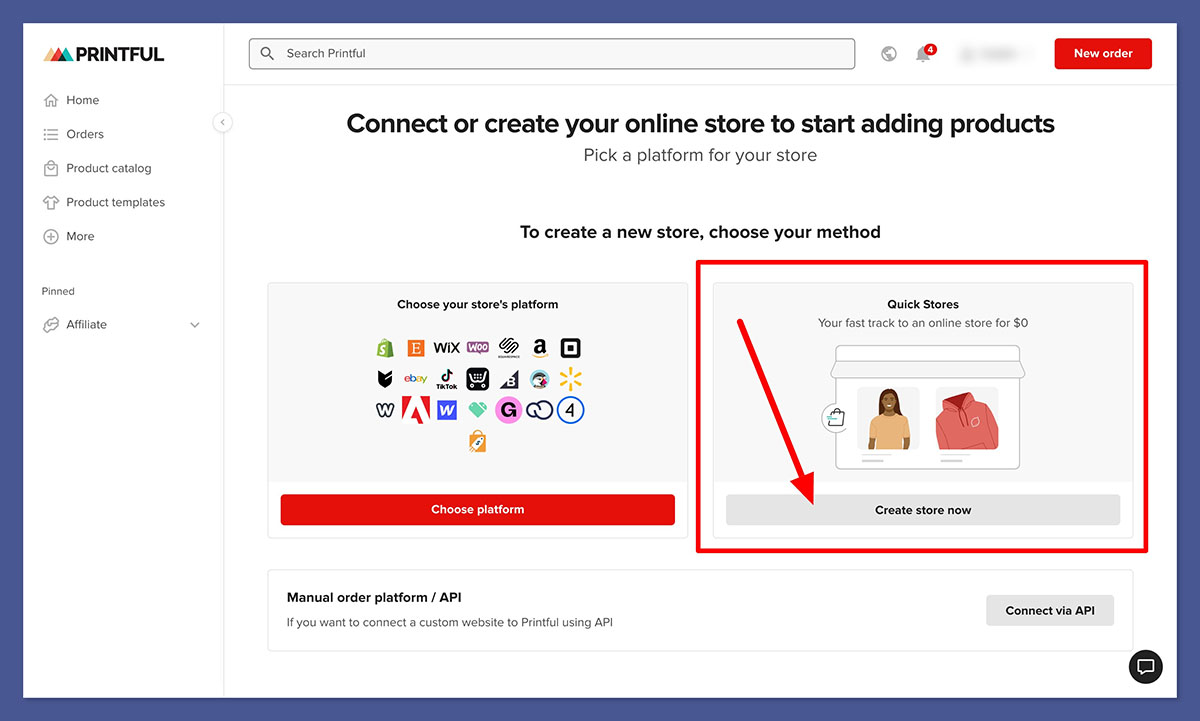
The only thing really missing is a storefront, but Printful handles that with its “Quick Stores” option, although that’s far more restrictive than Fourthwall’s builder.
Fourthwall is a bit different. It has more products to offer than Printful (particularly if you consider the specialist items like plushies and premium blankets). The design tools are a lot stronger, with automatic conversion of transparent art to half-tones and flexible DTF and DTG printing.
You also get a lot of things Printful doesn’t offer, like a full store builder with headless options, and a system that lets you sell dropshipped products, digital downloads, memberships, and your own home-made goods alongside print on demand items.
The mistake people make is treating this as a straight “which is better?” decision. It’s not. These tools aren’t competing head-on.
They’re solving different problems that just happen to overlap around merch.
Quick Verdict: Who Should Use Fourthwall vs Printful
Fourthwall and Printful both support creators, just in different ways, which is probably why comparing them is so confusing.
Fourthwall makes sense if you want to sell great quality products without having to hire a team to run your store for you. You’re probably publishing on YouTube, Twitch, TikTok, or running a newsletter. You don’t want to work with Shopify, a POD app, a membership platform, and a bunch of specialist developers.
Fourthwall gives you one storefront, handles fulfillment, and even deals with customer support for products from its catalog. You still keep control too. Companies can choose to handle as much of their own support as they like. Fourthwall is just there to help.
Printful fits better if you think like an ecommerce operator, or you’re running a side-hustle, rather than a premium brand.
If you’re happy running Shopify or WooCommerce, managing support yourself, and dialing in margins over time. Printful gives a strong product catalog, and plugs neatly into whatever stack you’re building.
Quick Comparison: Fourthwall vs Printful
| Feature | Fourthwall | Printful |
|---|---|---|
| Storefront | Built-in full store builder | Basic “Quick Store” page |
| What You Can Sell | POD, digital, memberships, donations, custom items | POD only |
| Integrations | YouTube, Twitch, TikTok, IG Shop | Shopify, Etsy, WooCommerce, etc. |
| Support | Handles catalog product support | You handle support |
| Pricing | Free or $15/mo (no digital fees) | Free or $19.99/mo (POD discounts) |
| Best For | Creators wanting one platform | Ecommerce builders needing flexibility |
Fourthwall vs Printful: The Side by Side Comparison
Fourthwall and Printful get lumped together because they both touch merch, but they’re solving very different problems.
Printful is a service. A very good one. It exists to print things accurately, ship them quickly, and connect to whatever ecommerce setup you’ve already chosen.
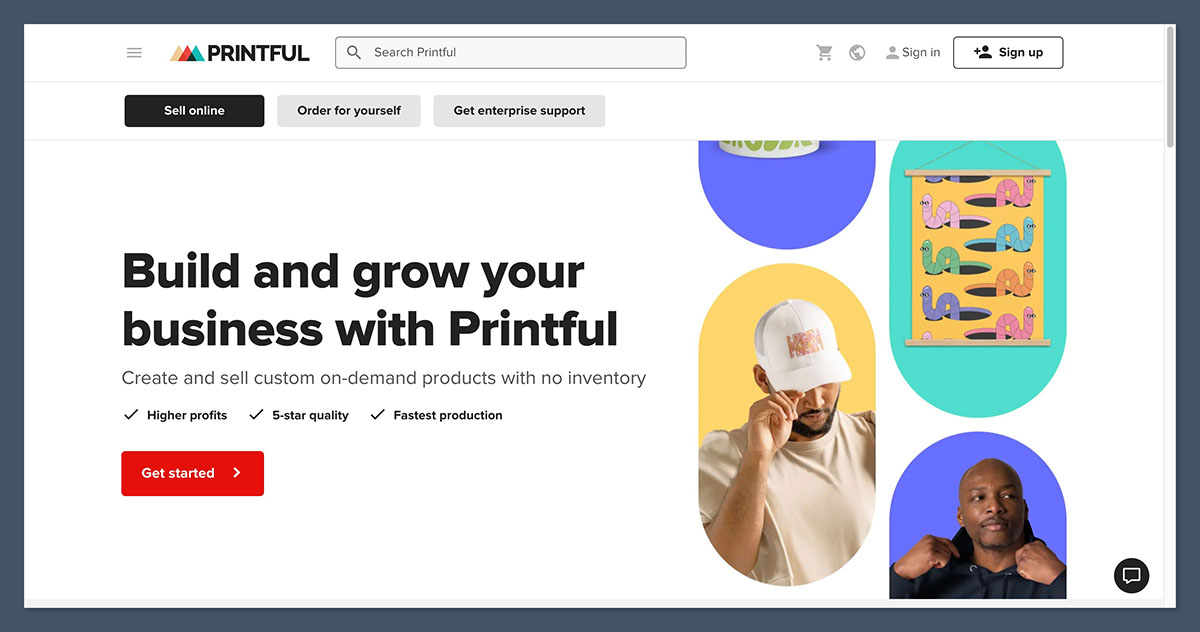
Shopify, Etsy, WooCommerce, or anything else. If you like building your own stack and controlling every layer, Printful is ideal, and honestly, one of my favorite POD platforms.
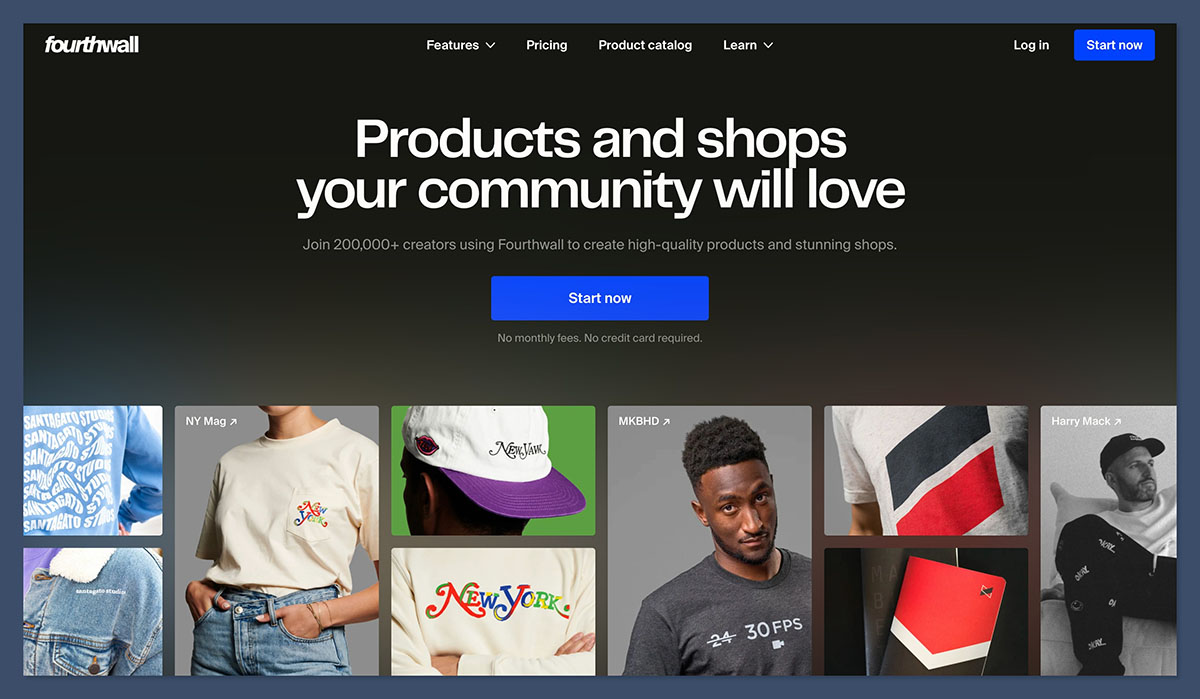
Fourthwall wants to be the place everything happens. It handles your POD products too, but also your storefront, checkout, digital products, memberships, even customer support for catalog items, quality control, logistics, and taxes. They handle the tedious pieces, so you can focus on doing what you love.
Brand Building Tools: Storefronts, Websites, and Integrations
This is where the Fourthwall vs Printful comparison usually goes off the rails, because people try to treat them like they’re solving the same problem. They aren’t.
Fourthwall gives you a customizable storefront and website because it assumes you don’t want to run a full ecommerce stack. You get a clean site builder, a handful of layouts, custom pages like About or FAQs, and the ability to connect a custom domain.
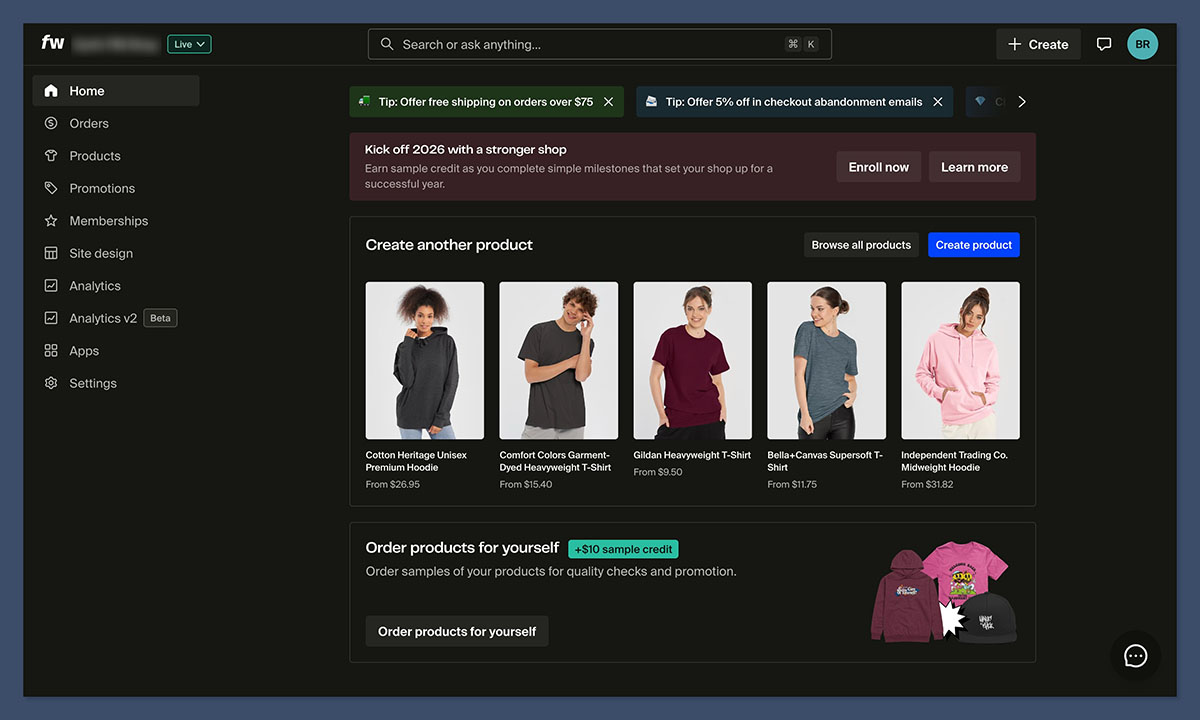
There’s not a lot of control here compared to something like Shopify, but you do get more scope than you’d expect.
Compared to Printful’s “Quick Stores” option, which essentially gives you a shortcut for online selling, Fourthwall is a lot more advanced.
The Quick Stores product is a bit like creating a “link in bio” shop page for your social media followers. You don’t really get a full ecommerce website.
However, Printful does have an edge over Fourthwall because it integrates directly with the bigger tools you may already be using.
You can link it to Shopify, WooCommerce, Etsy, Wix, and BigCommerce, among others.
That means you can end up with a lot more tools than Fourthwall can give you, such as:
- Advanced inventory management
- Marketing tools
- Customer service and support tools
The downside is that you’re technically still managing a bunch of different tools with Printful. It’s designed for people trying to build an ecommerce business with a collection of tools.
Fourthwall is for people who just want great quality without having to stress about the details.
What You Can Sell: Product Variety and Monetization Scope
This part of the comparison can be tricky for some sellers, especially if they’re focusing on print on demand.
Printful’s POD is a little smaller than Fourthwalls, but you do have hundreds of items to choose from, plenty of printing styles, (although Fourthwall offers that too), and a great set of design tools for customizing products and making mock-ups.
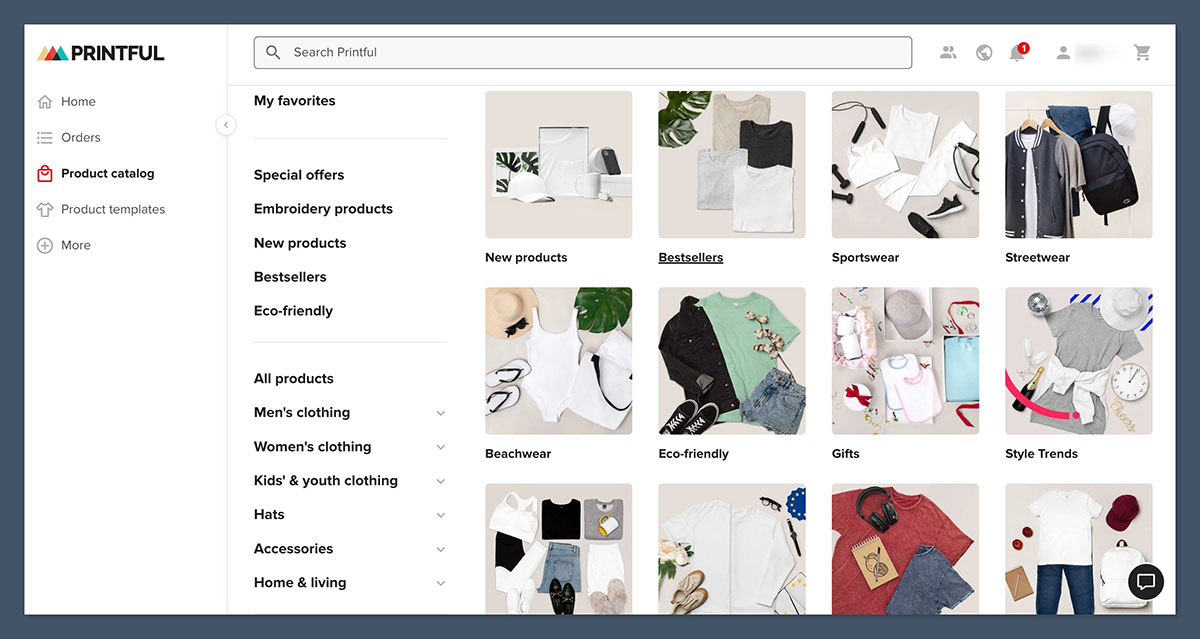
What people sometimes overlook is that while Fourthwall gives you more freedom over what you sell. Alongside print on demand products, Fourthwall lets you:
- Work with them to source custom products from dropshipping providers, like key caps or plushies (you can’t get those from Printful)
- Sell your own products, sourced from independent vendors or made by you
- Offer digital products like courses, downloads, or eBooks
- Create and manage memberships for premium content
- Accept donations from members of your community
Printful is about depth within one monetization lane.
Fourthwall is about letting creators stack multiple revenue streams without duct-taping five platforms together. Neither approach is better by default.
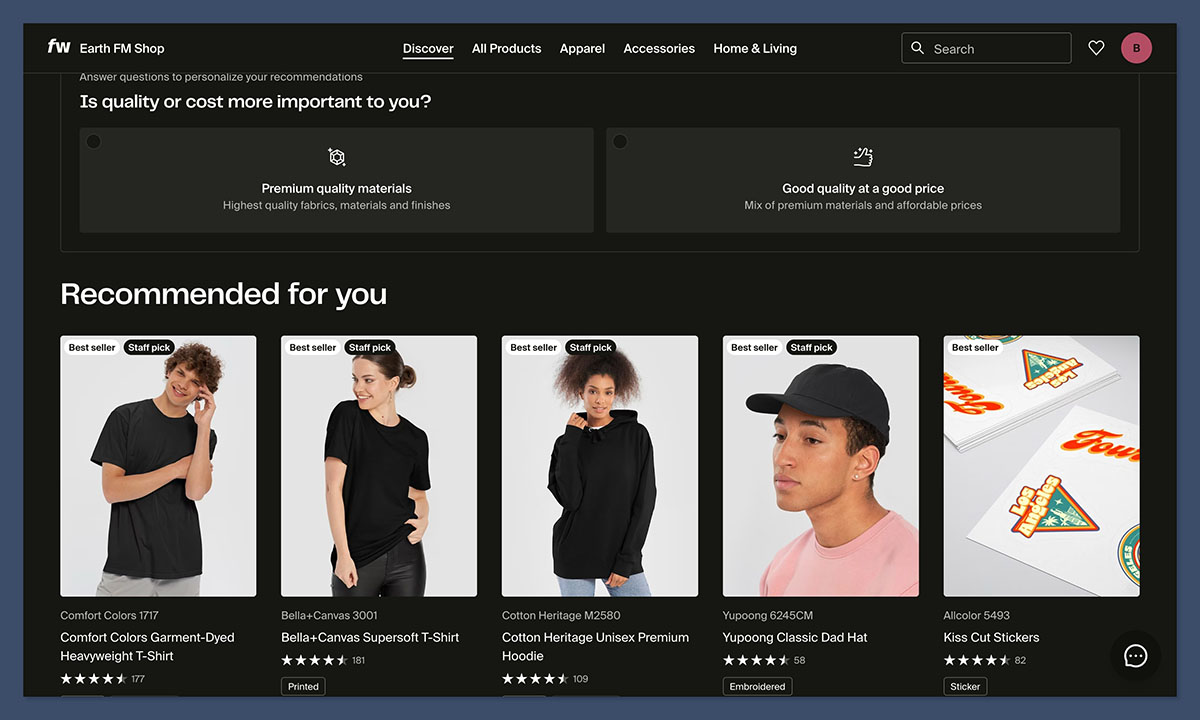
It just depends on whether you’re building a merch business, or a creator business that happens to sell merch.
Product Quality, Pricing Control, and Profit Margins
Again, the comparison between Fourthwall and Printful can get messy here if you’re looking at print on demand alone.
The base prices of Fourthwall’s products aren’t the cheapest, but they’re pretty much in-line with what you get from Printful (without a Growth membership). For instance a Bella+Canvas Supersoft T-Shirt costs you about $11.75 from Fourthwall, and about $11.69 from Printful.
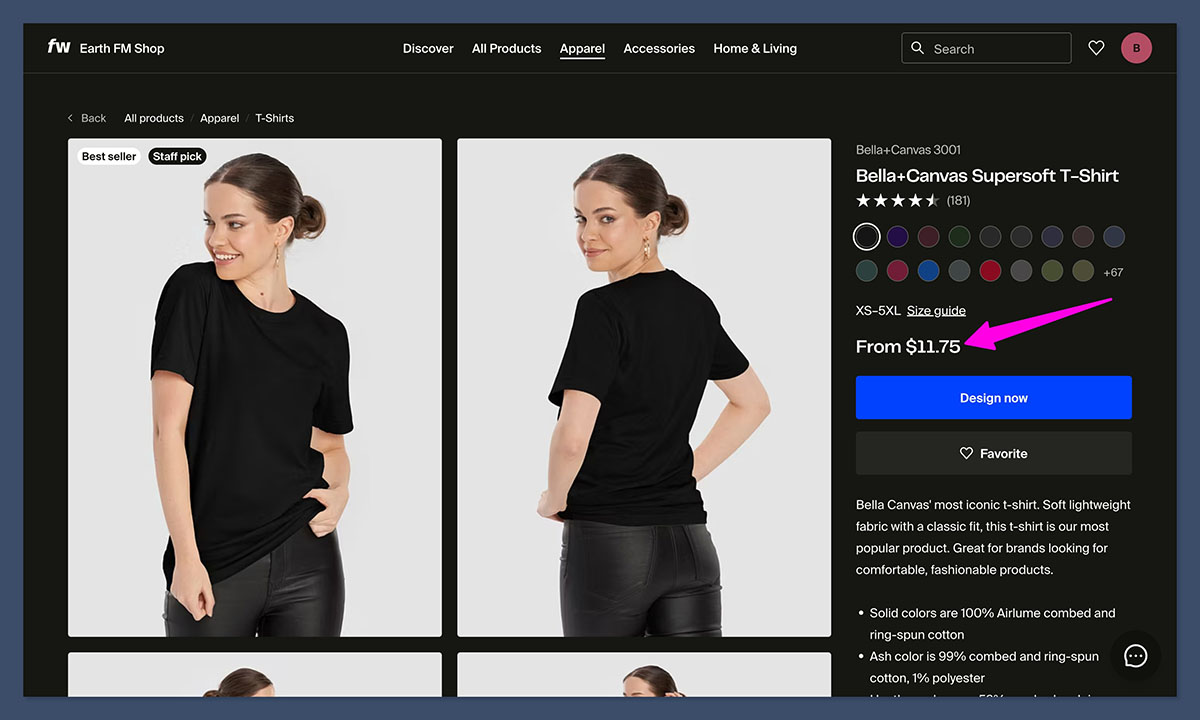
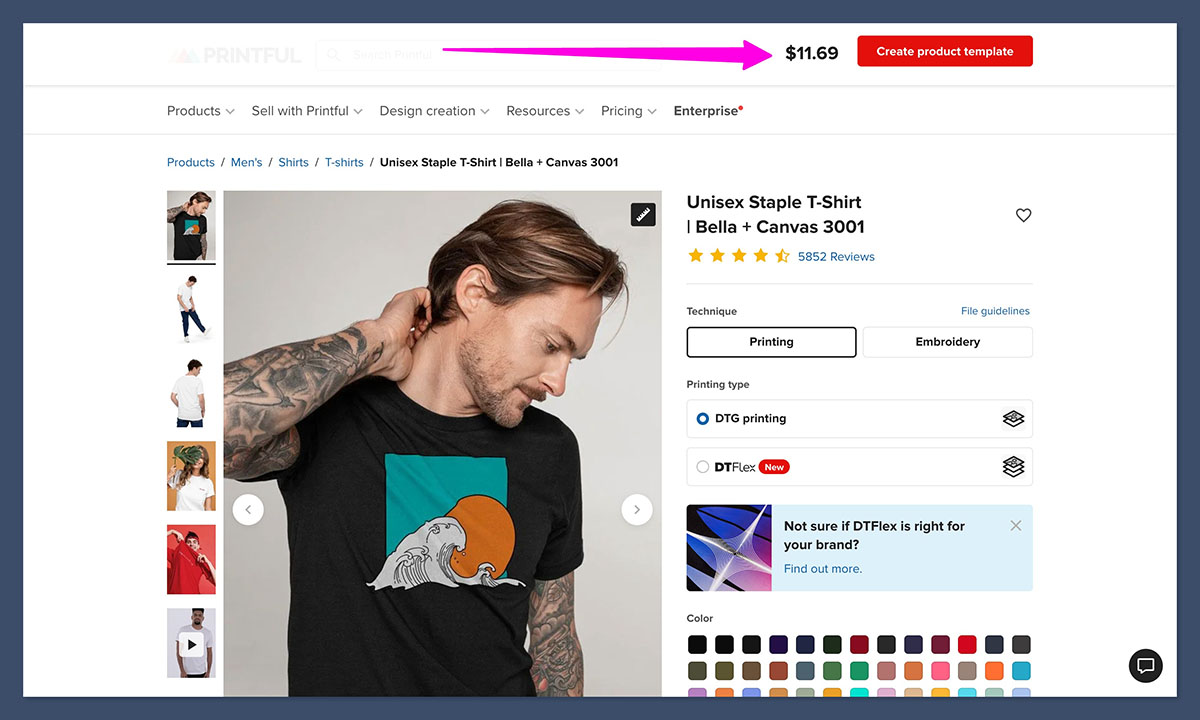
Printful has an excellent reputation for quality, but Fourthwall goes a step further. They’ve actually negotiated with Printful vendors to ensure they use maximum quality settings on their machine, so you always get premium quality.
Fourthwall also lets you sell a massive selection of products in one place, without having to pay for extra platforms. Printful really only focuses on print-on-demand, so if you want to sell anything else, you have to handle it all on your own.
Shipping, Fulfillment, and Customer Support: Who Does the Work?
Again, Printful and Fourthwall are pretty similar here. If you’re selling print-on-demand products with either platform, they handle fulfillment for you, globally.
Both offer similar levels of speed, and the price for shipping is about equal, depending on the size of the parcel, and where you’re sending it.
Printful does give you options for “branding” the fulfillment experience, as far as I can tell, like labels, and different packaging options.
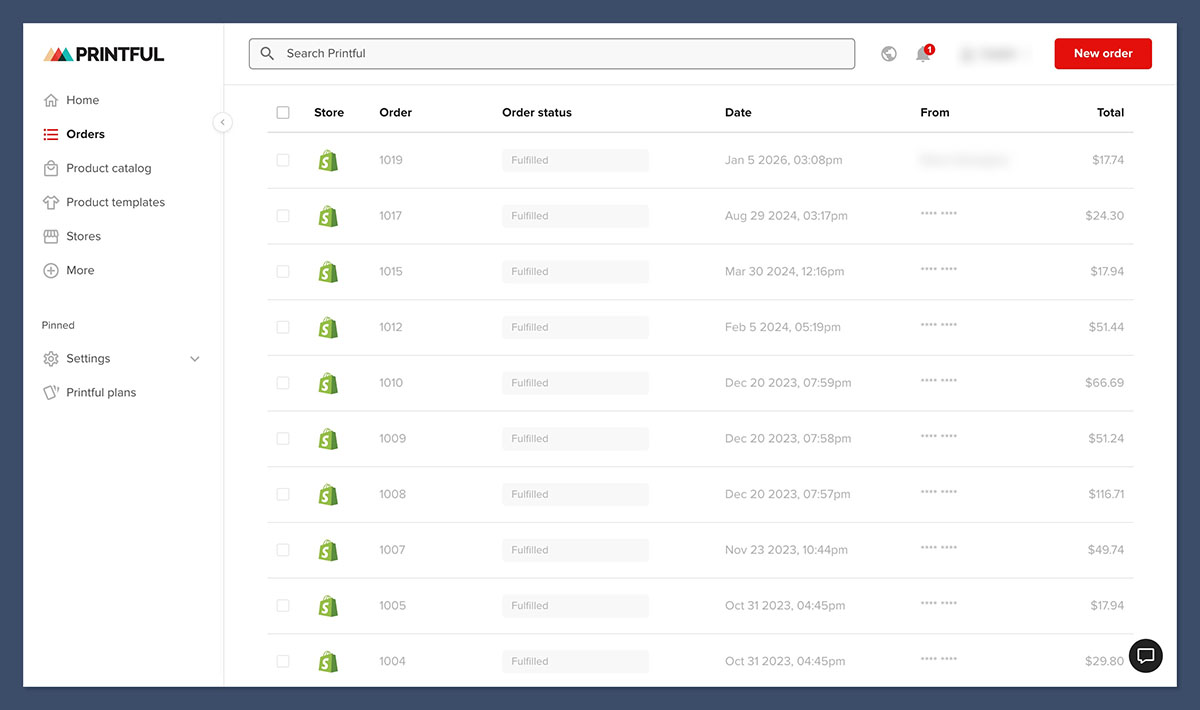
Fourthwall does the same, but it automates it all for you, so you don’t have to handle the design yourself. Fourthwall also handles a lot more on your behalf.
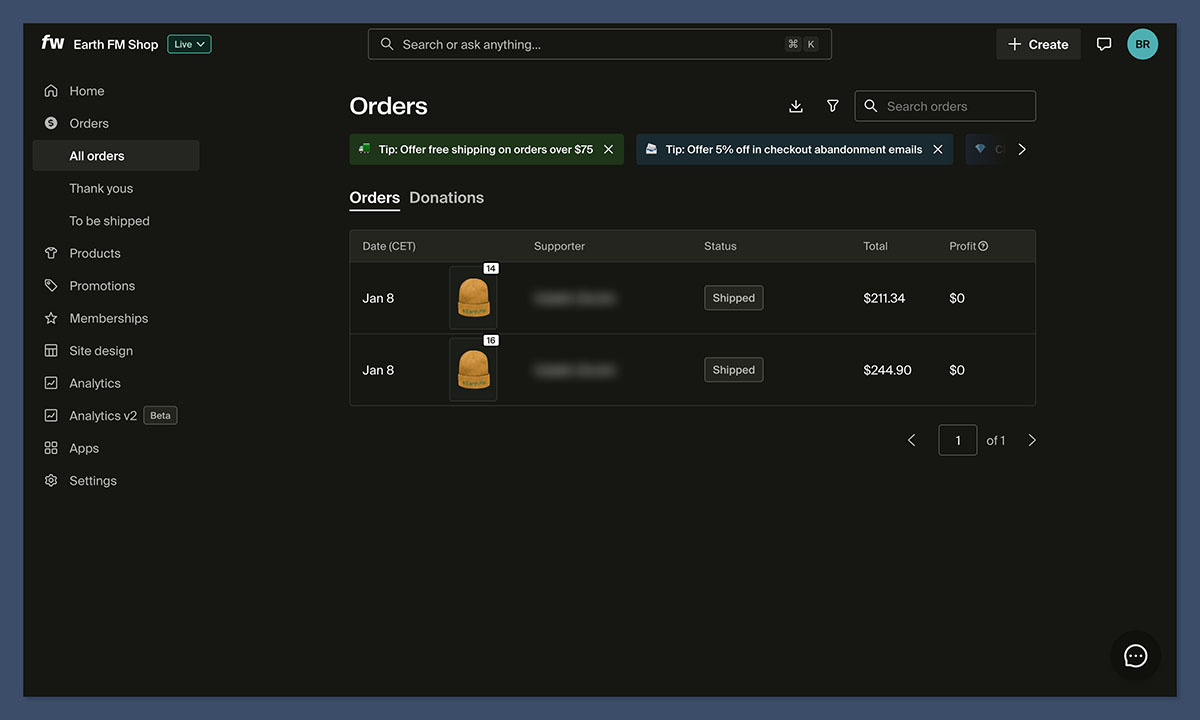
It deals with customer service if the products are from its catalog. That means order issues, delivery questions, and basic refunds don’t automatically become your problem. You still own the brand, but you’re not stuck playing support agent every time a hoodie goes missing. Fourthwall also handles things like taxes and logistics.
That difference doesn’t matter much at ten orders a month. At a hundred, it starts to. At a thousand, it’s the difference between running a business and answering emails all weekend.
Extra Features and Ecosystem Tools
This is the section where the gap between Fourthwall and Printful becomes a bit clearer, because the “extra features” both platforms offer address different problems.
Fourthwall’s extras are mostly about keeping an audience close. Stuff like promo codes, direct messages to supporters, and those little “Thank You” upsells you see after checkout.
You’re not getting a huge sales and marketing toolkit, but the system is clearly built for creators who already have people paying attention and want to nudge them a bit further without setting up another tool.
You also get a huge selection of specialist integrations with Fourthwall, such as direct links to YouTube Product Shelf, TikTok Shop, Twitch Merch, and IG/FB shopping.
Printful’s extras live on the other end of the workflow. Mockups, design tools, branding options like pack-ins and custom slips are all there, just like they are on Fourthwall.
The only thing that Printful offers differently is integrations with ecommerce platforms like Shopify and WooCommerce. Although arguably, you don’t really need those with Fourthwall, as all the features are already built-in.
Pricing Comparison: Free vs Paid Plans
The good news is both Printful and Fourthwall let you get started for free. They also both have premium plans. The difference is in what those plans unlock.
Fourthwall Pricing
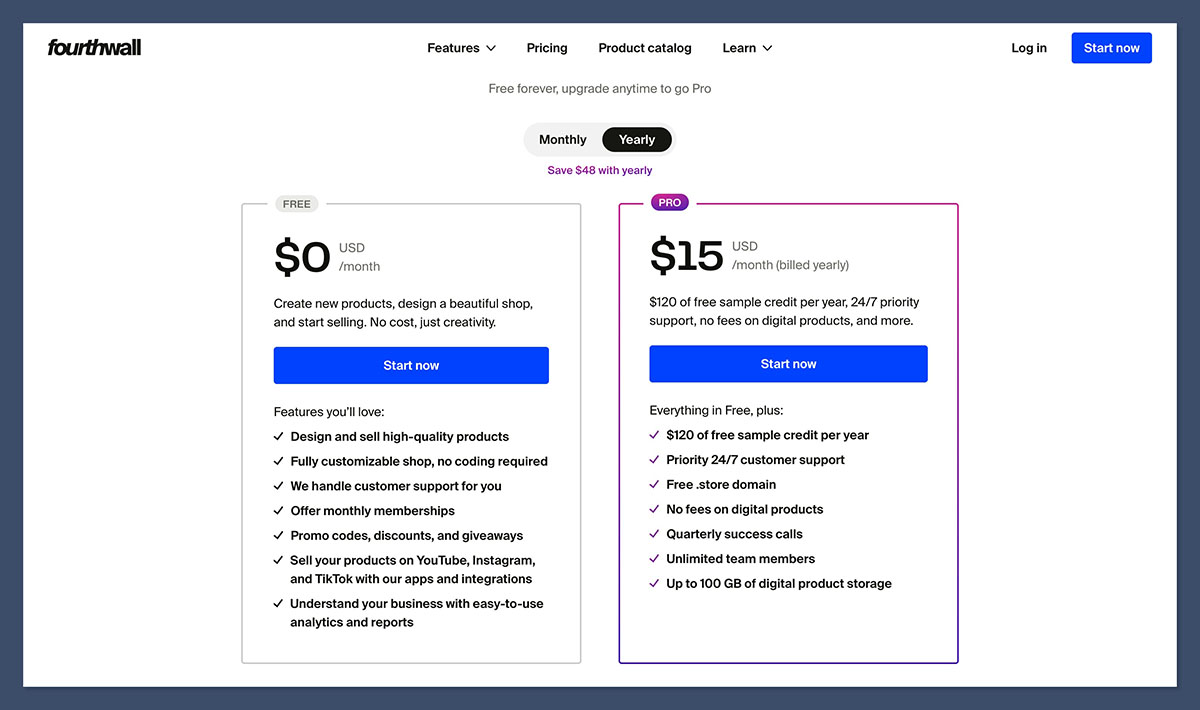
With the free version of Fourthwall, you get a customizable shop where you can sell POD products, custom sourced items, memberships, digital downloads, and your own products. You can also run discounts and giveaways, use promo codes, and access basic reports.
Fourthwall’s premium plan (starting at $15 per month), gives you more storage for your digital products, and removes the 5% fee you’d be paying to sell them on the free plan. You also get priority support, unlimited accounts for team members, sample credits, and quarterly success calls.
Printful Pricing
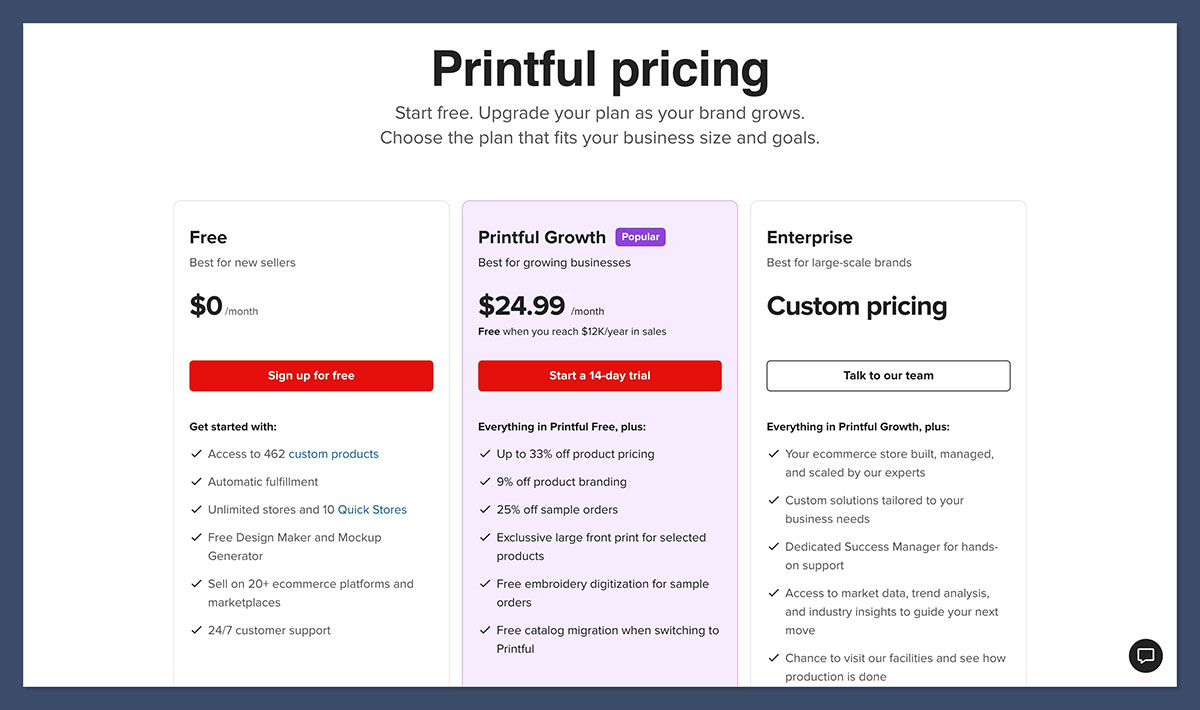
With Printful, the free version gives you all the essential tools you need. You can integrate with any ecommerce site, access all the products you want, design and customize everything with high-quality tools, and more. Printful Growth (for $19.99 per month) just helps you scale.
It gives you discounts, like up to 33% off custom premium products and 9% off branding, exclusive limited-time deals, personalized product transfer options, and unlimited stores.
One slight bonus that Printful has over Fourthwall is that it will actually pay for your Growth plan for a year if you reach $12k in sales. Still, it’s worth remembering you still need to pay for the other things that Fourthwall gives you built-in, like membership management tools.
Fourthwall vs Printful: Which Should You Choose?
There’s really no obvious winner here.
If you’re a creator first, Fourthwall makes a lot of sense. Especially if your income already comes from a mix of things, like merch, digital downloads, memberships, the occasional drop, and maybe donations when someone feels generous.
Fourthwall is honestly the best option I’ve found if you want to run an excellent quality store, with premium products, without having to handle it like a full-time job.
Fourthwall keeps all of that in one place, and more importantly, it removes work you probably don’t want. You’re not juggling tools, you’re not replying to shipping emails at midnight, and you’re not duct-taping platforms together just to sell a hoodie and a PDF.
Printful fits better when you’re thinking of ecommerce as a full-time career. If you’re happy to negotiate on margins, manage your own customer support, and tweak everything, Printful is a good choice. The trade-off is responsibility. Support, store setup, and growth all sit with you.
Neither approach is “better.” They’re just solving different problems.
If your business grows through systems and optimization, Printful fits. If it grows through audience and attention, Fourthwall probably feels easier to live with. That’s the simple verdict.