

If you’re looking to build a brand with staying power, not just upload trendy designs to random blanks, Tapstitch might be worth your attention.
It’s not the most popular print-on-demand platform yet, but it’s quickly gaining traction among creators who value garment quality, better blanks, and design control.
In this review, I’ll walk you through what makes Tapstitch stand out, how it compares to more established POD platforms, and whether or not it’s a smart choice for your apparel business.
What Is Tapstitch?
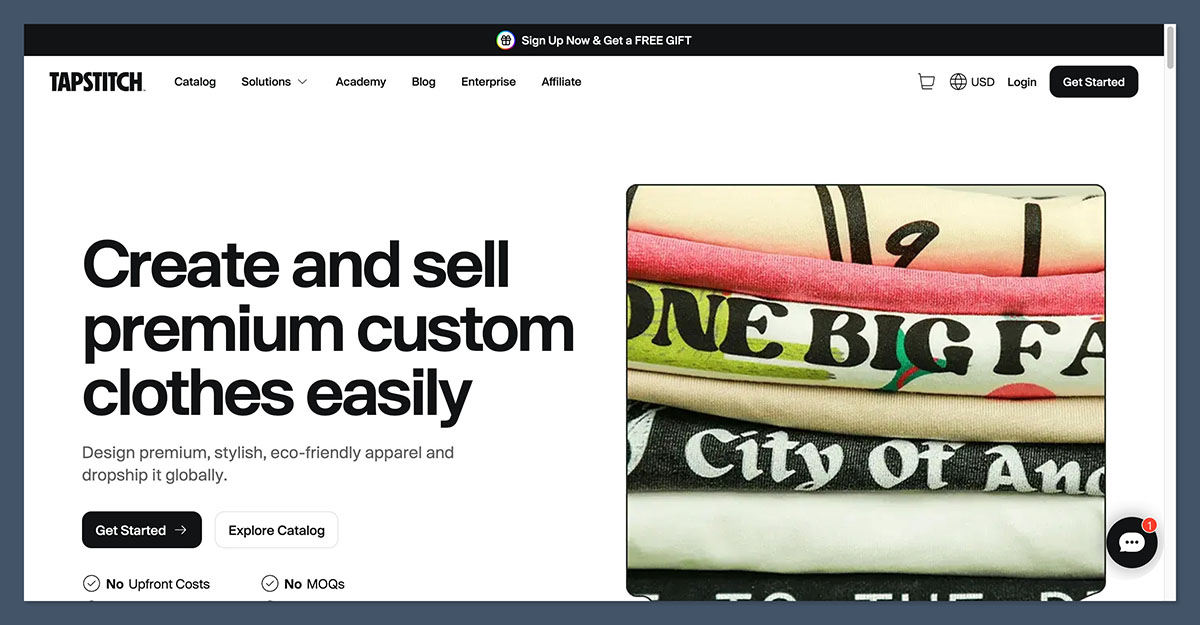
Tapstitch is a print-on-demand and dropshipping platform focused entirely on fashion and apparel.
Unlike generalist platforms like Printful or Printify, which offer everything from mugs to wall art, Tapstitch has one goal: help clothing brands produce better-looking, better-fitting, and better-printed apparel on demand.
You can connect Tapstitch directly to major ecommerce platforms, including:
- Shopify
- Etsy
- Wix
Once connected, any orders placed through your store are automatically sent to Tapstitch, where items are printed, packed, and shipped directly to your customers.
It’s a setup designed for sellers who care more about garment quality than catalog size. If you want oversized tees, heavyweight hoodies, and a streetwear-style fit, this platform is clearly optimized for you.
Tapstitch Pros and Cons
If you need a quick overview, here’s what stood out to me during testing:
What I Like
✔️ Fashion-forward blanks, including oversized and heavyweight tees
✔️ Clear focus on streetwear and minimalist brands
✔️ Transparent shipping and production timelines
✔️ Access to US fulfillment for faster delivery times
✔️ Simple integration with Shopify and Etsy
What I Don’t Like
❌ Limited product catalog (only apparel, no mugs or accessories)
❌ Branding extras like hang tags are still in development
❌ Some production delays depending on fulfillment location
❌ Print alignment issues reported by a few users
Who Should Use Tapstitch?
Tapstitch is best suited for sellers who:
- Are launching or growing a clothing brand
- Want to prioritize fabric quality, fit, and print finish
- Have a curated product catalog of 10 to 50 SKUs
- Want to test designs before committing to inventory
- Sell through Shopify, Etsy, or Wix
This is not the right fit for high-volume novelty product stores or general merch shops looking to upload hundreds of items across multiple categories. Tapstitch is intentionally limited in scope, but it fills that niche very well.
Getting Started with Tapstitch
Creating an account on Tapstitch is free. There’s no subscription model and no upfront fee to use the platform.
Once you sign up, you can browse the catalog, create mockups, and start designing your products. When you’re ready to start selling, you can install the Shopify or Wix app or connect your Etsy store.
Tapstitch also supports:
- On-demand sample orders
- Branded packing slips
- US-based and international fulfillment
All products are made to order. You won’t need to keep any inventory, and you won’t pay anything until a customer makes a purchase.
Product Catalog and Apparel Selection
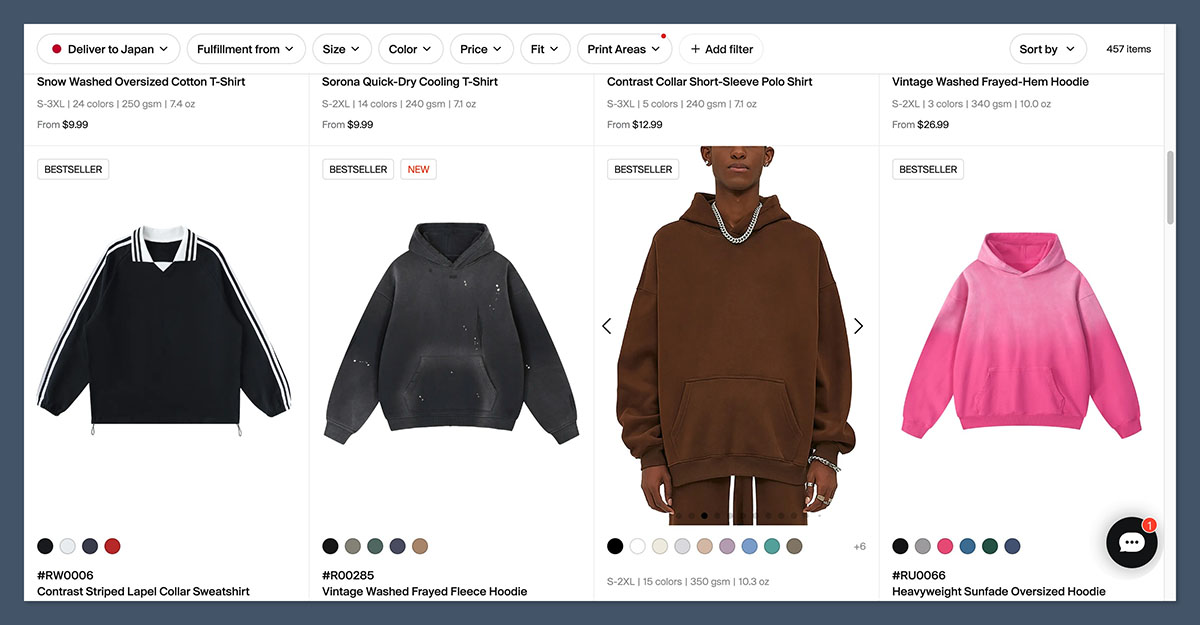
Tapstitch focuses solely on apparel, and while the catalog is smaller than competitors, the quality of their blanks is much higher.
Instead of mass-market basics, Tapstitch offers fashion-fit blanks that feel like something you’d actually want to wear.
Most popular product categories:
| Product Type | Style Options Available |
|---|---|
| T-Shirts | Heavyweight, oversized, fitted |
| Hoodies | Pullover, zip-up, cropped |
| Sweatshirts | Crewneck, fleece-lined |
| Joggers and Bottoms | Slim-fit, lounge, unisex |
| Activewear | Moisture-wicking, compression |
Tapstitch also offers color options, detailed size charts, and product descriptions that include fabric weight and cut.
It’s clear that these garments are designed for brand-first sellers who want their clothing to look and feel premium.
Design Tools and Print Areas
Designing products on Tapstitch is simple, and I found the platform intuitive to use. The editor allows you to upload your artwork and place it within clearly defined print areas.
Each product includes information like:
- Maximum print dimensions
- Recommended file resolution
- Supported print methods
What stood out to me was the size of the print areas, especially on oversized tees and hoodies. This gives you more room to design and makes your products look more custom and less templated.
Print Methods and Quality Control
Print quality is a common pain point in the POD world, so I was glad to see Tapstitch being upfront about the methods and equipment they use.
Print Methods Used:
| Method | Description |
|---|---|
| DTG (Direct to Garment) | Used for most t-shirts and hoodies. Utilizes Brother and Kornit machines for high-detail printing. |
| DTF (Direct to Film) | Used on specific blanks or for brighter colors and full-surface coverage. |
Tapstitch specifies which method is used on each product page. They also encourage sellers to order samples before launching to ensure placement, resolution, and finish are all working as expected.
From Reddit and other user reviews, most customers report high-quality prints and good wash durability. However, like any POD platform, there are occasional reports of:
- Slight misalignment
- Faded prints after repeated washes
- Color inconsistencies between batches
These issues are not widespread, but they highlight why sampling is essential before running full-scale campaigns.
Pricing Structure
Tapstitch follows a per-order pricing model. You only pay for what you sell, and there are no subscription fees or upfront costs.
Example Pricing (USD):
| Product | Base Price | US Shipping (First Item) | Add-On: Custom Label |
|---|---|---|---|
| Heavyweight Tee | $14.50 | $4.50 | $2.00 |
| Premium Hoodie | $28.00 | $6.00 | $2.00 |
| Activewear Shirt | $18.00 | $4.00 | $2.00 |
Shipping costs are calculated per item and clearly displayed on the product page. Each additional item typically adds around $2 to the total shipping cost.
If you’re planning to sell at higher price points—say $35 to $45 for tees and $65 to $85 for hoodies—there’s enough margin to build a healthy profit per sale, especially for DTC stores.
Shipping and Fulfillment
Shipping can vary depending on where the product is being fulfilled. Tapstitch offers both US and international fulfillment, with different timelines for each.
Shipping Timeframes:
| Region | Fulfillment Time | Shipping Time | Fulfilled From |
|---|---|---|---|
| USA | 2–5 days | 5–7 days | Los Angeles |
| Canada | 2–5 days | 7–14 days | US / Intl |
| Europe | 3–6 days | 10–21 days | Intl Facility |
It’s important to note that production time is not included in shipping estimates, something Tapstitch is very transparent about. So if you list an item as arriving in 5–7 days, you need to account for both fulfillment and shipping.
Faster fulfillment is possible for select items produced in the US, but not all products are eligible.
Branding and Customization
Tapstitch allows for some branding features, but others are still in beta or development. Right now, the most reliable option is a custom inside neck label, which you can add for $2 per item.
Other options, like:
- Hang tags
- Branded poly bags
- Custom packing inserts
are listed as either in development or limited rollout. Some dashboard users have access to these, while others do not.
If branding is important to your unboxing experience, I recommend confirming availability before launching your store.
Return Policy and Customer Experience
Tapstitch has a typical POD return policy. Since items are made to order, they don’t accept general returns unless there’s a product defect.
Key Return Conditions:
- Items must be unused, unworn, and unwashed
- Return shipping may be the buyer’s responsibility
- Returns are processed through a distribution center
- Unclaimed returns may be donated after 30 days
To avoid customer issues, you should:
- Use Tapstitch’s sizing guides on all listings
- Set expectations on delivery times
- Order samples to check for quality before launch
Doing these things will lower your return rate and improve customer trust.
How Tapstitch Compares to Other POD Platforms
Here’s how Tapstitch stacks up against major competitors in the apparel POD space:
| Feature | Tapstitch | Printful | Printify |
|---|---|---|---|
| Apparel Quality | High | Medium | Low to Medium |
| Branding Options | Labels only (tags in dev) | Labels, Tags, Inserts | Labels |
| Shipping Transparency | High | Medium | Low |
| Catalog Size | Apparel Only | Apparel + 200+ products | Apparel + 800+ products |
| Integrations | Shopify, Etsy, Wix | Shopify, Etsy, Woo | Shopify, Etsy, eBay, etc. |
If you want a large catalog or run multiple niche stores, Printify may be more flexible.
But if your priority is a focused, high-quality clothing brand, Tapstitch is one of the stronger choices right now.
Final Verdict: Is Tapstitch Worth It?
Tapstitch isn’t for everyone, but if you’re serious about building a real clothing brand, it offers real advantages.
From better blanks to transparent fulfillment and fashion-forward product selection, it brings something new to the POD space.
It’s best used by:
- Apparel-focused sellers
- Brand owners who prioritize quality and control
- Entrepreneurs building for the long term
It’s not well-suited for:
- Sellers offering hundreds of random products
- Gift shops or generalist stores
- Brands needing advanced branding features on day one
For me, Tapstitch works best when you treat it like a brand partner, not just a backend tool. Take the time to sample, refine, and launch with intent, and you’ll be in a much stronger position to grow.