
Starting a print on demand store can be more complicated than it seems. I’ve worked with enough ambitious vendors over the years to know you can have all the enthusiasm and spirit in the world, then get stuck when it comes to figuring out what you’re going to actually sell.
The great thing about Shopify is it gives you a lot of freedom to experiment with just about anything, from personalized products (which are ideal if you want to stand out), to premium or eco-conscious goods. Gelato is the POD partner that delivers all of that (and constantly keeps the quality high), so I think they’re a perfect mix.
Still, Gelato does give you quite a few categories to choose from, so if you’re facing a state of decision paralysis, these are the products I can see making a splash in 2026.
Quick Primer: The POD Market, Gelato and Shopify
Before we dive in, it’s worth getting realistic about print-on-demand market right now. It’s not the scrappy playground it used to be. Millions of people have realized just how easy it is to launch a store with a partner like Gelato, which is why the market is expected to be worth nearly $60 billion by 2033. That means a lot of opportunity, and a lot of competition.
With Shopify making store creation easier than ever, and AI tools lowering the design barrier, the average shopper has a lot more options. That’s part of why I recommend Gelato to POD sellers.
Sure, it might not have quite as many products to offer as bigger players like Printify and Printful, but it makes a difference where it counts.
You’ve got the production network spread across over 30 countries (with fast, local and eco-friendly delivery). Then there’s the products themselves, from organic t-shirts (people love sustainability), to premium art prints no-one else can match.
Gelato also has the best premium plan I’ve seen from a POD company, with huge discounts on products (up to 35%) to boost your margins, helpful mock-up generation tools, AI tools to build collections for you, and creative assets you can access for free.
So, yes, the market is tough right now, but with Shopify, Gelato, and the right product selection, you’ve still got a chance to win.
Quick Tips for Picking Your Product Collection
Most new POD sellers build catalogs backward. They start with designs, then go hunting for products that “might” fit. That’s how you end up with listings nobody needs, a cluttered Shopify admin, and ad costs that never pay you back. My advice is to focus on a few important things:
- Actual demand: Look for signs of real buying behavior (not just likes on socials). Check out Google Trends, Etsy Best Sellers, TikTok Shop trends, and Amazon movers, they give you a good sense of where people are already spending money.
- Unit Economics: Gelato’s base costs are solid, especially once you factor in their local production. But the real question is: Does the product leave enough room after ads, shipping, and discounts? A lot of apparel fails this test unless you price correctly or choose premium cuts. Print products and personalized items usually give you better margin because shoppers expect them to cost more.
- Low return risk: If you’ve ever dealt with apparel returns in POD, you know exactly why this matters. A single return can wipe out most of your profit for the week. Prints, calendars, books, mugs, and personalized goods? Much safer. Once they arrive in good condition, they rarely come back.
- Reusable Design Concepts: Any design that can stretch into five or ten products without looking forced is worth exploring. This is where Gelato’s Instant Collections is really helpful if you can use it, it lets you scale one winning idea into posters, mugs, apparel, and accessories without rebuilding listings.
- A Niche You Actually Understand: This gets overlooked constantly. You don’t need to be the target customer, but if you know how the people you’re going to be selling to think, and what they care about, you’re probably going to get more sales.
The Best Gelato Products to Sell on Shopify
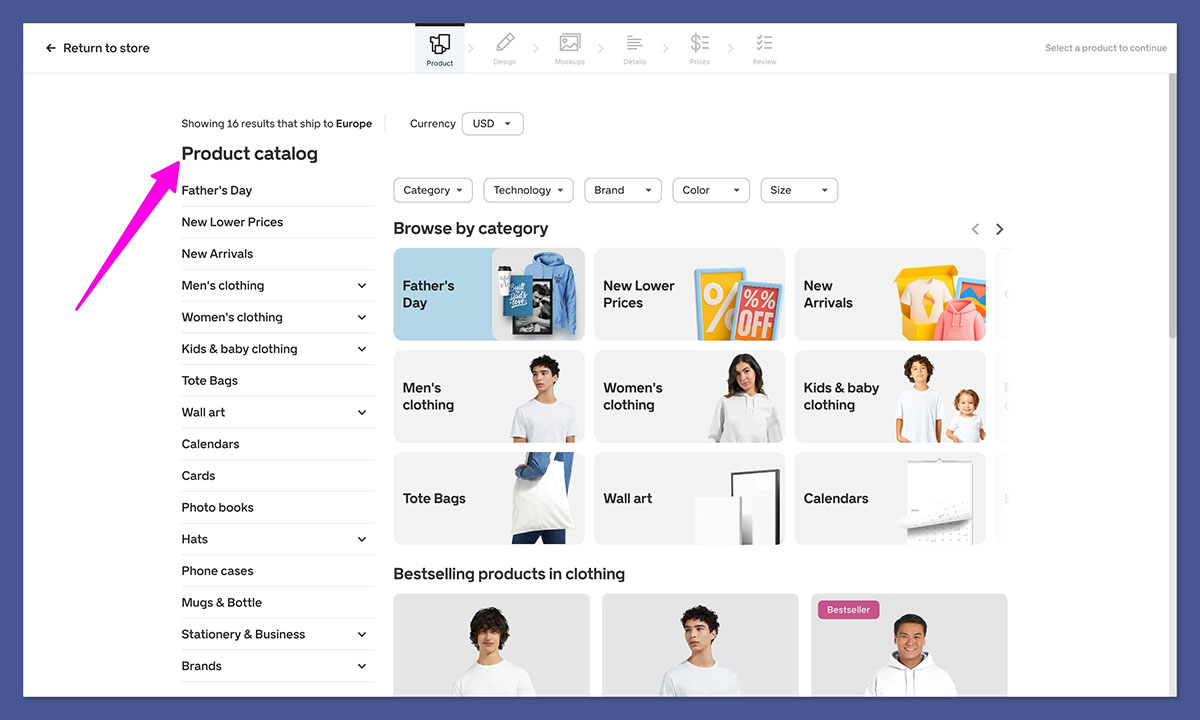
Okay, with all that out of the way, let’s get to my actual recommendations. Quick note here, you don’t have to stick to one category, you can mix and match. But honestly, if you’re new to POD selling, I wouldn’t recommend trying too much too quickly. Pick a few ideas and see how they work first.
Personalized Products
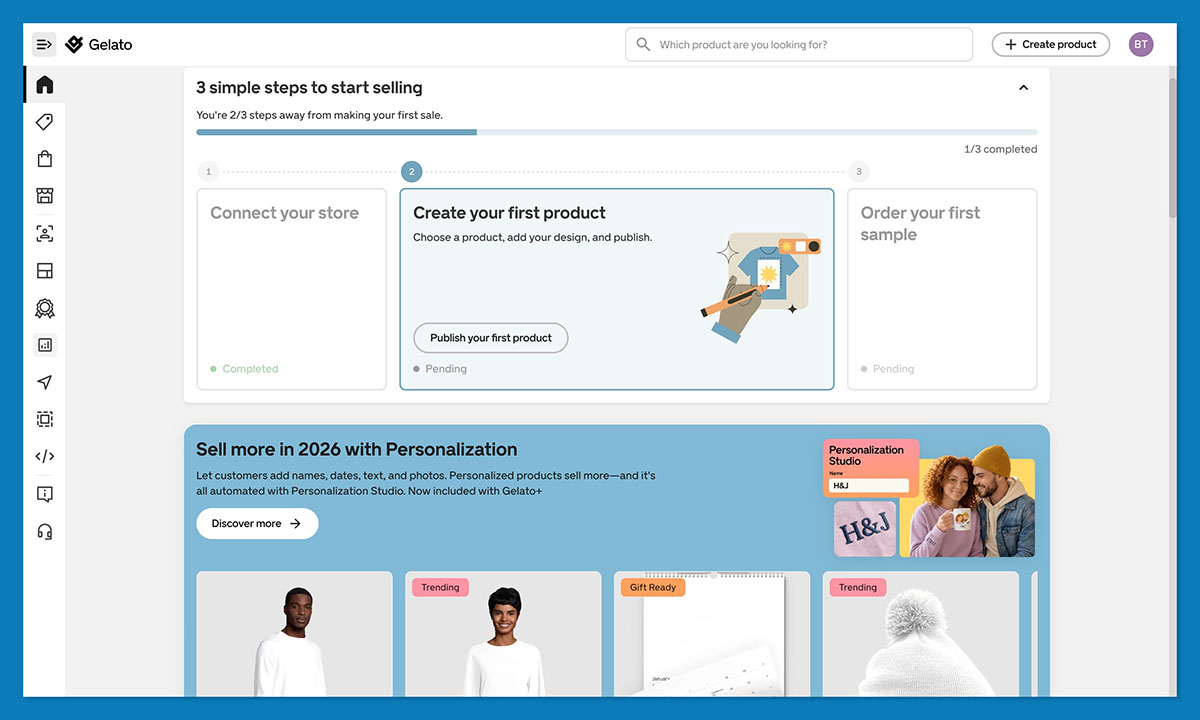
Every time I look at Shopify data from smaller POD brands, the pattern is the same: personalized items pull in higher order values and better repeat purchase rates. Buyers feel like they’re getting something “theirs,” not just another print. Plus, since these products are created on demand, you’re not carrying risk the way a traditional custom shop would.
Gelato’s personalization setup on Shopify is clean, fast, and doesn’t turn your product pages into a confusing mess. Customers can drop in names, dates, photos, or small text changes without you needing to build dozens of variant combinations behind the scenes.
Also, realistically, these items almost never get returned. People don’t send back a mug with their dog’s face on it. They don’t return a photo book documenting a vacation. It’s just not typical.
The most profitable items here include:
- Photo books (weddings, babies, pets, travel)
- Calendars with custom images or date prompts
- Custom apparel with names or small design edits
- Mugs and drinkware with personal details
- Phone cases featuring initials, monograms, or uploaded photos
If you want a category that immediately sets your store apart from generic POD shops, this is it.
Premium Prints & Wall Art
I’ve raved about Gelato’s art pieces a lot before, because honestly, I think they have the best options in the market right now. You’ve got everything from aluminum prints, to canvases, and more size options than most other vendors can offer.
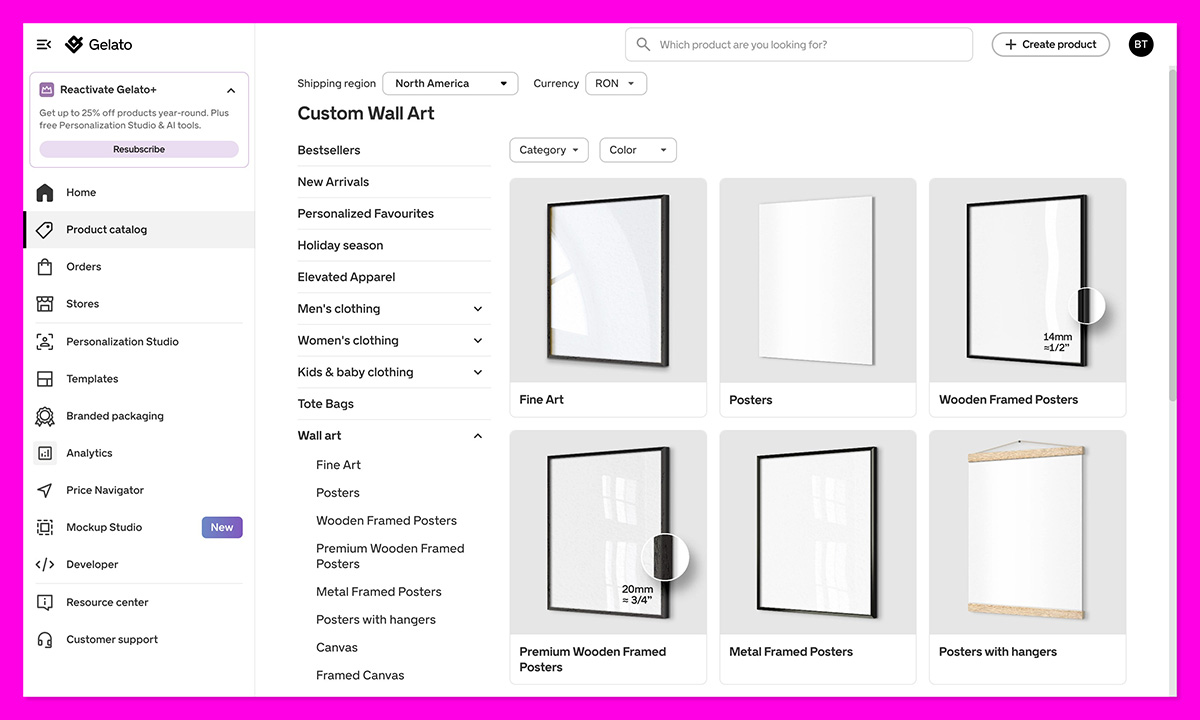
The great thing about prints is that they’re super easy to create (particularly with Gelato’s design tools), and they sell all year round. Plus, the wall art market is pretty huge (expected to pass $80 billion by 2030), so you know there’s demand.
Prints also scale beautifully. One strong art direction, like botanical line art, retro travel, geometric patterns, or pet silhouettes, can expand into ten products (mugs, clothes, etc), so it’s easy to build collections.
The standout options include:
- Posters in multiple paper types
- Canvas prints for buyers who want something more substantial
- Aluminum prints for premium shoppers
- Calendars and photo books built around visual themes
My best advice here is if you’re not an artist yourself, find a few to work with on Fiverr or a similar site, it’ll give you something to work with.
Apparel and Clothing Accessories
Most people put this category first, because it really does pull in the most sales across POD, but it’s also the most competitive arena. The return rate can wreck your margins if you pick the wrong blanks or flood your store with designs that only look good as mockups.
Gelato’s apparel lineup is a safer bet than most because the quality is consistent and the cuts don’t shift wildly between batches. You also get organic options, which matter when you’re building a brand around lifestyle, wellness, or sustainability, those customers are willing to pay more when the garment feels good in hand.
The trick with apparel is focus. When I see a store with 200 random t-shirts, it usually means the owner relied on designs instead of strategy. A handful of tight, niche-specific graphics will usually do a lot better.
Top-performing items include:
- Unisex tees for broad niches
- Hoodies and sweatshirts that justify higher pricing
- Tank tops for fitness or summer themes
- Kids and baby apparel for gifts and family niches
- Organic cotton lines for eco-conscious shoppers
Also it also helps to have a few accessories too. Lots of people who buy shirts or sweaters will also grab a hat or a tote bag if it’s cheap enough, and looks good.
Tech Accessories & Desk Items
People today love their tech, and they’re pretty serious about personalizing and protecting it, so accessories like phone cases will pretty much always do well. They’re also pretty cheap to produce, and don’t cost a fortune to ship, which is nice.
Gelato’s range of tech accessories isn’t huge, but you can always combine phone cases with other “desk” and office essentials your shoppers might be looking for. Calendars, cards, wall art, photo books, and mugs all fit into that category.
Another great way to boost your sales is to add the personalization option I mentioned above. People love having phone cases that include their names or a quote that inspires them.
Running seasonal drops or “limited theme” events can be useful too, if you find a local artist to work with or an influencer that people love.
Eco-Friendly Products
Sustainability has become a pretty big deal for shoppers lately. Most people are willing to pay nearly 10% extra if they know the product they’re getting is good for the planet. That’s one of the reasons Gelato is so great for POD sellers, they’re already eco-conscious.
They use sustainably sourced materials, offer organic t-shirts and totes, and also their global fulfillment network helps them deliver products with less travel, which means a lower carbon footprint. If you’re going to go the sustainable route, I’d recommend trying:
- Organic tees and hoodies
- Eco tote bags (arguably the easiest win in this category)
- Mugs and drinkware positioned as reusable alternatives
- Sustainably printed posters and paper goods
The most important thing you can do here though is make sure people know about your sustainable edge. Write about it on a dedicated page on your website, and include it in your product descriptions.
Pet Products
If you ask me, pet products are one of the safest bets in POD right now. People think about their pets like family. Any time they can buy a shirt, or a calendar with their pet’s picture or name on, they’re always going to get excited.
Gelato doesn’t offer bowls, leashes, or toys, but that’s not a limitation. The products they do offer in this niche (prints, apparel, mugs, phone cases) match exactly how pet owners like to shop. Most of the top-selling pet items on marketplaces are portraits, breed-specific apparel, and giftable accessories.
Since you can let customers personalize their products, you can give them items that are totally unique to them, not generic prints. You might try:
- Custom pet portrait posters and canvas prints
- Breed-specific apparel (simple silhouettes work surprisingly well)
- Pet-parent gear (“dog mom,” “cat dad,” etc.)
- Phone cases featuring pet names or minimal illustrations
- Mugs and calendars for gifting seasons
If you want a niche that can stand on its own as a full brand, pets are one of the few categories where you can scale fast without running out of ideas.
| Category | Margin Potential | Return Risk | Best Niche Fit |
|---|---|---|---|
| Personalised Gifts | High | Very Low | Gifting, occasions |
| Premium Prints | High | Low | Art, décor |
| Apparel | Medium | Medium | Broad/lifestyle |
| Tech Accessories | Medium | Low | Personalisation |
| Eco Products | Medium-High | Low | Sustainability brands |
How to Test and Scale Your Gelato Shopify Store
Here’s the part most creators skip: how to test products without getting buried in ad costs or endless design work. I keep my process tight because POD only works when you move quickly.
- Start with a tiny lineup: Five to ten products across one or two categories is plenty. If everything sells evenly, that’s a different problem (and a good one). If one item carries the whole store, double down.
- Order samples immediately: I don’t care how nice the mockup looks. Buy the actual product. Hold it. Photograph it. Check the colors. You’ll catch issues long before your customers do. Real photos are also the quickest way to lift your conversion rate.
- Run low-budget tests: Ten to twenty dollars a day on Meta or TikTok is enough to see early signs of interest. If nobody clicks by day three, you’ve got some insights to work with.
- Use simple customer signals: Check in on “add-to-cart” numbers, favorites, saves, comments, and people scrolling your pages repeatedly.
- Scale horizontally, not vertically: If a design sells on a poster, move it to a phone case, a hoodie, a mug. If a niche starts showing traction, build a small series. Gelato’s Instant Collections can do the heavy lifting here without you rebuilding everything manually.
Also, if your business really starts to grow, I can’t recommend Gelato+ enough. It’s not just that the discounts have a positive impact on your margins. The extra tools you get (Instant Collections, the Price Navigator, and Magic Mockups), help you build a more sustainable, premium store.
Build the Perfect Product Catalog for 2026
I know how easy it is to get stuck when you’re launching a POD brand for the first time. It’s so easy to assume you should stick with the basics like mugs or apparel, and for some companies, that’ll be the right step. For others, it helps to really look at what your POD partner does best.
With Gelato, your best options are always going to revolve around incredible prints, and products that customers can personalize themselves. So personally, I’d advise starting with those first. Once you’ve got a few items up on your store, pay attention to what drives the most sales.
A few weeks of analytics should be enough to tell you what you should be scaling into next.