YouTube truly is a great selling platform for creators. If you have a lot of fans already watching your videos, it makes sense to start giving them merch they can buy where they are, in the moment, rather than asking them to head over to a Shopify or Etsy page.
YouTube says that most channels tend to earn more from selling custom merch than they do from ads on their videos anyway, but that only really works out if your fans are committed, and if you’re selling products that your customers actually want to buy.
If you really want to turn merch into a business, you need a proper plan, and this is how I’d recommend starting.
Step 1: Decide What to Sell First, and Why You’re Selling It
There are some obvious products worth picking for a YouTube merch collection, like t-shirts, hoodies, mugs, and tote-bags. All the things that people naturally buy from the creators they want to support on other channels like TikTok, too.
Still, there isn’t a single starter kit that’s going to be perfect for every channel. Regardless of what types of products you choose to sell, the thing that matters most is creating designs that actually appeal to the community you’re building. People on YouTube are looking for inside jokes they love sharing with friends, or items that feature characters and artwork they’ve grown to love.
If you’re not sure what your particular community is obsessed with, check the comments section on your channel for recurring themes, or look for similar insights on Reddit or Discord, if your community goes there.
The Community tab even lets you run polls, which is helpful if you have a few ideas and can’t choose between them, run a poll in the Community tab asking people what kind of things they’d like to see. Just make sure you know what you’re actually capable of creating before you give people too many options. If you can’t create a set of custom enamel pins yourself, don’t offer it as a choice.
Don’t get too excited and try to create a massive collection on day one. It’s a lot easier to experiment and see what works if you start with a handful of options. Maybe a couple of t-shirts, one hoodie, a water bottle, tote bag, and a sticker pack. You might also consider selling digital downloads too, if that makes sense for your channel. For instance, maybe you sell a t-shirt as well as a design tutorial if you run an art program.
Step 2: Pick a Production Model
The next step is deciding how you’re going to get those products made, and generally, creating them yourself at home isn’t much of a sustainable option. The two better options are either working with someone who can manufacture products for you in bulk, or using a print-on-demand partner.
Really, the bulk manufacturing option won’t make a lot of sense until you absolutely know that you’re going to be getting plenty of orders for specific products. Although it does give you more control over the design and how things are created, it also gives you a lot of inventory risk, freight bills, and forecasting headaches to deal with.
For most creators, the easier option is print on demand. You choose a partner to work with, select a range of products, add your design using the included tools, then list the products on YouTube, or any other platform you’re going to be selling on.
Everything up until that point won’t cost you anything, which is a relief. Once a customer places an order, it goes through to your partner, you pay for the base cost of the item, and the POD company makes it (on demand) and ships it to your customer. Your profit is what’s left over after the POD brand takes the base cost out of the price you’ve charged.
This is definitely the easiest option overall, especially if you have no idea how to handle inventory yourself, and you don’t have your own screen printing tools. Plus, it’s the option that makes it easier to experiment, because you can list as many different items and designs as you like, and you only pay for what people buy.
One thing to keep in mind though, is that just because a print on demand partner handles most of the work for you, doesn’t mean they deal with everything. A lot of these companies still expect you to act as your merchant of record for taxes, and they leave you to handle any customer support issues.
There are a couple, like Fourthwall who handle taxes and customer service for catalog products for their users, but that isn’t the standard practice for other platforms, so make sure you check in advance.
Step 3: Pick the Right Print on Demand Platform
Assuming you’re going the easier route and working with a print on demand platform, it’s usually a good idea to choose your partner early. There are a lot of good options to consider, and they tend to work in different ways. First, I’d look for options that integrate with YouTube Shop directly, as that’ll save you some extra work as you’re building your business.
Printful, Printify, and Gelato don’t actually integrate straight with YouTube, but they do work with Shopify and other platforms you can use to patch in the connection.
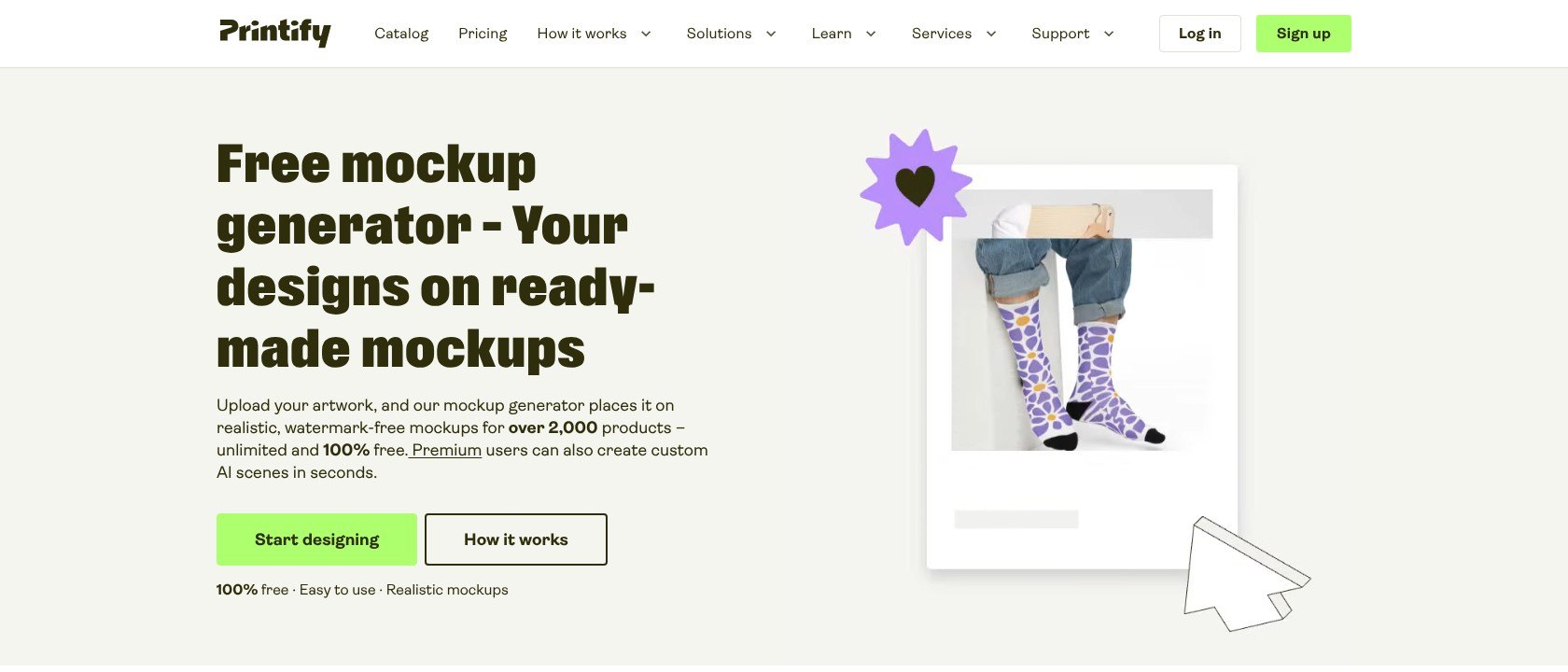
All three are also brilliant if you want a lot of variety. Printful has a fantastic production setup and more than 500 products, Printify gives you over 2,000 products, and dozens of partners to choose from, so you can look for the best picks based on quality or price. Gelato is better if you want fast delivery, local production, sustainable items, or amazing paper prints.
Spreadshop is a supported shopping platform for YouTube, and it’s free to set up and run. It’s also one of the few companies that can handle customer service for you, along with printing, shipping, and returns. You might see Spring recommended in older guides, but it was retired in September 2026, and its replacement, Amaze Commerce, isn’t on YouTube’s list of supported platforms. Teemill is a YouTube supported retailer, although you need a Pro account to get the plugin for YouTube Shopping. It’s still a great choice if you’re looking for sustainability outside of Gelato.
Why I’d Pick Fourthwall
Overall, I’d probably choose Fourthwall as my top pick for a couple of reasons. Fourthwall has a direct YouTube connection, as well as links to a lot of other social selling channels like TikTok and Twitch. It gives you a free storefront you can use alongside your YouTube channel, without having to pay for something like Shopify separately. You also get a premium print on demand catalog combined with support for other product types, like digital downloads or memberships, which can be excellent for a YouTube audience.
Also, Fourthwall acts as your Merchant of Record to handle sales tax, and it can deal with basic customer support for catalog orders. It’s the far more “complete” option if you’re trying to genuinely build a brand around your YouTube presence.
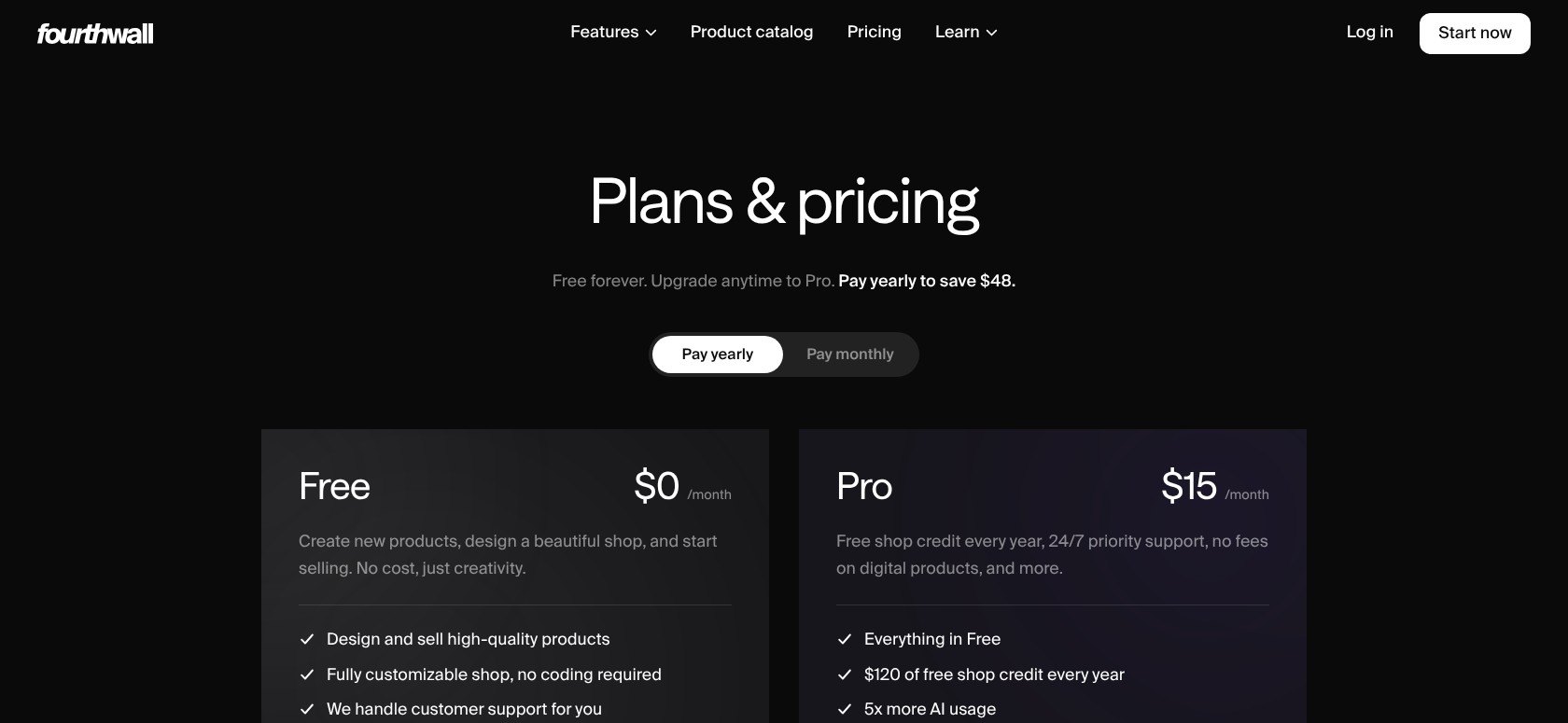
It’s also worth noting that you can start with Fourthwall for free (just like the other platforms I’ve mentioned), and you don’t pay any fees on physical products aside from paying for the base costs of the items you want to sell.
Step 4: Design Merch People Would Wear
This is the point where you can start getting into the design process, hopefully with some useful ideas you’ve already gathered from your comment section and community during step one. Although I definitely recommend using in-jokes and original characters, it’s worth asking yourself whether people would still buy the products you’re creating if the channel name wasn’t there.
For instance, if your channel teaches AI prompting techniques to executive sellers, they’re probably not going to want a custom plushie.
It helps to start with practical things that people buy all the time anyway. Shirts and hats are a good option, as well as tote bags, mugs, or anything that your audience will genuinely use every day, such as a mouse mat for tech fans.
Also, think about the kind of designs that actually appeal to people. Some audiences will be happy to buy a t-shirt with a huge logo spread across the front, if that logo is attractive and they’re genuinely obsessed with the channel, most people will want something a lot more subtle.
The type of printing needs to make sense for the artwork too. Embroidery is fine for simple designs, but it doesn’t make a lot of sense for a complex image on a t-shirt. Detailed illustrations often work better for bigger prints, and smaller prints need to be simple enough to be recognizable.
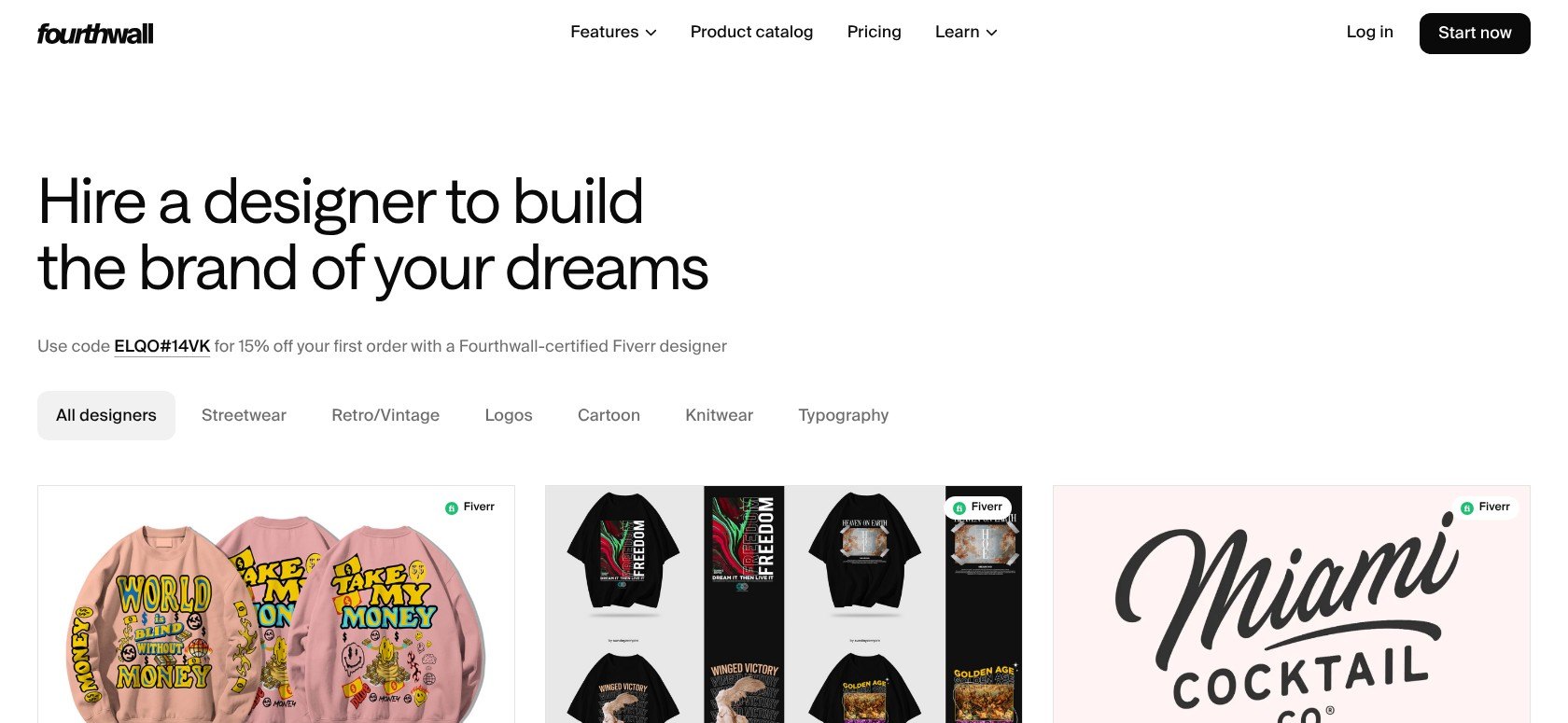
Most print on demand tools give you design features to work with, but you can always experiment with something like Canva if you’re having trouble. Plus, Fourthwall has a designer directory that can help you find artists to work with if you truly get stuck.
Once you settle on a design, mock it up to see what it’ll look like on the item you’re going to sell then order a sample so you can see it in person. That’ll give you a better idea of whether you’re producing things your audience will actually like, and whether the items will actually hold up.
Step 5: Set Your Pricing
Pricing is one of the hardest parts of selling merch, because you need to earn a profit, but you also can’t charge something ridiculous and expect the sales to roll in.
Some sites give you free calculators to help with figuring out margins, but it helps to start with the base cost of the item you’re going to be selling if you’re using POD. Say a t-shirt costs $10 to make, and you sell it for $22, that gives you $12 left over.
However, before you add that $12 to your profit, you’ll have other fees to think about. Processing fees usually average around 2.9% plus 30 cents, which takes what you actually earn down to $11.06. If you’re offering free shipping, that cuts into the margin again. So does any money you pay to have designs created, or post marketing campaigns.
| Line item | Amount |
|---|---|
| Base cost (t-shirt from your POD partner) | $10.00 |
| Retail price on your store | $22.00 |
| Gross margin | $12.00 |
| Payment processing (2.9% + $0.30) | −$0.94 |
| What you actually keep | $11.06 |
Don’t worry if it takes a little time to figure out the perfect pricing strategy. It’s usually a good idea to give people plenty of options to begin with, anyway. Sticker sets can be a cheap option for people who haven’t got much to spend, then you could add mid-level products like hats or tote-bags, followed by t-shirts, and more expensive options like hoodies and insulated tumblers.
Don’t automatically lower the prices the second you notice you’re not getting a lot of sales, or start giving everyone huge discounts. Sometimes the problem is the product, not the pricing. You could try running a “limited-time discount” to see if that helps, or explore things like bundles, since a t-shirt with a sticker pack can often seem like better value for money than a t-shirt on its own.
Step 6: Launch and Promote Through Your Channel
First, there are rules around who can actually sell products on YouTube. First, you need 500 subscribers and three uploads over the last 90 days before you launch your store. On top of that, you’ll need either 3,000 long-form watch hours accumulated over a year, or three million qualified Shorts views in 90 days. That just gives you access to the lower tier. If you want ad revenue and shopping access to products from other brands, there are additional thresholds.
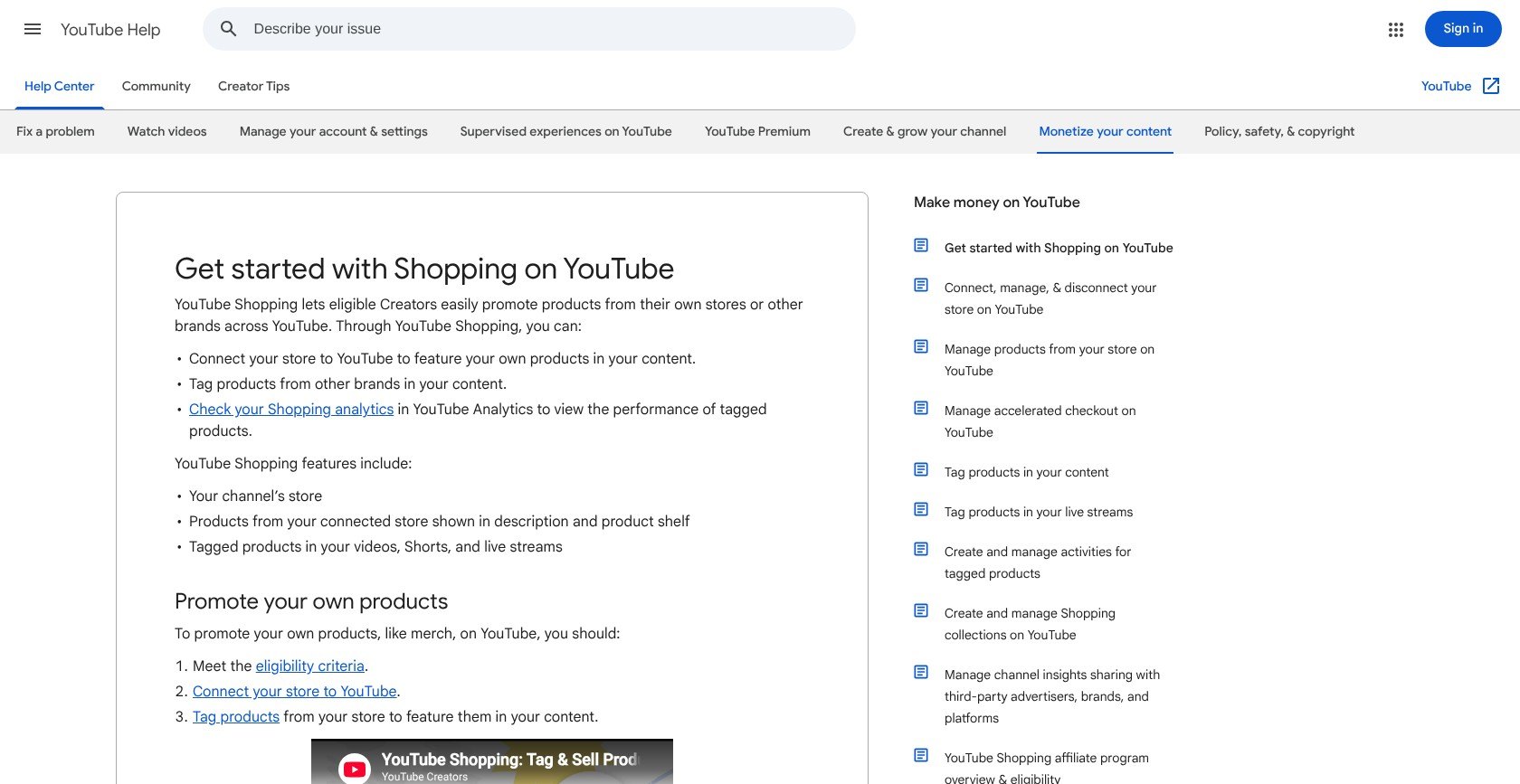
Once you are connected to YouTube, make sure you use product placements carefully. You can show products in your channel shop, in video descriptions, on the product shelf, or in the tagged products in your regular videos, live streams, or shorts.
Promoting Your Products
Start promoting before you officially open the store. Get a sample, and show it off in a video. Show a close-up in a community post a few days later, or give viewers a genuine choice between two versions of something you’re going to produce and ask them to decide which one wins.
Live streams are a brilliant way to get people excited about upcoming product drops and show off a range at once. You can even use them to answer any questions your audience might have, and use a little exclusive discount code to get people excited and upgrade your viewer count.
I’d also regularly add the products you’re selling into the videos or shorts you post, just not in an overly obvious way. You don’t need to be constantly asking people to buy, just wear the t-shirt you’re selling, or keep your branded mug on your desk and tag them so that people can buy them while they’re still watching the video.
Don’t be afraid to promote on other channels too, like TikTok, or Instagram, you can link people back to your YouTube shop from there, and potentially attract new followers and buyers at the same time.
Step 7: Keep Growing the Brand Beyond Merch
Every sale you make gives you a brilliant combination of both money and information. It’s probably not a good idea to stop asking your audience for their opinions as soon as they start buying, but at least you’ll have a better idea of what they’re really willing to spend money on.
That can make it a lot easier to figure out what you should be selling next, whether it’s a wider range of hoodies with different designs, or a new collection of products featuring a similar, popular design. YouTube gives you some helpful data, but it’s worth using an ecommerce platform like Shopify or Fourthwall for more insights when you start selling.
Also remember that you don’t have to stick with custom merch exclusively forever. If you’re using Fourthwall, you’ll be able to sell digital downloads and memberships, or even accept donations on the same site. That’s incredibly useful, as a lot of YouTube fans would be more than happy to pay for a membership if it means they get early access to new videos, exclusive content, or maybe some live streams they won’t find on your standard channel.
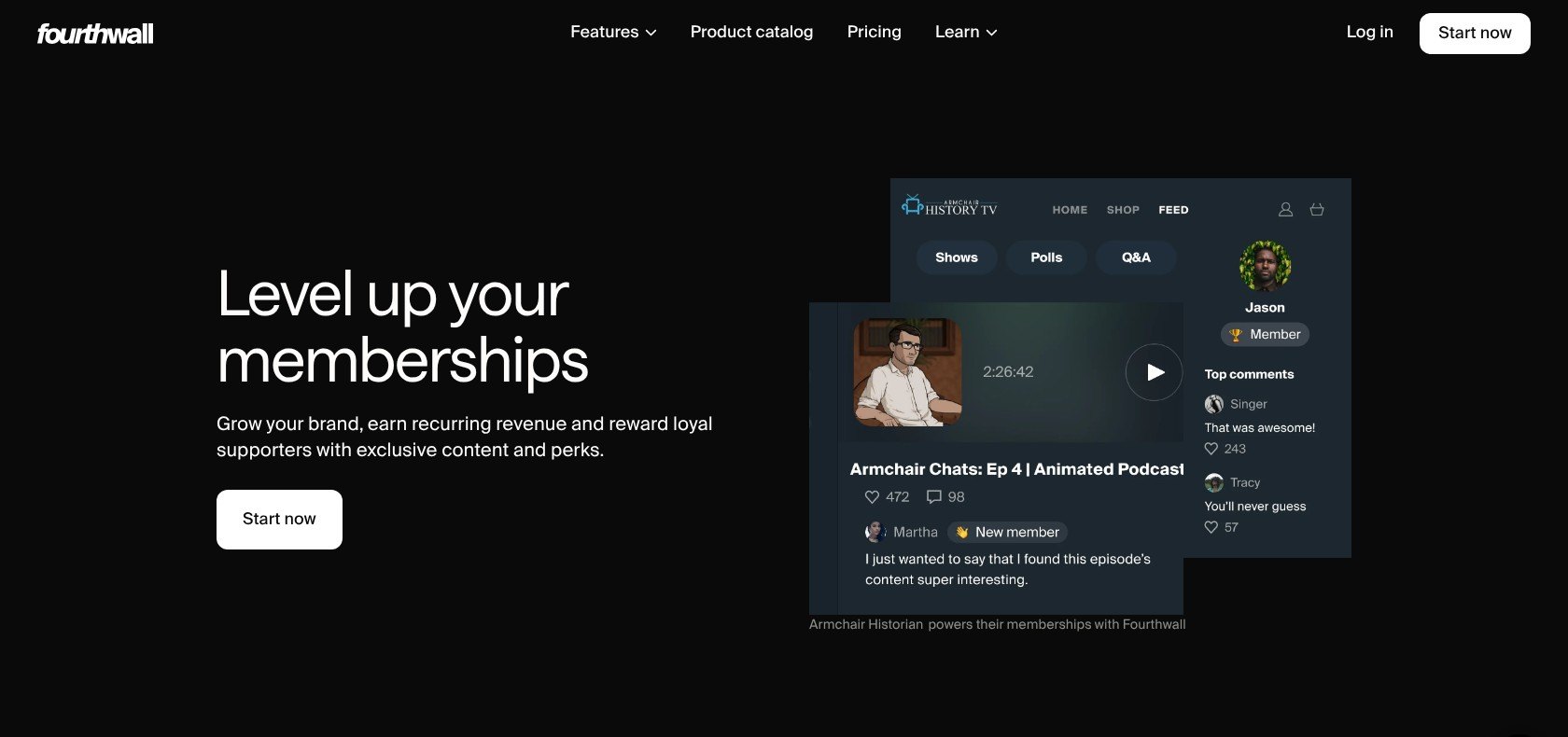
With Fourthwall, you can also source your own products and add them to the same store. Plus, you can bundle products from different categories. That might mean you offer people a free download when they pay for a membership, or give people a digital version of a book you published when they purchase a physical copy.
Sell the Merch Your Audience Won’t Want to Miss
YouTube is a fantastic platform for people who want to turn an existing fan base into a community of financial supporters. Still, it’s easy to fall into the trap of assuming that once you have so many subscribers, all you need to do is offer them a couple of t-shirts and a mug to start making money.
Fan stores work best when they build on the connection you already have with the people who follow you. If you build your product collection around the things that people already mention when they’re talking about you, or the parts of your brand your community has fallen in love with, you’re far more likely to see real success.
Keep that in mind when you start planning, launch with a small selection of products from a print on demand provider to begin with, then pay attention to the sales to figure out what comes next.