With more artists, illustrators, and ecommerce brands selling online than ever before, quality has become the biggest differentiator. Whether you’re printing gallery-grade photography, minimalist poster designs, or custom art merchandise, the platform you choose will determine how your customers perceive your work.
That’s why I’ve taken the time to test, research, and analyze the top print on demand (POD) platforms that focus specifically on high quality print outputs. These are not your average “stick-your-logo-on-a-mug” services. These platforms prioritize detail, paper quality, color accuracy, and fulfillment consistency.
On this page, you’ll find a side-by-side comparison of our top picks, along with pricing, pros and cons, who they’re best for, and the key reasons they stand out.
Quick Comparison Table
| Platform | Best For | Starting Price | Subscription Optional? | Specialty |
|---|---|---|---|---|
| Fourthwall | Premium creator merch and branded storefronts | Free to start | Yes | Premium apparel, memberships, digital products |
| Prodigi | Fine art and museum-quality prints | Free to start | Yes | Giclée printing, archival paper |
| Gelato | Fast global delivery | Free to start | Yes | Localized fulfillment in 30+ countries |
| Printful | Ecommerce and product variety | Free to start | Yes | Posters, framed art, apparel |
| INPRNT | Artist marketplace | Free to start | No | Curated fine art sales platform |
| Fine Art America | Exposure and art discovery | Free / $30/yr | Yes | Marketplace + custom site builder |
| Art of Where | Lifestyle art and boutique goods | Free to start | No | Home goods, textiles, decor |
| Gooten | Generalist ecommerce fulfillment | Free to start | No | Broad POD catalog, automated tools |
1. Fourthwall: Best for Premium Merch Quality Without Supplier Worries
Starting price: Free to use, pay per item
Product range focus: Premium apparel, creator merch, accessories, memberships, digital products
Ecommerce integrations: Built-in storefront, YouTube, Twitch, TikTok Shop, Discord
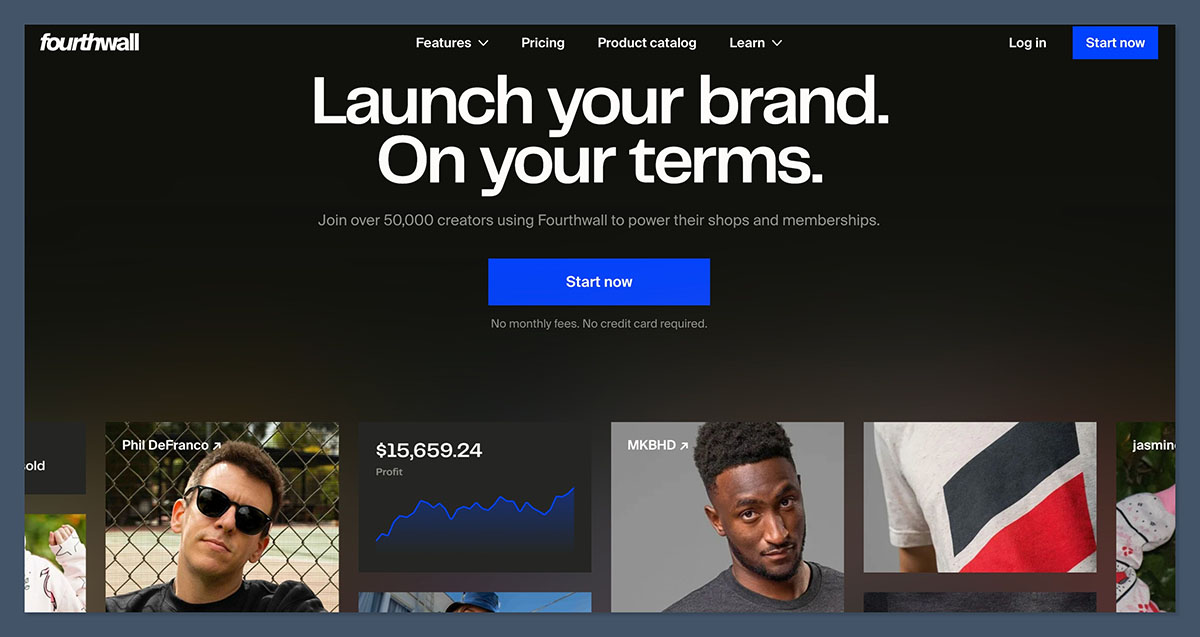
Fourthwall is very different to most print-on-demand sites. It’s not just giving you suppliers to choose from; it gives you an entire platform for launching and monetizing a brand. That means you get your own branded storefront (without having to use something like Shopify), a curated collection of premium products, and options for selling other products too.
For instance, with Fourthwall, you can send custom merch right alongside subscriptions, memberships, and digital downloads. You can even accept donations. One of the main things that makes Fourthwall stand out is its commitment to quality.
It works hand-in-hand with some of the world’s best suppliers, and makes sure printing partners use the best settings on machines so you never get less than a “premium” feel. There’s also a dedicated Signature Collection, with more fashion-focused products like AS Colour premium t-shirts, oversized hoodies, Stanley/Stella organic apparel, and embroidered options.
You also get print methods like DTG and DTFx, so you can move beyond basic flat prints when the design needs a sharper finish.
Pros
- Strong premium apparel options
- Signature collection with heavier, retail-style blanks
- More consistent quality than supplier-marketplace models
- Built-in storefront included
- No subscription fees to start
- Supports merch, digital products, memberships, and tips
- Customer support handled for Fourthwall catalog orders
- Merchant of Record support
Cons
- Smaller catalog than some alternatives, with less supplier control
- Base costs can be higher than on other platforms
Recent updates include:
- New AI assistant to help you run your store
- More DTFx and embroidery options across apparel
- Larger custom merch catalog with 200+ products
I’d use Fourthwall for premium merch before I’d use it for general POD testing. The difference is obvious once you look at the product strategy. This is not a “find the cheapest supplier” platform. It is better for a nonprofit selling supporter hoodies, a band launching tour merch, a school building a club store, or a creator selling products fans will actually wear outside the house.
How Much Does Fourthwall Cost?
- Free to start with no platform fees
- Pro plan available for $19 per month or $180 per year
- Custom t-shirts start at around $9.25
Why Use Fourthwall in 2026?
Fourthwall is an incredible option if you really care about print quality, consistent products, and brand presentation more than you care about having a bigger catalog.
It might not have the cheapest products out there, but it does give you the easiest way to create a brand that can scale, without compromising on quality.
Fourthwall is suitable for:
- Creators selling premium merch
- Musicians, bands, and podcasters with loyal audiences
- People selling custom merch alongside memberships and digital downloads
- Sellers who don’t want to deal with customer support and tax solo
Fourthwall isn’t suitable for:
- Sellers who want the cheapest possible base costs
- High-volume stores that need hundreds of supplier choices
#2. Prodigi: Best for Museum-Quality Art Prints
Starting price: Free to use, pay per item
Product range focus: Fine art prints, posters, framed artwork
Ecommerce integrations: Shopify, Etsy, API available
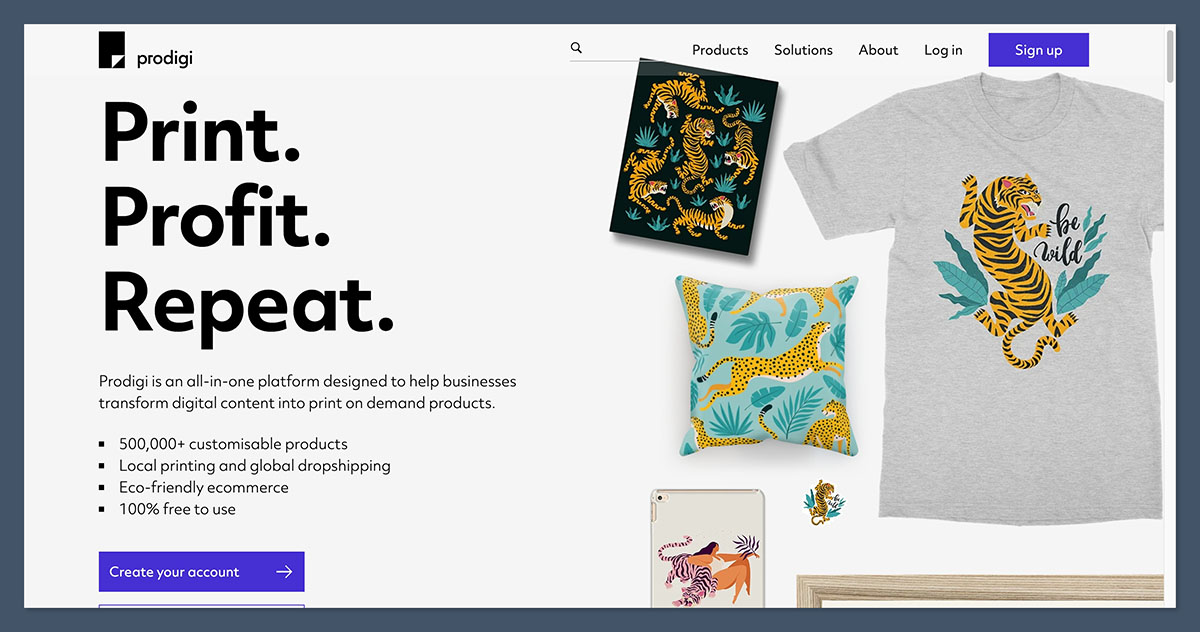
Prodigi is the best print on demand provider I’ve tested for gallery-level quality, taking the top spot in our rankings for artists, illustrators, and photographers who care about the final product more than mass-market catalog breadth.
While some platforms aim to offer everything, from t-shirts to tote bags, Prodigi specializes in producing archival-grade art prints using giclée technology, on the same paper stocks trusted by galleries and museums. Its clear focus on art-first fulfillment makes it a go-to choice if quality and longevity matter more than sheer volume or catalog variety.
High-resolution art prints made using giclée ink and Hahnemühle paper
Packaging is plastic-free and designed to protect premium prints
Prodigi provides mockups and easy Shopify integration for ecommerce stores
Pros
- Giclée printing with museum-grade materials
- Archival inks for long-term color retention
- No subscription fees
- Simple integrations for Shopify and Etsy
- Transparent, easy-to-understand pricing
Cons
- Product range is focused mainly on paper and wall prints
- No apparel or novelty item selection
- Not suitable for sellers needing a broad product catalog
Recent updates from Prodigi include:
- Expanded production in the US and EU to speed up delivery times
- New framing options for art prints including solid wood and metallic finishes
- Upgraded API endpoints for bulk order processing and automation
I used Prodigi to produce a series of fine art giclée prints, and what stood out immediately was the color accuracy and paper quality. The paper had a subtle texture and weight that instantly gave the prints a premium, gallery-ready feel.
Setup was simple through Shopify, and their mockup tools helped me present products professionally without extra design work. Turnaround was fast, and packaging was sturdy and eco-conscious, no bent corners or scuffed edges on arrival.
How Much Does Prodigi Cost?
- Prodigi has no monthly fees, you only pay per order
- Fine art prints start at around $8 to $12 depending on size and paper type
- Framed prints typically range from $25 to $45, depending on frame material
- Shipping is calculated per region, with discounts available for bulk
Why Use Prodigi in 2026?
Prodigi delivers museum-quality art prints with professional consistency, making it ideal for artists who want to sell premium work without handling fulfillment or compromising on quality. With a clear, print-first product range, global shipping infrastructure, and white-label options for branding, it’s built to support art-focused ecommerce brands at any scale.
Whether you’re selling photography, digital art, or hand-drawn illustrations, Prodigi ensures your final product looks exactly how you intended.
Prodigi is suitable for:
- Artists selling giclée prints or photography
- Ecommerce brands focused on quality over product variety
- Designers wanting long-term color retention and fine art presentation
Prodigi isn’t suitable for:
- Sellers looking to offer clothing or merchandise
- High-volume general stores needing a wide product catalog
- Users focused on novelty or gift-based print products
#3. Gelato: Best for Fast Global Shipping
Starting price: Free
Product focus: Posters, framed prints, apparel, merchandise
Fulfillment: 30+ countries with local production
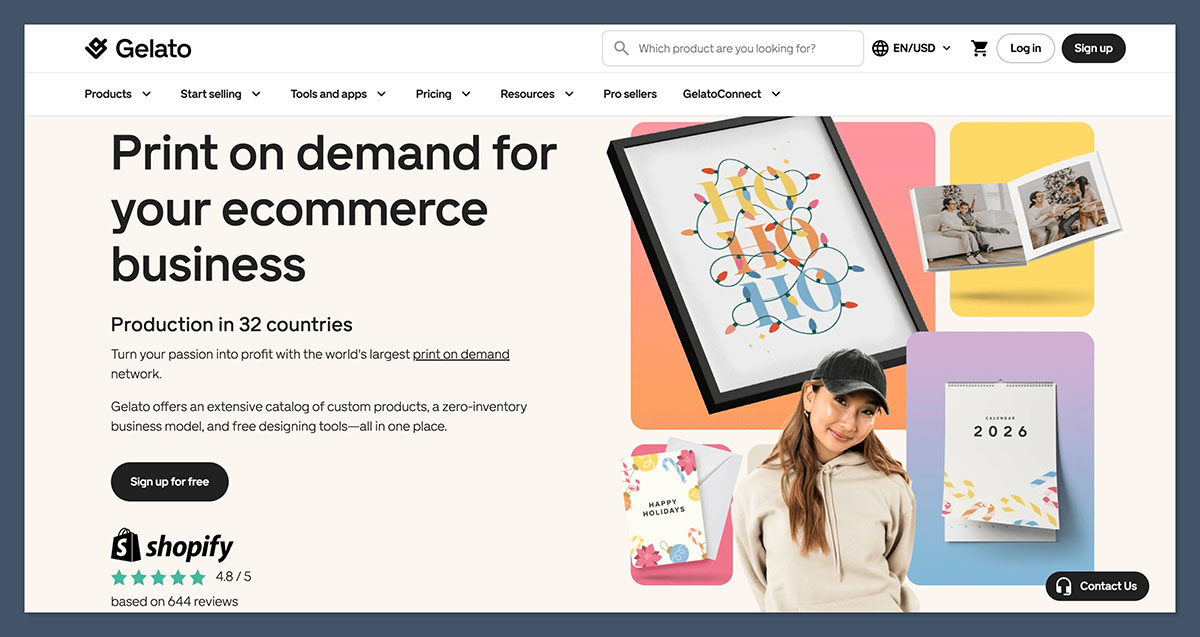
Gelato is the best print on demand platform I’ve used for international fulfillment speed. It prints locally through a network of 100+ partners around the world, meaning your customers get their orders faster, with fewer customs delays or shipping issues.
While it doesn’t offer the same museum-grade print quality as Prodigi, Gelato’s strength lies in reliability, scale, and delivery efficiency. Products look sharp, colors hold up well, and packaging has been clean and protective in all the test orders I placed.
Its subscription model (Gelato+ or Gold) unlocks discounted pricing, better branding tools, and advanced ecommerce features.
Pros
- Fastest delivery speeds worldwide
- Local fulfillment reduces shipping time and damage
- Reliable poster and print quality
- Scales well with store growth
- Shopify integration + workflow tools
Cons
- Best pricing requires a paid plan
- Print quality varies slightly across regions
- Not designed for high-end fine art prints
Recent updates include:
- New mockup generator for prints and apparel
- Expanded delivery estimates dashboard
- More branded packaging options via Gelato+ Gold
I tested framed poster prints with Gelato, shipping to both the US and Germany. In both cases, delivery was fast, and the product arrived in great shape. The paper quality wasn’t as heavy as what I got from Prodigi, but for ecommerce buyers, it still felt very professional and visually clean.
How Much Does Gelato Cost?
- Free to start, no subscription required
- Gelato+ is $23.99/month or $19.99/month billed annually
- Gelato+ Gold is $129/month
- Poster prints start from around $10.00
Why Use Gelato in 2026?
Gelato is perfect for sellers with international customers who want consistent results and reliable fulfillment. While it’s not ultra-premium for art prints, it’s solid for most sellers, and the delivery experience makes it stand out.
Gelato is suitable for:
- Stores serving international buyers
- Poster and art print sellers at scale
- Businesses that prioritize fast shipping
Gelato isn’t suitable for:
- Artists selling collector-grade prints
- Sellers with very specific color control needs
- Low-volume stores wanting the best margins without a subscription
#4. Printful: Best for Versatility and Brand Tools
Starting price: Free
Product focus: Posters, apparel, home goods, accessories
Ecommerce integrations: Shopify, Etsy, WooCommerce, more
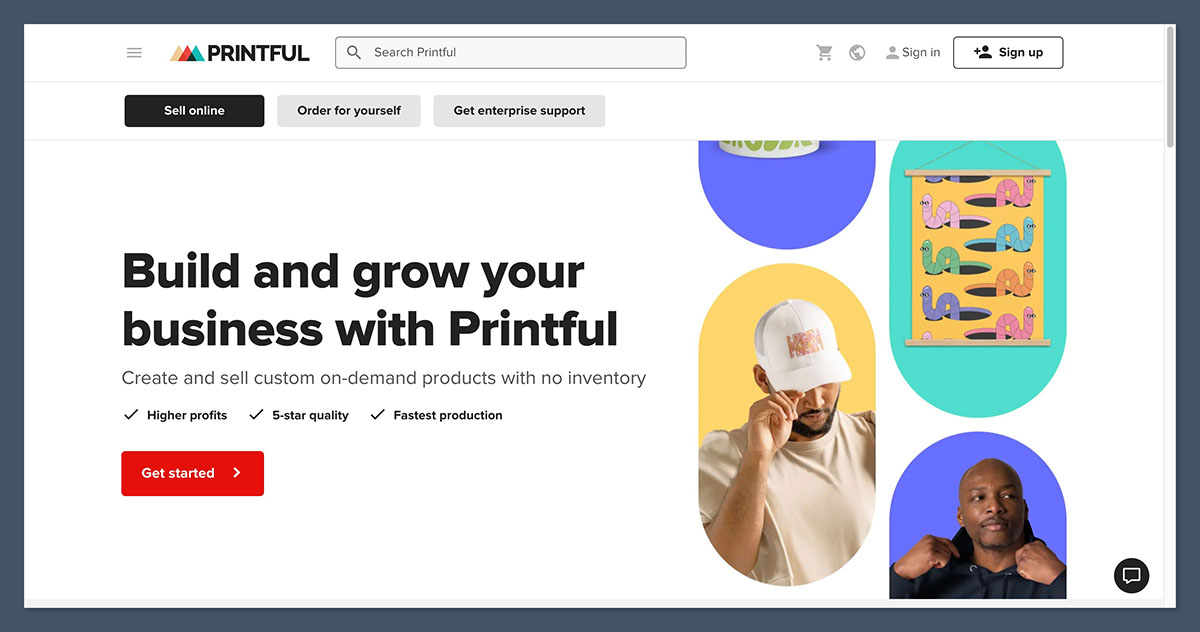
Printful is the best all-round print on demand platform I’ve used when balancing quality, scale, and catalog variety. It might not deliver giclée-grade art, but its posters, framed prints, and canvas options are consistent, clean, and suitable for most ecommerce needs.
Where Printful really stands out is in its store management tools. You get order routing, branding features like custom labels and pack-ins, and real-time inventory visibility. It integrates with nearly every major platform, and the dashboard is intuitive even for beginners.
Pros
- Huge catalog and stable quality
- Easy-to-use backend tools
- Branding options included
- Global warehouses for quicker shipping
- Excellent ecommerce integrations
Cons
- Unit prices can be high without a paid plan
- Some framed print styles are limited
- Quality is good, but not gallery-grade
Recent updates include:
- Expanded framed print options
- Lower flat-rate shipping in the US
- Better order tracking tools for Shopify
I ordered several posters and framed prints from Printful. All arrived on time, with clean edges and sturdy packaging. The colors were vibrant, and the framing felt solid. I’ve also used their pack-in card feature, which helped reinforce my branding.
How Much Does Printful Cost?
- Free to use
- Optional Printful Growth plan is $24.99/month
- Posters start from $9.50, framed prints from $24.00
- Canvas prints around $32.00
Why Use Printful in 2026?
Printful gives you flexibility. If you’re building a store with a mix of products — from prints to t-shirts — and you want backend automation and strong integrations, it’s hard to beat.
Printful is suitable for:
- Store owners selling multiple product types
- Sellers scaling via Shopify or Etsy
- Ecommerce businesses that need reliable fulfillment
Printful isn’t suitable for:
- Artists needing ultra-premium print quality
- Sellers only focused on wall art
- Users on tight margins without a paid plan
#5. INPRNT: Best for Fine Artists Who Want a Marketplace
Starting price: Free
Platform type: Curated artist marketplace
Product focus: Fine art prints, framed art, canvas
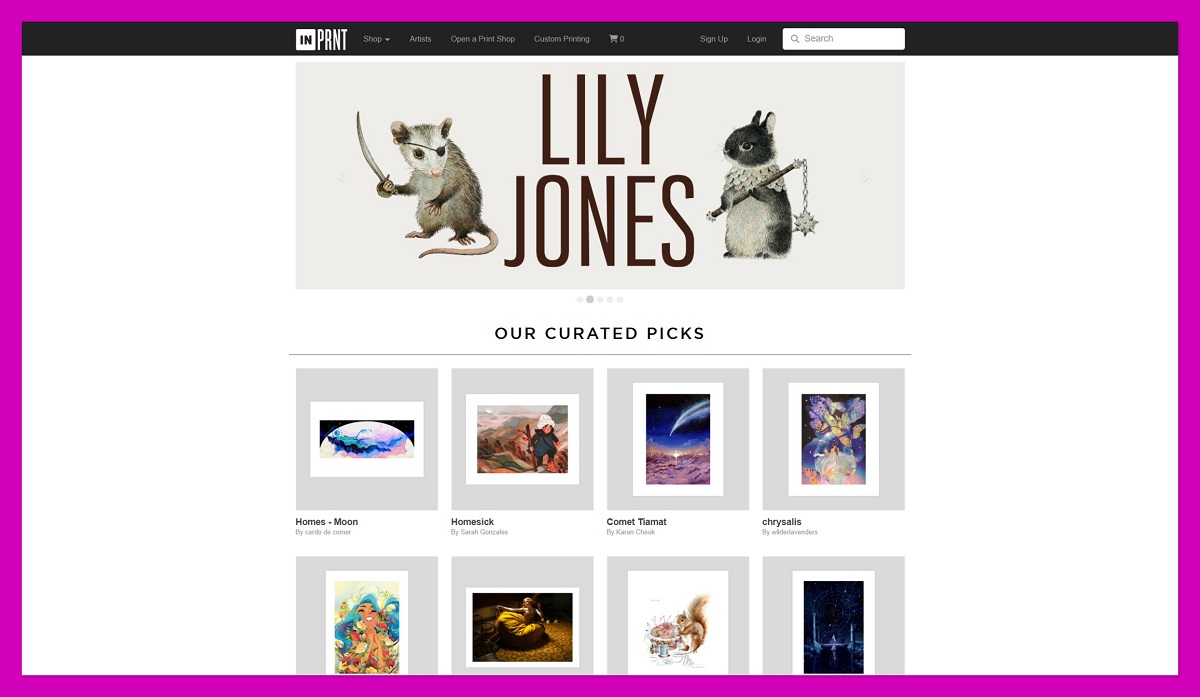
INPRNT is the best print on demand marketplace I’ve tested for digital artists and illustrators who want to focus on creating, not running a storefront. It’s a curated platform — you apply to sell — and INPRNT handles all fulfillment, packaging, customer service, and pricing.
You earn a 50 percent cut on most print types, which is much higher than the industry average. And since the print quality is strong across all product types, it’s a great way to offer premium prints with minimal effort.
Pros
- High earnings for artists
- Beautiful print quality and presentation
- Fulfillment and service handled for you
- No setup or store management required
Cons
- Less control over branding
- Competitive application process
- No external storefront integrations
Recent updates include:
- Expanded print sizes and frame finishes
- Faster shipping in North America
- Artist-focused homepage redesign
I submitted a digital illustration to INPRNT, and the resulting print felt gallery-worthy. The paper was thick with a matte finish, and the framing looked custom-made. Packaging was excellent, and I didn’t need to lift a finger after uploading.
How Much Does INPRNT Cost?
- Free to join
- No monthly fees
- Artists earn 50 percent of the retail price
- 8×10 prints typically retail for $20, with you earning $10
Why Use INPRNT in 2026?
INPRNT is ideal if you want to focus on your art without managing a store. The marketplace is curated, the quality is excellent, and the earnings structure is artist-friendly.
INPRNT is suitable for:
- Digital artists and illustrators
- Creators who don’t want to manage a storefront
- Sellers who want print quality with passive sales
INPRNT isn’t suitable for:
- Ecommerce stores with their own brand
- Sellers who need control over pricing or customer journey
- High-volume general merchandise stores
#6. Fine Art America: Best for Exposure and Flexibility
Starting price: Free (Premium plan: $30/year)
Platform type: Marketplace with optional store builder
Product focus: Wall art, photography prints, home decor
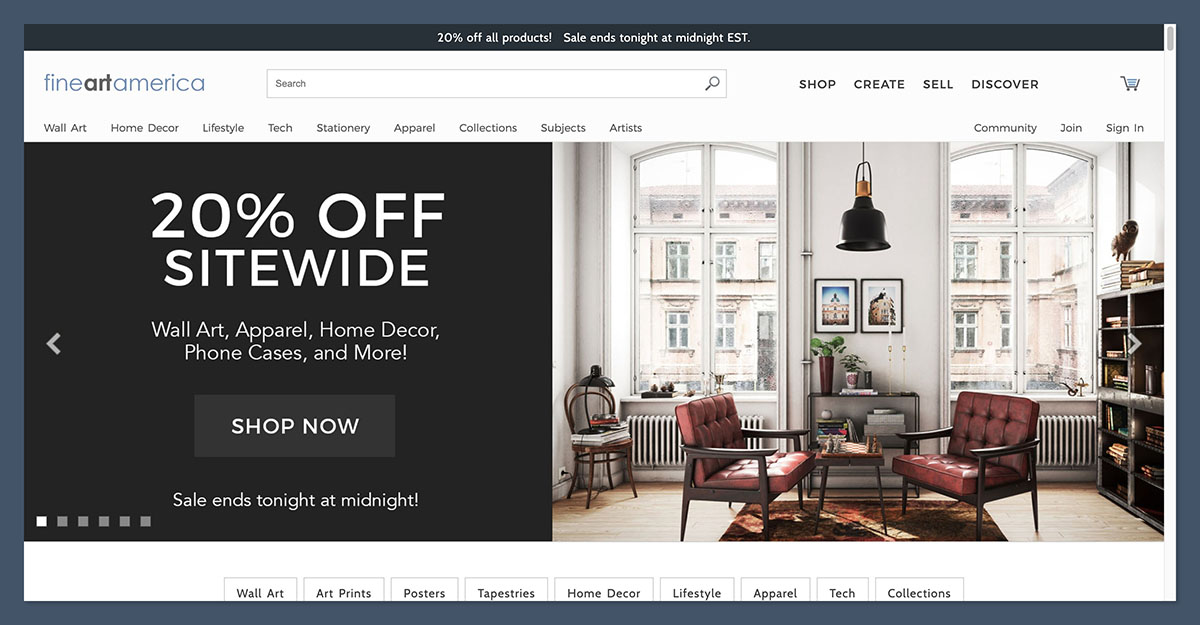
Fine Art America is the best print on demand platform I’ve used when it comes to exposure plus built-in selling tools. It combines a marketplace (with a large art-buying audience) and the option to create your own branded site — all while handling fulfillment for you.
While it’s less customizable than something like Shopify or WooCommerce, it’s a strong middle-ground if you want a low-effort way to sell prints and take advantage of a platform that already has traffic.
Pros
- Huge built-in customer base
- Wide selection of print formats, from canvas to acrylic
- Optional branded storefront
- Low annual premium fee
- Marketing and promotional tools available
Cons
- Limited design freedom for your storefront
- Platform competition is high
- Margins depend heavily on how you price your markups
Recent updates include:
- New seller dashboard with improved analytics
- Expanded selection of print materials
- Premium sellers can now link external domains
I listed a few pieces of photography on Fine Art America and was surprised by how quickly they gained traction. The marketplace traffic did a lot of the work for me. Print quality was solid, and the frame options gave the finished piece a polished, gallery-like appearance.
How Much Does Fine Art America Cost?
- Free to list and sell
- Premium plan: $30/year
- 8×10 prints typically retail for $20 to $30
- You set your markup — keep 100 percent of that margin
Why Use Fine Art America in 2026?
This is a great platform if you want a mix of exposure and automation. It’s ideal for artists and photographers who want to tap into an existing audience without building a full ecommerce site from scratch.
Fine Art America is suitable for:
- Photographers and illustrators who want exposure
- Sellers looking for passive traffic and fulfillment
- Artists who want to test without upfront costs
Fine Art America isn’t suitable for:
- Sellers who want control over every design detail
- Businesses needing full ecommerce flexibility
- Stores outside of the visual art space
#7. Art of Where: Best for Boutique, Lifestyle-Oriented Art Brands
Starting price: Free
Product focus: Fine art, textiles, apparel, home decor
Fulfillment: In-house production in Montreal, Canada
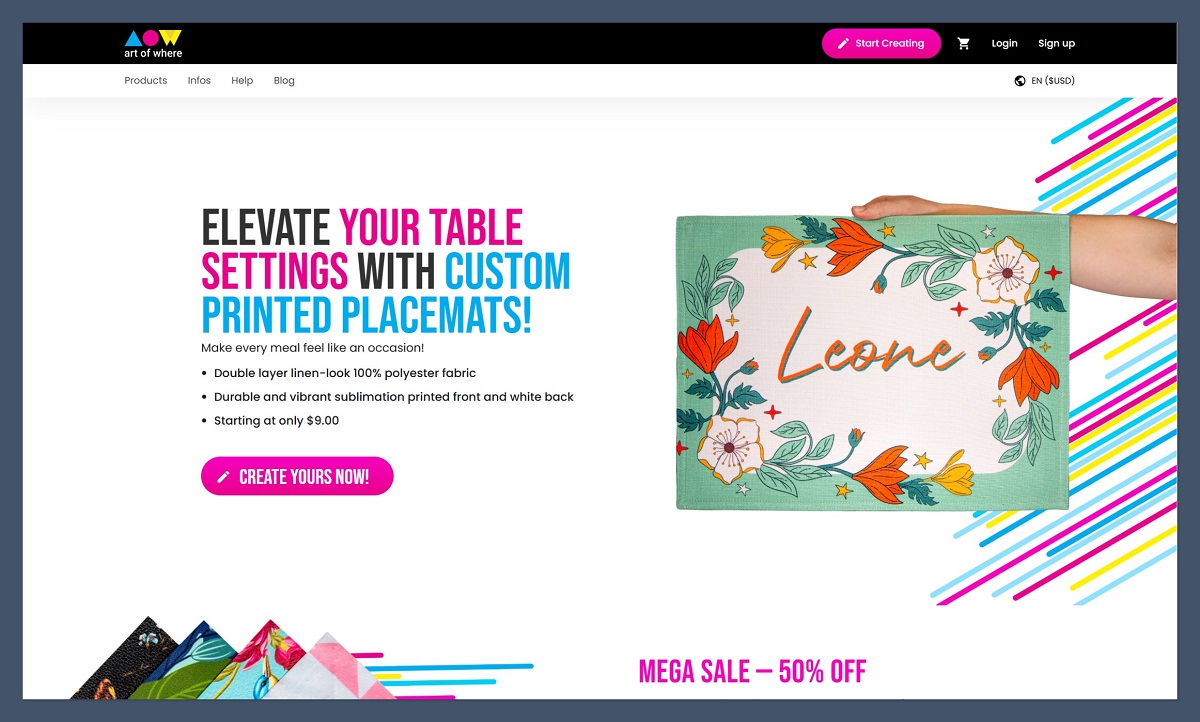
Art of Where is the best print on demand platform I’ve tested for boutique brands that want to combine fine art prints with custom textiles and lifestyle products. It has a handmade feel, and the product catalog reflects that, think printed scarves, journals, cushions, and more.
This platform isn’t as plug-and-play as others, but the product quality is excellent, and it appeals to artists who want their work on something a little more unique than just a poster.
Pros
- Unique product catalog (textiles, decor, notebooks)
- Boutique vibe with artist-driven presentation
- No monthly subscription fees
- Low minimums for wholesale ordering
- Handmade and printed in Canada
Cons
- Less automation and integration
- Smaller catalog compared to major POD providers
- Some tools feel less polished
Recent updates include:
- Expanded apparel templates with all-over print options
- New branded packing slip features for Shopify sellers
- Updated mockup generator with lifestyle photos
I uploaded one of my art prints to a notebook and cushion, and both came out beautifully. The colors were deep and clean, and the fabric had a premium finish. It’s the kind of product you’d expect to find in an art gallery gift shop or boutique.
How Much Does Art of Where Cost?
- Free to use, pay per product
- 8×10 art prints from $9.00
- Printed notebooks from $15.00
- Scarves and cushions from $29.00+
- Wholesale discounts begin at just 6 units per design
Why Use Art of Where in 2026?
Art of Where is perfect for artists who want a cohesive brand with a handcrafted feel. The quality is consistent, the products feel unique, and the low-order minimums make it great for small batch runs.
Art of Where is suitable for:
- Art brands with a lifestyle or fashion angle
- Creatives who want boutique-level packaging
- Sellers looking for unique POD products
Art of Where isn’t suitable for:
- Sellers needing fast, automated integrations
- Large catalog ecommerce operations
- Businesses looking for the cheapest pricing
#8. Gooten: Best for General Print on Demand Flexibility
Starting price: Free
Product focus: Posters, canvas, apparel, gifts
Ecommerce integrations: Shopify, Etsy, BigCommerce
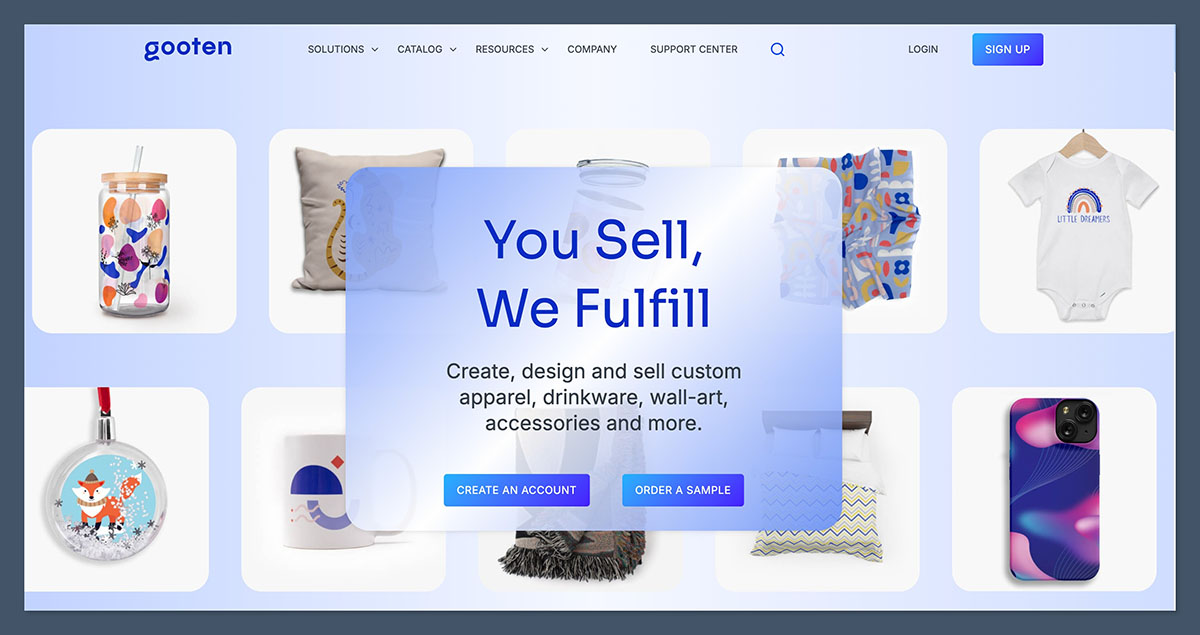
Gooten is the best generalist POD platform I’ve tested when it comes to balancing product variety, cost, and automation. While it doesn’t specialize in art prints the way Prodigi or INPRNT does, it gives you access to over 150 products, including wall art, apparel, homeware, and accessories.
Print quality is good, though it can vary depending on which production partner fulfills the order. This makes sampling essential. Gooten also integrates with major ecommerce platforms and offers backend tools to help automate fulfillment.
Pros
- Wide range of product categories
- No subscription fees
- Strong automation and order routing tools
- Flexible pricing and margins
- Scales well for ecommerce stores
Cons
- Print quality varies across providers
- Less curation than art-specific platforms
- No built-in storefront or marketplace
Recent updates include:
- Better product preview tools in the dashboard
- New shipping options and cost calculators
- Updated Shopify integration with auto-sync
I ran a few product tests using Gooten’s framed poster and canvas prints. The quality was solid, though slightly behind what I received from Prodigi. That said, it was good enough for most customers and arrived on time, well-packaged.
How Much Does Gooten Cost?
- Free to use, no subscription
- Posters start from $7.00
- Canvas prints from $18.00
- Framed prints from $20.00+
- Shipping is based on product and region
Why Use Gooten in 2026?
Gooten is great if you need variety, flexibility, and scale. You can run an entire ecommerce store using their fulfillment and keep your margins under control with custom pricing. Just be sure to sample any product before committing.
Gooten is suitable for:
- General ecommerce stores needing a wide catalog
- Shopify or Etsy sellers who value backend tools
- Sellers testing new niches or products
Gooten isn’t suitable for:
- Artists who need gallery-grade printing
- Sellers who want tightly controlled output quality
- Users needing a built-in marketplace or audience
Final Verdict: Which Print on Demand Platform Should You Choose?
Choosing the right POD platform depends on your priorities.
Use Prodigi if you’re selling museum-quality fine art and want full control over quality.
Choose Gelato if you need fast global delivery and strong logistics.
Go with Printful if you’re running a full ecommerce store with a mix of products.
Try INPRNT if you’re an artist who wants to focus purely on creation, not logistics.
Explore Fine Art America if you want exposure and passive art sales through a marketplace.
Whatever platform you choose, always order samples first and test the integration with your existing store. A print-on-demand partner can make or break your reputation, and the right one can free you to focus on creating and growing.