If you’re frustrated with Printful’s prices, shipping, or limited branding, platforms like Printify, SPOD, and Gelato offer better margins, faster fulfilment, or more control.
When I started using Printful, it felt like the obvious choice. They had a clean interface, solid integrations, and a decent range of products.
But a few months in, the issues started to stack up. The profit margins were tight, shipping delays crept in, and the lack of real branding options became frustrating. If you’re in that same spot—watching your costs climb and your customers get impatient—there are better options out there.
I’ve tested over a dozen print-on-demand (POD) platforms, spoken to countless sellers, and run multiple stores myself. This guide breaks down the best Printful alternatives available in 2026 based on pricing, fulfillment speed, branding control, and overall usability.
Below is a breakdown of the best Printful alternatives based on real use cases, pricing, fulfilment, and branding options.
Best Printful Alternative for 2026
- Printify – Best for keeping base costs low
- SPOD – Best for fast US and EU shipping
- Fourthwall – Best for creators and all-in-one selling
- Gooten – Best for scaling operations and automation
- AOP+ – Best for UK-based brands and full white-label
- ShineOn – Best for emotional gift products and jewelry
- T-Pop – Best for eco-conscious brands in the EU
- Teelaunch – Best for unique and niche product catalogs
- Print Aura – Best for full branding control and white-label
- CustomCat – Best for reliable US fulfillment and low cost
TL;DR: Best Printful Alternatives Compared
| Platform | Best For | Strengths | Weak Points | Integrations |
|---|---|---|---|---|
| Printify | Lowest base prices | Cheap pricing, wide supplier network | Quality varies by supplier | Shopify, Etsy, WooCommerce |
| SPOD | Speed + US shirt fulfillment | 48-hour production, low prices | Basic branding only | Shopify |
| Fourthwall | Creators & all-in-one simplicity | Merch, digital products, memberships, storefront built-in | Less control than Shopify stack | YouTube, TikTok, Twitch, Facebook, IG |
| Gooten | High-volume scaling | Stable API, B2B-friendly backend | Not beginner-friendly | Shopify, Etsy, WooCommerce |
| AOP+ | UK-based white-label | UK fulfillment, eco-friendly, no third-party branding | Slower outside UK | Shopify, Etsy |
| ShineOn | Jewelry + emotional gifts | High AOV, fast US fulfillment | No apparel, limited integrations | Shopify |
| T-Pop | EU-focused eco brands | Carbon-neutral, white-label, EU-based shipping | EU-only shipping, limited catalog | Shopify, Etsy, WooCommerce |
| Teelaunch | Unique & niche product catalog | Bluetooth gear, engraved gifts, tumblers | Limited platforms | Shopify |
| Print Aura | Branding control & white-label | Custom packaging and inserts | Dated UX, slower fulfillment | Shopify, Etsy, WooCommerce |
| CustomCat | Reliable US POD with low cost | Fast fulfillment, big catalog | Basic UX, limited branding | Shopify, WooCommerce |
How We Ranked These Printful Alternatives
When comparing Printful alternatives, I focused on what actually affects your bottom line and customer experience. This isn’t just theory, I’ve tested most of these platforms hands-on while running multiple stores.
Here’s what mattered most:
- Landed Cost – I compared the true cost to ship a product (base + shipping + platform fees). Profit margins shrink fast, so pricing transparency was key.
- Quality Control – Platforms using in-house fulfillment (like AOP+ or SPOD) scored higher than those relying on a big supplier network, where consistency varies.
- Fulfillment Footprint – I looked at where orders are printed and shipped from. A broader footprint means faster delivery and less angry emails from buyers.
- Branding & Unboxing – Full white-label support, branded labels, packing slips, and custom inserts helped separate pro-level platforms from the generic ones.
- Integrations & Workflow – Seamless Shopify and Etsy integrations, plus tools like order routing and bulk editing, made daily operations smoother.
- Support & Issue Resolution – Good platforms make it easy to resolve problems. I ranked providers based on how fast and effectively they respond when things go wrong.
This ranking isn’t sponsored or hypothetical—it’s built on real orders, actual customer feedback, and hundreds of hours working inside these platforms.
10 Best Alternatives to Printful
1. Printify (Now Merged with Printful, But Still a Separate Brand)
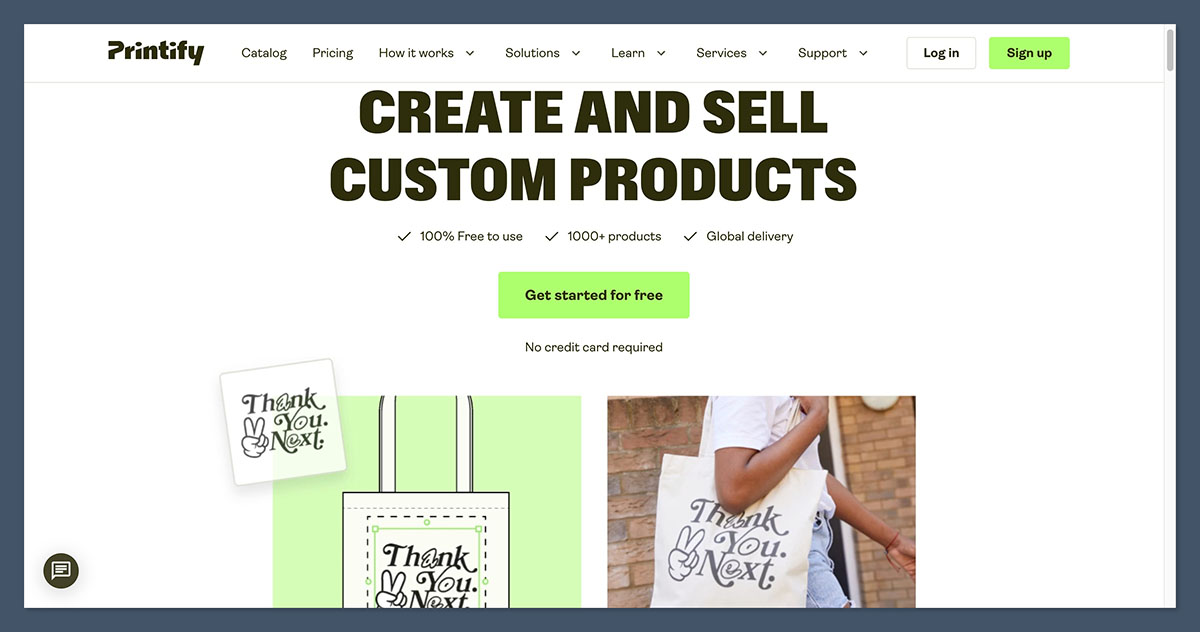
As of November 2024, Printful and Printify have officially merged. This is massive news for the print-on-demand industry.
While the two brands still operate independently for now—separate dashboards, separate pricing, and supplier relationships—they are now under one umbrella.
This changes everything.
Printify used to be the scrappy, low-cost alternative to Printful. With 85+ third-party suppliers, it gave sellers more flexibility, better pricing, and a wider range of fulfilment partners. That hasn’t gone away—but it’s now part of a much bigger, consolidated player in the POD space.
What This Means:
- Printify and Printful now share resources and technology
- You can expect future overlap in pricing, tools, and possibly even suppliers
- Both platforms are working together to offer faster shipping and broader product options
- Sellers may see changes over time, especially around pricing and fulfilment strategy
| Product Example | Printify Cost | Printful Cost | Future Impact |
|---|---|---|---|
| Bella+Canvas 3001 Tee | $7.50 | $12.95 | TBD – price alignment likely |
| 11 oz Mug | $4.00 | $7.95 | TBD – depends on suppliers |
I still use Printify when I want cheaper base prices and flexible fulfilment, but I’m watching closely. This merger could reshape how sellers pick platforms and how much control we actually get over costs and suppliers.
If you want to stick with the familiar workflow, it’s business as usual—for now. But just know that the Printful–Printify combo is no longer true competition. It’s now one company operating with two faces.
2. SPOD: Fastest Production Times (Seriously)
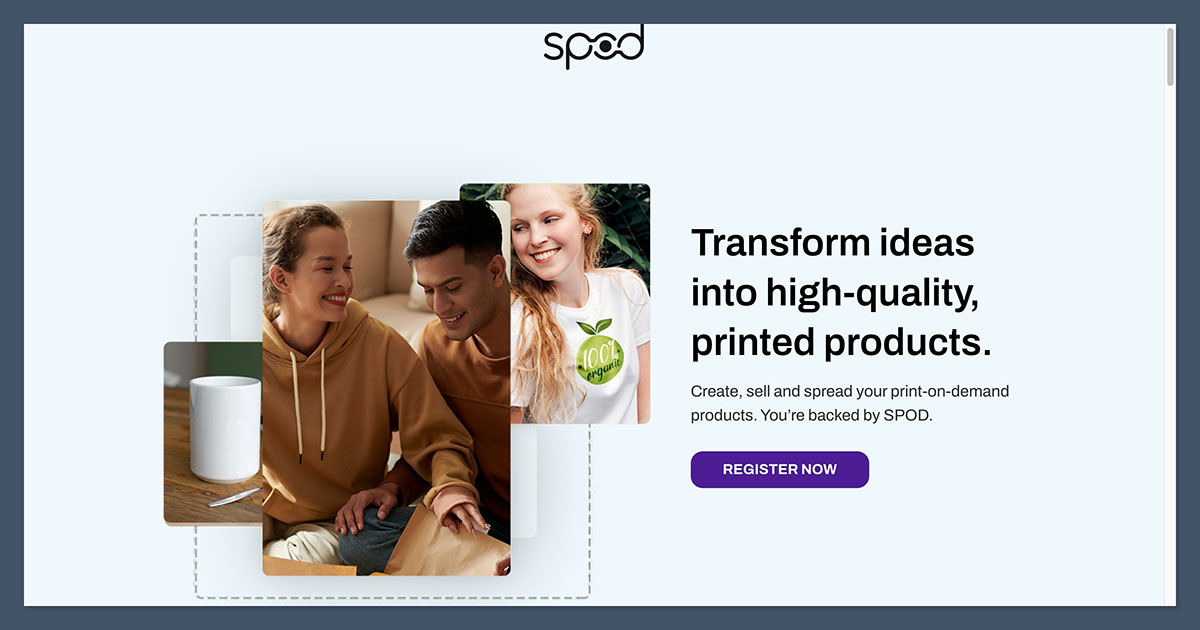
SPOD (powered by Spreadshirt) is built for speed. If your business lives or dies by delivery time, this is the platform to consider.
They ship 95% of orders within 48 hours, and in my experience, they actually hit that target. I’ve used them for US-based t-shirt drops where buyers expect Amazon-level shipping.
Pros
- Blazing-fast fulfilment — 2 days or less on most orders
- One of the cheapest base price providers on the market
- Simple setup — great for fast testing or new sellers
- Tight integration with Shopify for smoother workflows
Cons
- Smaller product selection than Printify or Printful
- Branding options are limited — no custom inserts or labels
- Not a fit for luxury or premium brands
SPOD is perfect for fast-turnaround campaigns, Q4 flash sales, or TikTok/IG ad testing. If you need to move product quickly with minimal overhead, this is your speed-first solution.
3. Fourthwall
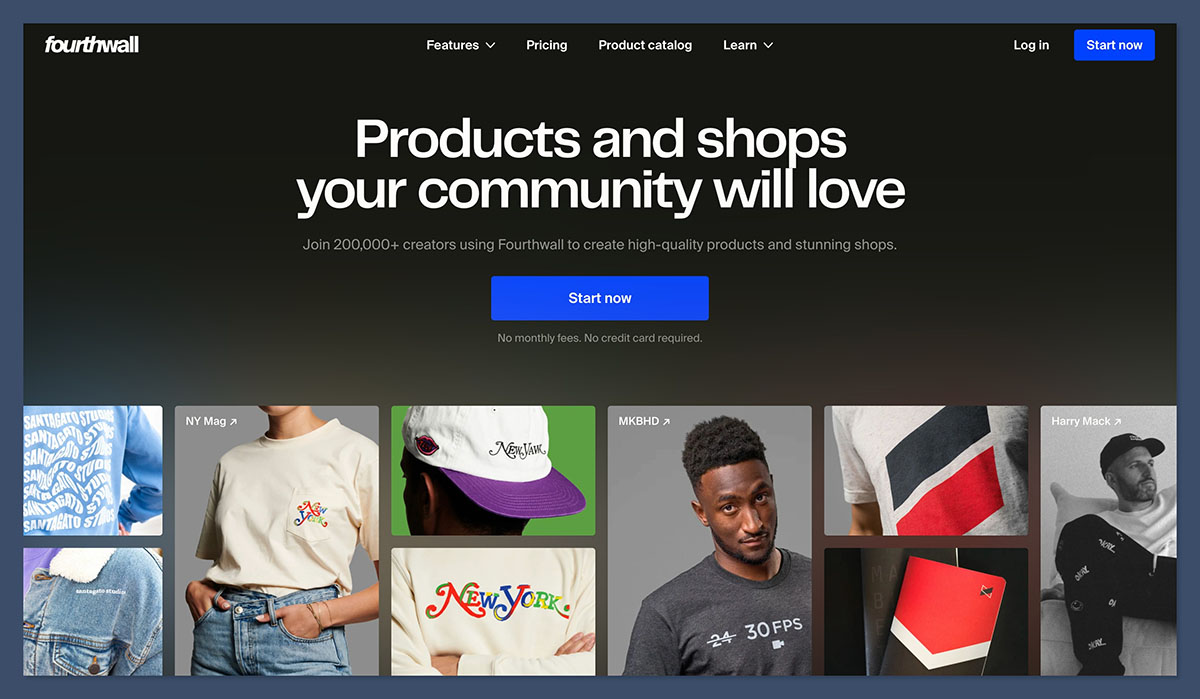
Fourthwall is a completely different animal to Printful, even if it still supports creators who want to sell merch. It’s designed for people who want to sell premium products, without hiring a huge team or running a complicated ecommerce operation.
Fourthwall combines high-quality POD merch, sourced custom products, a storefront, payments, customer support, and even memberships and digital products into one platform. It’s the all-in-one alternative to the whole “Printful + Shopify + GumRoad + Whatever else” strategy.
Pros
- Premium product quality (Printful-level or better, with quality locked in by default)
- All-in-one platform: merch, digital products, memberships, donations
- Handles fulfillment and customer support for catalog items
- Built-in storefront, so you don’t need another tool
- Native integrations with YouTube, TikTok, Twitch, Instagram & Facebook
- Free plan available, with no pressure to upgrade early
Cons
- Slightly less control than a full Shopify + POD stack
- Product costs aren’t the cheapest (quality over bargain pricing)
- Smaller integration ecosystem than Shopify
If Printful is best for operators who love optimization and control, Fourthwall is best for people who want their store to just work, without hiring staff, answering shipping emails, or spending hours on admin.
4. Gooten: Great for Scaling and B2B Integrations
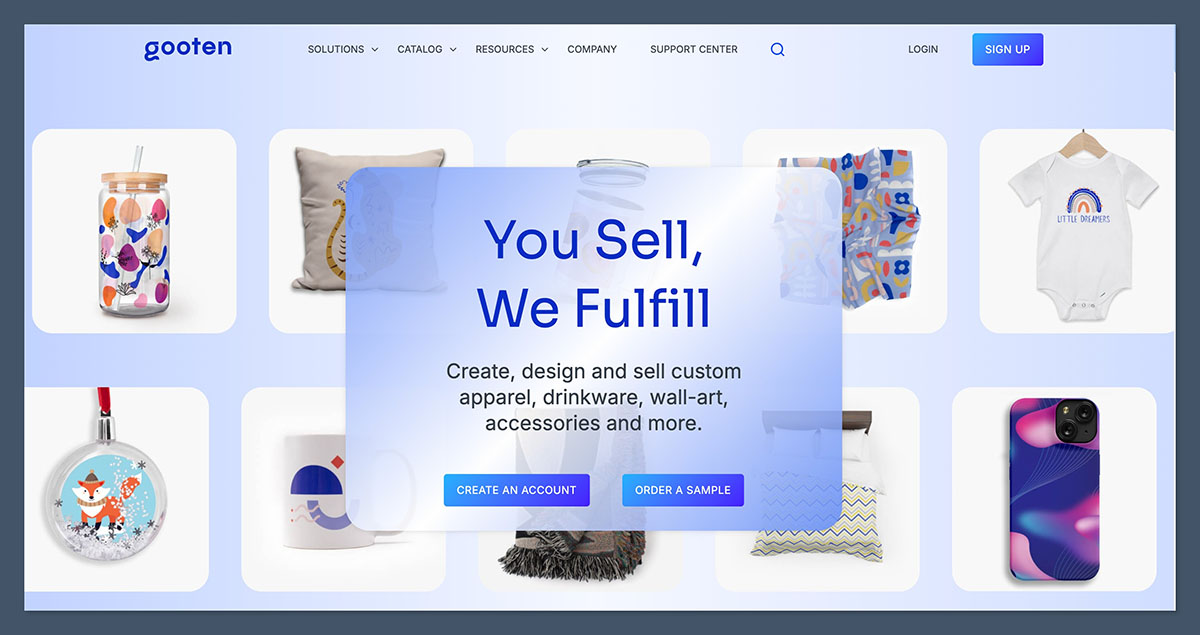
Gooten flies under the radar but performs like a backend powerhouse. I’ve used them for higher-volume orders when I outgrew Printful’s pricing.
Gooten is more B2B-focused than most POD platforms, with a strong emphasis on automation, API, and process efficiency.
Pros:
- Huge product selection across multiple categories
- Stable fulfilment and solid global shipping reach
- Works well for brands doing 1000+ orders/month
- Powerful backend for teams scaling into bulk
Cons:
- UX isn’t as slick as newer platforms
- Limited branding and packaging customisation
- Not very beginner friendly — best for experienced operators
If you’ve got momentum and need a supplier that won’t choke at scale, Gooten is built for that next level. It’s not sexy, but it’s a beast for big ops.
5. AOP+: White Label POD Based in the UK
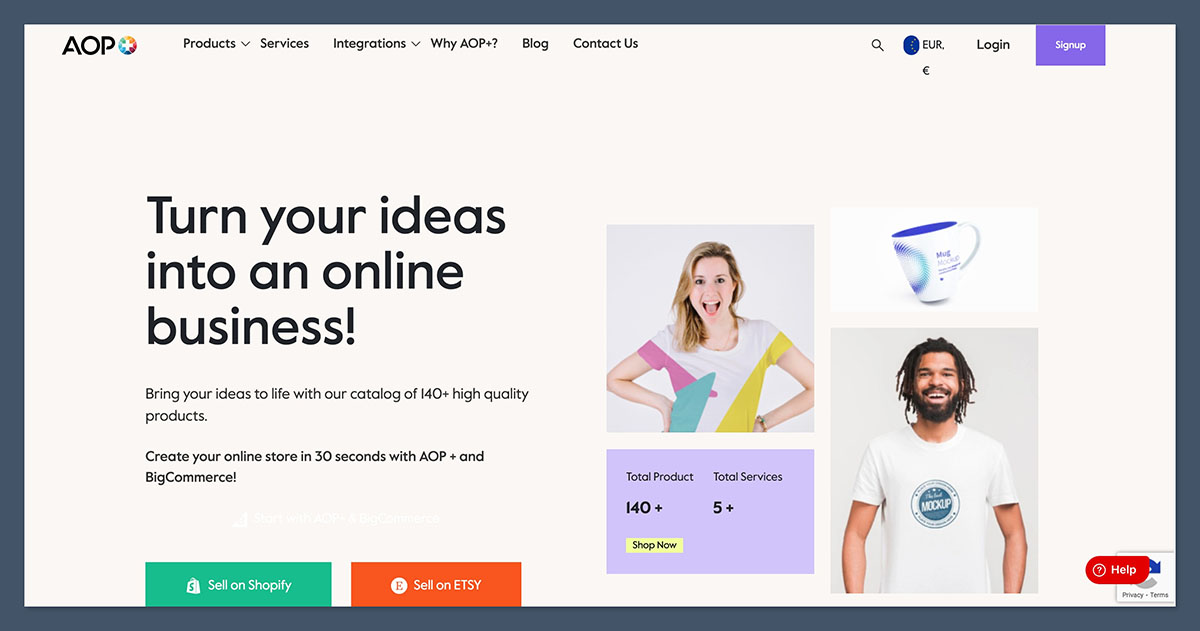
AOP+ is a UK-based print-on-demand platform that I started using to test handmade, ethical products with a custom feel. It’s one of the few truly white-label platforms in the POD world. Everything is produced in-house in London — no third-party fulfilment, no surprise branding.
Pros:
- All products are made and shipped from the UK
- Strong focus on sustainable materials and ethical production
- Fully white label: your customer never sees AOP+ branding
- Excellent for custom apparel, wall art, and niche gifts
Cons:
- Slower shipping outside the UK
- Smaller product range than Printify or Gelato
- Not ideal for fast scaling across multiple geographies
If you want full control over packaging, fulfilment, and sustainability — especially in the UK market — AOP+ is a top pick for independent brands.
6. ShineOn: Perfect for Jewellery and High-AOV Gifts
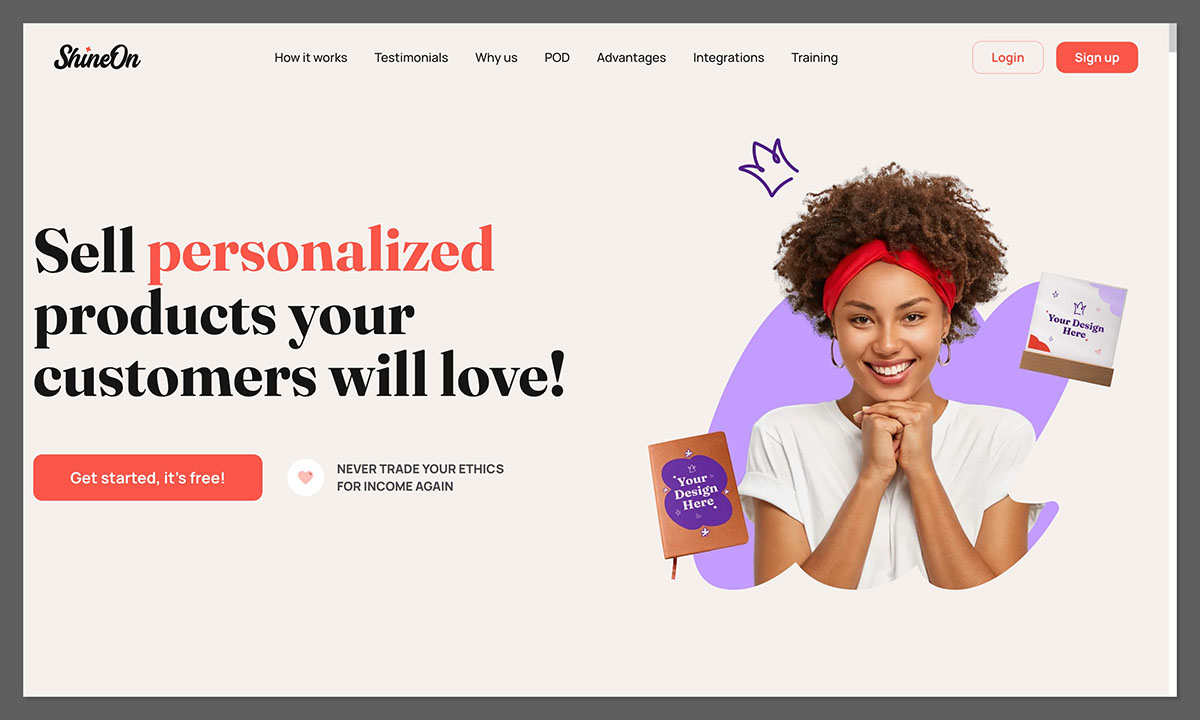
ShineOn is the go-to POD platform for high-emotion gift products. I’ve used them during Valentine’s Day and Christmas for jewellery campaigns — and the returns were impressive. You’re selling stories, not just products, which drives higher margins and stronger conversion rates.
Pros:
- Very high average order value (AOV), often $60+
- Specialises in jewellery and premium custom gifts
- Fast US fulfilment and solid packaging
- Optimised for emotional, giftable product niches
Cons:
- No apparel or basic POD items
- Requires solid ad creative and funnels to perform
- Shopify integration only (no Etsy support as of now)
If you’re running paid traffic and want to push emotional triggers like family, love, and meaning — ShineOn’s jewellery can absolutely crush it.
7. T-Pop: Eco-Focused Print-On-Demand for EU Sellers
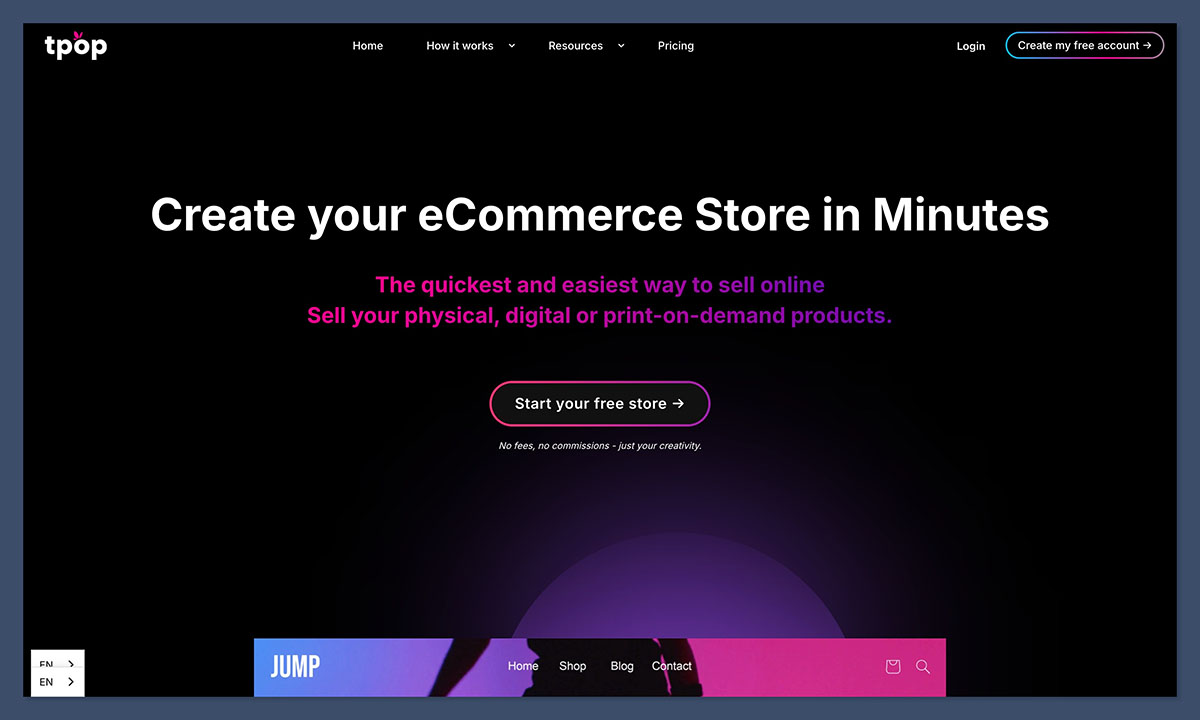
T-Pop is a France-based POD platform that puts sustainability and white-label branding at the core of everything. I don’t use it daily, but I’ve spoken to a few Etsy sellers who swear by it — especially if you’re serving buyers in France, Germany, or the UK.
Pros:
- 100% white-label, eco-packaging included by default
- Products shipped from Europe = fast EU fulfilment
- Automated custom packing slips and branded tracking emails
- Built-in carbon-neutral processes
Cons:
- Ships only from Europe (no US production)
- Limited product catalogue
- Design tools and UI could use improvement
For sellers with an eco-conscious brand identity targeting EU customers, T-Pop is a strong Printful alternative with great values baked in.
8. Teelaunch: Unique Products and Easy Shopify Setup
Teelaunch is one of my favourite wildcard platforms. They offer unusual products, think engraved tumblers, Bluetooth speakers, and pet bowls, stuff you won’t find on Printful or Printify. It’s ideal for targeting niche buyers or standing out with uncommon gift items.
Pros:
- Access to unique, high-margin product types
- Quick and clean Shopify integration
- Stable US fulfilment for most products
- Pricing is competitive for the type of products offered
Cons:
- No Etsy or WooCommerce integration
- Dashboard is a little dated
- Quality control varies across product categories
If you’re looking to sell creative products that don’t scream “generic POD,” Teelaunch is a fun, flexible option to test niche angles.
9. Print Aura: Old School, But Customisation Friendly
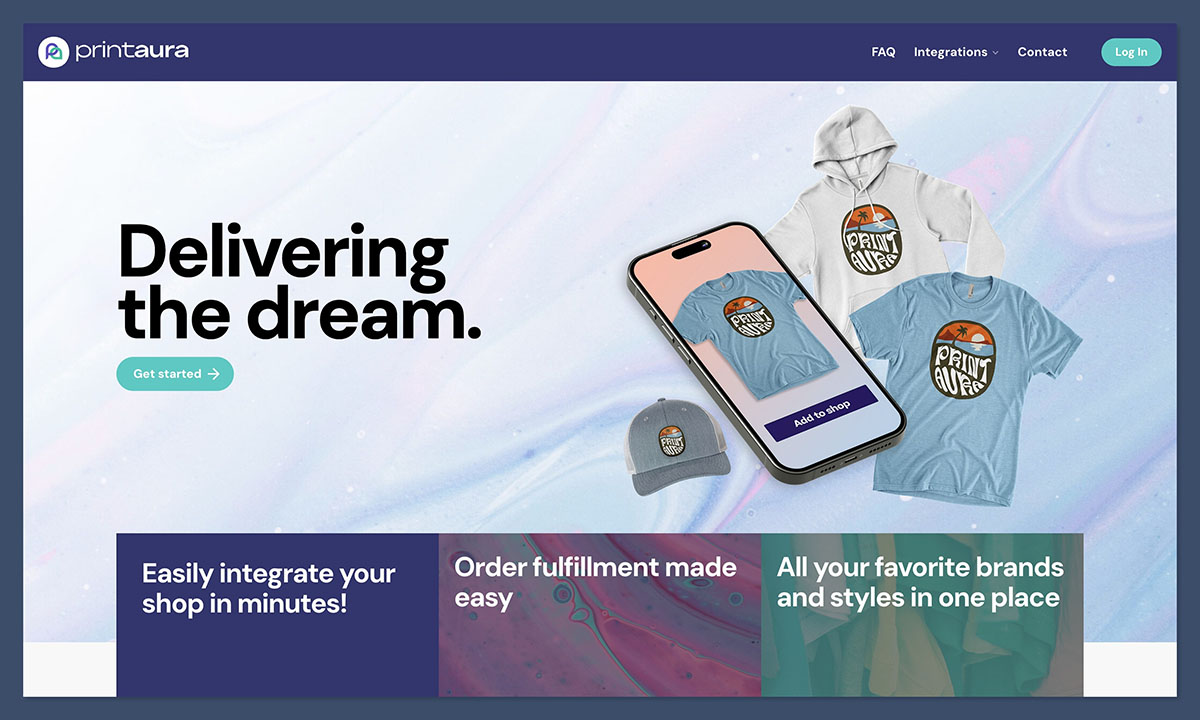
Print Aura has been around longer than most POD platforms. It’s a bit clunky, but it does one thing well — complete control over packaging and white-label branding. When I wanted total anonymity for a premium store, I gave it a try.
Pros:
- Full white-label fulfilment with branded labels and inserts
- Good range of apparel and accessory products
- Solid print quality for core items
- US-based fulfilment
Cons:
- UX is outdated and hard to navigate
- Not great for beginners
- Slower fulfilment than SPOD or Printful
If you’re building a premium, tightly branded store and want your own packaging experience — Print Aura gives you that control, but you’ll have to work for it.
10. CustomCat: Solid, Reliable POD for the US
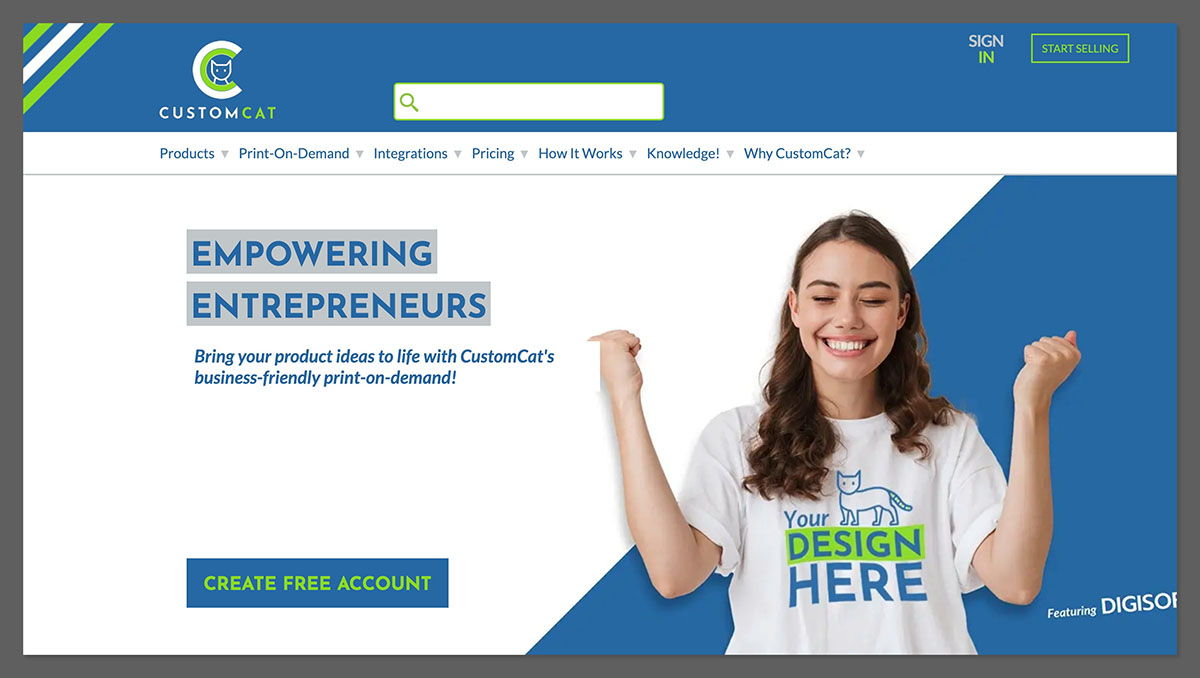
CustomCat has a no-frills vibe but delivers where it counts. I’ve used them for athletic and gym apparel, and the fulfilment has always been fast and predictable.
Their base prices are some of the lowest for US-based POD, which helps boost your margins.
Pros:
- Fulfilment within 2–3 business days
- Massive product library — including niche categories
- Low base costs across most items
- Shopify and WooCommerce integrations work well
Cons:
- Branding options are minimal
- The dashboard looks and feels outdated
- Support is functional but not amazing
If you just want a reliable POD provider with fast US shipping and solid margins, CustomCat is the workhorse worth considering.
Switching from Printful Without Breaking Your Store (Migration Checklist)
Switching platforms can feel risky—especially if you’re already live and making sales. The last thing you want is broken listings, missing SKUs, or slower shipping that kills trust.
Here’s the checklist I use when migrating away from Printful:
- Order Samples First
Before flipping the switch, order samples from your new provider. Check print quality, packaging, and shipping time to avoid surprises after launch. - Map SKUs and Variants Carefully
If you’re replacing existing products, make sure your new listings match existing SKUs and variant options—especially for platforms like Shopify or Etsy that track inventory by SKU. - Set Shipping Profiles and Delivery Estimates
Shipping speed and cost vary by provider. Update your Shopify or Etsy shipping profiles so buyers know what to expect. Underpromise, overdeliver. - Rebuild Mockups (Or Keep Photos Consistent)
Don’t confuse returning customers with different product visuals. Use mockups that match your previous branding or recreate them using the new supplier’s tools. - Update Policies (Returns, Reprints, Shipping)
Different platforms have different rules. Update your return window, refund process, and turnaround times so you’re not stuck making up for their fine print later. - Run a 2-Provider Test
Before going all-in, use a dual-provider setup. Route certain products (e.g., mugs or hoodies) through the new supplier while keeping your bestsellers on Printful. This helps reduce risk and keeps your store stable while testing.
If you treat the migration like a soft launch, you can keep sales flowing while improving costs, quality, or branding behind the scenes.
Profit Margin Reality Check
Margins in print-on-demand are tight—but manageable when you track the full picture.
Target Margin Range for POD Sellers:
- Entry-level sellers: Aim for 30–40% margins
- Ad-driven stores: Minimum 50% to cover CAC
- Established brands: 60%+ when factoring in repeat purchases
How to Model Landed Cost:
Use this formula:
Landed Cost = Base Product Price + Shipping + Platform Fees + App Fees (if any)
Let’s take a real example:
- Bella + Canvas 3001 via Printify:
Base = $7.50
Shipping (US) = $4.00
Total Landed Cost = $11.50
If you sell the shirt for $24.99, your profit is:
- $24.99 – $11.50 = $13.49 profit
- Margin = 54% (solid for ads and scale)
Now compare that to Printful:
- Base = $12.95
- Shipping = $3.99
- Total = $16.94
- Margin = 32% at the same price
Over hundreds of orders, that difference adds up fast.
For advanced modeling and margin calculators, tools like PODBase are useful. They help project profits by product and supplier, especially if you’re testing different providers or planning bundles.
FAQ: Printful Alternatives
Here are answers to the most common questions I see from POD sellers when exploring other platforms.
Yes, Printify generally has lower base prices on most products, especially with Printify Premium. But the quality depends on the print provider you choose inside their network.
Printify, SPOD, and T-Pop all work well with Etsy. T-Pop is especially strong for European sellers because of its eco packaging and white-label fulfillment.
SPOD consistently ships 95% of orders within 48 hours. If speed is your main concern, it’s the fastest option in the US and parts of Europe.
Absolutely. In Shopify, you can route different products through different apps. Many sellers use Printify for apparel and ShineOn for gifts or jewelry.
Most platforms are free to use. Printify has a $29/month Premium plan that unlocks lower base prices. Other platforms, like Fourthwall, offer optional upgrades.
Order samples of your top 3 products from each platform you’re considering. It’s a small upfront cost that saves you from angry customers and refund requests later.
Custom packing slips, neck labels, and eco-packaging all improve the unboxing experience. AOP+, T-Pop, and Print Aura offer the best white-label options if branding is key.
Final Thoughts
If you’re running a print-on-demand business or starting one, Printful might not be your best long-term solution.
The competition is fierce, and keeping your margins tight and fulfilment fast can be the difference between scaling and sinking.
Here’s how I decide what to use:
- Want lowest prices + big network? Go with Printify
- Selling to Europe or eco-focused? Try Gelato or T-Pop
- Need speed? Choose SPOD
- Selling jewellery or gifts? Use ShineOn
- Scaling fast and need reliability? Look at Gooten or CustomCat
- UK based or want premium white-label? AOP+ or Print Aura are solid picks
I’ve rotated through almost all of these based on what I was selling, where, and to whom. The best POD supplier depends on your audience, your product type, and your business model.