
TeePublic makes it genuinely easy for artists to upload designs, reach buyers, and earn royalties without worrying about production or shipping.
Site-wide promos and a pop-culture-friendly audience keep it popular. But easy doesn’t mean ideal for everyone. So if not TeePublic, then what?
We break down the strongest alternatives to TeePublic and explain why you might want to look beyond it.
Why Not TeePublic?
TeePublic is a solid artist-forward marketplace, but like any platform, it has trade-offs that push sellers toward alternatives:
- Margins are thin and pricing is out of your hands. TeePublic controls sale events, product pricing, and promo frequency. Your cut on a discounted tee during a site-wide sale can drop to a few dollars. You have no say in when those sales happen or how deep the discounts go.
- You can’t build a real brand. Your storefront lives inside TeePublic’s ecosystem. There are no custom domains, no branded packaging, and very limited options for making buyers remember you instead of the marketplace.
- Discovery depends on TeePublic’s algorithm. Visibility is tied to search placement, trending tags, and promotion cycles. Without external traffic, new artists can sit unnoticed in a catalog of millions of designs.
- Product range is narrower than some competitors. TeePublic leans heavily into apparel and a few accessories. If you want to sell wall art, home decor, tech accessories, or premium products, you’ll find the catalog limiting.
- No real audience portability. Customers belong to TeePublic, not to you. If the platform changes its terms, restructures payouts, or loses traffic, you have little to fall back on.
If any of these limitations matter to your goals, it’s worth exploring alternatives. The right one depends on what specifically bothers you about TeePublic.
Best TeePublic Alternatives at a Glance
| Platform | Type | Built-in Audience | Branding Control | Best For |
|---|---|---|---|---|
| Printful | POD backend | No | High | Brand builders using Shopify, Etsy, etc. |
| Redbubble | Marketplace | Yes (very large) | Very low | Beginners, exposure-focused artists |
| Society6 | Marketplace | Yes | Very low | Wall art and decor-oriented illustrators |
| Threadless | Marketplace + Artist Shops | Yes | Medium | Community-driven artists, contest lovers |
| Printify | POD backend | No | High | Cost-optimizing sellers needing a large catalog |
| Zazzle | Marketplace | Yes | Low | Personalized gifts, events, custom products |
| Spreadshirt | Marketplace + Spreadshop | Yes | Medium | Apparel-first creators wanting a simple shop |
| Amazon Merch on Demand | Marketplace | Yes (huge) | Very low | High-volume sellers leveraging Amazon traffic |
| Spring | Marketplace + social | Limited | Medium | Social-media-first creator merch |
The alternatives split into two camps. Some are direct marketplace swaps where you upload designs and tap into existing buyer traffic, similar to TeePublic.
Others are POD providers that handle printing and shipping while you sell through your own store on Shopify, Etsy, or another platform. We’ll cover both.
POD Providers + Your Own Store (More Control Than TeePublic)
These platforms don’t give you a built-in audience. Instead, they handle printing and fulfillment while you sell through your own storefront on Shopify, Etsy, WooCommerce, or another platform.
You drive traffic, set prices, own customer relationships, and build a brand. The trade-off is obvious: more work, more control, better margins.
1. Printful
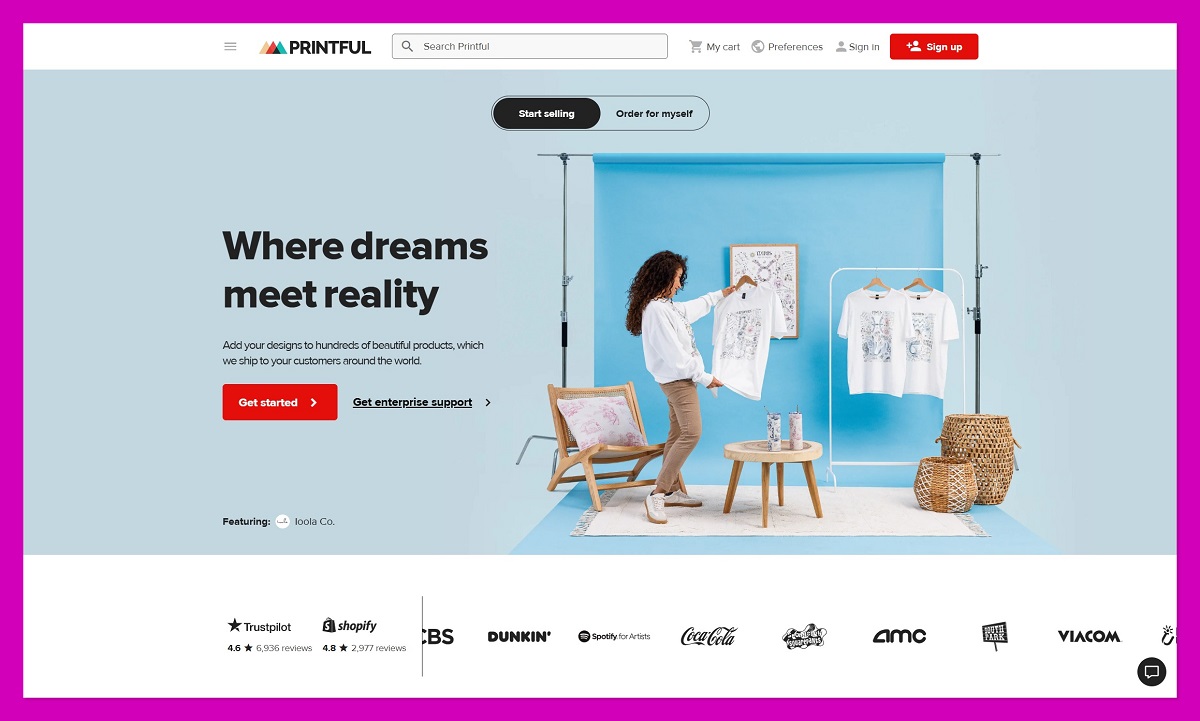
Printful is probably the most recognized name in the POD-provider space. It positions itself as a full-stack print-on-demand and logistics partner for brand-first ecommerce businesses, and it’s the strongest option for artists who want to move beyond the marketplace model entirely.
The integration list is extensive: Shopify, Etsy, WooCommerce, Wix, Squarespace, BigCommerce, Amazon, and more. Printful focuses heavily on quality and consistency, running a 3-step quality check on orders.
In 2026, the platform has expanded its eco-friendly product range, added more embroidery options, and strengthened its Growth Plan, which offers priority processing and better discounts. The Growth Plan becomes free once you hit a certain annual sales volume (around $12k USD).
The main drawback is that there’s no marketplace traffic. With Printful, you handle all of the marketing, conversion optimization, and customer acquisition yourself. Base product prices can also be high, so margins depend on your ability to price with confidence and build a brand that supports higher retail prices.
Pros:
- Deep integrations with all major ecommerce platforms
- 3-step quality check and consistent output
- Growth Plan with priority processing and volume discounts
- Expanding eco-friendly and embroidery options
Cons:
- No built-in audience
- Higher base prices than some competitors
- You need brand strength to justify retail pricing
Printful is the best TeePublic alternative for artists who are ready to treat their work as a brand rather than a side upload. The quality controls, platform integrations, and Growth Plan discounts make it a strong foundation for a serious POD business. But it only works if you’re prepared to invest in driving your own traffic.
2. Printify
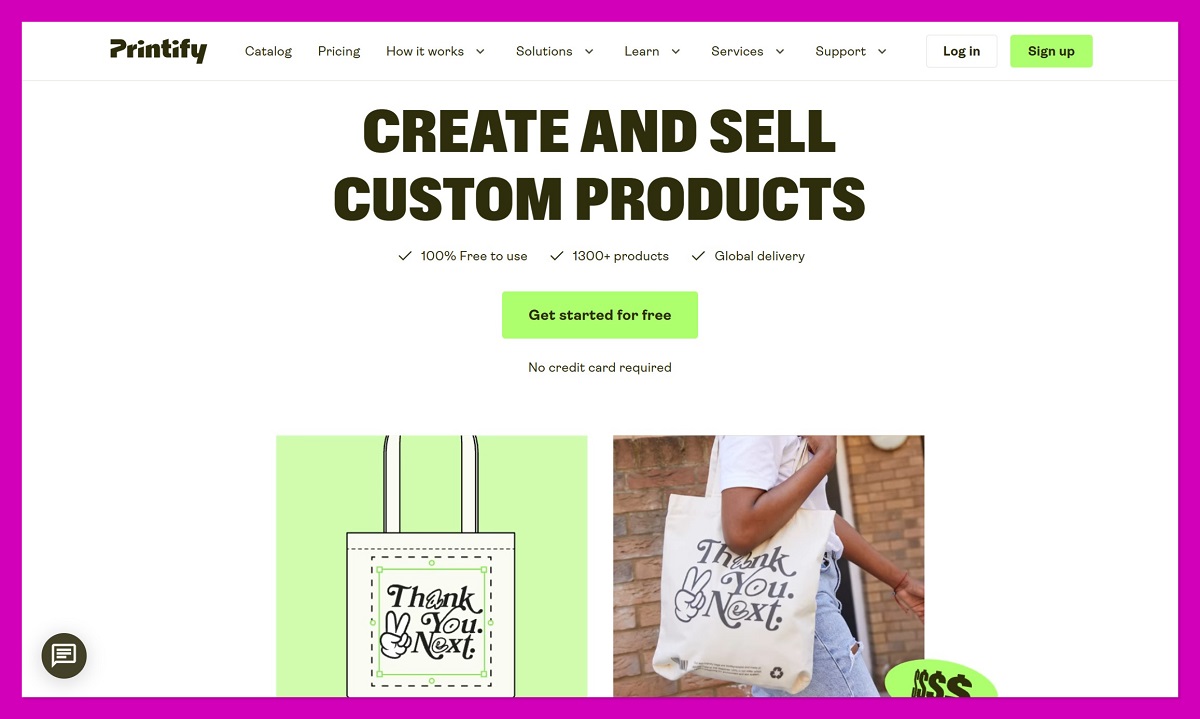
Printify takes a network approach. Instead of running its own production facilities, it connects you to multiple print partners across different regions. That gives you a very large product catalog (over 800 items, with ongoing additions in 2026) and the ability to choose providers based on cost, location, and rating.
The platform integrates with Shopify, Etsy, WooCommerce, and other major ecommerce and marketplace platforms.
The provider-choice model is Printify’s defining feature: you can optimize for the lowest base price, the fastest shipping to a specific region, or the highest-rated production quality. That flexibility is something Printful doesn’t offer in the same way.
The downside of a multi-provider network is inconsistency. Quality and fulfillment speed vary between partners, so you need to order samples and curate your provider list. And like Printful, there’s no marketplace traffic. You bring the demand.
Pros:
- Very large product catalog
- Choose print providers by cost, location, or rating
- Integrations with major ecommerce platforms
Cons:
- Quality varies by provider; requires testing
- No built-in audience
- Managing multiple providers adds overhead
Printify is the right pick if you want maximum flexibility on pricing and product selection. The ability to shop between print partners gives you margin optimization that single-facility providers can’t match. Just expect to spend time testing and vetting providers before committing to a lineup.
Marketplace Alternatives (Closest to TeePublic)
These platforms work the way TeePublic does: you upload designs, they handle production, fulfillment, and customer service, and you earn a royalty or margin on each sale. The upside is built-in traffic. The downside is limited control.
3. Redbubble
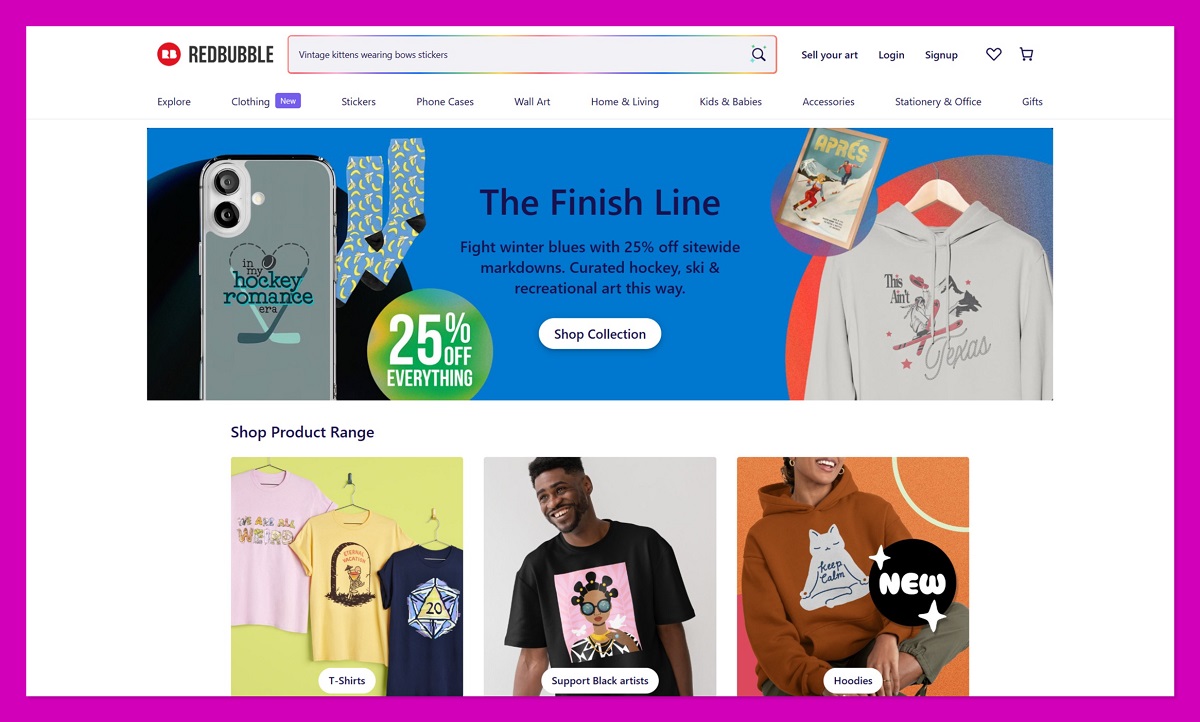
Redbubble is probably the first name that comes up when artists look beyond TeePublic. It’s a large global marketplace for independent art across apparel, home decor, stickers, accessories, and more. The product catalog is broader than TeePublic’s, and the global reach is substantial.
Uploading is free and straightforward. You set a markup percentage on each product, and Redbubble handles everything else. There’s no approval process, so you can start selling immediately.
The problems are familiar to anyone who has sold on a large marketplace. Margins tend to be low, often sitting in the 10-20% range. The search results are extremely saturated, and standing out organically is difficult without driving your own traffic. Branding options are minimal, and print quality can be inconsistent because orders are routed through different production partners depending on the buyer’s location.
Pros:
- Huge built-in traffic and global reach
- Free to join, no upfront costs
- Broad product catalog beyond apparel
Cons:
- Low margins and high saturation
- Limited branding and inconsistent print quality
- You often need external traffic for meaningful earnings
Redbubble works best as a like-for-like TeePublic swap when you want broader product variety and more international exposure. The core limitations are similar, though, so treat it as a complement to your strategy rather than a long-term solution on its own.
4. Society6
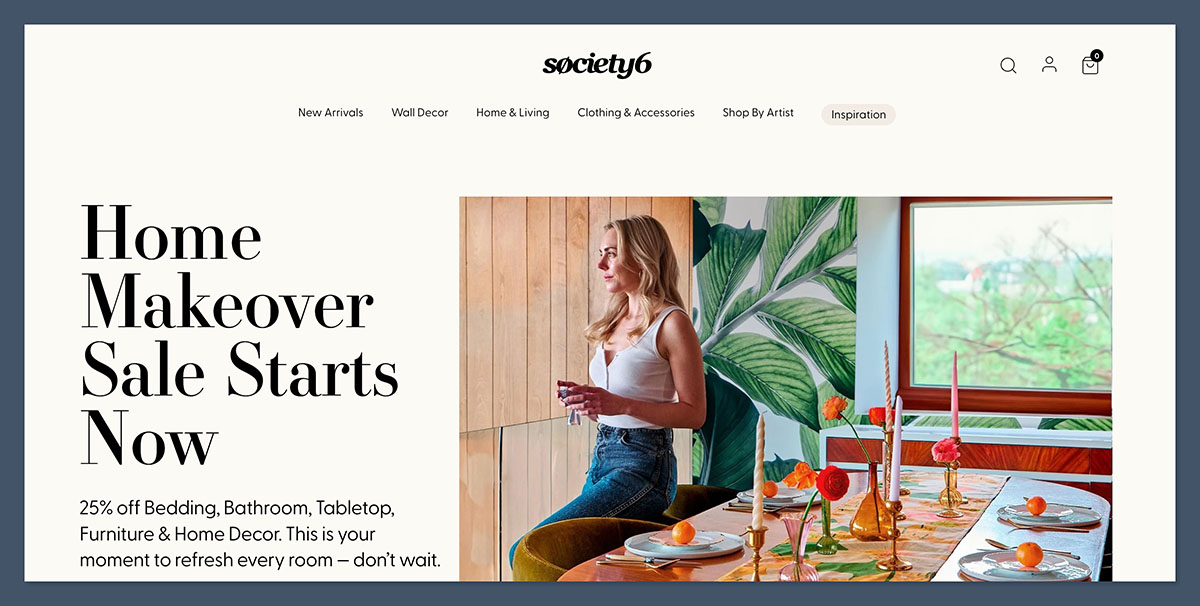
Society6 positions itself more toward art enthusiasts than graphic-tee buyers. The catalog leans heavily into wall art, framed prints, home decor, and lifestyle accessories. If your work is illustrative, painterly, or photography-based, Society6’s audience is a better stylistic match than TeePublic’s pop-culture crowd.
The platform has been around for a long time, carries an A+ BBB rating, and attracts buyers who are specifically looking for art rather than meme-driven designs. That said, artist royalties are typically low, often around 10%, and Society6 controls pricing and production. Competition for visibility is fierce, and some artists report frustration with additional seller fees eating into already thin payouts.
Pros:
- Strong fit for illustrators and fine-art-style work
- Catalog prioritizes wall art and decor
- Established platform with an audience actively buying art
Cons:
- Low royalties (often around 10%)
- Pricing and production controlled by the platform
- High competition and limited visibility tools
Society6 makes sense if your work fits the gallery aesthetic and you want exposure to a decor-buying audience. It’s less suitable for fan art, pop culture, or text-heavy designs. Think of it as TeePublic’s artier cousin: similar hands-off model, different buyer profile.
5. Threadless
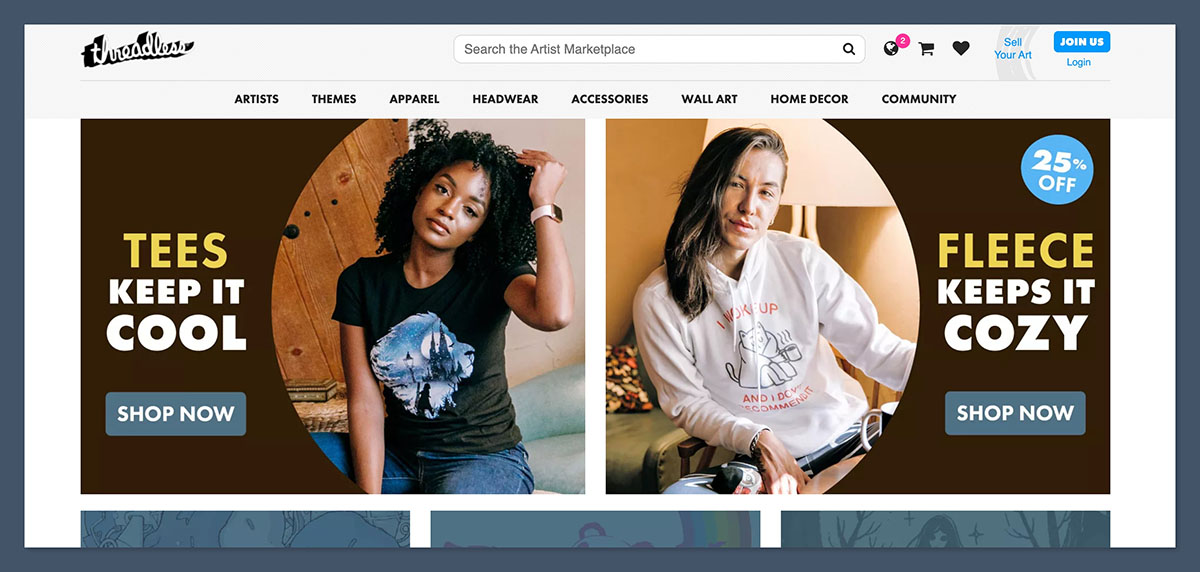
Threadless takes a different approach from pure upload-and-sell marketplaces. It combines a community-driven marketplace with design contests, challenges, and a separate “Artist Shops” system where you get more control over your storefront.
The community angle is the main draw. Design challenges can drive real visibility, cash prizes, and features on the homepage. Threadless has a built-in audience in the millions, and the interactive format gives artists feedback and engagement alongside sales. It’s a good fit if you enjoy the social side of selling art and want to build a following through participation rather than just uploads.
The flip side is that visibility is still algorithm-driven and curation-gated. Competition is intense, and unless you’re winning challenges or getting featured, your designs can get buried. If your priority is building a tightly controlled direct-to-consumer brand, Threadless still has marketplace-level limitations.
Pros:
- Design contests and challenges drive visibility
- Built-in audience with community engagement
- Artist Shops offer more branding than pure marketplaces
Cons:
- Visibility is algorithm- and curation-driven
- Intense competition
- Less suitable for pure DTC brand building
Threadless is the best marketplace alternative for artists who thrive on community interaction and competition. The contest model creates opportunities that passive-upload marketplaces don’t offer. But if you just want to upload and let the platform sell for you, the experience won’t feel very different from TeePublic.
6. Zazzle

Zazzle sits in a slightly different lane. While TeePublic and Redbubble focus on artist designs applied to standard products, Zazzle adds a deep personalization layer. Buyers can customize text, layouts, colors, and more, which makes the platform a strong fit for event merch, personalized gifts, corporate products, and wedding stationery.
The product range is very wide. If you design templates that buyers can personalize, Zazzle opens up revenue streams that purely design-driven marketplaces don’t. Fulfillment is completely handled by Zazzle, similar to TeePublic.
The downside is that the interface and product setup process are noticeably more complex than TeePublic’s simple upload flow. Brand-building tools are limited, and customers tend to remember Zazzle, not the individual artist. It’s a better fit for designers who think in terms of customizable products than for artists uploading finished artwork.
Pros:
- Deep buyer personalization options
- Very wide product range including event and corporate items
- Zero inventory, fulfillment handled by Zazzle
Cons:
- Complex interface compared to TeePublic
- Weak artist branding
- Customers remember Zazzle, not you
Zazzle is worth exploring if your designs translate well into customizable templates. The personalization engine opens up product categories that standard POD marketplaces don’t touch. For artists who sell finished designs without a customization angle, simpler platforms like Redbubble or Threadless will feel more natural.
7. Spreadshirt (Spreadshop)
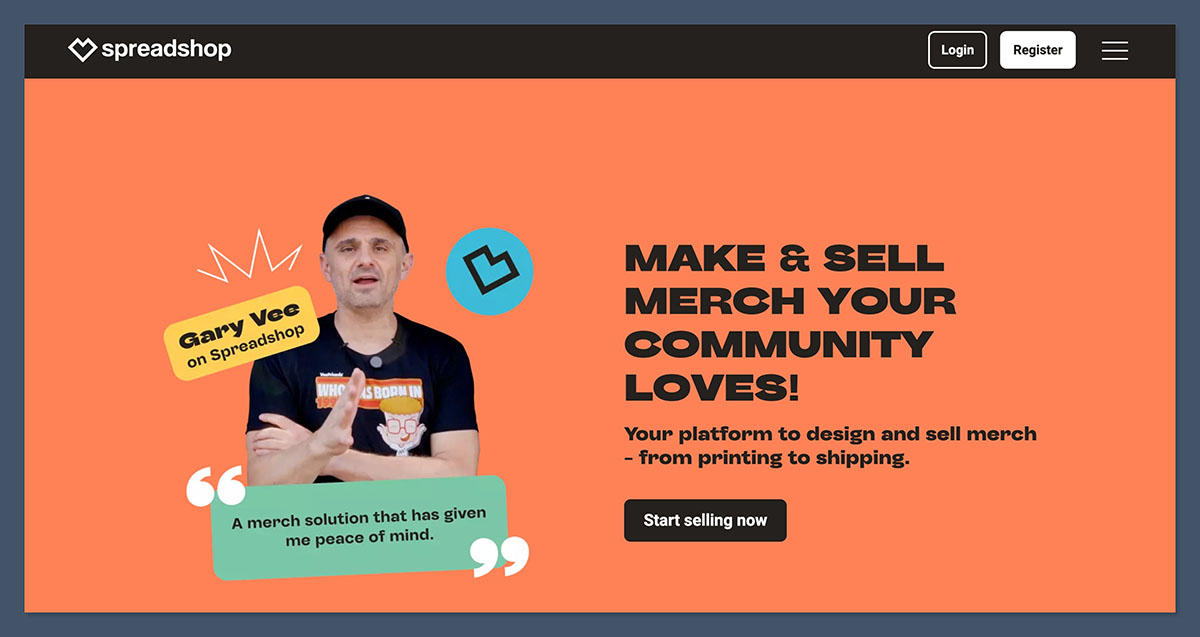
Spreadshirt works as a hybrid. You can sell through its public marketplace, or you can launch a free Spreadshop storefront with more control over how your products are presented. That dual model gives you a bit more flexibility than pure marketplaces like TeePublic.
The catalog is apparel-first, which suits creators whose output is mostly wearable designs. The Spreadshop side lets you customize your shop’s look, set your own prices, and create something that feels a step closer to a standalone store without the complexity of running one yourself.
The marketplace side still comes with typical competition and saturation issues. Branding options on the marketplace remain weaker than a real ecommerce stack, and the payout structure plus base prices can limit your effective margins.
Pros:
- Dual model: marketplace exposure plus standalone Spreadshop
- Solid apparel-first catalog
- Free Spreadshop with more presentation control
Cons:
- Marketplace side is competitive
- Branding still weaker than a full ecommerce setup
- Base prices can limit margins
Spreadshirt is a reasonable middle ground for artists who want more control than TeePublic but aren’t ready to manage a full Shopify store. The Spreadshop option gives you a taste of running your own storefront without the overhead, while the marketplace side provides some passive exposure.
Niche and Specialist Options Worth Knowing
The platforms above cover most use cases. But depending on your niche, audience, or selling style, two specialist options are worth a look.
8. Amazon Merch on Demand
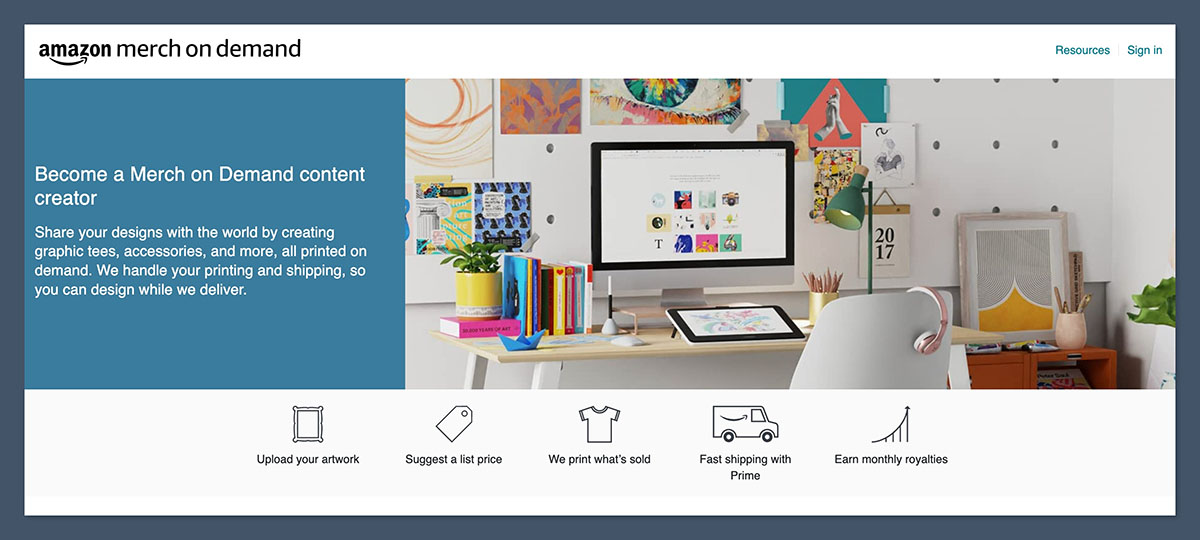
Amazon Merch on Demand (formerly Merch by Amazon) lets you sell POD products directly on Amazon’s marketplace. The traffic advantage is obvious: you’re placing designs in front of the largest online retail audience in the world. Fulfillment and customer service are completely handled by Amazon, and orders ship with the same Prime-style speed buyers expect.
The catch is that it’s an invite-only program with strict intellectual property policies. Competition is extremely heavy, visibility is algorithm-driven, and branding is essentially nonexistent.
Your designs live inside Amazon’s catalog, indistinguishable from thousands of others. It works for high-volume sellers who can play the keyword and trend game, but it won’t help you build an artist brand.
Pros:
- Massive Amazon traffic
- Hands-off fulfillment and customer service
Cons:
- Invite/approval required
- No branding, heavy competition
- Strict IP policies
Amazon Merch on Demand is a volume play, not a brand-building one. If you can get accepted and you’re willing to compete on keyword optimization rather than artistic identity, the sheer traffic makes it worth including in a multi-platform strategy. It’s not a replacement for TeePublic so much as an additional channel.
9. Spring (formerly Teespring)
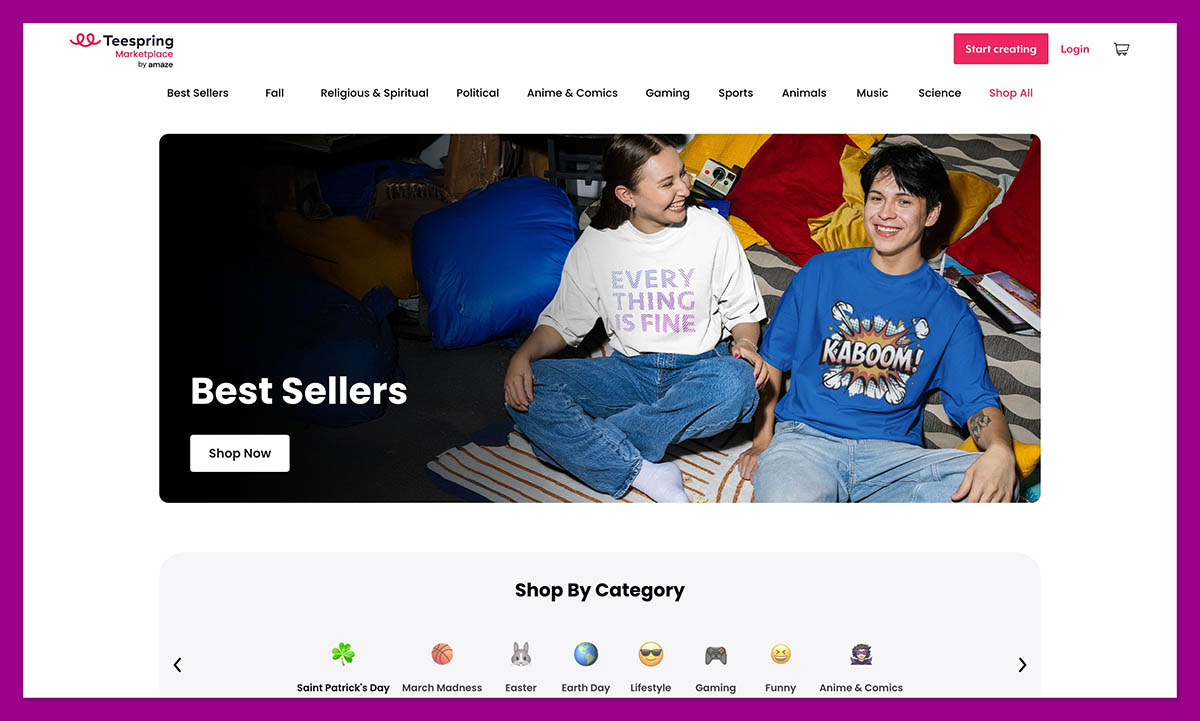
Teespring has repositioned itself around social-media-driven merch. The platform includes tools for integrating with YouTube, TikTok, and other social platforms, letting creators sell directly under their content. It’s a better fit for influencers who want frictionless fan merch than for artists looking for marketplace discovery.
If you already have a social following, Spring reduces the friction between content and commerce. If you don’t, the discovery side is limited compared to Redbubble or TeePublic.
Pros:
- Social commerce integrations (YouTube, TikTok)
- Good for influencer and creator merch
Cons:
- Weak discovery without an existing audience
- Less attractive for pure artist marketplace selling
Teespring makes sense as a TeePublic alternative only if your audience lives on social platforms. The social commerce integrations are its real advantage. For artists who rely on marketplace browse traffic rather than followers, other options on this list are a better fit.
Marketplace vs. Your Own Store: Which Path Makes Sense?
The decision usually isn’t either/or. Many artists start on marketplaces like Redbubble or Threadless for validation and early sales, then shift their main revenue to a Shopify store connected to Printful or Printify once they have proof of demand. Marketplaces become top-of-funnel exposure while the branded store captures the higher-margin, repeat-customer revenue.
A useful rule of thumb: If you’re just starting out and want to test designs with minimal effort, a marketplace (Redbubble, Society6, Threadless) gets you in front of buyers fastest. If you already have an audience or want to build a real brand with better margins, a POD provider (Printful, Printify) paired with your own store gives you the control and upside that marketplaces can’t.
Conclusion
TeePublic is a solid starting point for artists who want a simple, low-friction way to sell designs. But it’s not the only option, and it’s rarely the best long-term fit for artists who want higher margins, stronger branding, or a wider product catalog.
If you’re ready to move beyond the marketplace model entirely, Printful and Printify give you full control over pricing, branding, and customer relationships, with the trade-off that you need to bring your own traffic.
Fourthwall bundles merch with memberships for creators who already have a following.
If you want a direct marketplace swap with more product variety, Redbubble and Threadless are the closest alternatives.
For wall art and home decor, Society6 is the stronger fit. Zazzle and Spreadshirt each carve out useful niches for customizable products and apparel-first creators. Amazon Merch on Demand and Spring round out the list for sellers who can leverage massive retail traffic or social audiences.
None of these platforms are perfect. But the right combination of marketplace exposure and brand-owned infrastructure can give you something TeePublic alone never will: a business you actually control.