People have been talking about the “creator economy” for ages now, shouting about this massive $250 billion economy where anyone can be an entrepreneur. That sounds great in theory, but even if you take the “easy route”, and combine build-your-own website tools with print on demand or dropshipping, you still need a bunch of tools.
You end up with a combination of platforms all running separately. Shopify for merch. Patreon for memberships. Gumroad for downloads. A link-in-bio page holding it all together.
Fourthwall exists because that setup is exhausting. It’s a simple solution for launching the kind of businesses creators excel with, ones based on custom merch, digital products, donations and memberships. It’s not some “enterprise-level” stack for online selling. It isn’t supposed to be.
But if you’re looking for something aligned, straightforward, and actually built for you, I’m about to tell you why I think it’s still a great option for creators right now.
Fourthwall Review: Quick Verdict
If you already have an audience and you’re tired of trying to use five different tools just to sell a hoodie or run a membership, Fourthwall is the platform for you. It gives you the storefront, the quality products, the fulfillment, and the membership tools in one place.
In fact, for 99.9% of sellers, Fourthwall gives you everything you need, from native analytics, to integrations with most major marketing tools, and even headless customization.
Pros
- Free plan, no monthly pressure
- Handles all customer support on your behalf
- Acts as a merchant of record for every seller
- Special partnerships with vendors for premium quality
- Merch, digital products, memberships, and donations live together
- Print-on-demand and MOQ without inventory stress
- Native Integrations with YouTube Product Shelf, Instagram Shopping, TikTok Shop and other social commerce platforms
- Interface stays out of the way
- Plenty of visible trust from real creators
Cons
- Significantly more customization than Printful, but slightly less than Shopify
- Print costs aren’t bargain-level (quality focus over price)
- Much smaller integration list than Shopify
- Membership fees don’t fully go away
Fourthwall Review What Is Fourthwall?
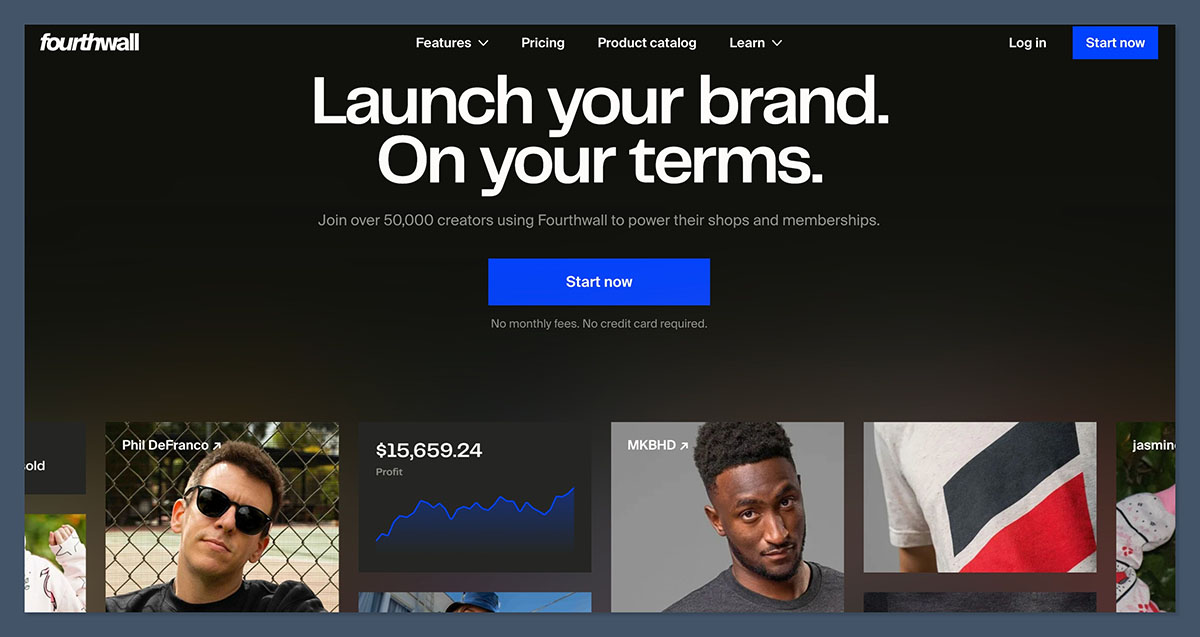
Fourthwall can be pretty hard to describe, because it doesn’t really match any of the other tools most creators are already familiar with. It’s not just a print on demand vendor like Printful, or a membership subscription platform. It’s more of a full ecommerce platform, designed for creators.
It’s more of a bundle of tools designed to help creators sell to their communities.
You get a branded site where you can sell physical merch (from the print on demand collection they offer), digital products, memberships, and accept donations, all from the same place.
It’s no-code, so you’re not expected to tweak templates for hours or mess with settings that only exist because ecommerce platforms have carried them around for years. You pick a layout, add your products, connect payments, and move on.
As I said, there are fewer native marketing tools (though plenty of integrations), so Fourthwall really makes sense for creators who already have people paying attention to them, like YouTubers, streamers, podcasters, artists, educators. If you’ve got all that already, Fourthwall lets you create shops, homepages and websites, and membership sites that complement your existing strategy.
Fourthwall Pricing: How Much Does it Cost?
Fourthwall’s pricing is one of the reasons it gets so much attention, and also one of the reasons people get confused.
You can start for free, and a lot of creators do. The free plan lets you design and sell high-quality print-on-demand products from Fourthwall’s collection, and design a fully custom storefront. You can also create promo codes, discounts, and giveaways, sell products over social media, access basic reports, and offer monthly memberships. Fourthwall even handles customer service for you.
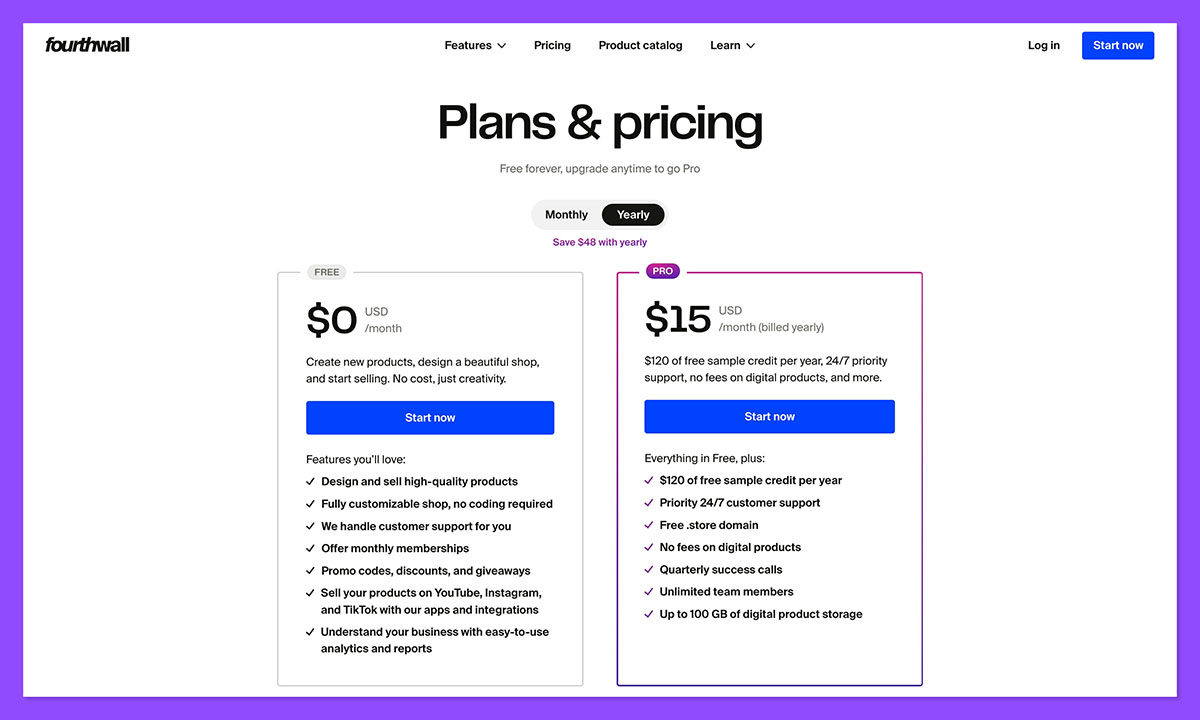
Still, it’s not “totally” free. There’s a 5% fee on every digital product you sell (and a 5GB upload limit). This disappears if you upgrade to the paid plan for $15 per month, but you’ll still cover the base cost of any print-on-demand products when they sell, just like with any POD platform.
There are also payment processing fees to think about, which are usually 2.9% + 30 cents (the same as you’d get from Shopify).
Aside from eliminating the digital product fees, the paid plan does give you a few extras like:
- $120 in free sample credit per year
- 24/7 priority support
- A free .store domain
- Quarterly success calls
- Unlimited team members
- 100GB of storage for digital products
Pro makes sense if digital products are a real part of your income, or if you value the operational perks enough to justify the subscription. If you’re only selling merch and keeping things small, Free is usually fine. Fourthwall doesn’t punish you for staying there.
The Core Features
Fourthwall isn’t some massive platform like Shopify, you’re not going to get an absolutely huge feature list here, but the features it does have are more than enough for most creators.
Website & Store Builder
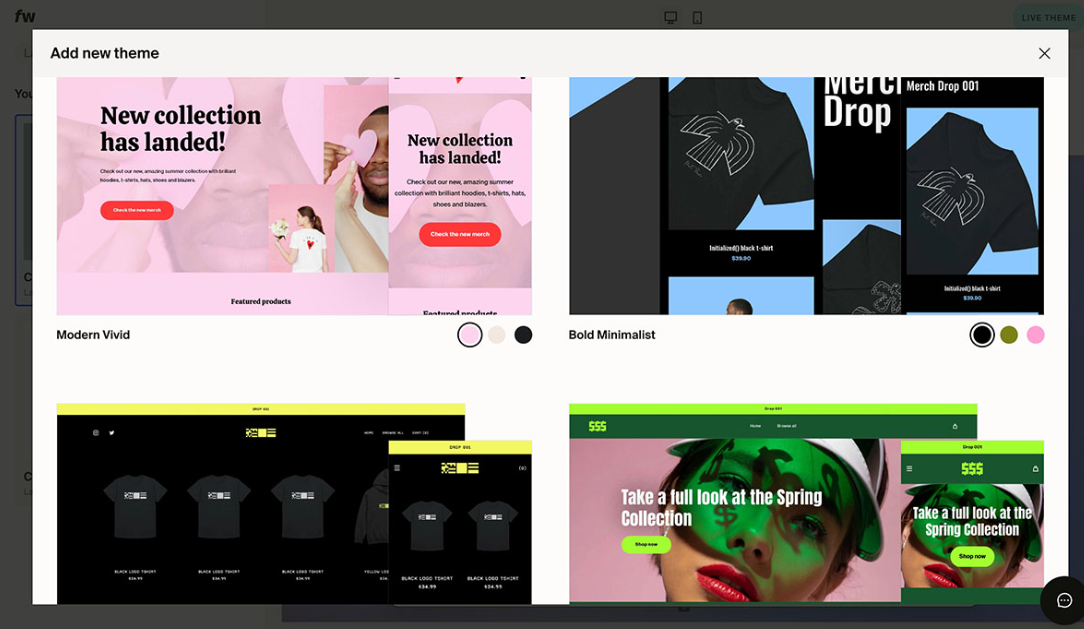
Fourthwall’s site builder is more capable than it looks at first glance.
You can build proper site pages (not just a store page), including things like About, press kits, FAQs, and other custom pages that make a creator site feel like a real brand home.

The help docs also get surprisingly specific about layout editing, you can add sections like collection lists and featured collections inside the layout editor rather than being stuck with one shop grid forever.
You’ll need the headless ecommerce stack for full customization, but even without that, it’s enough to build a site that feels unique to you.
Print-on-Demand and Custom Products
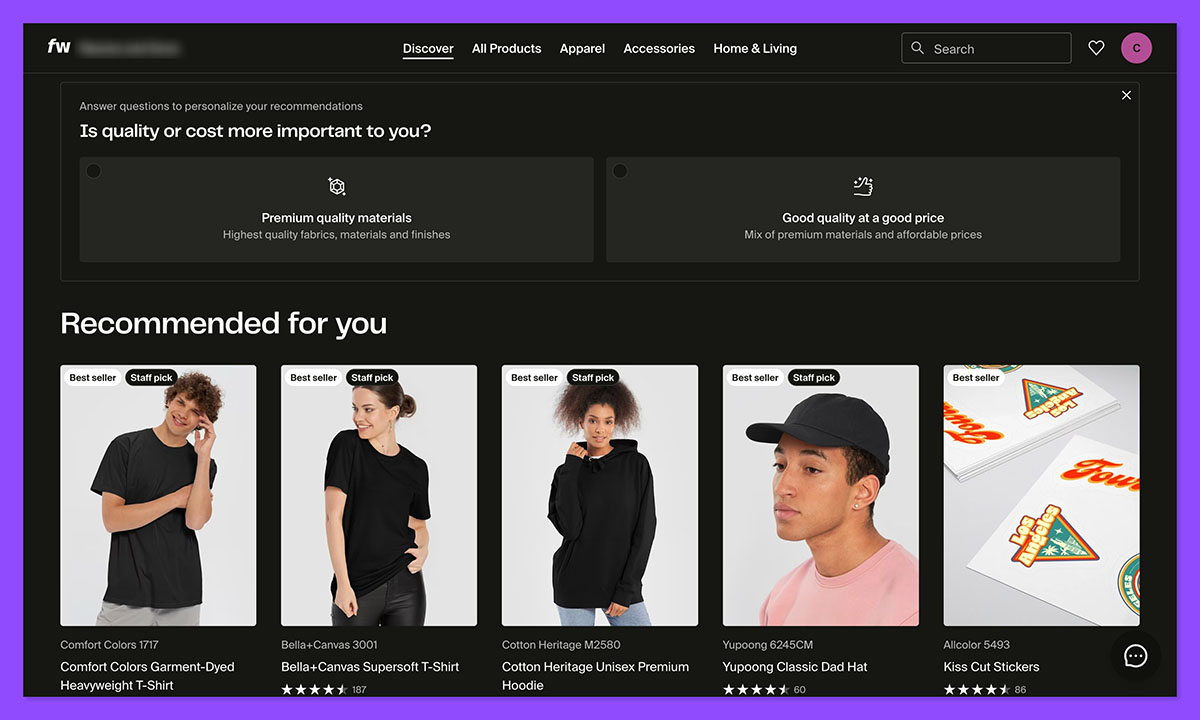
This is what really makes Fourthwall different from a lot of the other creator-focused platforms I’ve seen. Print on demand is already built-in. The product collection isn’t as big as Printify’s, but it is larger than Printful’s.
Plus, the print and material quality are genuinely premium. You even get knitwear options, and all-over-print, plus prices that actually protect your margins. What I think really stands out though, is that Fourthwall combines “print on demand” with more options to sell unique products.
You can actually ask them to go out and find products for you from trust-worthy dropshipping providers. That means you can sell things like custom shirts alongside plushies, keyboards, earrings, and dozens of other options most POD brands don’t offer. You can even set up a crowdfunding system to help source cash for your new collection.
You don’t even have to order a ton of products at once. Minimum order quantities can be as low as 24 units, or as high as 500. On top of that, you can still list all the products you source yourself on the same custom site. So that’s print on demand, dropshipping, and home-made products in one place.
The Extra Sales Tools
Fourthwall’s sales tooling is more than discount codes, but again, don’t expect to get everything you’d get from something like Shopify. You do get payment processing support for a lot of payment methods, like PayPal, credit cards, and e-wallets. Plus, you can sell in multiple currencies.
You can also play with:
- Promo codes (with examples like % off, $ off, sitewide sales, giveaway links)
- Direct Messages for engaging supporters
- A Thank Yous tool (they claim it can be done in “15 seconds or less” and they even claim it “increases sales by over 30%”).
- Native bundles to quickly boost average order value
- Gift cards to increase your sales potential
- Basic reports and analytics for tracking and understanding your sales.
If you need extra features, that’s where Fourthwall’s integration options are helpful. You can connect with YouTube, TikTok, and Twitch shopping channels, plus Instagram and Facebook. There are also integrations for tools like Klaviyo for email marketing, Zapier, Shipstation for fulfillment, and so on.
Digital Products, Memberships, Donations, and More
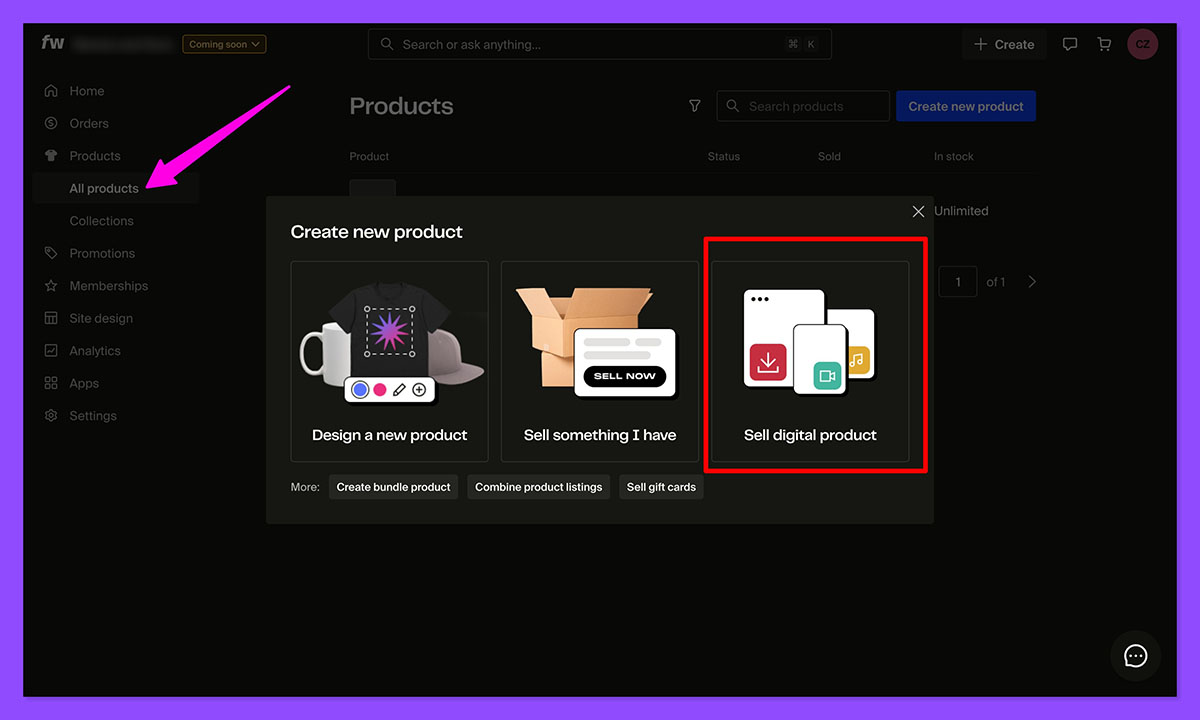
Physical products aren’t the only things that give you variety when it comes to monetizing your brand with Fourthwall. You can sell digital products and memberships too.
If you take the digital products route, Fourthwall supports ebooks, courses, music, digital art, software and more, with limits of about 100GB product storage on the paid plan.
Memberships are focused more on “channel” subscriptions for videos.
- You can upload 1080p video
- You can also embed YouTube, Vimeo, and Streamable
- You can tag videos and create “Netflix-style video collections” via series
- Members can like and comment on posts
Fourthwall also gives you a feature for accepting donations, if your community members aren’t necessarily shopping for products or perks, but still want to show their support.
Plus, if you want to keep customers around (and engaged), Fourthwall lets you branch out from your online store into a dedicated mobile app.
Your app can be the official home for all your custom and premium content, with a membership login option, video hosting, and community messaging all built-in. You get to control everything, from the design of the app, to your upselling strategies, benefits, tiers for members, and pricing.
You can even host live events, with private livestreams or polls, and reward members with digital badges. It’s a next-level community experience perfect for anyone in the creator economy.
Customer Support and Ease of Use
Honestly, the reason I still recommend Fourthwall to creators (even when there are more advanced platforms out there), is that it really removes the barrier to “launching your own brand”. Getting started is incredibly easy. You just choose a plan, sign up, and start building.
There’s even a Getting Started guide to help you, and a ton of help articles and community resources you can tap into as you build. For non-technical users, Fourthwall just feels easier than a classic ecommerce platform. You’re not assembling a stack, or inventing your own workflows from scratch.
Customer support is decent too (and it’s helpful across all plans, with fast response times for everyone. Pro users just get priority in the queue). Everyone gets access to a help center, email support, and a Discord community. If you upgrade to the paid plan, you get 24/7 priority support, and quarterly calls from an expert who can give you advice on how to scale your strategy.
Who Fourthwall Is, and Isn’t Right For
Fourthwall isn’t going to be the perfect toolkit for everyone. It’s not supposed to be. If you ask me, it works best for:
- Anyone with an audience: That includes Podcasters, musicians, startups, non-profits, influencers, and just about anyone else you can think of. It assumes you’re sending people who want excellent quality to your store, not trying to attract strangers through search.
- Sellers selling a mix of things: Merch, digital products, memberships, donations: all of these are first-class features, not awkward add-ons. If your income comes from a blend of formats, Fourthwall keeps everything in one place without feeling stitched together.
- Sellers who want less admin: Fourthwall quietly handles a lot of boring stuff, like basic support flows and fulfillment logistics and taxes. That’s not exciting, but it’s the kind of thing that saves you hours once sales pick up.
- Sellers planning more intentional merch: The Bespoke option matters here. Low-ish minimums and pre-order support give you a path to merch that doesn’t look like it came straight out of a generic POD catalog.
On the other hand, it’s not a great fit for:
- Traditional ecommerce businesses: If you want deep customization, complex shipping logic, or a massive app ecosystem, this isn’t the platform. Fourthwall wants to be the store, not part of a bigger stack.
- SEO-first stores: All of Fourthwall’s stores are automatically SEO ready, but it’s less focused on attracting customers with things like long-tail keywords.
- Sellers chasing the lowest POD costs: The pricing is transparent, but it’s not bargain-hunting territory. You’re paying for integration, quality products, and ease, not the cheapest blanks on the internet.
- Teams trying to stretch “free” forever: Product and team limits exist on the Free plan. If you’re growing, Pro eventually becomes part of the conversation.
The Final Verdict
Fourthwall feels like a platform built by people who got tired of watching creators overcomplicate their own businesses.
It’s meant for people who want to keep their time to themselves. In other words, if you don’t want to spend your entire life running and managing your store, then Fourthwall has you covered, and it gives you the actual quality you need to scale. It’s just less intended for people who want to optimize or A/B test every detail, like you can do with something like Shopify.
If your priority is clarity over control, and momentum over endless tweaking, Fourthwall earns its place. It’s especially strong for creators who want to own their brand, keep monetization simple, and stop duct-taping tools together just to get paid.
I wouldn’t recommend it to everyone. I wouldn’t build a complex ecommerce brand on it. But for creators who want a cleaner, more intentional setup, Fourthwall does a lot of things right.