
After 12+ years in ecommerce, with a strong focus on print-on-demand, one pattern has always stayed true: successful stores are built on successful products.
The design, the marketing, the platform—none of it matters if you’re selling the wrong product.
In this guide, I’ll walk you through how I conduct product research for Shopify print-on-demand stores.
The goal is simple: find products that are already selling and introduce something better, faster, or more relevant to a specific audience.
This process isn’t about gut instinct or creative luck. It’s about data, trends, and customer psychology.
Why Product Research Is the Foundation of Shopify Success
Most failed POD stores have nothing to do with quality or shipping time.
They fail because they choose the wrong product. It’s that simple.
You could have perfect branding, a polished store, and flawless fulfillment. But if the product doesn’t hit the right niche, solve a specific need, or spark an emotional response, it won’t sell.
Key reasons product research is non-negotiable:
- You reduce risk by focusing only on proven demand
- It speeds up the validation process
- You gain clarity on what kind of designs actually resonate with your market
- Marketing becomes more effective and cost-efficient
POD success isn’t about being early — it’s about being relevant. And product research is what ensures you are.
Tools That Power My Product Research Workflow
Over the years I’ve had the privilege of testing a whole bunch of product research tools for Shopify and print-on-demand – most were just a bunch of hype or half-baked ideas.
The tools that I actually rely on are the ones that give me consistent, reliable insights across platforms like Etsy, TikTok, Amazon and Pinterest.
The real secret to success? It’s not just about using one tool – it’s about combining all of them to validate what’s actually working.
EverBee
Purpose: A top-notch Etsy analytics tool
Why it matters: Let’s you check out what’s selling on Etsy without having to spin your wheels. You can view estimated monthly revenue, keyword performance and competition levels. It’s hands down the fastest way to find profitable print-on-demand designs on Etsy.
Ideal use case: Finding Etsy bestsellers in your niche before you even start designing.
Koala Inspector
Purpose: A killer Shopify store analyzer
Why it matters: Breaks down any Shopify store’s product catalog, traffic sources, app stack and bestsellers. Great for competitor research – and let’s be honest, we all do a little spying now and then.
Ideal use case: Sneaking a peek at what successful Shopify stores are selling and how they’re promoting it.
Printify / Printful
Purpose: POD fulfillment and product catalog research
Why it matters: You can use Printful and Printify to verify product availability, print areas, shipping costs and base pricing. This is crucial for calculating margins before you even launch a product.
Ideal use case: Checking if a product is viable to fulfill at scale before you go and build a store around it.
TikTok Creative Center
Purpose: A trend discovery platform
Why it matters: A goldmine for spotting viral product trends, top-performing ad creatives and emerging design themes. Updated daily – and it shows real consumer attention. You can’t argue with that.
Ideal use case: Seeing the kind of visuals, hooks and formats that are driving traffic for ecommerce products right now – and adapting your strategy.
MyIP.ms
Purpose: A Shopify IP and store lookup tool
Why it matters: Let’s you find thousands of live Shopify stores by IP address. You can filter by traffic rank, niche and even use it to discover under-the-radar stores that aren’t running ads yet.
Ideal use case: Building a list of active Shopify stores in your niche for inspiration or competitive benchmarking.
BigSpy / Dropispy
Purpose: Ad intelligence platforms
Why it matters: Analyze trending ecommerce ads across Facebook, Instagram and TikTok. You can filter by engagement, product type and ad copy. Especially useful for print-on-demand and viral products.
Ideal use case: Finding winning print-on-demand designs and proven creatives to reverse engineer your own ad campaigns.
Amazon Movers & Shakers
Purpose: A product growth tracker
Why it matters: Shows which products and categories are gaining traction on Amazon right now – updated hourly. Great for validating trends that are already moving volume.
Ideal use case: Confirming if a trending product on Etsy or TikTok is also converting on Amazon.
Pinterest Trends
Purpose: Visual trend insights
Why it matters: Pinterest is where people plan what to buy later – it gives you early signals on what’s trending across home decor, lifestyle, fashion and gifting – all hot niches for print-on-demand.
Ideal use case: Spotting design themes and seasonal trends before they go mainstream.
How I Use These Tools Together
It’s not just one tool – it’s about using all of them to get a full picture. The power comes from combining all the data.
For example:
- Find a trending design on TikTok – that’s just the starting point.
- Validate demand using EverBee on Etsy – to see if people are actually buying it.
- Cross-check Amazon Movers & Shakers for volume – to make sure it’s moving some sales.
- Confirm fulfillment options via Printify – so you don’t end up with a product that can’t be fulfilled.
- Research competitors with Koala Inspector – to see what they’re doing.
- Analyze ad angles with Dropispy – to find the winning ad strategies.
This workflow gives you the confidence that a product is trending, has real buyer intent and can actually be fulfilled profitably.
My Product Research Process for Print-on-Demand on Shopify
This is the framework I’ve refined over the last decade. It’s built to scale, and it works regardless of the niche or product category.
Step 1: Start with Demand Signals from Etsy
Etsy is one of the strongest demand validation platforms for POD. Many Shopify sellers overlook it, but it offers real-time buyer behavior across niche markets.
How I extract product ideas:
- Search keywords related to the niche (e.g., “plant lover mug”)
- Filter by “Bestseller”
- Use EverBee to extract sales and revenue data
- Study customer reviews to see what resonates (messages, themes, styles)
- Track shop age and product longevity
Etsy trends are often a preview of what will work on Shopify—especially when combined with Facebook or TikTok ad strategies.
Step 2: Analyze Competitor Shopify Stores
Once I find a few strong product directions, I look at Shopify stores selling in those spaces.
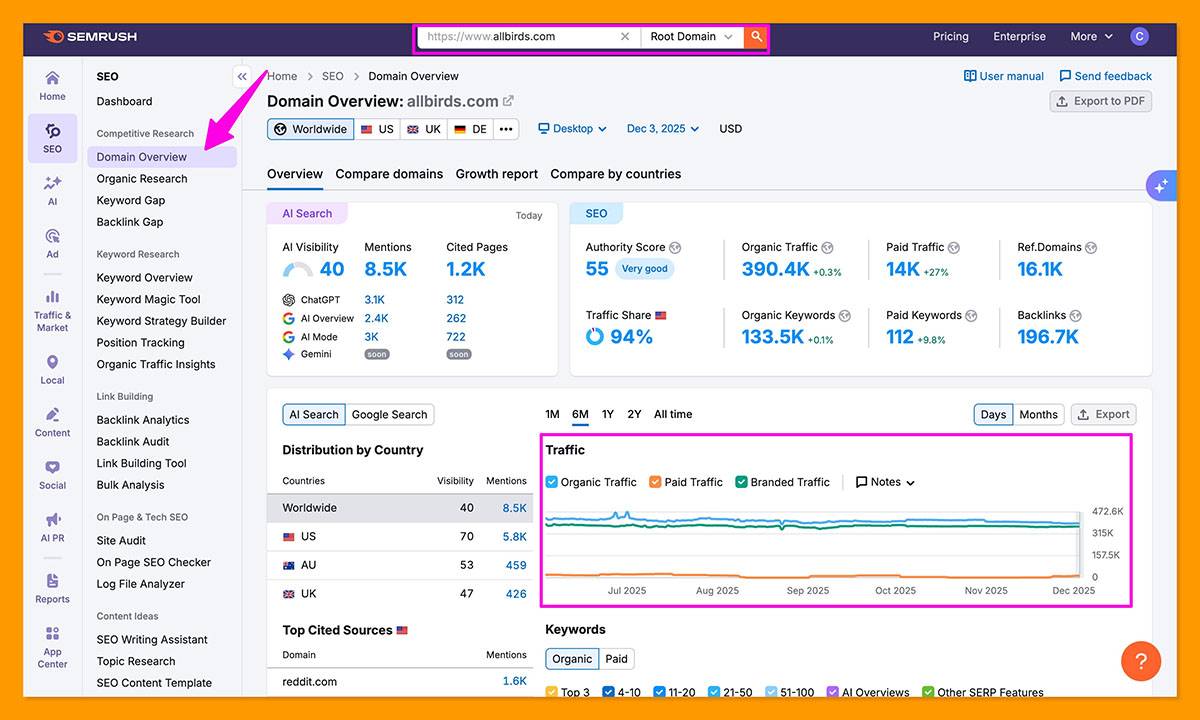
Key data points to gather:
- Traffic volume (via Koala Inspector or Semrush)
- Bestselling SKUs
- Product pricing and margins
- Product variations (sizing, personalization, etc.)
- Store age and ranking (using myip.ms)
This gives me insight into what’s working right now in the Shopify ecosystem. It also helps spot gaps in design quality, messaging, or product selection.
Step 3: Validate Trends Using TikTok and Pinterest
Most winning print on demand products today are driven by trends — whether it’s a meme, a viral quote, or niche humor. TikTok and Pinterest provide direct access to fast-rising themes.
On TikTok Creative Center, I look for:
- Top-performing product ads in apparel/gifts
- Trends with high engagement in niche communities
- UGC-style product promotion (a strong POD angle)
On Pinterest Trends, I check for:
- Design elements gaining popularity (fonts, color schemes, themes)
- Product formats (mugs vs tumblers, hoodies vs tees)
- Seasonal or event-driven spikes (Mother’s Day, Graduation, etc.)
When I see alignment across Etsy, Shopify stores, and TikTok, it’s usually a strong green light.
What Defines a High-Potential Print-on-Demand Product?
Before a product ever hits the storefront, it needs to be tested and validated through low-risk, data-driven methods.
This step is critical for identifying demand early, avoiding wasted ad spend, and preventing inventory or design cycles that go nowhere.
By validating your product ideas upfront, you can move forward with confidence, knowing there’s actual interest from your target audience.
Here’s how I typically pre-validate product ideas before committing to a full launch:
- Engage in niche communities like Facebook Groups or Subreddits to gauge early interest in your concept
- Post mockups or rough design ideas and ask for honest feedback from real people in your target niche
- Soft-launch the product using organic social media or email lists to test reactions without paid ads
- Present the item as a “limited drop” or “early release” to create urgency and measure interest
- Use low-budget A/B testing with Facebook ads to compare creatives and track metrics like CTR and Add to Cart events
- Analyze heatmaps using tools like Hotjar to see how users interact with your product page and where they drop off
This process doesn’t have to take long, but skipping it can lead to wasted effort. Even a few days of validation can save weeks of poor performance.
Table: Example Product Opportunities
| Niche | Product Idea | Angle |
|---|---|---|
| Dog Owners | “I Work Hard So My Dog Can Have a Better Life” hoodie | Identity + humor |
| Teachers | “Don’t Make Me Use My Teacher Voice” mug | Gifting + humor |
| Coffee Lovers | “No Coffee, No Talkie” tumbler | Relatable + trend-driven |
| Gamers | “Respawn. Repeat.” hoodie | Niche + design-driven |
These product ideas work because they speak directly to a specific identity or lifestyle, not just a broad category.
The more targeted the message, the higher the emotional connection—and that’s what drives conversions in print-on-demand.
Validating Product Ideas Before Launch
Before a product ever hits the storefront, it’s tested and validated.
This process helps avoid wasting ad spend or inventory cycles.
How I pre-validate ideas:
- Engage in niche communities (Facebook Groups, Subreddits)
Post mockups or ideas and ask for feedback. Watch reactions carefully. - Soft-launch via organic social or email
Present the design as a “limited test” and measure interest. - Use A/B creatives in Facebook Ads
Spend $20–$50 total to test three variations. Watch for CTR and Add to Cart events. - Analyze heatmaps (if available)
See where users click, hover, or drop off on product pages. Tools like Hotjar are useful for this.
This step often makes the difference between a $100 campaign and a $10,000 one.
Understanding Costs, Profit Margins, and Pricing Strategy
Profitability is often misunderstood in POD. Many store owners price too low or don’t account for rising shipping costs.
Here’s a breakdown of average base costs vs. expected retail pricing:
| Product | Average Base Cost | Typical Retail Price | Gross Margin |
|---|---|---|---|
| T-shirt | $7.00 | $24.99 | $17.99 |
| Hoodie | $17.00 | $44.99 | $27.99 |
| Mug (11oz) | $3.50 | $16.99 | $13.49 |
| Tote Bag | $9.00 | $24.99 | $15.99 |
| Canvas Poster | $10.00 | $29.99 | $19.99 |
All prices in USD. Excludes shipping.
Best practices:
- Keep margins above 50% to allow room for paid traffic
- Bundle products or offer personalization to increase perceived value
- Avoid race-to-the-bottom pricing, especially in saturated categories
Mistakes to Avoid During Product Research
A flawed research process doesn’t just waste time — it burns ad budget, kills momentum, and can stall your store before it even gains traction.
Over the years, I’ve seen these same mistakes repeated by both beginners and experienced sellers.
- Starting with design before understanding demand
Jumping into Photoshop without validating your idea is a gamble. Just because you like the design doesn’t mean your audience will. - Copying Amazon or AliExpress products without understanding buyer intent
A product with thousands of reviews on Amazon might look like a winner, but POD customers behave differently. What works in a low-cost, commodity marketplace won’t always translate to personalized or niche-focused products. - Targeting mass audiences instead of specific subcultures or identity groups
Going after “everyone who likes dogs” is too broad. You need to get specific — think rescue dog owners, senior dog parents, or people who travel with their pets. - Underestimating the importance of product descriptions and emotional copy
Too many sellers write generic product pages. Strong copy that connects with a buyer’s identity or sense of humor can double your conversion rate. - Skipping trend validation on social platforms
If no one’s talking about it on TikTok, Reddit, or Pinterest, it’s a sign your product might not have social traction. These channels are early indicators of what people actually care about.
The product doesn’t need to be brand new or revolutionary — but it does need to be relevant, timely, and aligned with what your target audience wants right now.
Scaling and Iteration: What Happens After You Find a Winning Product
Don’t think finding a winning product means you’re done — that’s just where the real work begins. Sure, getting a SKU to sell takes effort, but here’s the thing: scaling it profitably?
That’s where most people stumble. You need to understand the difference between running a hobby store and building a serious revenue-generating business — it all comes down to what you do after a product starts gaining traction.
That’s when you dive into optimization, offer strategy, and retention tactics.
Once your initial sales data shows there’s real demand, you need to shift your focus completely. Stop chasing new product launches and start maximizing the performance of what’s already working for you.
This approach doesn’t just boost your average order value and lifetime value — it actually cuts down your acquisition costs over time.
Why? Because you’re building real momentum instead of starting from scratch every single time.
Once a SKU gains traction, the next steps are:
- Optimize the product page
Improve copy, images, testimonials, and offer structure. - Expand the offer
Create bundles, add personalization options, and build matching products (e.g. mug + t-shirt). - Retarget warm audiences
Use email flows, retargeting ads, and SMS to re-engage past traffic. - Launch complementary designs
Once one theme works, create adjacent products targeting the same niche.
This allows you to maximize lifetime value and increase average order value — without creating new products from scratch.
Final Thoughts on Shopify Product Research for POD
After working with hundreds of ecommerce sellers over the last decade, the pattern is clear: the sellers who treat product research like a skill — not a guess — always outperform the ones chasing the latest app or trend.
Product research is the cornerstone of a scalable Shopify POD store.
It’s not glamorous. It’s not always fun. But it saves you money, helps you sell faster, and positions your brand around what the market already wants.
Keep researching. Keep testing. Keep adjusting.
That’s what builds long-term success in print-on-demand.