
I think a lot of people will click on this comparison with the wrong idea to begin with. They’ll assume they’re weighing up the pros and cons of two “print on demand” tools that basically do the same thing. That’s not the deal with Fourthwall and Redbubble.
They both help you out with creating and selling custom merch, obviously, but they’re really solving completely different problems. Redbubble tries to fix the “visibility” issue a lot of new creators have, by giving them a marketplace, traffic, a checkout, and the rest of the basics.
Fourthwall gives you the building blocks of a full brand, with your own storefront, domain, customer data, premium merch, digital products, and some extra help with tax and customer support. Totally different value proposition.
You’re not really asking which platform is better at all, you’re asking what you want: a marketplace for your design, or a brand you can own?
TL;DR: The Quick Verdict
Personally, I’m not Redbubble’s biggest fan. I’ve seen too many people complaining about how hard it is to stand out there with all the competition, the low profit margins, and how unpredictable product quality can be.
Still, I do think Redbubble can be a good option for someone “new” to the POD market. Someone with no audience, no time to build something substantial, and very little budget.
For anyone else, I’d pick Fourthwall. Redbubble basically just sells access to traffic, Fourthwall sells something you can actually grow, without making you handle the work of a full ecommerce team solo. That’s the fundamental difference.
It doesn’t really matter if you’re a new creator, podcaster, musician, nonprofit, school, or startup, you can use Fourthwall to create a brand you actually maintain ownership over.
Fourthwall vs Redbubble: The Biggest Differences
| Factor | Redbubble | Fourthwall |
|---|---|---|
| Model | Marketplace (you’re a listing) | Brand platform (you’re an actual store) |
| Traffic source | Redbubble SEO and marketplace browsing | Your audience, community, or channel |
| Brand | Redbubble-branded buying experience | Your brand, your domain, your storefront + checkout experience |
| Customer relationship | Marketplace-controlled | You own the customer data |
| Margins | 10-20% above base cost | You set pricing above listed product cost |
| Product quality | Standard marketplace POD | Curated, premium-positioned catalog |
| Product range | Physical goods marketplace | Merch, digital products, memberships |
| Integrations | Limited creator-facing tools | YouTube Merch Shelf, stream alerts, creator/social selling tools |
| Tax and compliance | Handled inside Redbubble’s model | Fourthwall is Merchant of Record |
| Customer support | Redbubble handles marketplace orders | Fourthwall handles support for catalog products |
| Setup cost | Free to start | Free to start |
What Is Fourthwall, and What Is Redbubble?
Fourthwall is a premium brand platform. Redbubble is a marketplace.
With Fourthwall, you get a platform where you can sell custom merch (premium merch, I might add), but that’s just one part of the kit. You can also sell memberships, digital downloads, and your own products. You’re not listing anything next to a bunch of other competitors, so you’re not fighting for attention. You’re selling what you want in your own space.

Fourthwall also gives you stuff you just don’t get from something like Redbubble. It acts as your Merchant of Record, so you’re not worrying about taxes (well, not as much anyway), and it handles customer support from the products you get from their catalog.
Redbubble is much simpler, overall. You get an account, upload artwork, add it to products, and list it in an ecosystem. Redbubble handles the process of basically getting you in front of an audience, and making it easy for them to buy whatever you want to sell.
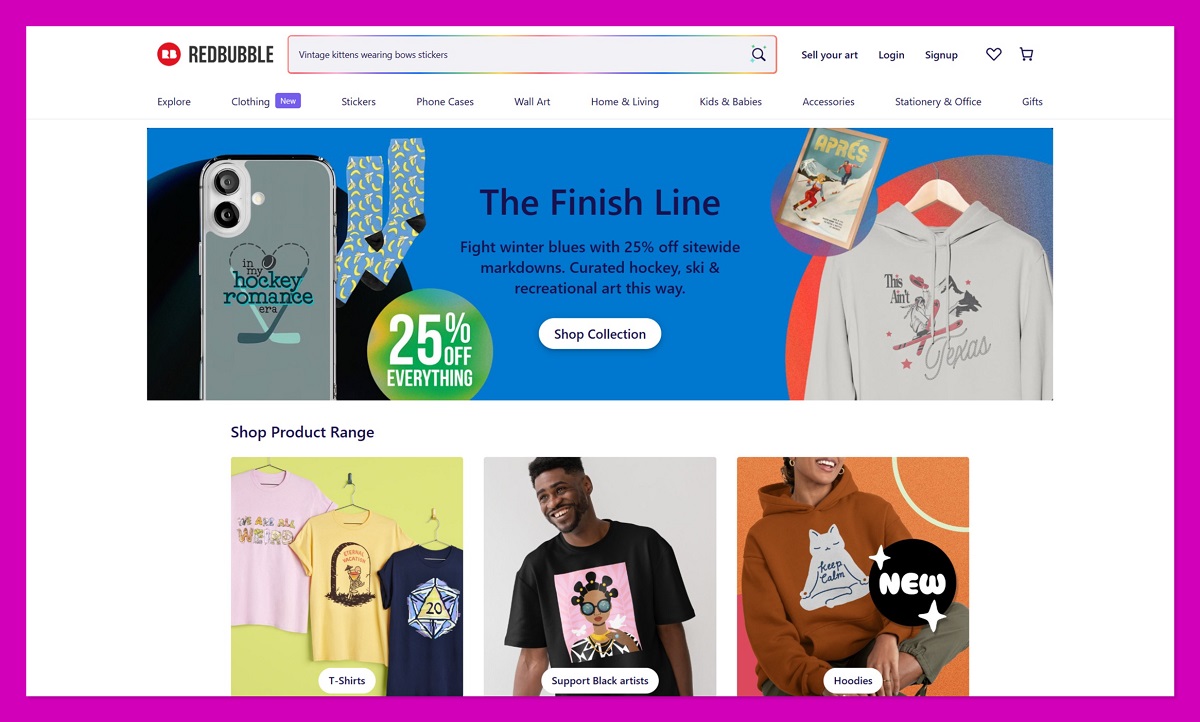
It’s great if you want someone to shine a spotlight on your company, while asking very little of you. It’s much less appealing if you want a brand you maintain some control over.
Fourthwall vs Redbubble: Who Each Platform Is Actually For
The mistake a lot of people make here is saying Fourthwall and Redbubble are both for “creators” and leaving it at that. Really, that’s only partially true. They do both “serve” creators, but Redbubble really only concentrates on one type of user: an artist with no audience (or not much online presence), who needs help finding buyers.
Fourthwall supports a broader group. Basically, anyone who already has some demand and wants to sell under their own name, rather than trying to make a splash in a marketplace.
It’s for:
- YouTubers, podcasters, streamers, and TikTok creators with an audience
- Musicians and bands selling merch, digital extras, or memberships
- Nonprofits running supporter merch or donation-linked products
- Schools, clubs, churches, and community groups with a clear identity
- Startups and small brands that want merch without building a full ecommerce stack
What all of those groups share is the fact that they generally already have distribution (an audience and a way to connect with them), but they don’t want to build a whole ecommerce operation, manage apps, deal with taxes, or answer endless support tickets.
Fourthwall vs Redbubble: Where Redbubble Wins
I don’t hate Redbubble, I’m just pretty cautious about who I’d recommend it to, and what I’d recommend it for. There are things that Redbubble does better than Fourthwall, mainly:
- Built-in discovery: This is the whole point of Redbubble. People are already there, and they’re already comfortable buying from people they might never have encountered before. It’s an easy way to build demand.
- No audience required: You don’t need an email list, your own dedicated social channel, or a community to get started (though that can help). You can be brand new, basically unheard of, and still sell.
- Low-effort setup: Upload the design, apply it across products, publish it, and you’re done. There’s no real storefront to shape, no membership layer to think about, no extra monetization system to build.
- Good fit for passive design selling: If your plan is to make some money from trend-led graphics, meme designs, novelty art, or seasonal stuff, a marketplace sometimes feels a bit less stressful than a full store.
- Plenty of artist-facing product coverage: Redbubble supports a wide product mix across apparel, stickers, wall art, home goods, and accessories. You’ve got 70+ products here, so you’re not too “limited”.
One other thing, you get “tiers” with Redbubble accounts, so when you do start building an audience, you naturally progress through the rankings, which give you extra benefits, like more feature opportunities, or reduced account fees. So, there is room to grow, it just feels more like you’re in a competition than you’re building a brand.
Fourthwall vs Redbubble: Where Fourthwall Wins Decisively
Some people really do make money on Redbubble, and some love how easy it is to manage, but if you ask me, Fourthwall is easier to recommend for a few reasons.
1. You keep more control over the money
Redbubble’s earnings model isn’t really as simple as it seems, and I’m not just talking about how slow payouts can be at times. How much you pay in platform fees really depends on your account (Standard accounts pay 50%, Premium accounts pay 20%, Pro accounts pay 0%).
You don’t get to pick your tier, Redbubble does that. You also have to follow rules for “markups” (usually about 10-20% of the sale price).
Fourthwall is easier to understand. Products have a listed base cost. You set the retail price. You keep the difference. The only thing that changes with your account type is the fee for memberships and digital products.
2. The store feels like yours
On Redbubble, the whole buying experience belongs to Redbubble. That’s fine if you’re not worried about creating a real “brand” experience, but it makes it a lot harder to stand out. Everything is “Redbubble-themed”, from your storefront to your confirmation emails.
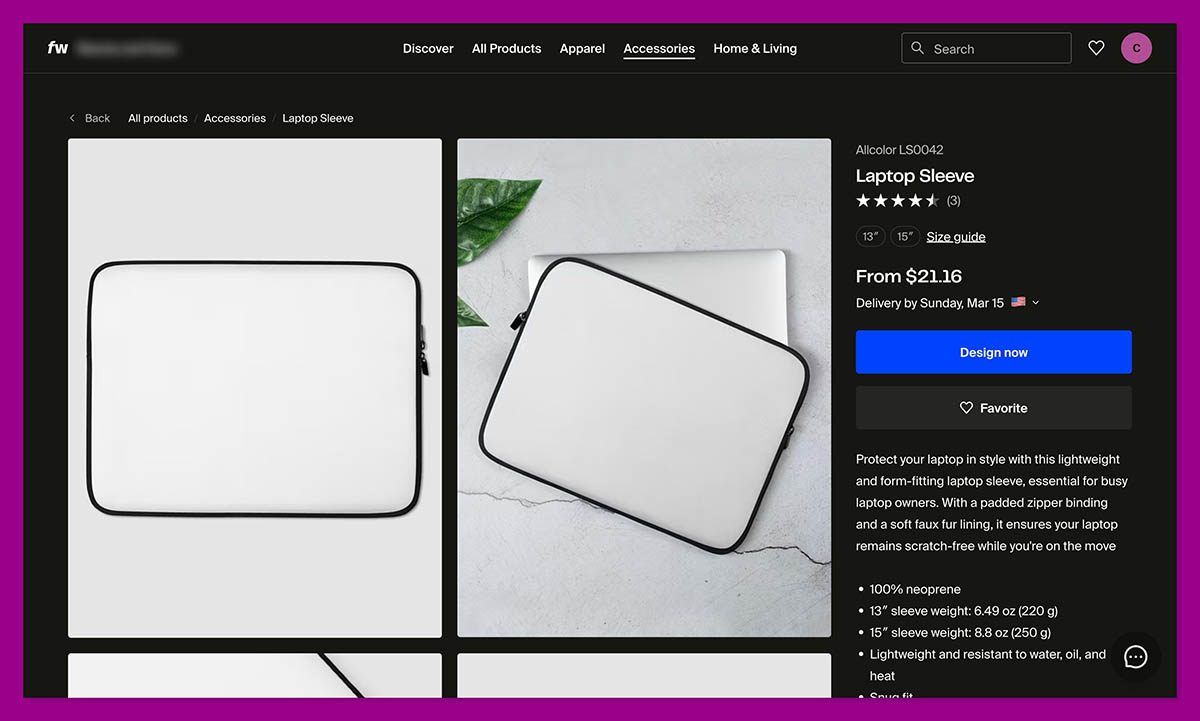
Fourthwall lets you make the experience completely yours. You can use your own domain, your own branding, and design your storefront however you like. You even get control over the post-purchase experience. It feels less generic.
3. You own the customer relationship
Redbubble gives you “access” to customers, but you don’t own the relationship. You can’t email them, build a list, or run a remarketing campaign. With Fourthwall, every customer you get is yours to nurture. That makes a huge difference to your revenue in the long term.
You can encourage repeat purchases, build your income with memberships, offer digital add-ons, and stay in touch. You’re not handing the relationship off to a marketplace.
4. It goes way beyond physical merch
Redbubble is a physical-product marketplace. A print-on-demand marketplace, to be exact. Fourthwall gives you print on demand too, but it also lets you sell:
- Digital products
- Memberships
- Members-only videos
- Your own products
You can also accept donations, run limited-time drops, and more without having to add-on a bunch of integrations like you would with something like Shopify.
5. The product quality better
Redbubble is usually fine for standard POD merch, basic stuff like (cheaper) t-shirts and stickers. It’s probably never going to transform you into a luxury brand.
Fourthwall aims a lot higher, with premium blanks, and a Signature collection for retail-grade products. It supports DTG, embroidery, all-over print, and DTFx. The company also works with manufacturers to ensure machine settings are consistently high.
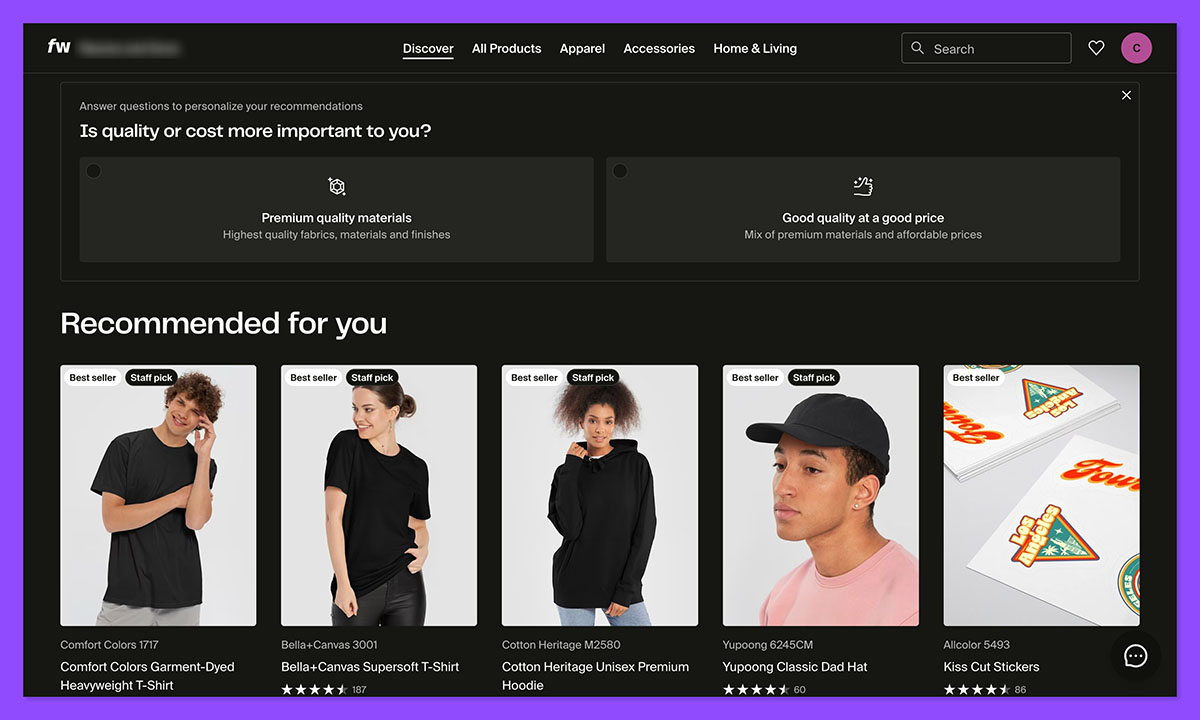
It also offers 350+ products, which is a lot more range than most people expect from a curated catalog.
6. Integrations make sense for creators
Redbubble offers absolutely no native integrations with other platforms. You can sometimes work around that with Zapier, but you’re not really expected to be building out your sales channels.
Fourthwall automatically integrates with the other avenues that its customers use to sell already, like YouTube Merch Shelf, TikTok, Twitch, Streamlabs, and Discord. That makes sense because Fourthwall assumes your sales will happen around content.
7. Fourthwall removes a lot of the worst ecommerce jobs
This is probably the biggest thing. Sure, Redbubble usually deals with elements of customer support, and indirect taxes, but it doesn’t go nearly as far as Fourthwall.
Fourthwall as Merchant of Record for you. That means it handles payment processing, nexus registration, sales tax collection, and remittance. I don’t know many other true ecommerce platforms (not marketplaces), that give you that kind of extra help.
It also handles customer support for catalog products, and on its alternatives page it claims an average reply time of 12 hours or less, including nights and weekends. That makes your brand look better, too.
Fourthwall vs Redbubble: An Easy Pick
Really, what you’re deciding here is what kind of seller you are. If you need a marketplace that can help you find buyers for your work fast, Redbubble is fine. It’s easy, convenient, and works well for artists in those initial stages.
But if people already know who you are, and you want to turn the recognition you’ve gained into a monetizable brand that has room to grow, Fourthwall is easily the better option. You’re not stuck inside a system battling for attention with other sellers, you’re building something with scale, without taking on the extra stress you’d have with something like Shopify.
Sure, choose Redbubble if you want discovery without building a brand, but choose Fourthwall if you want a brand that actually belongs to you.
Redbubble sells your designs. Fourthwall builds your brand.