
I know there’s some controversy around tools like Spreadshop, mostly because they give you a quick and affordable way to launch a business, but still leave you to find traffic or customers yourself.
I still think Spreadshop can be a decent platform though, especially if you already have an audience, you don’t want to deal with the logistics involved in selling merch like you’d have to with something like Etsy, and you can take advantage of integrations to things like YouTube Merch Shelf.
The print-on-demand model is easy to build on, you get to set your own retail prices, and there’s absolutely no upfront cost. Still, there’s also a lot missing if you eventually decide you need complete branding control, as well as other avenues for creating revenue, like digital downloads or subscription sales.
That’s when Fourthwall starts to feel a lot more attractive, combining Spreadshop’s zero-cost setup and print-on-demand capabilities with a fully customizable storefront you can use to sell just about anything.
Fourthwall vs Spreadshop: My Quick Verdict
To judge Fourthwall and Spreadshop fairly, you really need to recognize that they’re selling different things. Spreadshop is there to give creators a quick, affordable way to sell custom merch without getting too deep in the weeds of ecommerce, and it does a good job.
Fourthwall is for creators who want to build and monetize an entire brand, whether that’s through premium print-on-demand, subscription or membership sales, or a completely hybrid strategy.
| Comparison Point | Fourthwall | Spreadshop |
|---|---|---|
| Meant for | Building and monetizing a brand | Quick and affordable merch sales through POD |
| Starting price | Free | Free |
| Storefront/branding | Fully customizable website and storefront | Customizable merch shop with templates |
| What you can sell | Digital downloads, subscriptions, memberships, your own physical products, premium print-on-demand products | Print-on-demand products |
| Base costs for POD | Can be slightly lower | Can be higher until you get a Performance Bonus |
| Fulfillment | Global | Mostly the US and Europe |
One other thing: neither of these platforms gives you immediate access to an audience like Etsy. You need to bring your own traffic, although both do integrate with social selling platforms like YouTube Merch Shelf, and Fourthwall does have some additional marketing and community engagement features to help you out with growth.
Fourthwall vs Spreadshop Pricing: Which Leaves You More Profit?
Both platforms are free to start with, although there’s a big difference between what you actually get from each free package.
With Spreadshop, you can create and run a basic store without paying anything, although I will say the store you get is nothing close to what you could create with Fourthwall. For print on demand, Spreadshop charges a fixed base price for every item in its catalog, which covers both the blank item and the first printing area, although you have to pay extra if you add more customization.
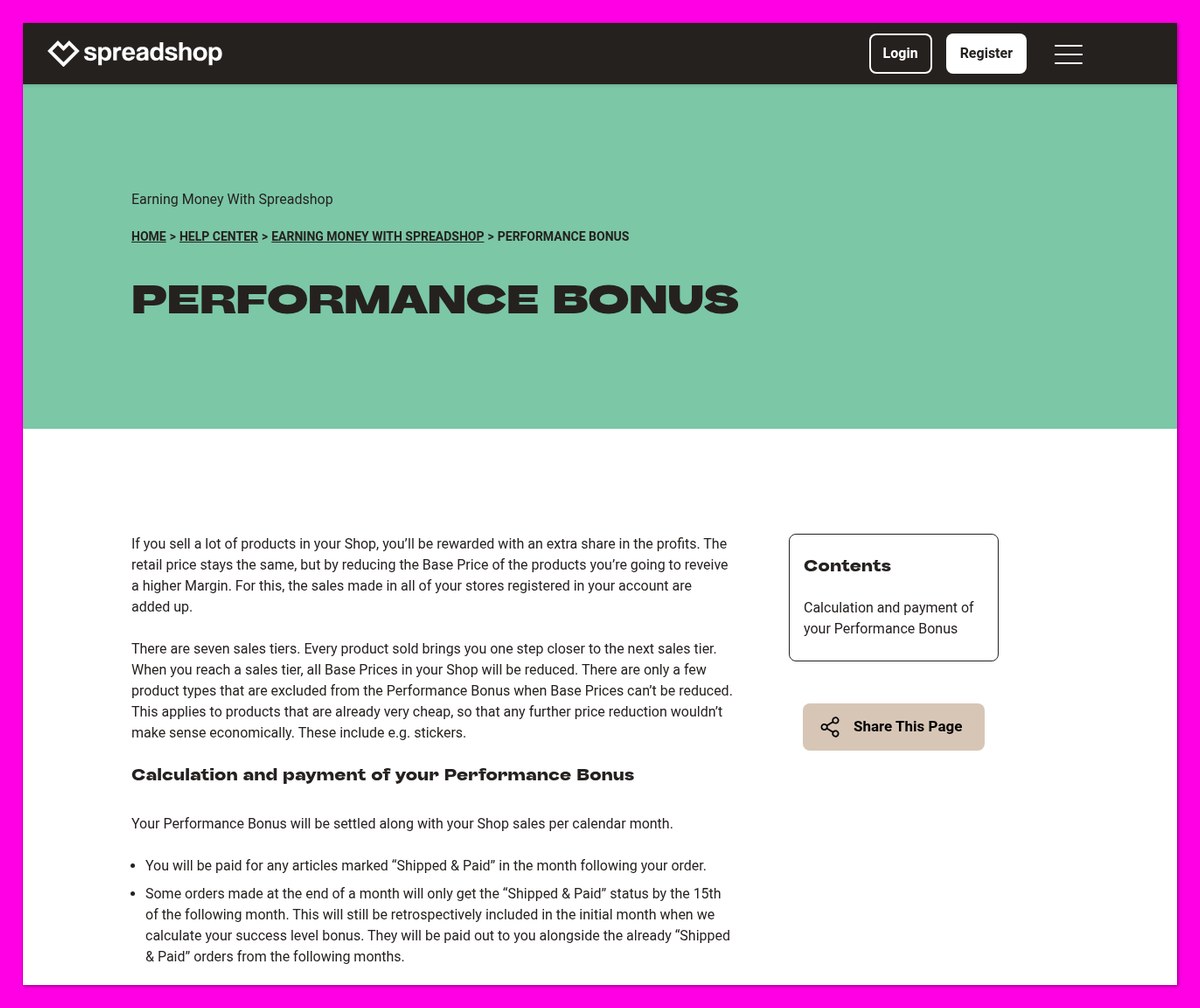
Spreadshop also gives users the opportunity to save money on base costs when they reach certain “success tiers” through its Performance Bonus. There are seven tiers, based on the number of items you sell each calendar month, starting at 50 items.
Fourthwall’s free plan includes the customizable storefront that you can use to sell anything from digital downloads and subscriptions to physical products you source yourself. On the free plan, there’s a 5% fee on all membership and digital download sales, though the Pro tier ($19 per month, or $15 per month billed yearly) removes the fee for digital downloads.

There aren’t any platform fees for selling physical products, although obviously, if you’re using Fourthwall’s print-on-demand catalog, you’ll need to pay for the base costs of the products.
Surprisingly, even though Fourthwall’s catalog is premium, the cost of blanks can be quite a bit lower than it is with Spreadshop. For instance, an entry-level t-shirt on Fourthwall can cost you $9.25 (Gildan’s women’s Softstyle tee, or $9.50 for the unisex Gildan 5000) compared to $16.99 for Spreadshop’s cheapest men’s or women’s t-shirt (without any Performance Bonus), so you can actually preserve more of your margin with Fourthwall from day one. Spreadshop’s men’s tee only drops to $9.02 at the top bonus tier, which means selling 10,000+ items a month.
Plus, you’ll also be saving money on extra tools, because you won’t need to pay for something like a Shopify subscription if you decide Spreadshop’s basic templates are a bit too restrictive.
Fourthwall vs Spreadshop: Storefronts and Branding
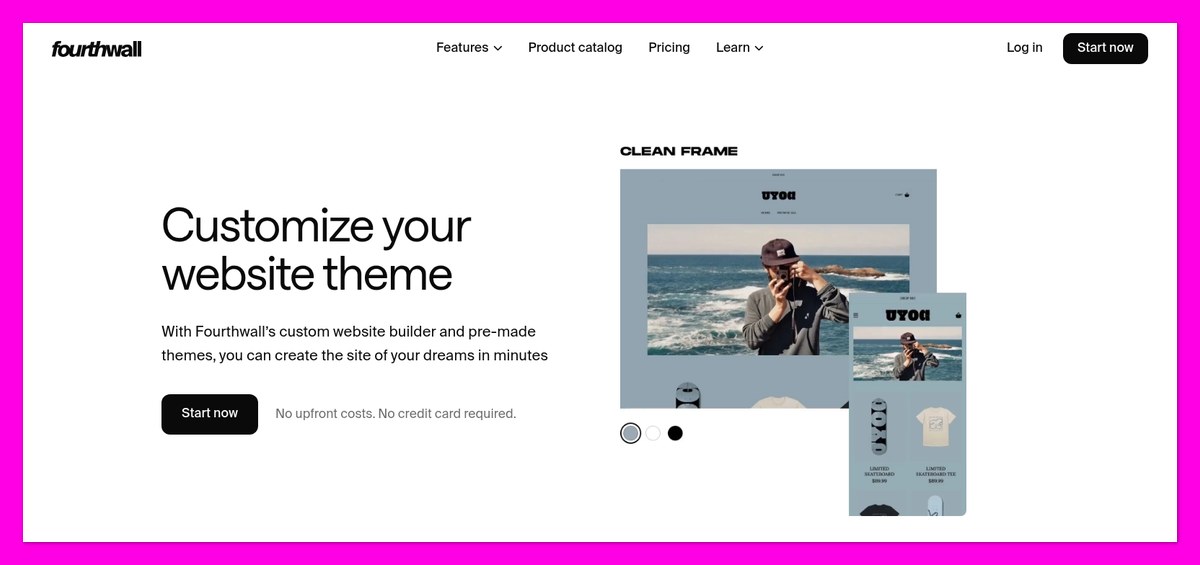
I do think Fourthwall is the far better option for building and managing a recognizable brand online, but Spreadshop’s tools aren’t terrible. You can still use Spreadshop to create a simple branded store with a custom domain, and organize your own product collections (Spreadshop calls them Topics). You’ll also be able to embed a merchandise store into an existing site through WordPress or JavaScript, although Spreadshop says embedded shops may not work with its new storefront right away.
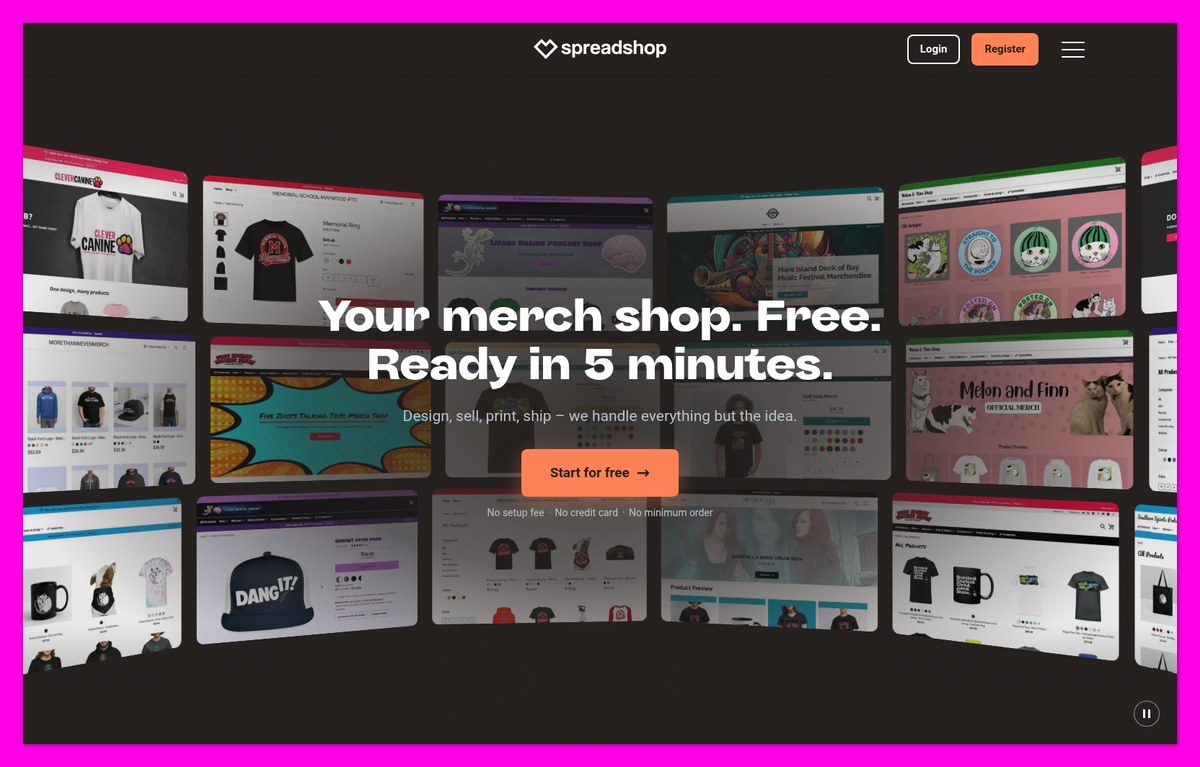
As of 2026, Spreadshop supports modular content sections and mega menus, stronger mobile layouts, and cleaner product pages, but there’s still a real limit to what you can do.
Fourthwall gives you a fully customizable store and a brand you can own from the get-go. There are customizable themes, dedicated pages for content (like a blog), custom code options, over a thousand font choices, and even integrations with tools like Klaviyo and Kit to help you build out your marketing strategy. If you want to see how that works in practice, here’s how to set up a store on Fourthwall.
Both tools give you ways to stretch beyond your digital homebase too. Spreadshop is an official YouTube Shopping partner and can feed your products to Instagram, Facebook, and Google Shopping, while Fourthwall connects straight to social and live commerce platforms like TikTok Shop. Spreadshop doesn’t offer a native integration for TikTok Shop or marketplaces like Etsy; for those, you’d need its sister service, Spreadconnect.
Fourthwall has just started testing its own Etsy integration (still in beta), which pushes your products to Etsy and prints and ships the orders that come in. It’s also worth saying that Fourthwall gives users an option to create their own branded mobile app for their memberships, which fans install straight from the browser rather than an app store. A Spreadshop storefront might work on a mobile device, but that isn’t the same as having your own app.
Fourthwall vs Spreadshop: What Can You Sell?
I think this is where the difference between Fourthwall and Spreadshop is probably going to be the most obvious. Ultimately, Spreadshop is all about print on demand, and it does reasonably well in that area, giving you over 300 customizable products to choose from, including options from well-known brands like Champion, Gildan, and Bella+Canvas, and organic apparel.
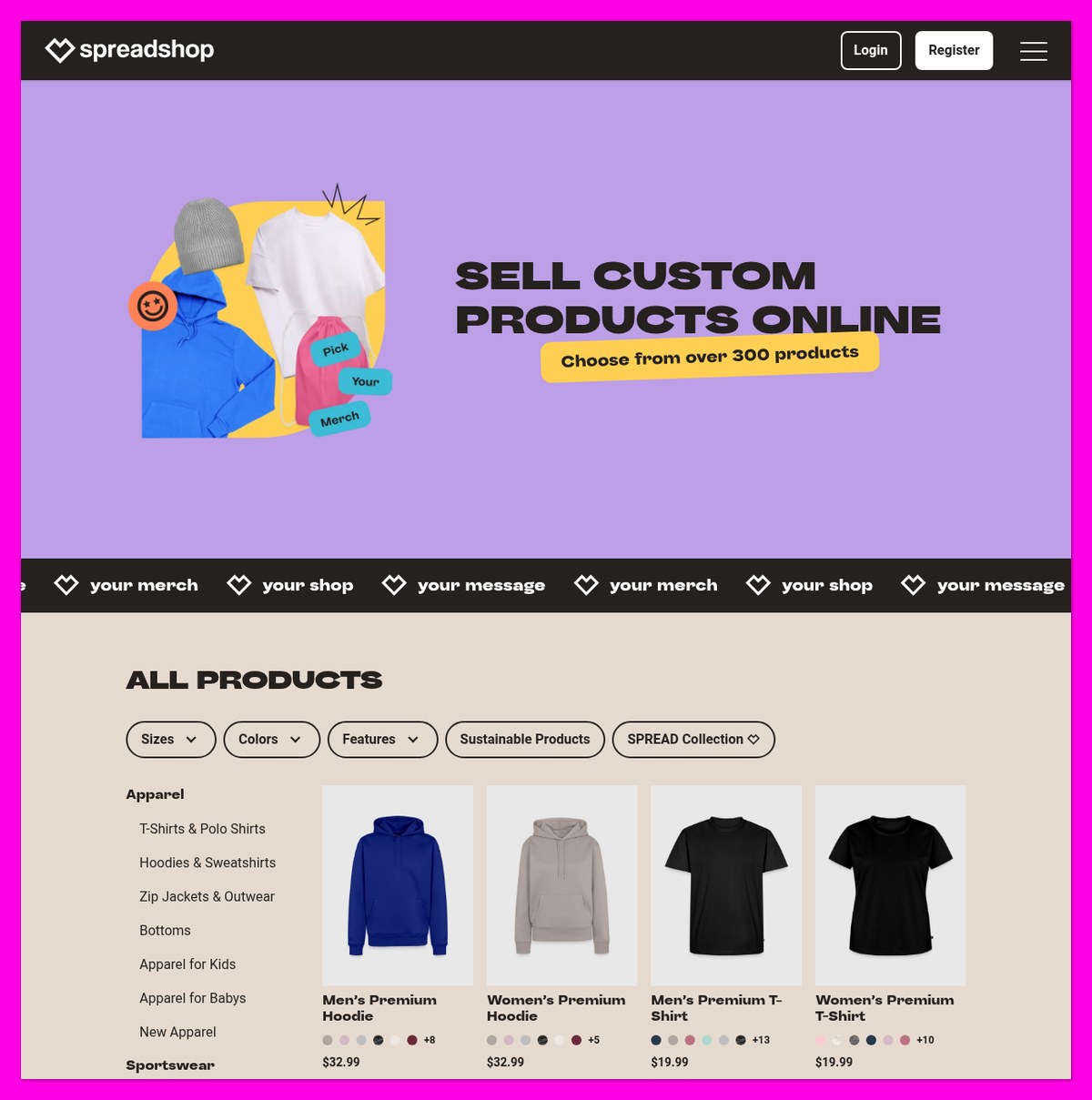
It also gives you plenty of printing options, like digital direct printing, DTF transfers, flex and flock printing, and embroidery.
Fourthwall gives you a far broader range of ways to make money. It does have a print-on-demand catalog, like Spreadshop, and the quality of the products is genuinely excellent, particularly if you’re checking out the Signature collection.
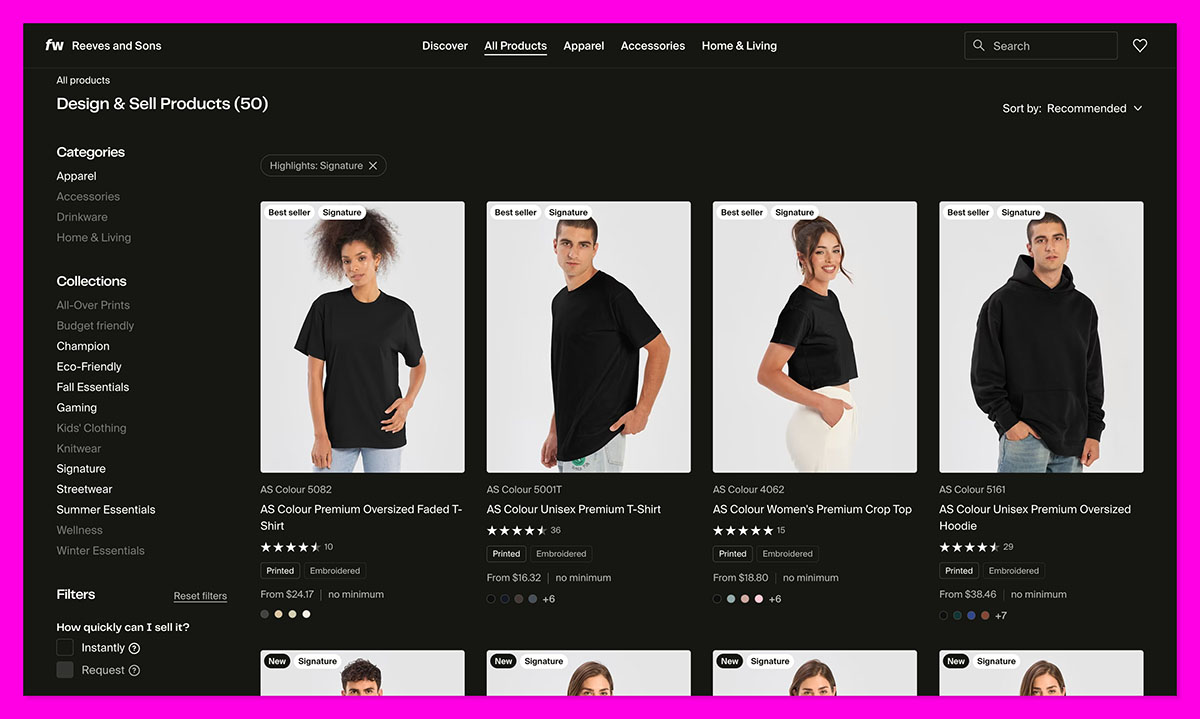
Then you can start exploring other routes too. For instance, you can sell physical products you source yourself on your Fourthwall store, and once you pass $50,000 in yearly sales, the company can even help you with finding suppliers for certain items, like custom plushies. Digital download sales are supported too, as are memberships and subscriptions.
The membership selling options are particularly impressive, with high-quality native video hosting, collections, custom tiers, exclusive livestream access, and support for Discord perks and other extras. You can also upsell a membership at checkout, offering customers buying a hoodie a free first month of your exclusive content at the same time.
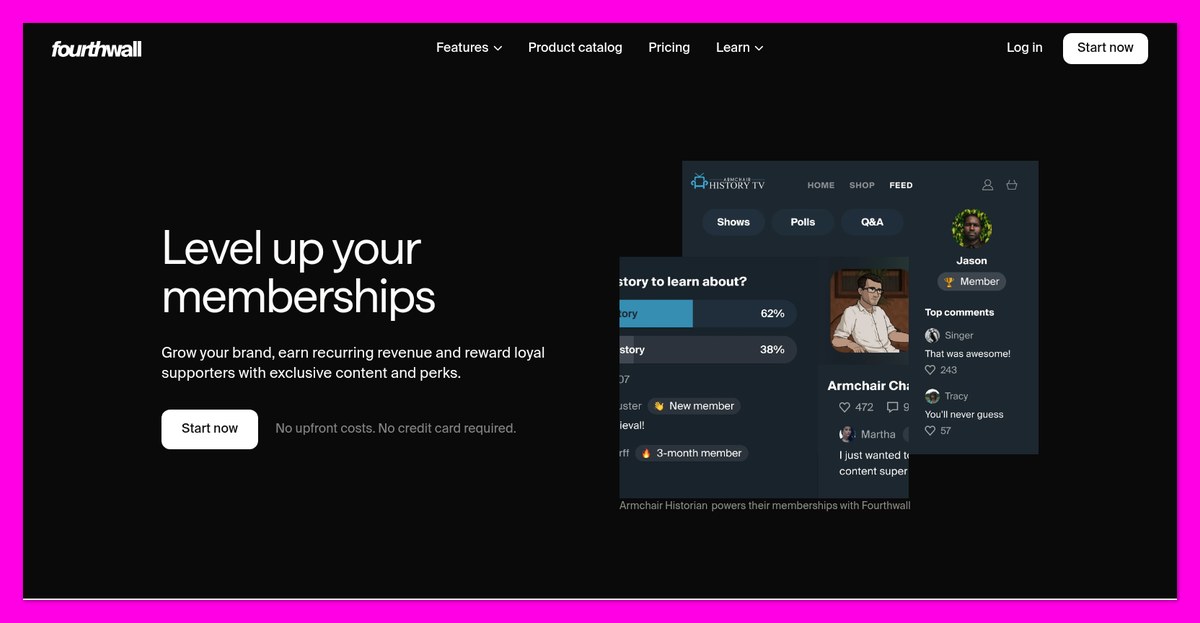
Overall, Spreadshop does a decent job of covering traditional print on demand, but Fourthwall is a far better option if you want to experiment with different sources of revenue, without having to end up buying several different licenses or subscriptions. If memberships are your main goal, our Fourthwall vs Patreon comparison goes deeper.
Fourthwall vs Spreadshop: Support and Fulfillment
Starting with fulfillment in this section, both platforms have decent coverage if you’re working with them as your print-on-demand supplier, but Fourthwall is better for global brands. Its catalog ships from 8 regions worldwide (the US, Canada, the UK, the EU, Australia, Brazil, Japan, and China), while most of Spreadshop’s fulfillment is based around the US and Europe, with its own print facilities in Las Vegas, Poland, and the Czech Republic.
Both companies handle the logistics work relatively well, from printing and packaging products, to sending items to your customers. They also both offer some help with customer support for the items bought from their catalog, so you should have slightly fewer things to worry about if you’re selling merchandise for the first time.
Both partners can also give you extra assistance with sales tax, which is a lot more helpful than it might sound. Spreadshop calculates sales tax at checkout for you, and lets sellers monitor orders and earnings through their dashboard. Fourthwall acts as the Merchant of Record for its customers, which means it manages sales tax registration, collection, and remittance, although obviously, you still need to manage your own income taxes.
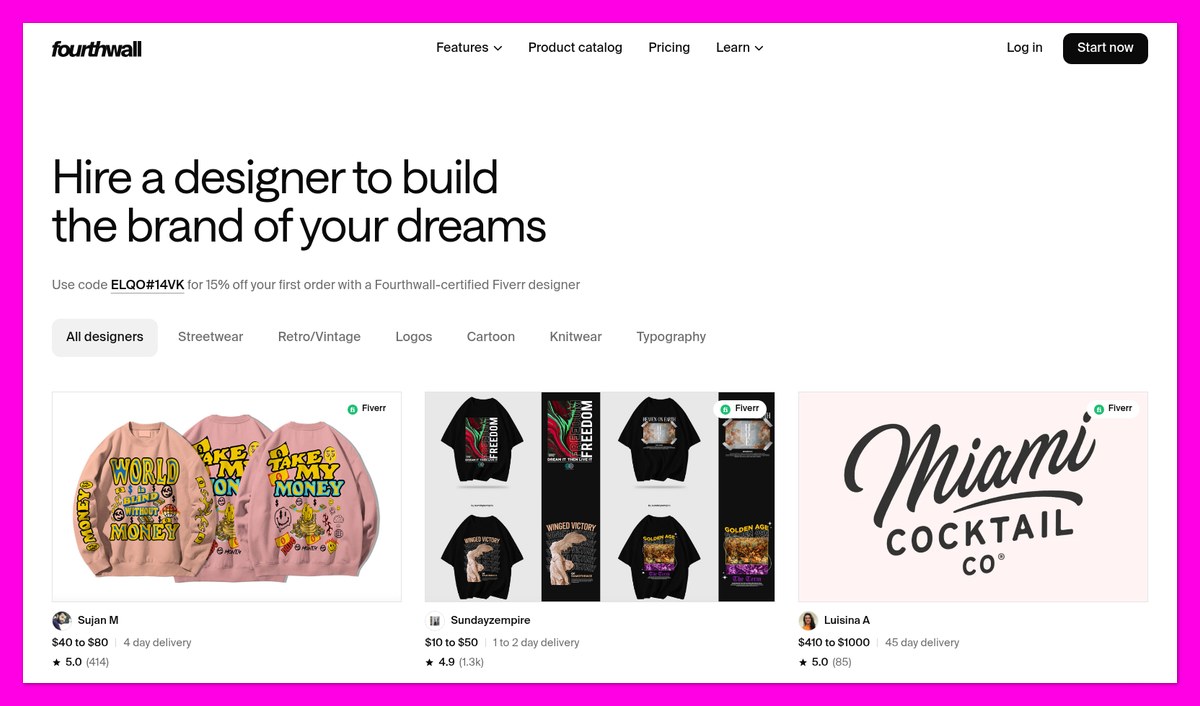
There are a few extra sources of help that I appreciate from Fourthwall too. For instance, it has its own directory of Fourthwall-certified designers and artists (hired through Fiverr) if you need help creating something new, and there’s the custom product sourcing service I mentioned above, as well.
Fourthwall vs Spreadshop: What’s Changing Right Now?
Spreadshop’s been more productive than I realized when I first started this comparison. In October 2026, it expanded its SPREAD Collection, which is basically an in-house premium apparel line that adds to the bigger POD catalog, to 27 styles in North America, from heavyweight hoodies to oversized and cropped cuts.
The storefront designer is much better now too, as I mentioned above, and there are some helpful extras, like an AI design generator that can help you create artwork for your products. Fourthwall’s also introduced an AI assistant (Eli) that can help with shop management, data analytics, and basic storefront design changes.
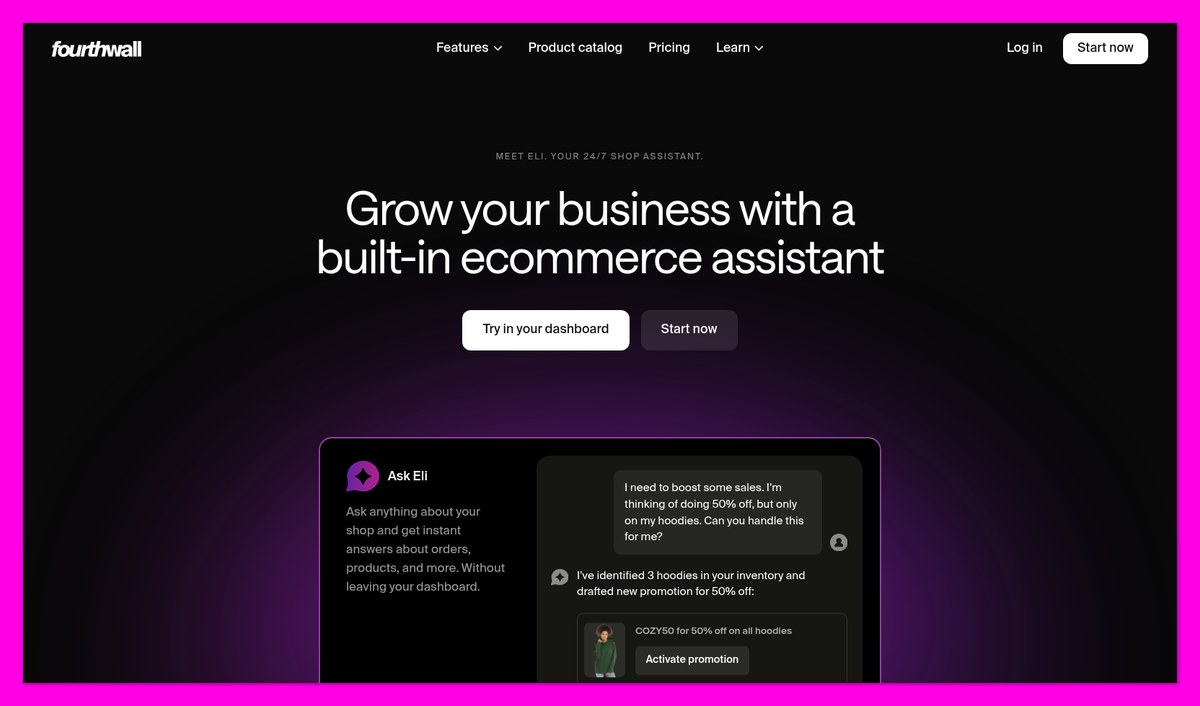
In July 2026, Fourthwall added a ChatGPT integration that lets shop owners manage their store from inside ChatGPT (there’s a Claude connector too). For instance, you could connect Fourthwall to your assistant and ask it to help you with canceling orders, changing shipping addresses, or creating gift cards for eligible customers.
The membership selling features are probably a little more exciting, though. Fourthwall allows free follower accounts that see previews of locked content, which can be a great way to tempt extra community members to sign up. Members can also attach tips to their direct messages, and you can send pay-per-view locked messages with specific pieces of exclusive content.
Fourthwall vs Spreadshop: Which Should You Choose?
I haven’t got a problem recommending Spreadshop to a creator who already has a decent audience and just wants a low-effort way to sell merch, particularly in the US and Europe. The free storefront is fine, customer service and certain aspects of tax support are included, and the product selection is pretty good, especially with the expanded SPREAD Collection.
But if you have even the slightest inkling that you might want to go beyond print-on-demand sales pretty soon, Fourthwall is clearly the better choice. You start with a website you can truly brand and own, get immediate access to a fantastic print-on-demand range, and you’re free to add as many different revenue streams as you like, from digital downloads to memberships.
Also, even though both platforms expect you to find and build your audience yourself, Fourthwall gives you more ways to keep them engaged, and encourage repeat purchases, which could make it the more sensible choice if you’re trying to achieve more than the occasional one-off sale. For a closer look at the platform, read our full Fourthwall review.