There’s nothing quite like a high-quality hoodie. Next to t-shirts, I’d say they’re the most popular garment in the apparel industry, and they’re certainly one of the most versatile products you can add to a clothing collection, whether you’re selling to men, women, kids, or a mixture.
These days, just about anyone can make a hoodie (even if you know absolutely nothing about sewing), but there’s a thin line between creating something that becomes your brand’s bestseller, and producing a very expensive mistake.
Here’s how I’d advise you to get started, if you want to make sure you end up with a garment you’ll actually be proud to list on your website.
How to Make a Custom Hoodie: Step by Step
If you’ve been thinking about making a hoodie of your own for a while now, you probably have a few ideas for designs in mind, and you might even have a good understanding of the niche or target audience you’re trying to reach. Maybe, for instance, you’re building an apparel collection for fans of your livestream, and you’ve already got a few pieces of artwork ready to upload.
Before you start creating mockups, though, there are a few other important steps to take.
Step 1: Choose the Right Hoodie Blank
Picking the blank first makes a lot of sense because it gives you a better idea of what your canvas is going to look like for any designs, and what kind of quality you’re going to be aiming for.
With hoodies, you’ll probably be looking at fabric weight first. Around 200-280 GSM might be fine for a lighter hoodie (maybe promoted during the summer and spring months), while 280-380 GSM will be better for a cozier, winter-ready hoodie. Anything above 380 GSM will give you a more structured, streetwear-style feel, similar to something you’d expect to wear instead of a jacket.
Once you’ve got a weight range in mind, think about the fit. The choice here really depends on your audience; some people prefer a regular fit, others like an oversized design as long as it doesn’t feel unusually baggy. Whichever option you go for, make sure you can access a complete size guide from the manufacturer to share with your customers.
The last thing to think about is the fabric blend. Cotton-rich fabrics are great if you’re going to be using DTG printing, and you want something that feels ultra-soft. Polyester can be a little more durable, and it does work better for sublimation prints too, so keep that in mind.
Step 2: Picking Your Printing Method
There are a few different ways you can get your design onto your hoodie, and the best option really depends on the kind of artwork you’re using, as well as your chosen material (as I mentioned above).
Screen printing is one of the cheapest options if you’re producing hoodies in bulk, and you need to ensure the print is extremely durable. The catch is that there are usually higher setup costs involved, because every ink color you’re using will need its own screen, and most manufacturers require a minimum number of orders.
DTG (Direct to Garment) printing is brilliant for detailed, full-color designs that cover a large amount of space. If you’re adding photographic images, illustrations with gradients, or artwork to a garment that includes a lot of different colors, it’s the more affordable alternative to screen printing, and there’s usually no minimum order requirement. Just keep in mind that DTG prints on darker hoodies can lose some of their vibrancy faster.
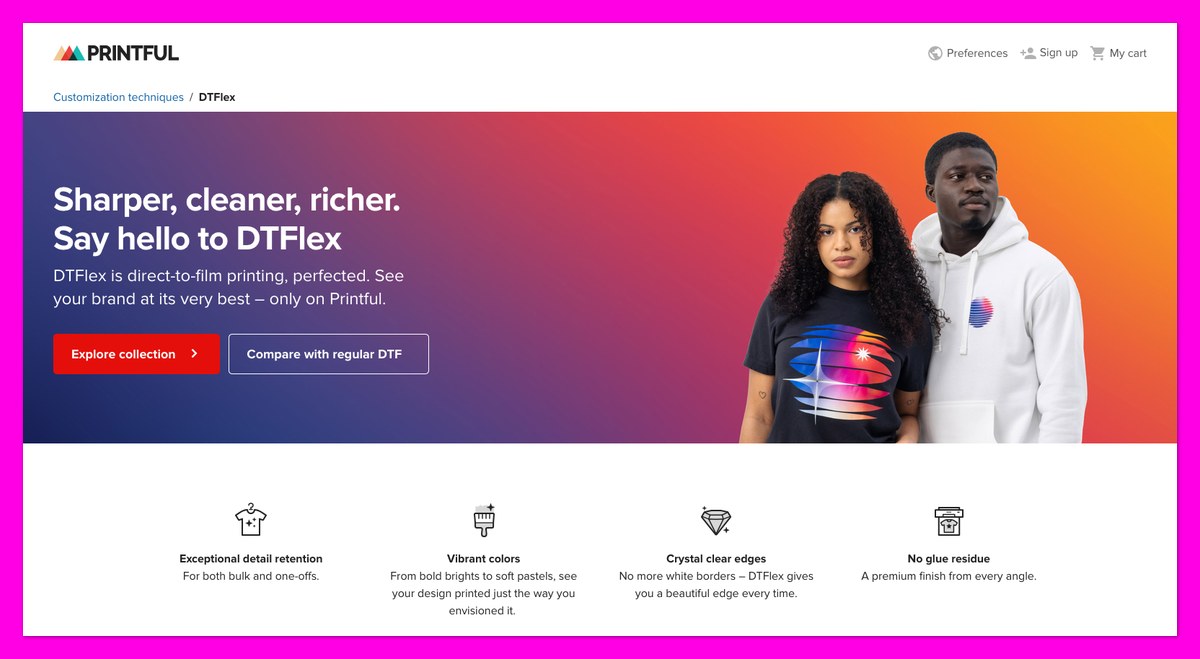
DTF (Direct to Film) is usually the better pick for bright colors and mixed fabrics. If you want to add artwork to a darker hoodie and find that DTG isn’t vibrant enough, DTF could be the perfect alternative. The downside is that the feel is very different. You’re printing designs onto a film that gets heat-pressed onto a hoodie with an adhesive layer, so it can feel a little like plastic.
For a premium-looking design or very simple piece of artwork, embroidery can be fantastic. It tends to cost a little more than other printing methods, and you’ll be limited in how complex the design can really be, but embroidery looks luxurious, and it lasts very well.
Finally, all-over printing and sublimation are best for full-coverage designs, for example, if you wanted to cover an entire hoodie in a pattern. The biggest problem with this method is that sublimation works best with polyester materials, and usually you’ll have to start with white or light-colored fabric, since white ink isn’t an option.
Step 3: Figuring Out Costs
Now you start figuring out what you’re going to spend on producing these hoodies. Obviously, the overall cost will depend on a few things, including the printing method you’re using, and the complexity of the design. Expect to spend around $20-$50 per hoodie on average, but remember that heavyweight materials and complicated embroidery can push that price a lot higher.
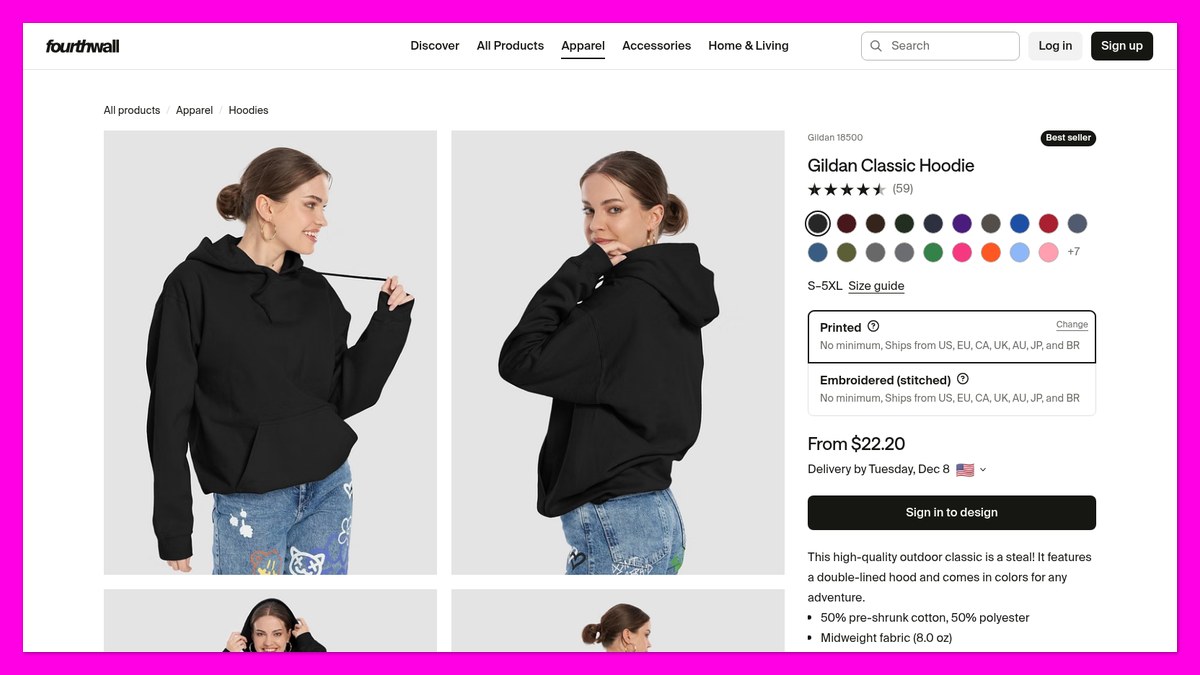
For an example, we can take a look at the amount it might cost to produce a hoodie with a few different print-on-demand companies. The Gildan 18500, for instance, is available for $19.86 from Printify (the cheapest of the 18 providers that print it there), $22.20 from Fourthwall, and $22.63 from Printful.
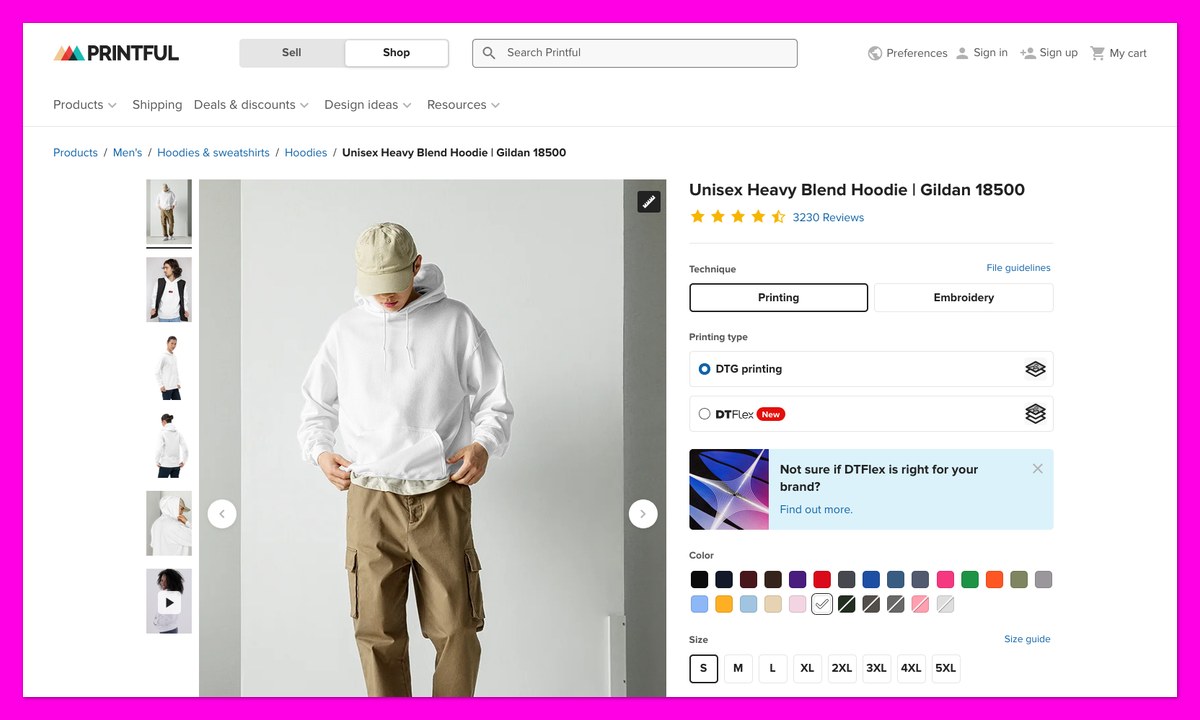
Then you have the extra costs to consider. For instance, Printful will charge you an extra $5.95 if you want to include another print area, and another $0.99 if you need a custom inside label. If you’re going to pay for shipping on behalf of your customers, there’s an extra fee there too.
| Cost component | Single Print POD | Two-Print POD | Bulk production (50 units) |
|---|---|---|---|
| Blank and first print | $25 | $25 | $20 |
| Additional print | $0 | $5 | $0 |
| Setup per hoodie | $0 | $0 | $2 |
| Shipping | $6 | $6 | $6 |
| Fees and allowances | $2 | $2 | $2 |
| Total per hoodie | $33 | $38 | $30 |
It’s also worth keeping some room in your budget to account for damaged orders or replacements, because those can affect how much you spend no matter how reliable your provider or partner is.
Bulk vs. Print-on-Demand Hoodies: Which Saves More Money?
At a glance, bulk-printing can sometimes seem like the cheapest way to produce hoodies, because you generally do get discounts when you order more units at once. Before you assume that’s the right path, though, remember that there are more risks involved with bulk production than there are with print on demand.
If you order fifty hoodies from a bulk manufacturer, and only sell twenty of them, then you’ve got to pay for storage, and figure out how you’re going to get the money you’ve already spent on your inventory back in the long-term.
With Print on Demand, you pay a little more upfront, but you don’t have to pay for anything until the product’s already been sold, and you’re not worrying about storage yourself. I’d probably only consider bulk printing if you already have a pretty confident idea of how many sales you’re going to make, potentially because your community has signed up and agreed to pre-orders.
Step 4: Getting Your Custom Hoodies Made
Now you figure out who’s going to be responsible for producing your custom hoodies. If you already know exactly how many hoodies you’re going to need for a specific sales run, and you don’t mind handling inventory and packaging yourself, the best option is probably to work with a local print company. They should be able to adapt to your design requirements, let you inspect samples in person, and give you discounts on bulk purchases.
If you’re not sure how many hoodies you’re going to sell, and you don’t want to take on too much extra work, the better option is print on demand. There are a few print on demand partners I usually recommend for different reasons.
If you already have an online store or website, for instance, and you just need a printing partner, both Printify and Printful are excellent. Printful has a great reputation for variety and quality, and its design maker supports all kinds of detailed artwork. You’ve even got multiple printing options, ranging from DTFlex, to embroidery, and all-over sublimation.
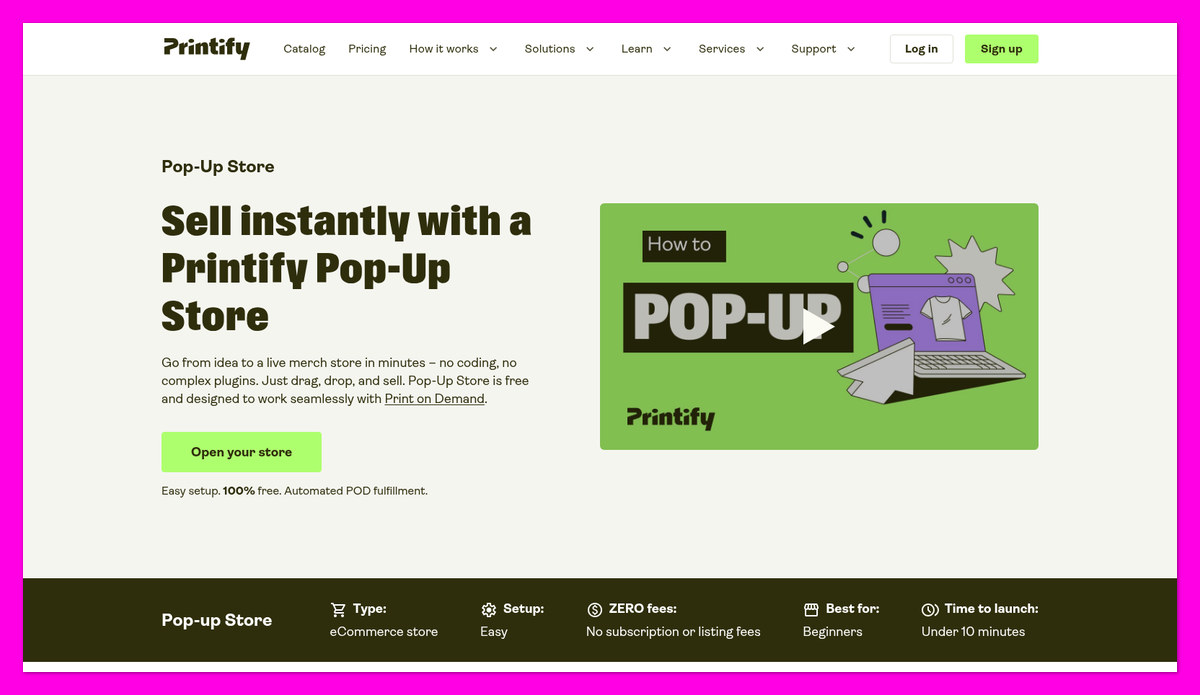
Printify is a little better if you’re looking for a bargain, because it gives you access to a big network of print providers (Printify lists 141 production facilities), so you can choose who you want to work with based on their product collection, quality, location, and overall price. You’ll also be able to create a free pop-up store with Printify if you don’t already have a website, though it’s not the same as a full ecommerce store.
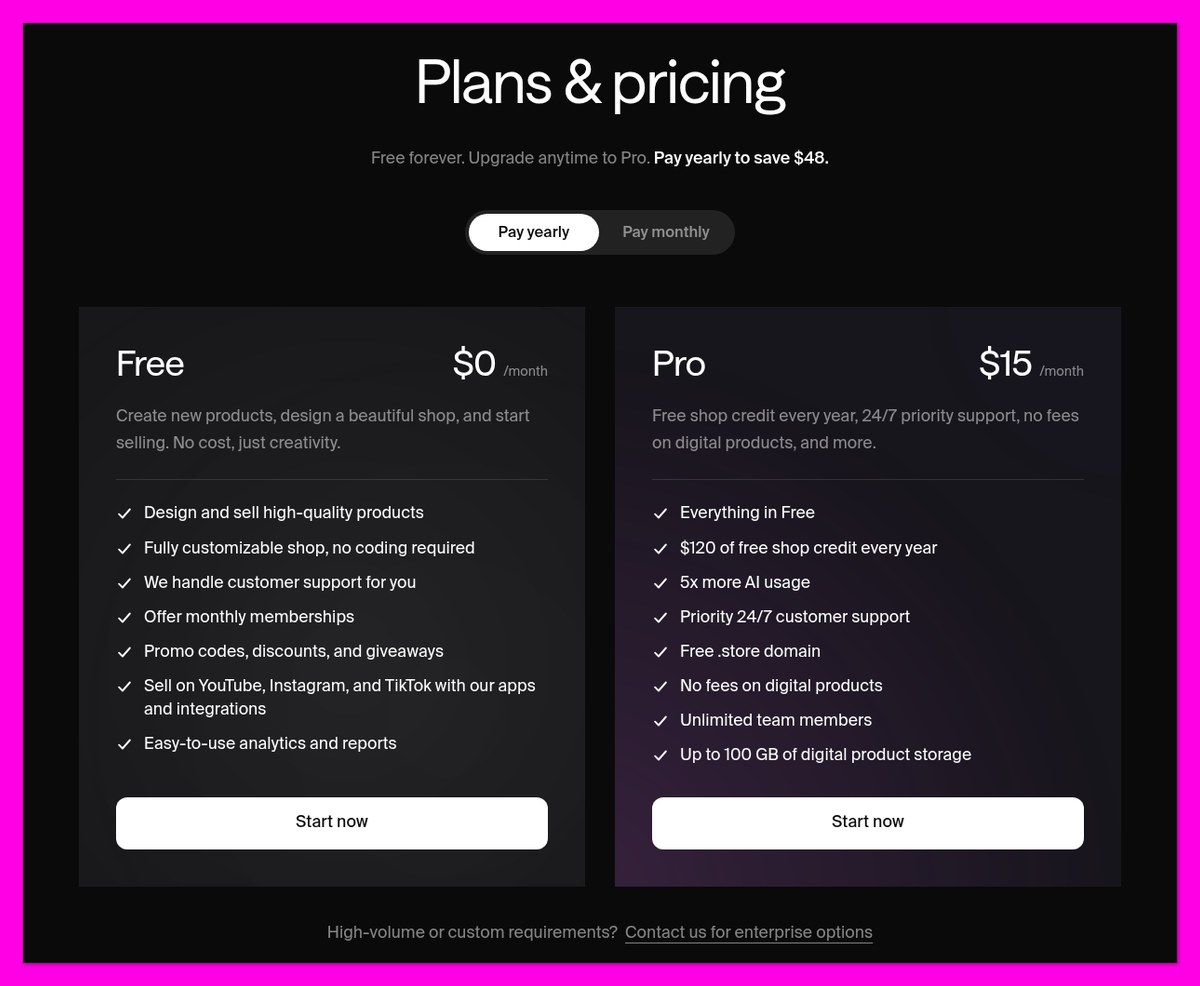
Fourthwall is worth considering if you want to build a brand and a hoodie business at the same time. It gives you a customizable storefront, so you don’t have to wrestle with Shopify, plus instant access to a premium collection of print on demand products, which include heavyweight hoodies, sweaters, eco-conscious apparel, and more.
Fourthwall also gives you additional behind-the-scenes help when you’re starting out, handling customer support for products ordered from its catalog and working as your merchant of record for sales tax. You get all that without having to pay a monthly subscription fee, too.
Step 5: Deciding What to Charge
After you’ve chosen a production partner, you should have a pretty good idea of how much each hoodie is going to cost to make, but that isn’t the only thing you need to account for when setting your own prices. Say you choose a Gildan Classic Hoodie from Fourthwall with a DTG design, which starts at $22.20 (it’s the same Gildan 18500 blank).
Take that price, then add in the other potential costs, including shipping fees (if you’re going to handle them for your customers), anything you’re paying artists to produce designs for you, the cost of any marketing campaigns, and you could end up with an average outgoing cost of $45 per hoodie. Charging your customers only $50 would give you a very small profit margin.
I’d aim for around a 35-50% margin if you can, which means if the overall price of creating a hoodie comes out at around $33, you charge $55 on your website. If you’re not sure about anything, it can help to look around at the kinds of prices similar brands are charging for their own hoodies, just make sure they’re using the same material compositions, printing methods, and delivery strategies.
Step 6: Order Samples Before Launch
Last, but not least, before you give anyone an opportunity to buy your hoodies, purchase one yourself. Print on Demand providers tend to have excellent tools for creating realistic-looking mockups these days, but a mockup can’t tell you much about how a hoodie’s going to look and feel in reality.
Order a sample that includes your artwork in the printing method you’ve chosen, then pay attention to how long it takes to be delivered, and whether it matches your expectations when it arrives. Look at the quality of the print, how soft or luxurious the material feels, and whether it holds onto its shape and design after you put it through the wash a few times.
Once you’re happy with your samples, take plenty of real pictures you can share on your website and across social media, and start promoting your new product properly. You might even choose to run a limited time exclusive drop to generate excitement, or send a sample to an influencer so they can show it off for you.
When the orders start coming in, pay attention to the feedback you get from your customers about the design, the quality of the material, and anything you might need to fix (such as slow delivery times), before you start expanding your collection.
Get Started on Your Very Own Hoodie Collection
I’ve given you the easy guide to creating your own hoodie here, and I definitely think that the print on demand route is going to be the best option for most people starting from zero. Bulk ordering can be a great way to save money in the long-term, but only if you know exactly what you can expect to sell each month.
If you’re still uncertain where to begin from a printing method perspective, I’d match the method to the kind of hoodie you want to make. DTG is always going to be a good option for detailed artwork, or DTF if you’re working with polyester blends and darker fabrics. Embroidery is brilliant if you’re going for a premium aesthetic, while sublimation is ideal if you want artwork that covers practically every inch of the garment.
Don’t just shop for the cheapest production quote. Find the method that makes the most sense for your product, then put it to the test by ordering a sample. That way, you’re far less likely to waste money on bulk-ordering hundreds of hoodies nobody’s going to buy anyway.