
Fourthwall and Ko-fi now have more in common than they used to. Ko-fi used to be the platform you’d use to send a link to community members who wanted to support your work by “buying you a coffee”, or giving you a small tip. Fourthwall, on the other hand, used to be seen as the platform for content creators ready to sell a variety of products.
Now, they’re both versatile options for online growth. Both let you sell a variety of “products”, and both remain incredibly easy to use. They’re still, however, directed at different people.
I’d still call Ko-fi the simpler “starter” option overall, closer to something like Patreon than Shopify. Fourthwall is more comprehensive, with tax support, print-on-demand, membership sales, and a proper branded website. Here’s how I’d choose between the two.
Fourthwall vs Ko-fi: Quick Verdict
The quick version is that I’d still choose Ko-fi if I just wanted to accept commissions, donations, or sell the occasional download. It’s the cheap low-effort tool when you don’t really need a full website, print-on-demand, or complete product pages.
I’d switch to Fourthwall for growth. It gives you a fully customizable home for your brand, plenty of different ways to earn money (including premium print-on-demand and custom sourcing), excellent membership and video hosting features, as well as Merchant of Record tax support.
What Are Fourthwall and Ko-fi?
I’ve had a hard time describing Fourthwall in the past because it’s closer to something like Wix or Shopify than Ko-fi, but it’s still simpler all-round. I’d say it’s a homebase for your brand, with a no-code website builder (and your own domain), tools for selling physical and digital products (plus memberships), donation features, and social media integrations.

Ko-fi is a lot simpler, closer to Patreon and Buy Me a Coffee. It’s an “audience support” platform that can function as an online tip jar, membership hub, or a simple storefront where you can collect one-time donations, sell digital or physical goods, and run simple subscription tiers.

Both platforms are heavily concentrated on “community” selling, and both give you a free plan, Fourthwall just feels more tuned to ongoing growth, while Ko-fi is more about the early stages of fan monetization.
| Feature | Fourthwall | Ko-fi |
|---|---|---|
| Intended audience | Brands building a dedicated online homebase | Creators looking for quick monetization options |
| Pricing | Starts with a free plan | Starts with a free plan |
| Product options | Your own stock, digital products, memberships, or retail-grade print on demand | Your own physical or digital products, or commissions |
| Storefront | Custom branded website and domain | Custom one-page store |
| Payment model | Integrated checkout and payments | Stripe or PayPal payments |
| Customer support | Merchant of Record support for tax, and assistance with customer support for POD | Basic customer service |
Fourthwall vs Ko-fi: Pricing
First, both Fourthwall and Ko-fi let you get started for free, although there are some “background fees” you might need to think about.
With Fourthwall’s free plan, you still get full access to the store builder, and you can sell whatever you like. Still, you’ll have to pay a 5% fee on digital products or membership sales. If you sell products from the Fourthwall POD catalog, you’ll pay their base cost whenever a customer places an order and keep the profit from the price you set.
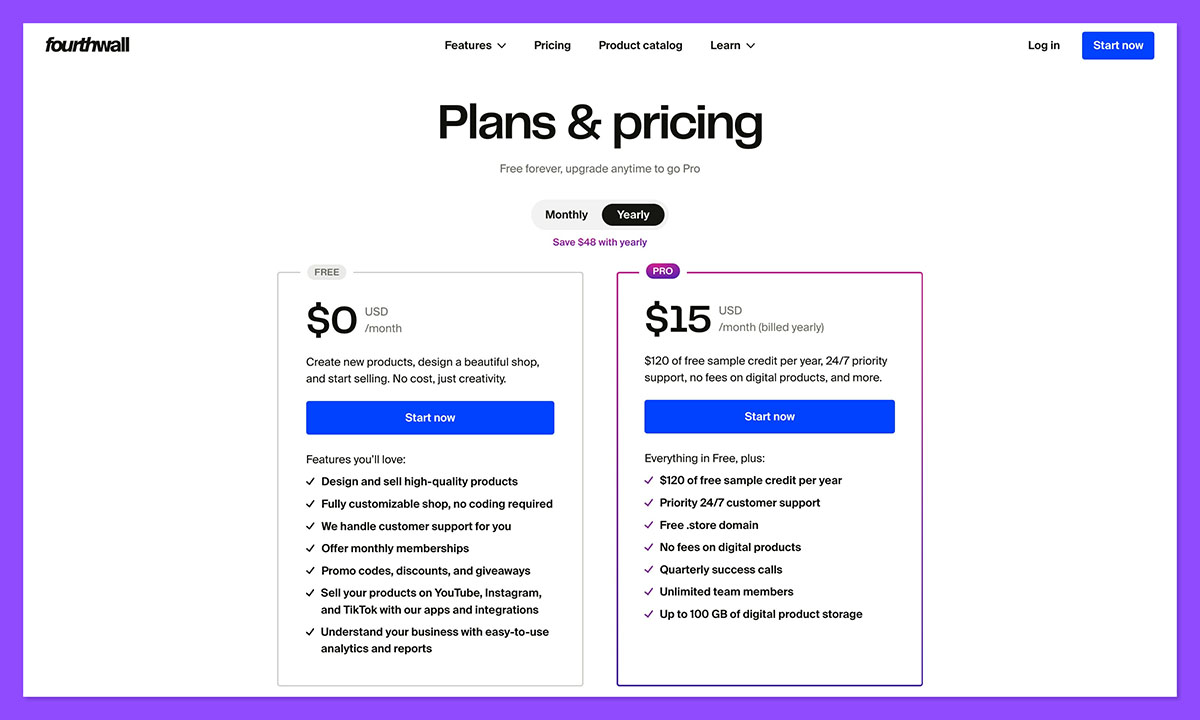
The Pro plan for $19 per month removes the digital product fee, and gives you a few extras, like unlimited team members, free sample credits for POD, and advanced customer support.
Ko-fi’s free plan lets you accept tips with absolutely no fee, but shop sales, memberships, monthly support and commissions come with a 5% transaction fee. There’s also a Gold plan for $12 per month which removes the 5% service fee.
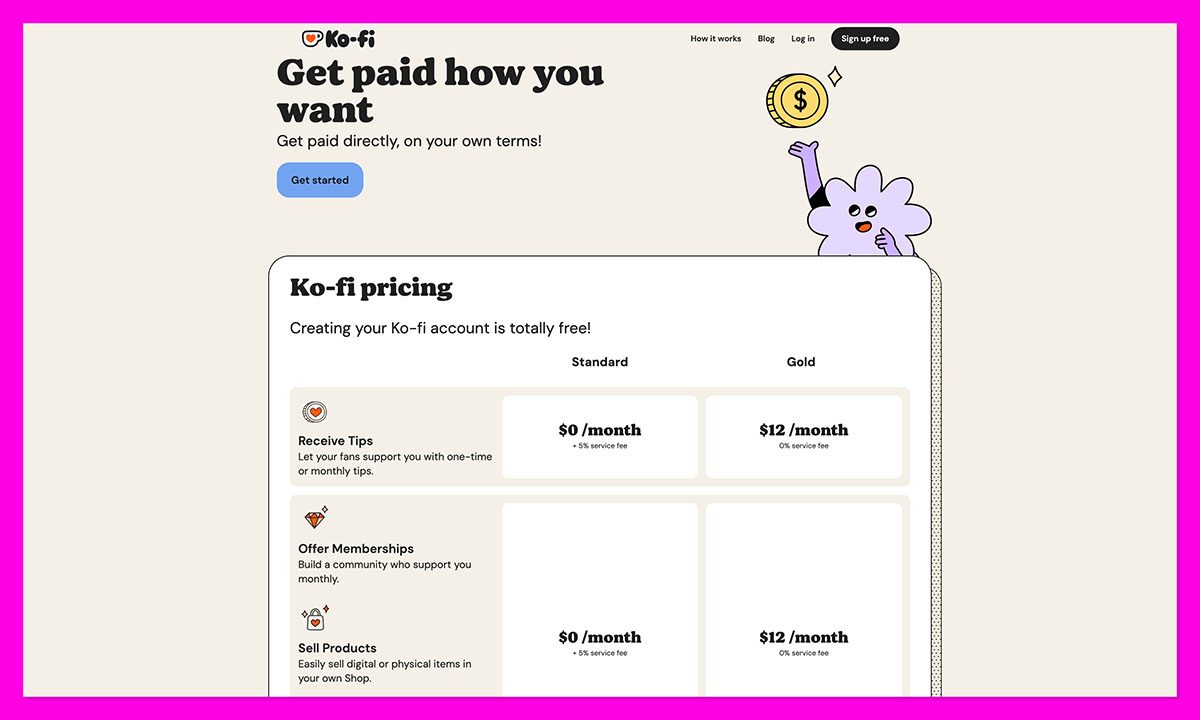
Obviously, if you’re just collecting occasional tips, Ko-fi’s pricing is cheaper, but it’s worth remembering that Fourthwall does handle more for you, like support for print on demand products and Merchant of Record work. It also doesn’t charge fees on the free plan when you’re selling physical products.
Fourthwall vs Ko-fi: Store Building, Branding and Integrations
I don’t want to write Ko-fi off completely here. It’s not a full ecommerce platform, but it gives you a space you can sell from very quickly. You essentially create a page that includes a cover image, page color, and a list of your products or available commissions. You can also add up to 15 social or custom links, which is great for community-led brands.
Ko-fi supports embeds for an existing website (if you have one), Zapier connections, as well as payment webhooks. There aren’t a huge number of extra integrations available, but there are some fun features like messaging, discount codes, polls, and posts, which let you share blogs, videos, or audio.
You can also set goals for fundraising, and lock exclusive content behind passwords for members. It’s plenty for an early-stage creator, but Fourthwall gives you a lot more to work with.
You get a full website that you can customize completely, a dedicated checkout, your own custom domain, plus connections to social selling channels like YouTube Shopping or Twitch. You can also connect to tools like Klaviyo and Mailchimp for email marketing. There’s also an Adobe Express add-on to help you create artwork for the Fourthwall POD products you might want to sell, too.
Ko-fi is fine for a page, Fourthwall is the platform you’ll want to go for if you want something closer to a Shopify setup without all the work Shopify gives you when it comes to connecting selling options, apps, and extra features.
Fourthwall vs Ko-fi: What Can You Sell?
Again, Ko-fi is much better than it used to be in terms of overall product options. It used to be very donation or tip focused. You can still accept both through your page, but now you can also sell physical goods (though you have to source them yourself), as well as digital downloads. You can add up to 15 variants to a physical item, as well as up to 20 images. You’ve also got pay-what-you-want pricing, and membership options. Right now, free accounts get up to 600 shop items, while paid ones get up to 1,500.
Commissions are the more interesting part, letting buyers choose the things they want. You can also cap available slots and set up shipping rules for physical work.
Fourthwall is still the broader option overall, though. You can sell the physical products you source yourself, get help from Fourthwall with sourcing specialist items like enamel pins, or use the print on demand catalog to add your designs to retail-grade blanks that Fourthwall handles fulfillment for.

The POD catalog is a little smaller than the one you might see from something like Printful, but all of the products are excellent, and many are quite unique. Plus, unlike other print on demand vendors, Fourthwall helps you out with the customer support for items in its catalog.
You’ve also got digital product sales, memberships, donations, and digital gift cards. Even better, you can create bundles that span across product types, so you might create an offer that includes a t-shirt, a download, plus a one month membership.
The Membership Debate: Which is Better?
One quick note here because both Fourthwall and Ko-fi do memberships very well, if you’re interested in making money with exclusive content. Ko-Fi lets you set up basic memberships with tier prices and distinct benefits. You can create Discord roles, gate content, and send out physical rewards if you want to.
Fourthwall is better if you’re looking at memberships that involve a lot of video, since it hosts 1080P video on demand, and offers YouTube, Vimeo, or Streamable embeds. You can also arrange videos into collections, and let members watch through Chromecast or Airplay.
Fourthwall vs Ko-fi: Customer Support and Help
Both companies offer similar general support, such as self-help resources, email assistance, plus upgraded or “priority” support if you’re on a paid plan. Notably, though, Fourthwall does offer a few things you won’t get from Ko-fi.
The first is the Eli assistant which can help you with things like analyzing your data, creating promotions, editing product details, or adjusting pricing. Then, Fourthwall can also help with:
- Product production and fulfillment through it’s print on demand service
- Sales tax and VAT as your Merchant of Record for sales
- Sourcing products for custom physical sales
- Finding artists and partners for print on demand designs through a design community
- Customer support for print on demand products
Obviously, Fourthwall still doesn’t do absolutely everything for you, but it handles a lot of the things that might slow a seller down when they start to grow on something like Ko-Fi. The tax support alone is genuinely very useful. I also like that you can send your own products to Fourthwall’s fulfillment center if you want them to manage picking, shipping, or customer support for those items.
Fourthwall vs Ko-fi: Extra Features in 2026
Fourthwall has been a lot more ambitious with its updates this year. I’ve already mentioned the Eli AI shop assistant, which is really helpful for handling everyday store work. There’s also an MCP server, which gives compatible AI assistants access to your store data for jobs like finding orders or checking sales. You still maintain control over actions in your shop.
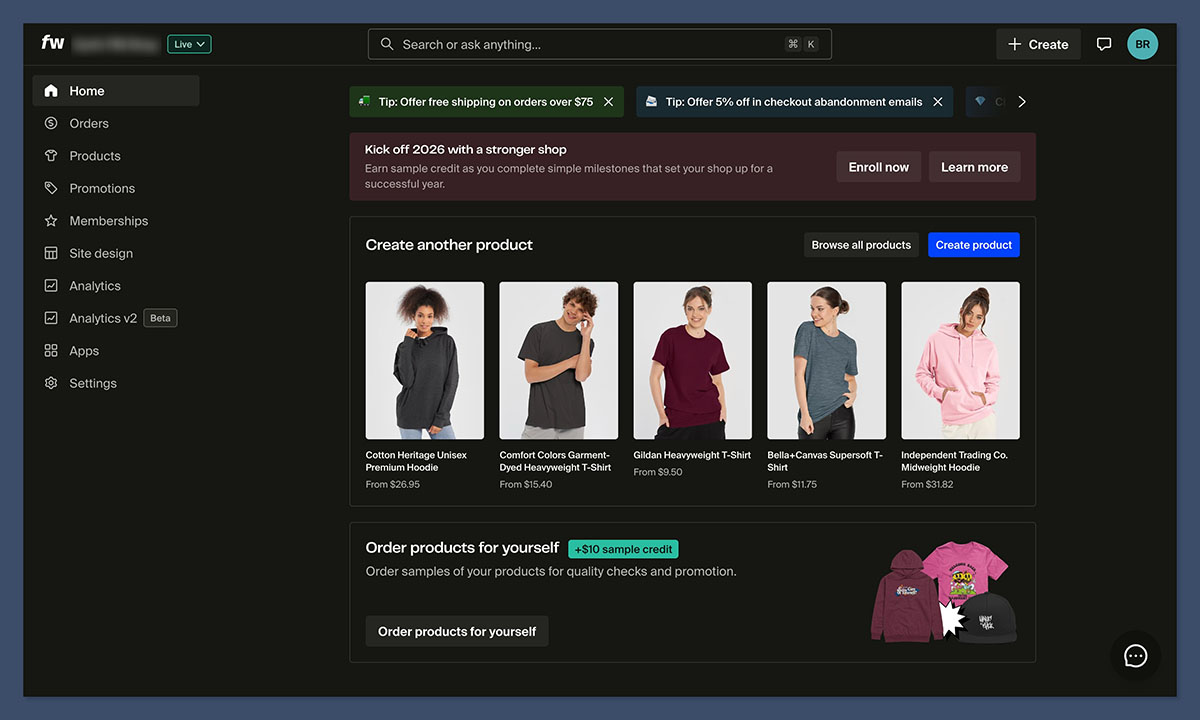
Then there’s the Designer Community for finding people who can help you create artwork for your products, the new Kit integration to help with subscriptions, RSS embeds, plus an ever-increasing range of new products added to the POD catalog, like French Terry hoodies.
Ko-Fi hasn’t made as many changes, but the ones it has introduced are useful. You’ve got things like “post likes” to help with engagement, custom poll formats, external team links, and Discord access. You can also access Google Analytics in your shop, and shipping and tracking numbers can be delivered through DMs.
Fourthwall or Ko-fi: Which Should You Use?
Ko-fi still gets my vote if you’re accepting tips or commissions, and you just want a simple page you can send your community to. It’s affordable, easy to use, and it’s brilliant for monetizing an engaged fanbase, you just have to do a bit more of the extra work yourself. You’re responsible for your tax, sourcing products, handling customer support, and making your brand stand out. If that trade-off bothers you, it’s worth scanning the best Ko-fi alternatives before you commit.
Fourthwall is the better option overall if you want to build a comprehensive brand homebase, and branch out into various ways of selling. It gives you more product options (both digital and physical), more assistance with everything from fulfillment to tax management, as well as a lot more room to experiment with various selling channels.
Fourthwall is also ideal for people outside of the “creator” community. It’s still great if you’re running a small business, podcast, or charity. It’s even suitable for nonprofits. So that’s the final verdict. Ko-Fi for simple tips and commissions, Fourthwall for brands ready to grow.